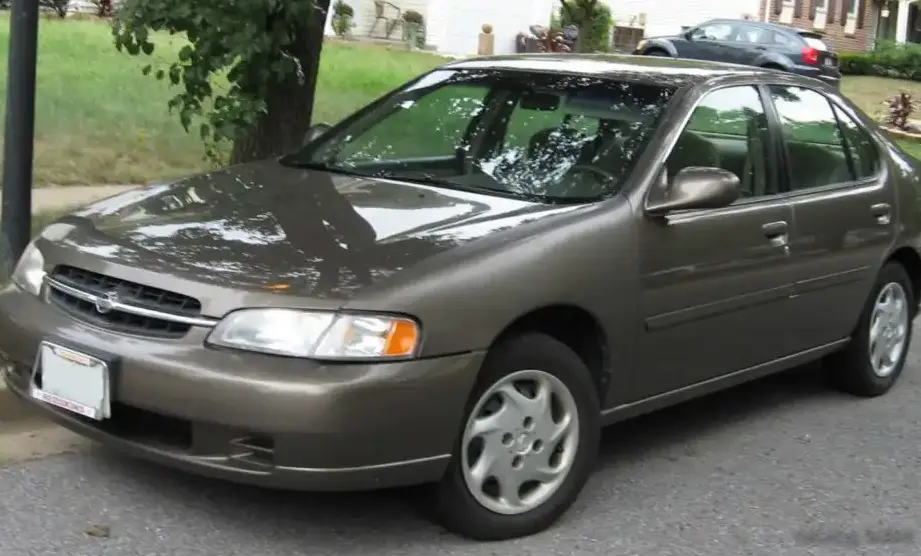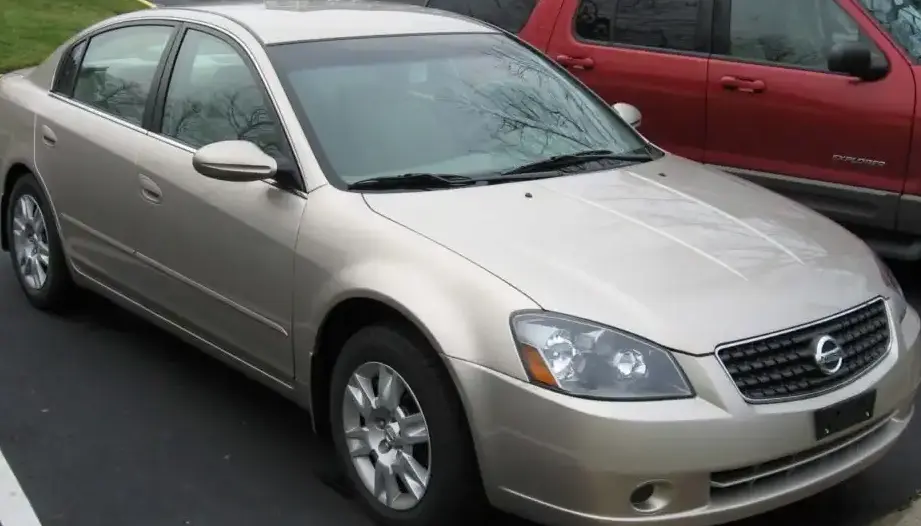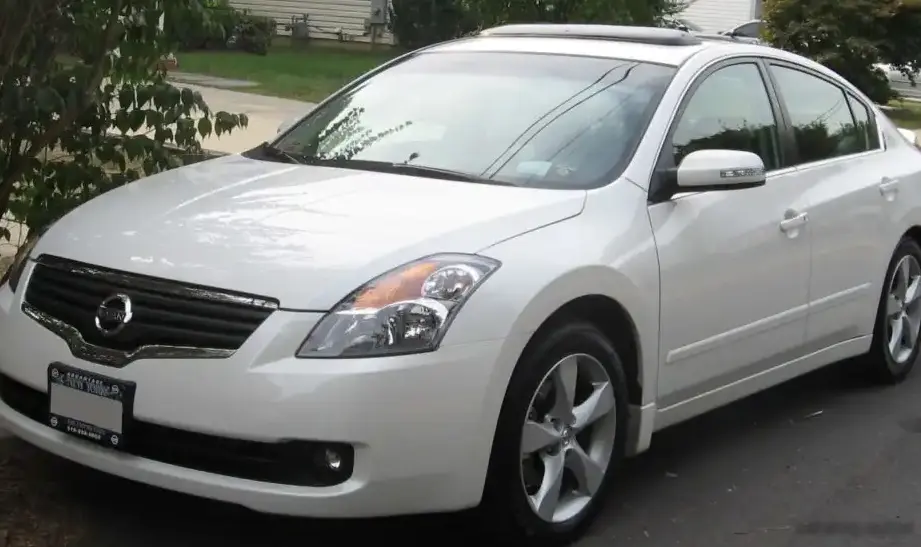
The Nissan Altima V 2.5, equipped with a 2.5-liter inline-four engine producing 182 horsepower and paired with a Continuously Variable Transmission (CVT), was a mainstay of the mid-size sedan segment in the United States from 2012 to 2015. Representing the fifth generation (L33) of the Altima, this variant occupied a central position in the lineup, offering a balance of fuel efficiency, performance, and features aimed at a broad consumer base. It served as a direct competitor to vehicles like the Honda Accord, Toyota Camry, and Ford Fusion.
Technical Specifications
| Brand | Nissan |
| Model | Altima |
| Generation | Altima V |
| Type (Engine) | 2.5 (182 Hp) CVT |
| Start of production | 2012 |
| End of production | 2015 |
| Powertrain Architecture | Internal Combustion engine |
| Body type | Sedan |
| Seats | 5 |
| Doors | 4 |
| Fuel consumption (urban) | 8.7 l/100 km (27 US mpg) |
| Fuel consumption (extra urban) | 6.2 l/100 km (37.9 US mpg) |
| Fuel Type | Petrol (Gasoline) |
| Acceleration 0 – 100 km/h | 7.3 sec |
| Acceleration 0 – 62 mph | 7.3 sec |
| Acceleration 0 – 60 mph | 6.9 sec |
| Maximum speed | 210 km/h (130.49 mph) |
| Weight-to-power ratio | 7.7 kg/Hp |
| Weight-to-torque ratio | 5.8 kg/Nm |
| Power | 182 Hp @ 6000 rpm |
| Torque | 244 Nm @ 4000 rpm (179.97 lb.-ft. @ 4000 rpm) |
| Engine layout | Front, Transverse |
| Engine Model/Code | QR25DE |
| Engine displacement | 2488 cm3 (151.83 cu. in.) |
| Number of cylinders | 4 |
| Engine configuration | Inline |
| Cylinder Bore | 89 mm (3.5 in.) |
| Piston Stroke | 100 mm (3.94 in.) |
| Compression ratio | 9.6:1 |
| Number of valves per cylinder | 4 |
| Fuel injection system | Multi-port manifold injection |
| Engine aspiration | Naturally aspirated engine |
| Engine oil capacity | 4.6 l (4.86 US qt | 4.05 UK qt) |
| Coolant capacity | 7.9 l (8.35 US qt | 6.95 UK qt) |
| Kerb Weight | 1409 kg (3106.31 lbs.) |
| Max. weight | 1910 kg (4210.83 lbs.) |
| Max load | 501 kg (1104.52 lbs.) |
| Trunk (boot) space – maximum | 436 l (15.4 cu. ft.) |
| Fuel tank capacity | 68 l (17.96 US gal | 14.96 UK gal) |
| Length | 4864 mm (191.5 in.) |
| Width | 1828 mm (71.97 in.) |
| Height | 1471 mm (57.91 in.) |
| Wheelbase | 2776 mm (109.29 in.) |
| Front track | 1584 mm (62.36 in.) |
| Rear (Back) track | 1584 mm (62.36 in.) |
| Ride height (ground clearance) | 137 mm (5.39 in.) |
| Drivetrain Architecture | The Internal combustion engine (ICE) drives the front wheels of the vehicle. |
| Drive wheel | Front wheel drive |
| Number of gears and type of gearbox | 1 gears, automatic transmission CVT |
| Front brakes | Ventilated discs |
| Rear brakes | Disc |
| Tires size | 215/60 R16 |
| Wheel rims size | 16 |
Powertrain & Engine Architecture
The heart of the Altima V 2.5 was the QR25DE, a 2.5-liter inline-four cylinder engine. This engine utilized multi-port fuel injection and a relatively conservative 9.6:1 compression ratio. The QR25DE was known for its durability and smooth operation, though it wasn’t particularly groundbreaking in terms of performance. The engine featured dual overhead camshafts (DOHC) and four valves per cylinder, contributing to its respectable power output. The engine’s design prioritized reliability and refinement over outright power. Paired with the QR25DE was Nissan’s Xtronic CVT (Continuously Variable Transmission). This transmission was designed to maximize fuel efficiency by seamlessly adjusting the gear ratio to keep the engine operating in its optimal power band. While CVTs sometimes receive criticism for their driving feel, Nissan’s implementation in the Altima was generally well-regarded for its smoothness and responsiveness.
Driving Characteristics
The 182 horsepower and 179.97 lb-ft of torque delivered by the 2.5-liter engine and CVT combination provided adequate, though not exhilarating, performance. Acceleration from 0-60 mph took approximately 6.9 seconds, making it competitive within its class. The CVT contributed to a smooth and linear power delivery, lacking the distinct gear shifts of a traditional automatic transmission. This could feel somewhat disconnected to drivers accustomed to conventional gearboxes. Compared to the optional 3.5-liter V6 engine available in higher Altima trims, the 2.5-liter model offered significantly less power and acceleration. However, it provided a noticeable improvement in fuel economy. The CVT’s programming prioritized efficiency, sometimes resulting in the engine holding a lower RPM for longer periods, which could feel sluggish during quick acceleration maneuvers.
Equipment & Trim Levels
The Altima V 2.5 typically came standard with features such as air conditioning, power windows and locks, a basic audio system with a CD player, and steel wheels with wheel covers. Higher trim levels, such as the SL, added features like alloy wheels, a more advanced audio system with a touchscreen display, Bluetooth connectivity, and a rearview camera. Optional extras included leather upholstery, a sunroof, and a navigation system. The interior design was functional and comfortable, with a focus on providing a spacious cabin for passengers. The base trim levels featured cloth upholstery, while higher trims offered upgraded materials and finishes.
Chassis & Braking
The Altima V 2.5 utilized a standard front-wheel-drive configuration with an independent MacPherson strut front suspension and a multi-link rear suspension. This suspension setup provided a comfortable ride quality, absorbing bumps and imperfections in the road effectively. Braking duties were handled by ventilated front discs and solid rear discs. The braking system was adequate for everyday driving, providing sufficient stopping power. The 2.5-liter models typically featured smaller brake rotors compared to the V6-equipped Altimas. Stabilizer bars were included both front and rear to reduce body roll during cornering.
Market Reception & Comparison
The Nissan Altima V 2.5 was generally well-received by automotive critics as a practical and fuel-efficient mid-size sedan. It was praised for its comfortable ride, spacious interior, and smooth CVT transmission. However, some critics noted that the engine lacked the power and refinement of some of its competitors. Fuel economy was a strong point, with the Altima V 2.5 achieving around 27 mpg in the city and 37.9 mpg on the highway. Compared to the V6-equipped Altima, the 2.5-liter model offered significantly better fuel economy, but at the expense of performance. Reliability was generally good, with the QR25DE engine proving to be a durable and long-lasting powerplant.
Legacy
The Nissan Altima V 2.5 (2012-2015) remains a relatively common sight on used car lots today. The QR25DE engine and CVT transmission have proven to be reasonably reliable, although regular maintenance is crucial. CVT fluid changes are particularly important to prevent premature wear and failure. These Altimas represent a good value for budget-conscious buyers seeking a comfortable and fuel-efficient mid-size sedan. While not a performance standout, the Altima V 2.5 offered a well-rounded package that appealed to a wide range of drivers, solidifying its position as a popular choice in the competitive mid-size sedan segment.