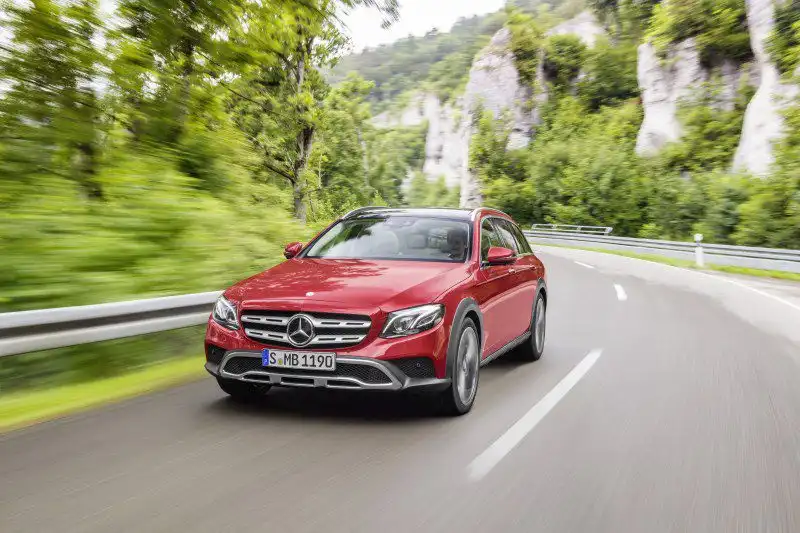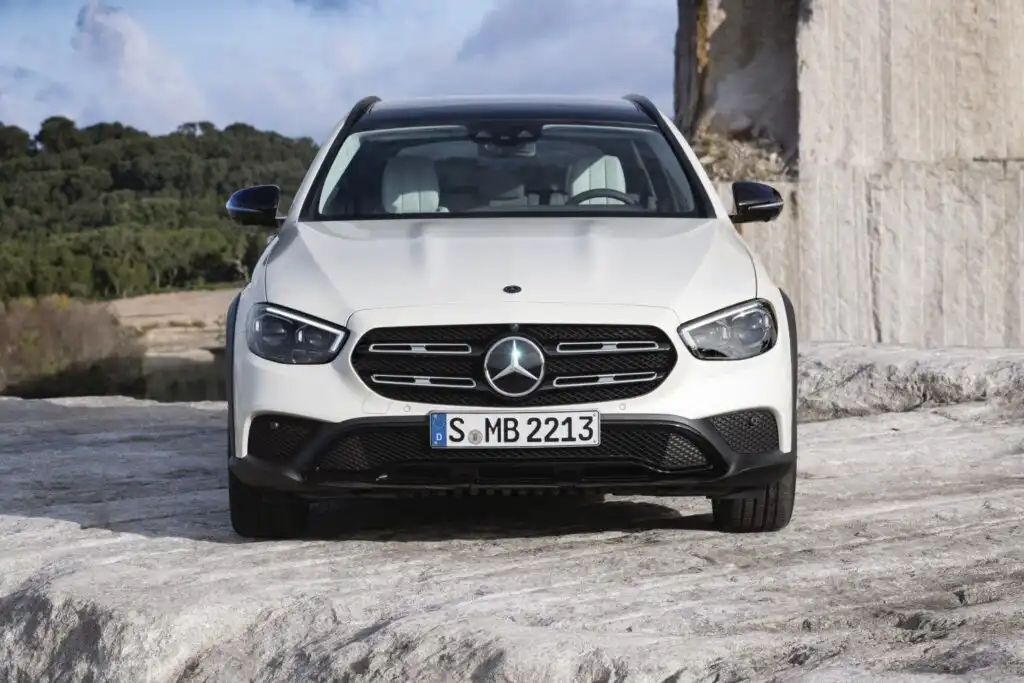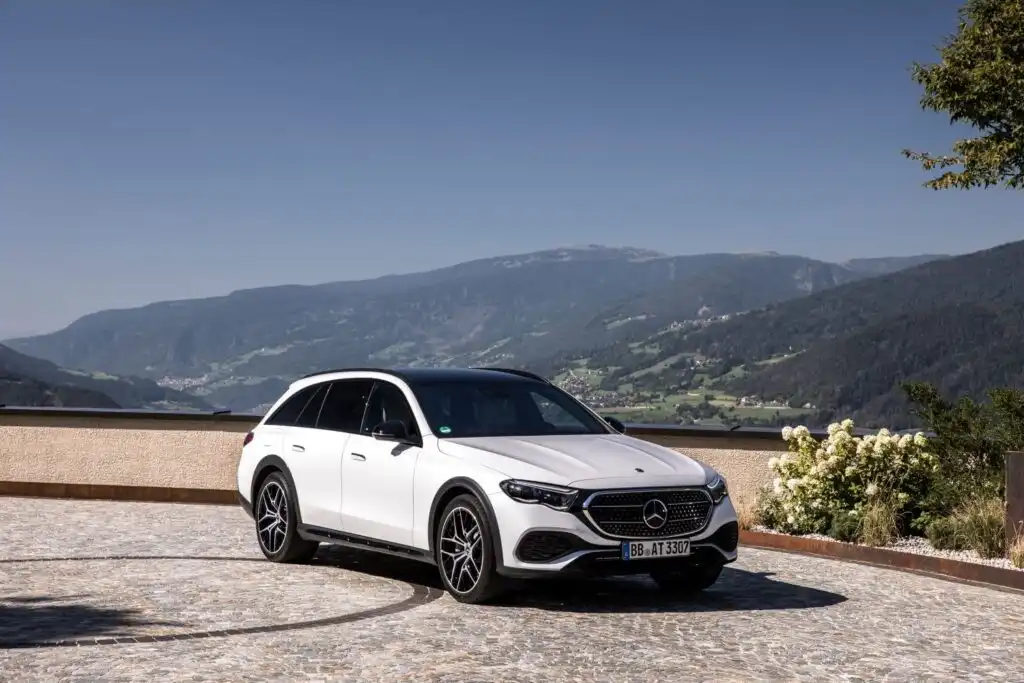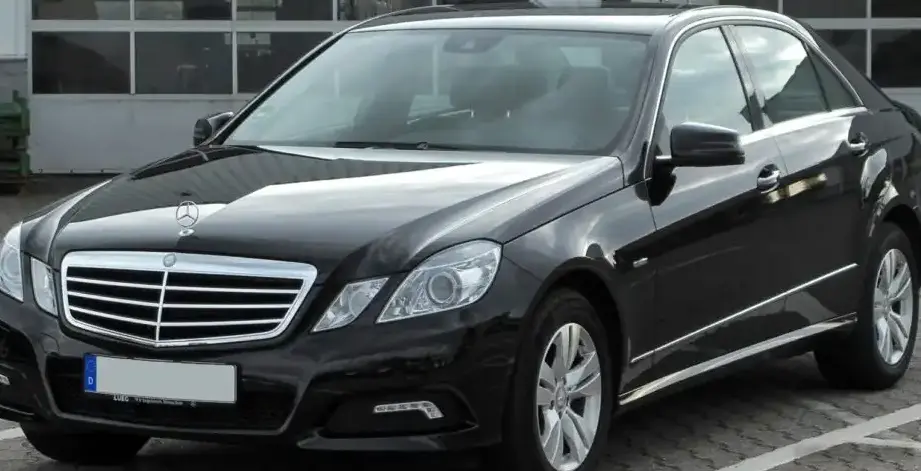
The Mercedes-Benz E 300 CDI BlueEFFICIENCY V6 (204 hp) with the 7G-TRONIC automatic transmission was a significant variant within the W212 E-Class range, produced from February to July 2010. Positioned as a mid-range offering, it blended respectable performance with enhanced fuel economy, appealing to buyers seeking a balance between driving pleasure and efficiency. This model represented Mercedes-Benz’s commitment to diesel technology, offering a sophisticated and refined driving experience within the executive sedan segment. It was primarily marketed in Europe and other regions where diesel engines held significant market share, offering a compelling alternative to gasoline-powered E-Class models.
Technical Specifications
| Brand | Mercedes-Benz |
| Model | E-class |
| Generation | E-class (W212) |
| Type (Engine) | E 300 CDI BlueEFFICIENCY V6 (204 Hp) 7G-TRONIC |
| Start of production | February, 2010 |
| End of production | July, 2010 |
| Powertrain Architecture | Internal Combustion engine |
| Body type | Sedan |
| Seats | 5 |
| Doors | 4 |
| Fuel consumption (economy) – urban (NEDC) | 8.9-9.4 l/100 km (26.4 – 25 US mpg, 31.7 – 30.1 UK mpg, 11.2 – 10.6 km/l) |
| Fuel consumption (economy) – extra urban (NEDC) | 5.5-5.8 l/100 km (42.8 – 40.6 US mpg, 51.4 – 48.7 UK mpg, 18.2 – 17.2 km/l) |
| Fuel consumption (economy) – combined (NEDC) | 6.8-7.1 l/100 km (34.6 – 33.1 US mpg, 41.5 – 39.8 UK mpg, 14.7 – 14.1 km/l) |
| CO2 emissions (NEDC) | 179-186 g/km |
| Fuel Type | Diesel |
| Acceleration 0 – 100 km/h | 7.9 sec |
| Acceleration 0 – 62 mph | 7.9 sec |
| Acceleration 0 – 60 mph | 7.5 sec |
| Maximum speed | 240 km/h (149.13 mph) |
| Emission standard | Euro 5 |
| Weight-to-power ratio | 8.6 kg/Hp, 116.6 Hp/tonne |
| Weight-to-torque ratio | 3.5 kg/Nm, 285.7 Nm/tonne |
| Power | 204 Hp @ 4000 rpm |
| Torque | 500 Nm @ 1400-2400 rpm (368.78 lb.-ft. @ 1400-2400 rpm) |
| Engine layout | Front, Longitudinal |
| Engine Model/Code | OM 642.850 |
| Engine displacement | 2987 cm3 (182.28 cu. in.) |
| Number of cylinders | 6 |
| Engine configuration | V-engine |
| Cylinder Bore | 83 mm (3.27 in.) |
| Piston Stroke | 92 mm (3.62 in.) |
| Compression ratio | 15.5:1 |
| Number of valves per cylinder | 4 |
| Fuel injection system | Diesel Commonrail |
| Engine aspiration | Turbocharger, Intercooler |
| Valvetrain | DOHC |
| Engine oil capacity | 8 l (8.45 US qt | 7.04 UK qt) |
| Kerb Weight | 1750 kg (3858.09 lbs.) |
| Max. weight | 2350 kg (5180.86 lbs.) |
| Max load | 600 kg (1322.77 lbs.) |
| Trunk (boot) space – minimum | 540 l (19.07 cu. ft.) |
| Fuel tank capacity | 80 l (21.13 US gal | 17.6 UK gal) |
| Max. roof load | 100 kg (220.46 lbs.) |
| Permitted trailer load with brakes (12%) | 2100 kg (4629.71 lbs.) |
| Permitted trailer load without brakes | 750 kg (1653.47 lbs.) |
| Permitted towbar download | 84 kg (185.19 lbs.) |
| Length | 4868 mm (191.65 in.) |
| Width | 1854 mm (72.99 in.) |
| Width including mirrors | 2071 mm (81.54 in.) |
| Height | 1464 mm (57.64 in.) |
| Wheelbase | 2874 mm (113.15 in.) |
| Front track | 1600 mm (62.99 in.) |
| Rear (Back) track | 1619 mm (63.74 in.) |
| Front overhang | 841 mm (33.11 in.) |
| Rear overhang | 1153 mm (45.39 in.) |
| Minimum turning circle (turning diameter) | 11.25 m (36.91 ft.) |
| Drivetrain Architecture | The Internal combustion engine (ICE) drives the rear wheels of the vehicle. |
| Drive wheel | Rear wheel drive |
| Number of gears and type of gearbox | 7 gears, automatic transmission G-TRONIC |
| Front suspension | Coil spring, Independent multi-link suspension, Transverse stabilizer, Air Suspension – Optional |
| Rear suspension | Independent multi-link spring suspension with stabilizer, Air Suspension – Optional |
| Front brakes | Ventilated discs, 322 mm |
| Rear brakes | Ventilated discs, 300 mm |
| Assisting systems | ABS (Anti-lock braking system) |
| Steering type | Steering rack and pinion |
| Power steering | Hydraulic Steering |
| Tires size | Front wheel tires: 225/55 R16; 245/45 R17; 245/40 R18Rear wheel tires: 225/55 R16; 245/45 R17; 265/50 R18 |
| Wheel rims size | Front wheel rims: 7.5J x 16; 8J x 17; 8.5J x 18Rear wheel rims: 7.5J x 16; 8J x 17; 9J x 18 |
INTRODUCTION
The E 300 CDI BlueEFFICIENCY, introduced in 2010 as part of the W212 E-Class facelift, represented a refinement of Mercedes-Benz’s diesel offerings. Built on the 1HX0/A3 platform, this variant aimed to deliver a compelling blend of performance, economy, and comfort. The “BlueEFFICIENCY” designation signified the inclusion of various fuel-saving technologies, aligning with Mercedes-Benz’s broader environmental initiatives. This model occupied a crucial position in the E-Class lineup, bridging the gap between the more affordable entry-level models and the higher-performance, more luxurious trims.
Powertrain & Engine Architecture
At the heart of the E 300 CDI BlueEFFICIENCY lay the OM 642.850 3.0-liter V6 diesel engine. This engine was a cornerstone of Mercedes-Benz’s diesel strategy, known for its robust construction and refined operation. It featured a common rail direct injection system, delivering fuel at extremely high pressures for optimized combustion. The engine also incorporated a variable geometry turbocharger (VGT) and an intercooler, enhancing both power and torque across a broad rev range. The 7G-TRONIC automatic transmission, a seven-speed unit, was specifically calibrated to complement the engine’s characteristics, providing smooth and efficient gear changes. This transmission offered both manual and automatic shifting modes, allowing drivers to tailor the driving experience to their preferences. The engine produced 204 horsepower at 4000 rpm and a substantial 500 Nm (368 lb-ft) of torque between 1400 and 2400 rpm, providing ample pulling power for comfortable cruising and effortless overtaking.
Driving Characteristics
The E 300 CDI BlueEFFICIENCY with the 7G-TRONIC transmission offered a refined and comfortable driving experience. While not overtly sporty, the engine’s ample torque provided brisk acceleration, with a 0-60 mph time of around 7.5 seconds. The 7G-TRONIC transmission contributed to smooth gear changes, minimizing disruptions to the driving experience. Compared to the more powerful E 350 or the sportier AMG variants, the E 300 CDI prioritized fuel efficiency and relaxed cruising. The automatic transmission’s gear ratios were optimized for both fuel economy and responsiveness, providing a good balance between the two. The engine’s torque curve meant that strong acceleration was available from low engine speeds, making it well-suited for everyday driving and highway journeys. Compared to manual transmission versions, the 7G-TRONIC offered greater convenience and ease of use, particularly in urban traffic.
Equipment & Trim Levels
The E 300 CDI BlueEFFICIENCY typically came well-equipped, reflecting its mid-range positioning within the E-Class lineup. Standard features included automatic climate control, a high-quality audio system, power-adjustable front seats, and a leather-wrapped steering wheel. Safety features were also comprehensive, including ABS, ESP, and multiple airbags. Optional extras included a navigation system, a premium sound system, leather upholstery, and various driver assistance systems such as adaptive cruise control and lane keeping assist. Interior trim levels varied, with options ranging from wood veneers to aluminum accents. The dashboard layout was typical of the W212 E-Class, characterized by a clean and elegant design.
Chassis & Braking
The E 300 CDI BlueEFFICIENCY featured a sophisticated chassis designed to provide a comfortable and controlled ride. The front suspension utilized coil springs and an independent multi-link setup, while the rear suspension employed an independent multi-link spring suspension. Stabilizer bars were fitted to both axles to reduce body roll during cornering. Depending on the options selected, the car could be equipped with an air suspension system, further enhancing ride comfort. The braking system consisted of ventilated discs on all four wheels, providing ample stopping power. ABS (Anti-lock Braking System) was standard, ensuring safe and controlled braking in various conditions. The suspension tuning was geared towards comfort, prioritizing a smooth ride over outright sporty handling.
Market Reception & Comparison
The E 300 CDI BlueEFFICIENCY was generally well-received by automotive critics, who praised its fuel efficiency, refined engine, and comfortable ride. It was often seen as a sensible and practical choice for buyers seeking a luxurious and efficient executive sedan. Compared to the gasoline-powered E 350, the E 300 CDI offered significantly better fuel economy, making it a more attractive option for high-mileage drivers. However, the E 350 provided more outright performance. In terms of reliability, the OM 642 engine proved to be robust and durable, although maintenance costs for diesel engines could be higher than those for gasoline engines. The 7G-TRONIC transmission was also generally reliable, but required regular servicing to ensure optimal performance.
Legacy
The E 300 CDI BlueEFFICIENCY, and the OM 642 engine it featured, has established a reputation for long-term reliability and durability. In the used car market, these models remain sought after by buyers who appreciate their fuel efficiency, comfortable ride, and robust construction. While modern diesel technology has advanced significantly, the OM 642 engine continues to be regarded as a benchmark for diesel refinement and longevity. Regular maintenance, including oil changes and filter replacements, is crucial for ensuring the continued reliability of these vehicles. The W212 E-Class, and particularly the E 300 CDI BlueEFFICIENCY variant, represents a high point in Mercedes-Benz’s diesel engineering, offering a compelling blend of luxury, efficiency, and durability.