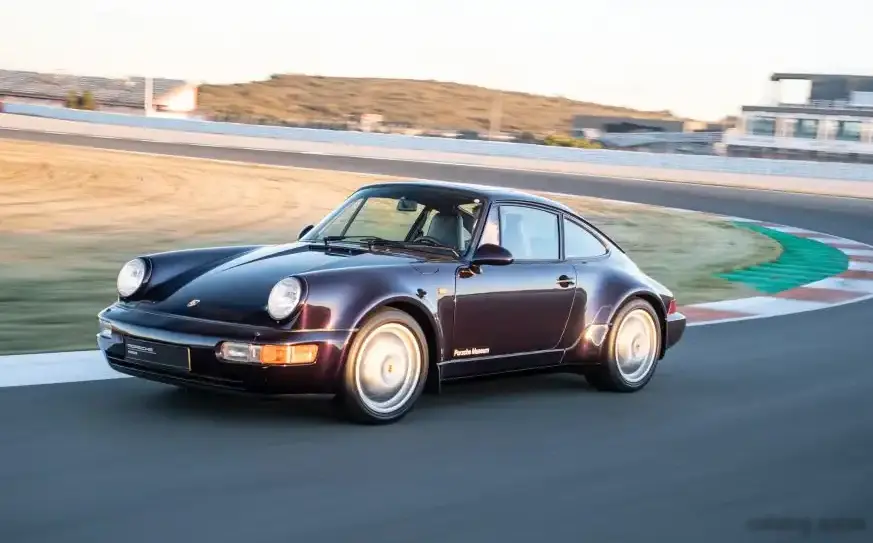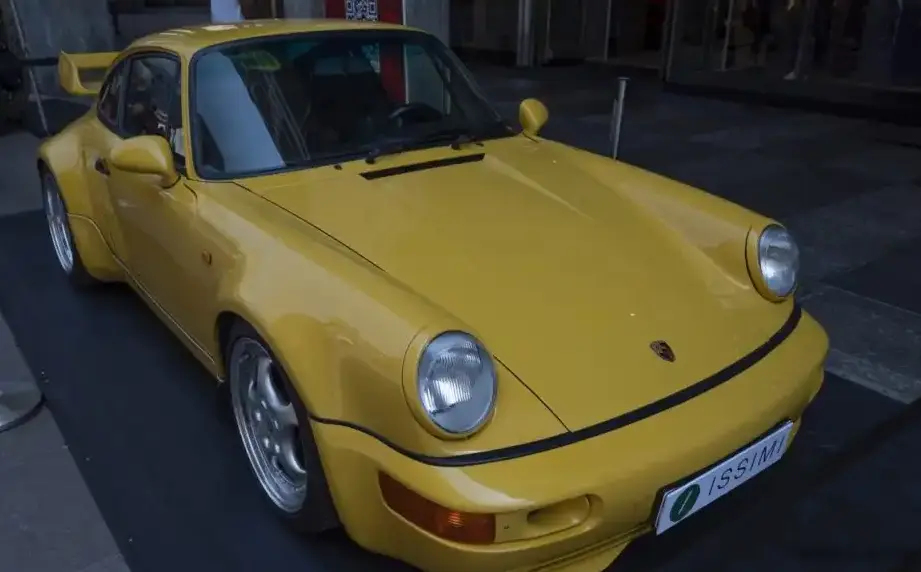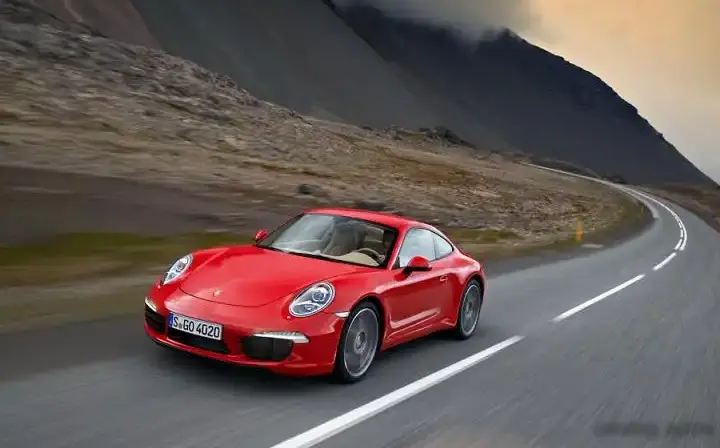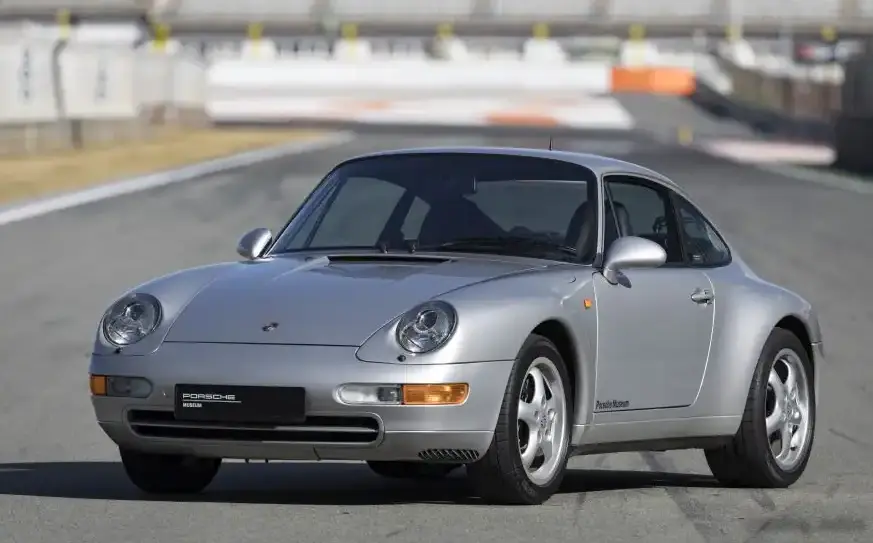
The Porsche 911 (993) Carrera 3.6, produced from 1995 to 1997, represents the final iteration of the air-cooled 911 before Porsche transitioned to water-cooled engines. This model held a significant position as the mainstream offering within the 993 generation, bridging the gap between the base Carrera 2 and the more performance-focused Carrera 4 and Turbo models. It was a pivotal car for Porsche, blending traditional 911 characteristics with modern refinements, and is highly sought after by collectors and enthusiasts today.
Technical Specifications
| Brand | Porsche |
| Model | 911 |
| Generation | 911 (993) |
| Type (Engine) | Carrera 3.6 (285 Hp) |
| Start of production | 1995 |
| End of production | 1997 |
| Powertrain Architecture | Internal Combustion engine |
| Body type | Coupe |
| Seats | 4 |
| Doors | 2 |
| Fuel consumption (economy) – urban | 17.9 l/100 km (13.1 US mpg, 15.8 UK mpg, 5.6 km/l) |
| Fuel consumption (economy) – extra urban | 8.9 l/100 km (26.4 US mpg, 31.7 UK mpg, 11.2 km/l) |
| Fuel consumption (economy) – combined | 12.2 l/100 km (19.3 US mpg, 23.2 UK mpg, 8.2 km/l) |
| Fuel Type | Petrol (Gasoline) |
| Acceleration 0 – 100 km/h | 5.4 sec |
| Acceleration 0 – 62 mph | 5.4 sec |
| Acceleration 0 – 60 mph | 5.1 sec |
| Maximum speed | 275 km/h (170.88 mph) |
| Weight-to-power ratio | 4.8 kg/Hp, 208 Hp/tonne |
| Weight-to-torque ratio | 4 kg/Nm, 248.2 Nm/tonne |
| Power | 285 Hp @ 6100 rpm |
| Power per litre | 79.2 Hp/l |
| Torque | 340 Nm @ 5250 rpm (250.77 lb.-ft. @ 5250 rpm) |
| Engine layout | Rear, Longitudinal |
| Engine Model/Code | M64.21 |
| Engine displacement | 3600 cm3 (219.69 cu. in.) |
| Number of cylinders | 6 |
| Engine configuration | Boxer |
| Cylinder Bore | 100 mm (3.94 in.) |
| Piston Stroke | 76.4 mm (3.01 in.) |
| Compression ratio | 11.3:1 |
| Number of valves per cylinder | 2 |
| Fuel injection system | Multi-port manifold injection |
| Engine aspiration | Naturally aspirated engine |
| Valvetrain | SOHC |
| Engine oil capacity | 9 l (9.51 US qt | 7.92 UK qt) |
| Kerb Weight | 1370 kg (3020.33 lbs.) |
| Max. weight | 1710 kg (3769.9 lbs.) |
| Max load | 340 kg (749.57 lbs.) |
| Trunk (boot) space – maximum | 123 l (4.34 cu. ft.) |
| Length | 4245 mm (167.13 in.) |
| Width | 1735 mm (68.31 in.) |
| Height | 1300 mm (51.18 in.) |
| Wheelbase | 2272 mm (89.45 in.) |
| Front track | 1405 mm (55.31 in.) |
| Rear (Back) track | 1444 mm (56.85 in.) |
| Drivetrain Architecture | The Internal combustion engine (ICE) drives the rear wheels of the vehicle. |
| Drive wheel | Rear wheel drive |
| Number of gears and type of gearbox | 6 gears, manual transmission |
| Front suspension | Independent type McPherson |
| Rear suspension | Independent multi-link suspension |
| Front brakes | Ventilated discs |
| Rear brakes | Ventilated discs |
| Assisting systems | ABS (Anti-lock braking system), Hydraulic Steering |
| Tires size | 205/55 R16; 245/45 R16 |
| Wheel rims size | 7J x 16; 9J x 16 |
Powertrain & Engine Architecture
The heart of the 993 Carrera 3.6 is the M64.21 engine, a 3.6-liter naturally aspirated flat-six. This engine represented a significant evolution of the air-cooled 911 powerplant, incorporating hydraulic valve lifters to eliminate the need for periodic valve adjustments – a common maintenance item on earlier 911s. The engine utilizes a multi-port fuel injection system, delivering fuel directly into each intake port. The 11.3:1 compression ratio and sophisticated engine management system contribute to its 285 horsepower output. The engine’s boxer configuration, with horizontally opposed cylinders, provides a low center of gravity, enhancing handling. The standard transmission for this model was a robust 6-speed manual, though a Tiptronic automatic transmission was also available, albeit less common and often considered to diminish the driving experience by purists.
Driving Characteristics
The 993 Carrera 3.6 with the manual transmission delivers a classic 911 driving experience. The engine provides a broad torque curve, making it responsive in most situations. While not as brutally fast as the Turbo models, the 3.6-liter engine offers ample power for spirited driving. The 6-speed gearbox is precise and engaging, allowing drivers to fully exploit the engine’s capabilities. The rear-wheel-drive layout and well-tuned suspension contribute to excellent handling balance. The automatic transmission, while offering convenience, alters the character of the car, with slightly slower acceleration and a less direct connection to the engine. The gear ratios in the automatic are optimized for smooth cruising, but can feel less responsive during aggressive driving.
Equipment & Trim Levels
The Carrera 3.6 was positioned as the core model in the 993 lineup. Standard equipment included power windows, power steering, air conditioning, and a basic audio system. Interior upholstery was typically cloth, though leather options were readily available. Optional extras were plentiful, including a sunroof, upgraded audio systems, sport seats, and various trim packages. The dashboard layout was relatively simple and functional, reflecting Porsche’s focus on driver engagement. The availability of various interior color combinations and trim materials allowed buyers to personalize their vehicles.
Chassis & Braking
The 993 Carrera 3.6 features a fully independent suspension system, with McPherson struts at the front and a multi-link setup at the rear. This suspension design provides a comfortable ride while maintaining excellent handling characteristics. Braking duties are handled by ventilated disc brakes on all four wheels, providing ample stopping power. Anti-lock braking system (ABS) was standard. The chassis itself is a steel monocoque construction, providing a rigid and safe platform. The weight distribution is carefully balanced, contributing to the car’s neutral handling.
Market Reception & Comparison
The 993 Carrera 3.6 was widely praised by automotive critics for its blend of performance, refinement, and classic 911 character. It was seen as a significant improvement over previous generations, offering a more modern and user-friendly driving experience. Compared to the base Carrera 2 (with the 3.0-liter engine), the 3.6 offered a substantial power increase and improved performance. Against the Carrera 4 (all-wheel drive), the 3.6 provided a more purist driving experience, appealing to enthusiasts who preferred rear-wheel drive. The Turbo models, with their forced induction, offered significantly higher performance but at a considerably higher price point. Fuel economy was reasonable for a sports car of its era, averaging around 19 mpg in combined driving.
Legacy
The Porsche 993 Carrera 3.6 has become a highly collectible and sought-after model. Its status as the last of the air-cooled 911s, combined with its refined engineering and engaging driving experience, has cemented its place in automotive history. The M64.21 engine is known for its reliability, provided it is properly maintained. Common maintenance items include oil changes, valve adjustments (though less frequent than earlier 911s), and inspection of the cooling system. Today, well-maintained examples command high prices in the used car market, reflecting their enduring appeal and historical significance. The 993 Carrera 3.6 represents a sweet spot in the 911 lineage, offering a classic Porsche experience with a touch of modern sophistication.