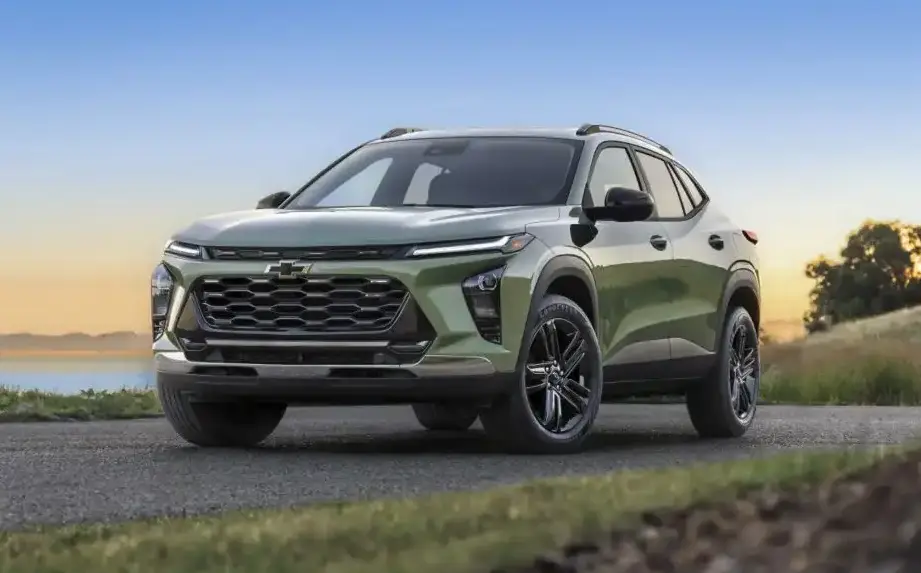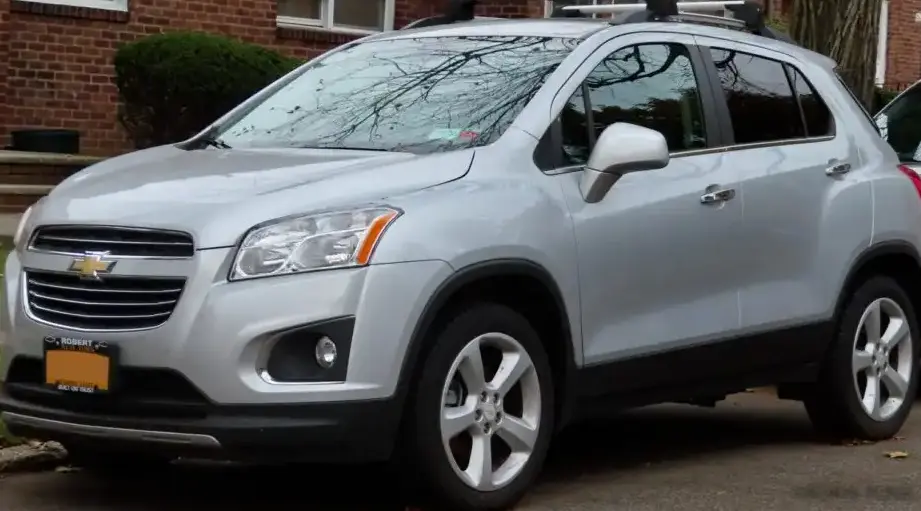
The Chevrolet Trax, known as the Holden Trax in some markets like Australia and New Zealand, is a subcompact SUV introduced by Chevrolet in 2013. The first generation, designated the Trax I, was produced from 2013 to 2017 and represented Chevrolet’s entry into the rapidly growing subcompact SUV segment. This variant, equipped with the 1.6-liter engine producing 115 horsepower, served as the base model for many markets, including North America, offering an affordable and practical option for buyers seeking a small, versatile vehicle. It was built on the Gamma platform, shared with other GM vehicles like the Opel/Vauxhall Mokka and Buick Encore.
Technical Specifications
| Brand | Chevrolet |
| Model | Trax |
| Generation | Trax I |
| Type (Engine) | 1.6 (115 Hp) |
| Start of production | 2013 |
| End of production | 2017 |
| Powertrain Architecture | Internal Combustion engine |
| Body type | SUV |
| Seats | 5 |
| Doors | 5 |
| Fuel consumption (urban) | 8.4 l/100 km (28 US mpg) |
| Fuel consumption (extra urban) | 5.4 l/100 km (43.6 US mpg) |
| Fuel consumption (combined) | 6.5 l/100 km (36.2 US mpg) |
| Fuel Type | Petrol (Gasoline) |
| Acceleration 0 – 100 km/h | 12.3 sec |
| Acceleration 0 – 62 mph | 12.3 sec |
| Acceleration 0 – 60 mph | 11.7 sec |
| Maximum speed | 174 km/h (108.12 mph) |
| Emission standard | Euro 5 |
| Weight-to-power ratio | 11.2 kg/Hp |
| Weight-to-torque ratio | 8.3 kg/Nm |
| Power | 115 Hp @ 6000 rpm |
| Torque | 155 Nm @ 4000 rpm (114.32 lb.-ft. @ 4000 rpm) |
| Engine layout | Front, Transverse |
| Engine Model/Code | LDE |
| Engine displacement | 1598 cm3 (97.52 cu. in.) |
| Number of cylinders | 4 |
| Engine configuration | Inline |
| Cylinder Bore | 79 mm (3.11 in.) |
| Piston Stroke | 81.5 mm (3.21 in.) |
| Compression ratio | 11:1 |
| Number of valves per cylinder | 4 |
| Fuel injection system | Multi-port manifold injection |
| Engine aspiration | Naturally aspirated engine |
| Engine oil capacity | 4.5 l (4.76 US qt | 3.96 UK qt) |
| Coolant capacity | 5.6 l (5.92 US qt | 4.93 UK qt) |
| Kerb Weight | 1287 kg (2837.35 lbs.) |
| Max. weight | 1791 kg (3948.48 lbs.) |
| Max load | 504 kg (1111.13 lbs.) |
| Trunk (boot) space – minimum | 356 l (12.57 cu. ft.) |
| Fuel tank capacity | 53 l (14 US gal | 11.66 UK gal) |
| Length | 4248 mm (167.24 in.) |
| Width | 1776 mm (69.92 in.) |
| Height | 1674 mm (65.91 in.) |
| Wheelbase | 2555 mm (100.59 in.) |
| Front track | 1540 mm (60.63 in.) |
| Rear track | 1540 mm (60.63 in.) |
| Minimum turning circle | 10.9 m (35.76 ft.) |
| Drivetrain Architecture | Front wheel drive |
| Number of gears | 5 |
| Gearbox type | Manual transmission |
| Front suspension | Independent type McPherson |
| Rear suspension | Torsion |
| Front brakes | Disc |
| Assisting systems | ABS (Anti-lock braking system) |
| Steering type | Steering rack and pinion |
| Power steering | Electric Steering |
INTRODUCTION
The Chevrolet Trax I 1.6 (115 Hp) was positioned as the entry-level trim in many markets. It aimed to provide an affordable and fuel-efficient option for buyers entering the subcompact SUV segment. The Trax I, built on GM’s Gamma platform, shared its underpinnings with vehicles like the Opel/Vauxhall Mokka and Buick Encore, allowing for economies of scale in production. This particular engine and transmission combination was widely available in North America and Europe, offering a balance between cost and usability. Production ran from 2013 through 2017, after which the Trax received a significant redesign for the second generation.
Powertrain & Engine Architecture
The heart of the Trax I 1.6 is the LDE engine, a 1.6-liter inline-four cylinder gasoline engine. This engine utilizes a multi-port fuel injection system, delivering fuel directly into the intake ports rather than directly into the combustion chamber. It features a single overhead camshaft (SOHC) design with four valves per cylinder, contributing to reasonable efficiency and power output for its size. The engine produces 115 horsepower at 6000 rpm and 155 Nm (114.32 lb.-ft.) of torque at 4000 rpm. Paired with this engine was typically a five-speed manual transmission, although a six-speed automatic transmission was also offered as an option. The automatic transmission was a conventional torque converter type, prioritizing smooth shifts and ease of use over outright performance. The engine’s relatively simple design and lack of forced induction contributed to its reliability, but also limited its overall performance potential.
Driving Characteristics
The 1.6-liter engine and five-speed manual transmission combination in the Trax I provided adequate, but not exhilarating, performance. Acceleration from 0-60 mph took around 11.7 seconds, and top speed was limited to 174 km/h (108.12 mph). The gear ratios were tuned for fuel efficiency rather than sporty driving, meaning the engine often needed to be revved to access its peak power. Compared to higher-trim models equipped with more powerful engines (like the 1.4L turbo), the 1.6L felt noticeably slower, particularly when fully loaded or climbing hills. The manual transmission offered a more engaging driving experience than the optional automatic, allowing drivers to better control the engine’s power band. However, the automatic provided a more relaxed and convenient driving experience, especially in urban traffic.
Equipment & Trim Levels
The base-level Trax I 1.6 typically came standard with features like air conditioning, power windows and locks, a basic audio system with USB connectivity, and steel wheels with wheel covers. Safety features included ABS brakes, stability control, and multiple airbags. Higher trim levels added features such as alloy wheels, a more advanced infotainment system with a touchscreen display, a rearview camera, and cruise control. Interior upholstery was typically cloth, with a relatively simple and functional dashboard layout. Optional extras included a sunroof, heated front seats, and upgraded audio systems.
Chassis & Braking
The Trax I utilized a front-wheel-drive layout with an independent McPherson strut suspension in the front and a torsion beam suspension in the rear. This suspension setup provided a comfortable ride quality, but wasn’t particularly sporty. The front brakes were disc brakes, while the rear brakes were typically drum brakes on the base model, with disc brakes available on higher trims. The steering was electric power-assisted, providing light and easy steering feel. The chassis was designed to prioritize practicality and affordability over handling prowess.
Market Reception & Comparison
The Chevrolet Trax I 1.6 was generally well-received as an affordable and practical subcompact SUV. Critics praised its spacious interior for its class, fuel efficiency, and ease of use. However, the 1.6-liter engine was often criticized for its lack of power, particularly when compared to turbocharged engines offered in competing vehicles. Compared to the Buick Encore, which shared the same platform, the Trax was positioned as the more value-oriented option. The Trax also competed with vehicles like the Nissan Juke, Kia Soul, and Honda HR-V, all of which offered different strengths and weaknesses. Fuel economy was a strong point for the Trax, achieving around 36.2 US mpg in combined driving, making it an attractive option for budget-conscious buyers.
Legacy
The Chevrolet Trax I 1.6, while not known for its blistering performance, proved to be a reliable and durable vehicle. The LDE engine, despite its simplicity, is generally considered to be a robust and long-lasting unit. Common maintenance items include regular oil changes, spark plug replacements, and air filter replacements. On the used car market, the Trax I 1.6 remains an affordable option for buyers seeking a small, practical SUV. Its relatively low running costs and decent fuel economy continue to make it an appealing choice, particularly for first-time car buyers or those seeking a city runabout. While not a standout performer, the Trax I 1.6 played a significant role in establishing Chevrolet as a competitor in the growing subcompact SUV segment.