Technical Specifications
| Brand | Audi |
| Model | Coupe |
| Generation | Coupe (B3 89) |
| Type (Engine) | 2.3 E 20V (170 Hp) CAT |
| Start of production | November, 1988 |
| End of production | July, 1991 |
| Powertrain Architecture | Internal Combustion engine |
| Body type | Coupe |
| Seats | 5 |
| Doors | 2 |
| Fuel consumption (combined) | 9.6 l/100 km (24.5 US mpg, 29.4 UK mpg, 10.4 km/l) |
| Fuel Type | Petrol (Gasoline) |
| Acceleration 0 – 100 km/h | 8.6 sec |
| Acceleration 0 – 62 mph | 8.6 sec |
| Acceleration 0 – 60 mph | 8.2 sec |
| Maximum speed | 220 km/h (136.7 mph) |
| Weight-to-power ratio | 7.1 kg/Hp, 141.7 Hp/tonne |
| Weight-to-torque ratio | 5.5 kg/Nm, 183.3 Nm/tonne |
| Power | 170 Hp @ 6000 rpm |
| Power per litre | 73.6 Hp/l |
| Torque | 220 Nm @ 4500 rpm (162.26 lb.-ft. @ 4500 rpm) |
| Engine layout | Front, Longitudinal |
| Engine Model/Code | 7A |
| Engine displacement | 2309 cm3 (140.9 cu. in.) |
| Number of cylinders | 5 |
| Engine configuration | Inline |
| Cylinder Bore | 82.5 mm (3.25 in.) |
| Piston Stroke | 86.4 mm (3.4 in.) |
| Compression ratio | 10.3:1 |
| Number of valves per cylinder | 4 |
| Fuel injection system | Multi-port manifold injection |
| Engine aspiration | Naturally aspirated engine |
| Valvetrain | DOHC |
| Engine oil capacity | 4.5 l (4.76 US qt | 3.96 UK qt) |
| Coolant | 8 l (8.45 US qt | 7.04 UK qt) |
| Kerb Weight | 1200 kg (2645.55 lbs.) |
| Max. weight | 1660 kg (3659.67 lbs.) |
| Max load | 460 kg (1014.13 lbs.) |
| Trunk (boot) space – minimum | 280 l (9.89 cu. ft.) |
| Trunk (boot) space – maximum | 960 l (33.9 cu. ft.) |
| Fuel tank capacity | 68 l (17.96 US gal | 14.96 UK gal) |
| Length | 4366 mm (171.89 in.) |
| Width | 1716 mm (67.56 in.) |
| Height | 1370 mm (53.94 in.) |
| Wheelbase | 2556 mm (100.63 in.) |
| Front track | 1453 mm (57.2 in.) |
| Rear (Back) track | 1447 mm (56.97 in.) |
| Drag coefficient (Cd) | 0.32 |
| Minimum turning circle | 11.1 m (36.42 ft.) |
| Drivetrain Architecture | The Internal combustion engine (ICE) drives the front wheels of the vehicle. |
| Drive wheel | Front wheel drive |
| Number of gears and type of gearbox | 5 gears, manual transmission |
| Front suspension | Independent, type McPherson with coil spring and anti-roll bar |
| Rear suspension | Double wishbone |
| Front brakes | Ventilated discs |
| Rear brakes | Disc |
| Steering type | Steering rack and pinion |
| Tires size | 205/60 R15 |
| Wheel rims size | 15 |
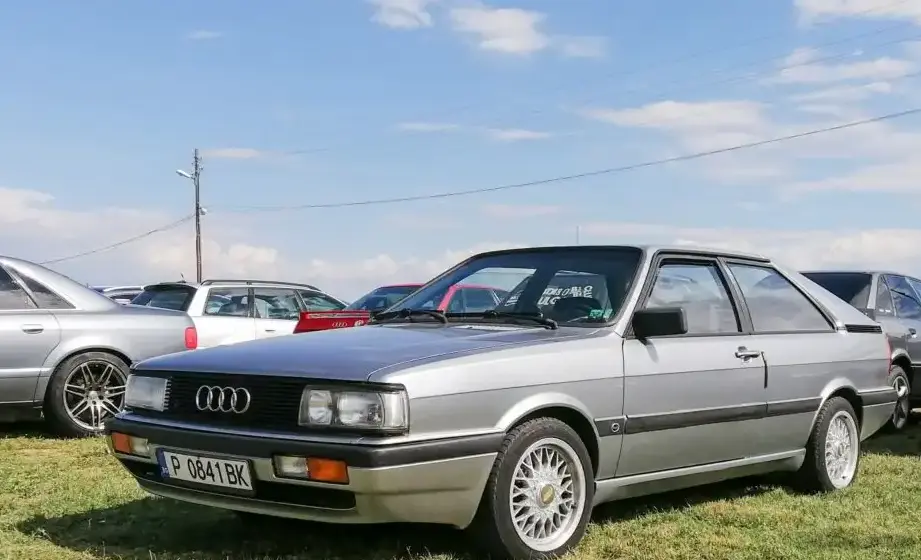
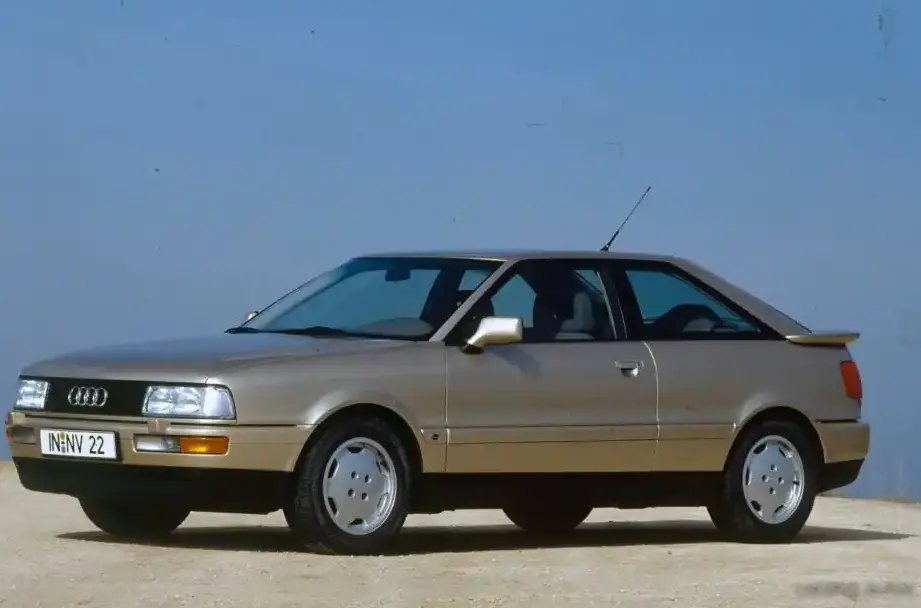
The Audi Coupe (B3), produced between 1988 and 1991, represented a significant evolution in Audi’s coupe lineage. The 2.3E 20V variant, equipped with a 2.3-liter inline-five engine and a five-speed manual transmission, was positioned as a performance-oriented model within the B3 range, sitting above the base 1.8L models and below the more exclusive quattro versions. This generation, built on the B3 platform (shared with the Audi 80/90), aimed to blend sporty handling with a degree of practicality, appealing to buyers seeking a stylish and capable grand tourer. The 2.3E 20V was a key model in establishing Audi’s reputation for sophisticated engineering and distinctive design.
Powertrain & Engine Architecture
The heart of the 2.3E 20V was the 7A engine, a 2.3-liter inline-five cylinder powerplant. This engine was notable for its smooth power delivery and distinctive sound. The “20V” designation refers to the dual overhead camshafts (DOHC) operating four valves per cylinder, enhancing volumetric efficiency and contributing to the engine’s high specific output. Fuel delivery was managed by a Bosch Motronic multi-port fuel injection system, optimizing air-fuel mixtures for both performance and emissions control. The engine’s longitudinal mounting and front-wheel-drive configuration were typical for Audi’s contemporary designs. The five-speed manual transmission provided precise gear changes and allowed drivers to fully exploit the engine’s powerband. This transmission was chosen for its sporty feel and direct connection to the engine, enhancing the driving experience.
Driving Characteristics
The 2.3E 20V offered a compelling blend of performance and refinement. With 170 horsepower and 162 lb-ft of torque, it provided brisk acceleration, reaching 60 mph in approximately 8.2 seconds and achieving a top speed of 136.7 mph. The five-speed manual transmission allowed for precise control, while the front-wheel-drive layout offered good traction in most conditions. Compared to the base 1.8L models, the 2.3E 20V delivered a significantly more engaging driving experience, with noticeably stronger acceleration and improved responsiveness. While not as overtly sporty as the quattro versions, it provided a balanced and enjoyable driving experience suitable for both daily commuting and spirited driving. The gear ratios were well-matched to the engine’s powerband, providing strong acceleration in each gear.
Equipment & Trim Levels
The 2.3E 20V typically came equipped with a relatively generous level of standard features. Interior appointments included comfortable cloth upholstery, a well-designed dashboard layout, and power windows. Optional extras included a sunroof, upgraded audio systems, and alloy wheels. The trim level generally fell into a mid-range category, offering a step up in features and performance compared to the base models but lacking some of the luxury appointments found in the higher-end quattro variants. The interior design emphasized functionality and ergonomics, providing a comfortable and driver-focused environment.
Chassis & Braking
The B3 Audi Coupe featured an independent suspension system, with McPherson struts at the front and a double-wishbone setup at the rear. This configuration provided a comfortable ride and good handling characteristics. The 2.3E 20V was equipped with ventilated disc brakes at the front and solid discs at the rear, providing adequate stopping power for its performance level. The steering was a rack-and-pinion system, offering precise and responsive control. Stabilizer bars were fitted to both the front and rear axles to reduce body roll during cornering.
Market Reception & Comparison
The 2.3E 20V was generally well-received by automotive critics, who praised its smooth engine, responsive handling, and stylish design. It was often seen as a good value for the performance it offered. Compared to the 1.8L models, the 2.3E 20V provided a significant performance upgrade, while the quattro versions offered superior all-weather traction but at a higher price point. Fuel economy was reasonable for a performance coupe of its era, averaging around 24.5 mpg. Reliability was generally good, although maintenance costs could be higher due to the complexity of the five-cylinder engine and its fuel injection system.
Legacy
The Audi Coupe B3 2.3E 20V has become a sought-after classic among Audi enthusiasts. The 7A engine is known for its durability and tunability, and well-maintained examples are still capable of providing a rewarding driving experience. While parts availability can be a challenge, a dedicated community of owners and suppliers exists to support the preservation of these vehicles. Today, the 2.3E 20V represents a significant chapter in Audi’s history, showcasing the brand’s commitment to engineering excellence and distinctive design. Its blend of performance, refinement, and style continues to appeal to collectors and enthusiasts alike.