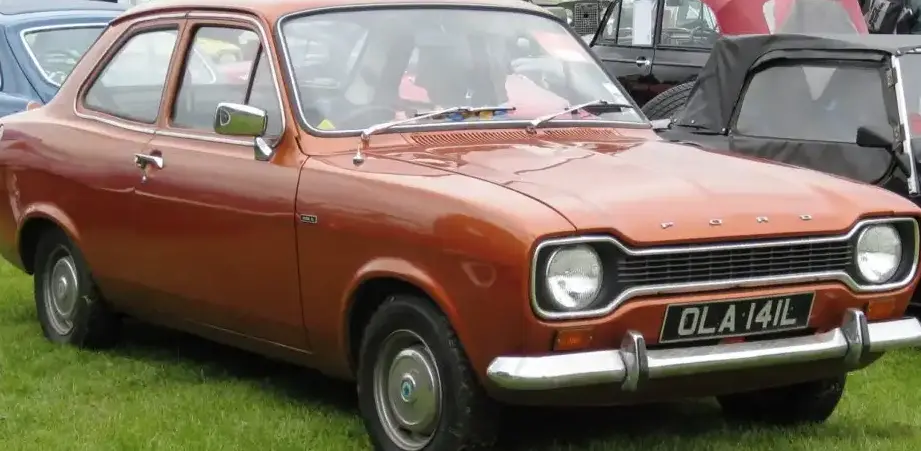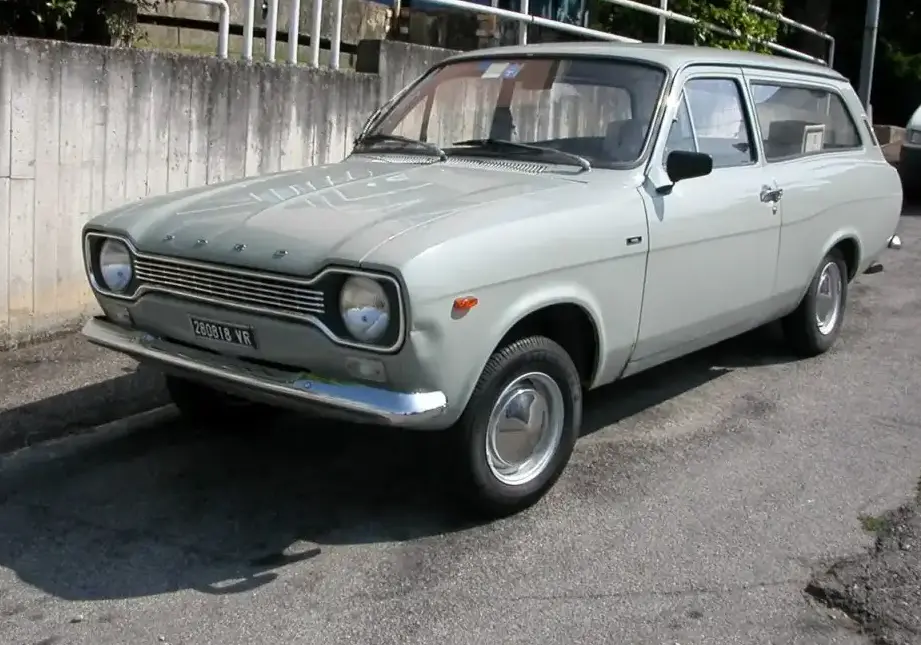
The Ford Escort Wagon II 2.0i LX Automatic, produced for the US market between 1991 and 1996, represented a practical and relatively affordable option within the compact station wagon segment. Positioned as a mid-range trim, it offered a step up in performance and features compared to the base models, while remaining more accessible than the higher-specification trims. This generation of Escort, built on the Ford BN93 platform, aimed to provide a blend of fuel efficiency, practicality, and a reasonable level of comfort for American families. The 2.0i LX Automatic was a key variant, appealing to buyers who prioritized ease of driving and space over outright performance.
Technical Specifications
| Brand | Ford |
| Model | Escort |
| Generation | Escort Wagon II (USA) |
| Type | 2.0i LX (110 Hp) Automatic |
| Start of production | 1991 |
| End of production | 1996 |
| Powertrain Architecture | Internal Combustion engine |
| Body type | Station wagon (estate) |
| Seats | 5 |
| Doors | 5 |
| Fuel Type | Petrol (Gasoline) |
| Weight-to-power ratio | 10.4 kg/Hp, 96 Hp/tonne |
| Weight-to-torque ratio | 6.7 kg/Nm, 148.3 Nm/tonne |
| Power | 110 Hp @ 5000 rpm |
| Power per litre | 55.4 Hp/l |
| Torque | 170 Nm @ 3750 rpm (125.39 lb.-ft. @ 3750 rpm) |
| Engine layout | Front, Transverse |
| Engine displacement | 1987 cm3 (121.25 cu. in.) |
| Number of cylinders | 4 |
| Engine configuration | Inline |
| Cylinder Bore | 84.8 mm (3.34 in.) |
| Piston Stroke | 87.9 mm (3.46 in.) |
| Compression ratio | 9.2:1 |
| Number of valves per cylinder | 2 |
| Fuel injection system | Multi-port manifold injection |
| Engine aspiration | Naturally aspirated engine |
| Valvetrain | OHC |
| Kerb Weight | 1146 kg (2526.5 lbs.) |
| Trunk (boot) space – minimum | 482 l (17.02 cu. ft.) |
| Trunk (boot) space – maximum | 1161 l (41 cu. ft.) |
| Fuel tank capacity | 48 l (12.68 US gal | 10.56 UK gal) |
| Length | 4387 mm (172.72 in.) |
| Width | 1702 mm (67.01 in.) |
| Height | 1369 mm (53.9 in.) |
| Wheelbase | 2500 mm (98.43 in.) |
| Front track | 1435 mm (56.5 in.) |
| Rear (Back) track | 1435 mm (56.5 in.) |
| Drivetrain Architecture | The Internal combustion engine (ICE) drives the front wheels of the vehicle. |
| Drive wheel | Front wheel drive |
| Number of gears and type of gearbox | 4 gears, automatic transmission |
| Front suspension | Spring Strut |
| Rear suspension | Spring Strut |
| Front brakes | Ventilated discs |
| Rear brakes | Drum |
| Steering type | Steering rack and pinion |
| Power steering | Hydraulic Steering |
| Tires size | 185/65 R14 S |
| Wheel rims size | 14 |
Powertrain & Engine Architecture
The heart of the Escort Wagon II 2.0i LX Automatic was the Ford Zetec 2.0-liter inline-four cylinder engine. This engine, internally designated as the SET, was a significant upgrade over the earlier 1.9-liter units. It featured a cast iron block with an aluminum cylinder head, incorporating a single overhead camshaft (OHC) design operating two valves per cylinder. The multi-port fuel injection system, controlled by a Ford EEC-IV engine control unit, delivered fuel directly to each intake port, optimizing combustion efficiency and power output. The 9.2:1 compression ratio was a compromise between performance and the fuel quality typically available in the US market. The engine produced 110 horsepower at 5000 rpm and 170 Nm (125 lb-ft) of torque at 3750 rpm. This power was then channeled through a four-speed automatic transmission, a popular choice for American buyers seeking convenience. The transmission itself was a Ford-sourced unit, designed for smooth shifting and reasonable durability.
Driving Characteristics
The 2.0i LX Automatic offered a comfortable and predictable driving experience. While not a performance-oriented vehicle, the 110 horsepower engine provided adequate acceleration for everyday driving situations. The automatic transmission, while smooth, did contribute to a slight reduction in responsiveness compared to the available five-speed manual transmission. Gear ratios were tuned for fuel economy and ease of use, rather than outright speed. The automatic transmission’s shift points were generally well-placed, but could sometimes feel hesitant during quick overtaking maneuvers. The front-wheel-drive configuration provided predictable handling, although it lacked the dynamic finesse of more sophisticated all-wheel-drive systems. Compared to the base model Escort with the 1.9-liter engine, the 2.0i LX Automatic offered a noticeable improvement in both acceleration and cruising ability.
Equipment & Trim Levels
The LX trim level placed the 2.0i Automatic in a comfortable middle ground within the Escort Wagon II lineup. Standard features typically included air conditioning, power steering, a basic AM/FM radio, and cloth upholstery. The interior was functional and reasonably well-appointed for its price point, with a focus on durability rather than luxury. Optional extras included a cassette player, upgraded sound systems, power windows and locks, and a sunroof. The LX trim also featured slightly upgraded interior trim compared to the base models, with more comfortable seats and improved door panel materials. Exterior features included body-colored bumpers and side moldings, adding a touch of visual appeal.
Chassis & Braking
The Escort Wagon II utilized a relatively simple but effective chassis design. Front suspension consisted of MacPherson strut coil springs, while the rear employed a twist-beam axle with coil springs. This setup provided a comfortable ride quality, although it wasn’t particularly sporty. The braking system featured ventilated discs on the front wheels and drum brakes on the rear. Power-assisted steering was standard, making maneuvering in tight spaces relatively easy. The 185/65 R14 tires provided adequate grip in most driving conditions, but were not designed for high-performance driving. The suspension was tuned for a balance between ride comfort and handling, prioritizing stability over agility.
Market Reception & Comparison
The Ford Escort Wagon II 2.0i LX Automatic was generally well-received by automotive critics as a practical and affordable family vehicle. It was praised for its spacious interior, comfortable ride, and reasonable fuel economy. However, some critics noted that the automatic transmission detracted from the engine’s performance, and that the interior materials were somewhat basic. Compared to other station wagons in its class, such as the Dodge Caravan or Chevrolet Cavalier Wagon, the Escort offered a more European-inspired driving experience and a slightly more refined interior. Fuel economy was competitive, averaging around 22-26 mpg in combined driving. Reliability was generally good, although some owners reported issues with the automatic transmission over the long term.
Legacy
Today, the Ford Escort Wagon II 2.0i LX Automatic is a relatively uncommon sight on the roads. While not a highly sought-after collector’s item, well-maintained examples are gaining appreciation among enthusiasts who value their practicality and affordability. The Zetec 2.0-liter engine is generally considered to be a durable and reliable unit, although regular maintenance is essential. The automatic transmission, however, can be a potential weak point, and should be carefully inspected before purchasing a used vehicle. The Escort Wagon II represents a significant chapter in Ford’s history, offering a glimpse into the company’s efforts to provide practical and fuel-efficient transportation to American families during the 1990s.