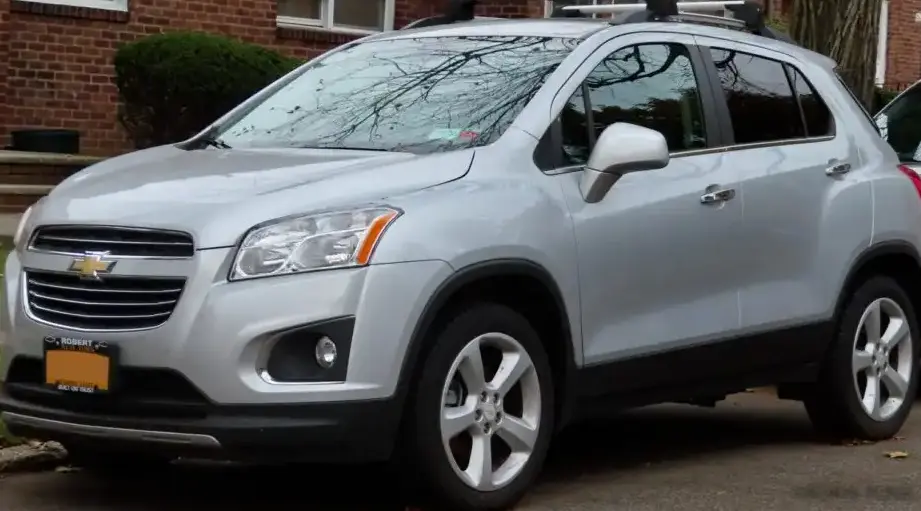
The Chevrolet Trax, known as the Holden Trax in some markets like Australia and New Zealand, is a subcompact SUV introduced by Chevrolet in 2013. The first generation, designated the Trax I, was produced from 2013 to 2017 and represented Chevrolet’s entry into the rapidly growing subcompact SUV segment. This variant, the 1.7D (130 hp) with All-Wheel Drive (AWD), was a significant offering, particularly in European and Asian markets, where diesel engines and AWD systems were highly valued. In the US market, the Trax was positioned as an affordable and practical crossover, though the diesel variant was not offered domestically.
Technical Specifications
| Brand | Chevrolet |
| Model | Trax |
| Generation | Trax I |
| Type (Engine) | 1.7D (130 Hp) AWD |
| Start of production | 2013 |
| End of production | 2017 |
| Powertrain Architecture | Internal Combustion engine |
| Body type | SUV |
| Seats | 5 |
| Doors | 5 |
| Fuel consumption (urban) | 5.6 l/100 km (42 US mpg, 50.4 UK mpg, 17.9 km/l) |
| Fuel consumption (extra urban) | 4.5 l/100 km (52.3 US mpg, 62.8 UK mpg, 22.2 km/l) |
| Fuel consumption (combined) | 4.9 l/100 km (48 US mpg, 57.6 UK mpg, 20.4 km/l) |
| Fuel Type | Diesel |
| Acceleration 0 – 100 km/h | 9.4 sec |
| Acceleration 0 – 62 mph | 9.4 sec |
| Acceleration 0 – 60 mph | 8.9 sec |
| Maximum speed | 188 km/h (116.82 mph) |
| Emission standard | Euro 5 |
| Weight-to-power ratio | 11 kg/Hp, 91 Hp/tonne |
| Weight-to-torque ratio | 4.8 kg/Nm, 209.9 Nm/tonne |
| Power | 130 Hp @ 4000 rpm |
| Power per litre | 77.1 Hp/l |
| Torque | 300 Nm @ 2000 rpm (221.27 lb.-ft. @ 2000 rpm) |
| Engine layout | Front, Transverse |
| Engine Model/Code | LUD |
| Engine displacement | 1686 cm3 (102.89 cu. in.) |
| Number of cylinders | 4 |
| Engine configuration | Inline |
| Cylinder Bore | 79 mm (3.11 in.) |
| Piston Stroke | 86 mm (3.39 in.) |
| Compression ratio | 16.5:1 |
| Number of valves per cylinder | 4 |
| Fuel injection system | Diesel Commonrail |
| Engine aspiration | Turbocharger, Intercooler |
| Engine oil capacity | 5.4 l (5.71 US qt | 4.75 UK qt) |
| Coolant | 7.1 l (7.5 US qt | 6.25 UK qt) |
| Kerb Weight | 1429 kg (3150.41 lbs.) |
| Max. weight | 1933 kg (4261.54 lbs.) |
| Max load | 504 kg (1111.13 lbs.) |
| Trunk (boot) space – minimum | 356 l (12.57 cu. ft.) |
| Fuel tank capacity | 52 l (13.74 US gal | 11.44 UK gal) |
| Length | 4248 mm (167.24 in.) |
| Width | 1776 mm (69.92 in.) |
| Height | 1674 mm (65.91 in.) |
| Wheelbase | 2555 mm (100.59 in.) |
| Front track | 1540 mm (60.63 in.) |
| Rear (Back) track | 1540 mm (60.63 in.) |
| Minimum turning circle | 10.9 m (35.76 ft.) |
| Drive wheel | All wheel drive (4×4) |
| Number of gears | 6 |
| Gearbox type | Manual transmission |
| Front suspension | Independent type McPherson |
| Rear suspension | Torsion |
| Front brakes | Disc |
| Assisting systems | ABS (Anti-lock braking system) |
| Steering type | Steering rack and pinion |
| Power steering | Electric Steering |
Powertrain & Engine Architecture
The Chevrolet Trax 1.7D AWD utilized the LUD engine code, a 1.7-liter inline-four cylinder diesel engine. This engine was part of a family of small displacement diesel engines developed by General Motors, and was known for its relatively efficient operation. The engine featured a turbocharger with an intercooler to boost power output and improve combustion efficiency. Fuel was delivered via a common rail direct injection system, allowing for precise fuel metering and optimized combustion. The engine produced 130 horsepower at 4000 rpm and 300 Nm (221 lb-ft) of torque at 2000 rpm. The engine’s high compression ratio of 16.5:1 was typical for diesel engines, contributing to its thermal efficiency. The engine was paired with a six-speed manual transmission, directing power to all four wheels via an all-wheel-drive system. This AWD system was generally an on-demand system, engaging the rear wheels when traction was lost at the front.
Driving Characteristics
The 1.7D AWD Trax offered a balance between fuel economy and reasonable performance. While not a particularly fast vehicle, the 300 Nm of torque provided adequate pulling power for everyday driving and highway cruising. Acceleration from 0-100 km/h (0-62 mph) took approximately 9.4 seconds. The six-speed manual transmission allowed drivers to maintain optimal engine speed for efficiency or power. Compared to higher-output gasoline versions of the Trax, the diesel offered significantly better fuel economy, but with a noticeable difference in outright acceleration. The AWD system provided enhanced traction in slippery conditions, making it a suitable choice for regions with inclement weather. The gear ratios were tuned for fuel efficiency, meaning the engine could feel somewhat strained when accelerating quickly or climbing steep hills.
Equipment & Trim Levels
The 1.7D AWD trim level of the Trax I typically represented a mid-range offering. Standard equipment generally included air conditioning, power windows and locks, a basic audio system with USB connectivity, and steel wheels with wheel covers. Safety features such as ABS, electronic stability control, and multiple airbags were also standard. Optional extras included alloy wheels, a more advanced infotainment system with a touchscreen display, rear parking sensors, and a panoramic sunroof. Interior upholstery was typically cloth, with a functional and durable design. The dashboard layout was straightforward and user-friendly, prioritizing practicality over luxury.
Chassis & Braking
The Trax I utilized a McPherson strut front suspension and a torsion beam rear suspension. This setup provided a comfortable ride quality, although it wasn’t particularly sporty. The torsion beam rear suspension was a cost-effective solution, but it limited the vehicle’s handling capabilities compared to more sophisticated independent rear suspension systems. Braking duties were handled by disc brakes at the front and drum brakes at the rear. ABS (Anti-lock Braking System) was standard, enhancing braking performance and stability. The steering system was an electric power steering setup, providing light and easy steering feel.
Market Reception & Comparison
The Chevrolet Trax 1.7D AWD was generally well-received in markets where diesel engines and AWD were popular. Critics praised its fuel efficiency, practicality, and affordable price point. However, some reviewers noted that the engine could be somewhat noisy and that the interior materials were not particularly high-quality. Compared to other subcompact SUVs with gasoline engines, the Trax 1.7D offered superior fuel economy, but with a trade-off in terms of performance. Compared to other diesel-powered competitors, the Trax offered a competitive price and a decent level of equipment. The manual transmission was seen as a positive by some drivers, but others preferred the convenience of an automatic transmission.
Legacy
The Chevrolet Trax I 1.7D AWD has proven to be a relatively reliable vehicle, with the 1.7-liter diesel engine generally exhibiting good durability. However, like all diesel engines, it’s important to maintain the fuel system and ensure proper servicing to prevent issues with the fuel injectors and diesel particulate filter (DPF). On the used car market, these models are often sought after for their fuel efficiency and practicality. The availability of AWD makes them a desirable option in regions with harsh winters. While not a particularly collectible vehicle, the Trax I 1.7D AWD represents a significant entry for Chevrolet into the competitive subcompact SUV segment, and its blend of affordability, fuel economy, and practicality has ensured its continued presence on roads today.