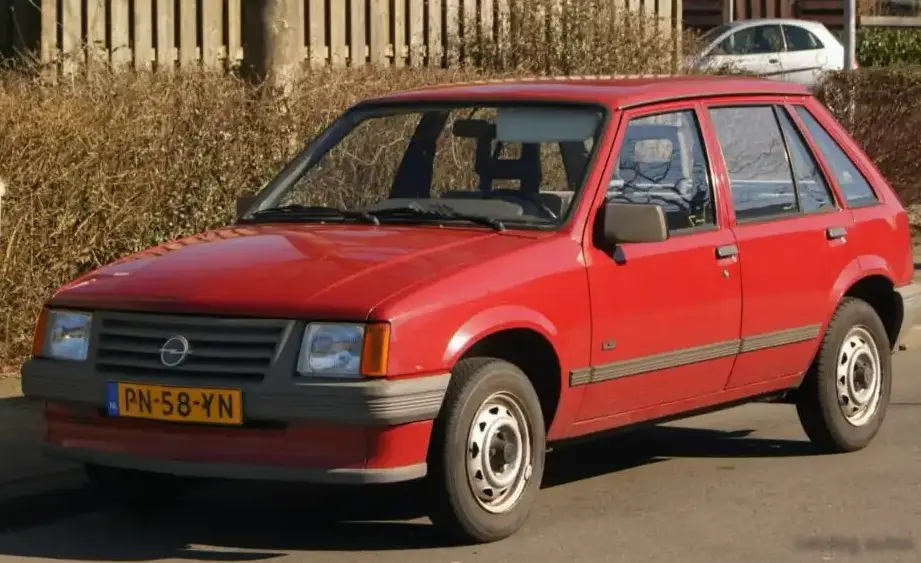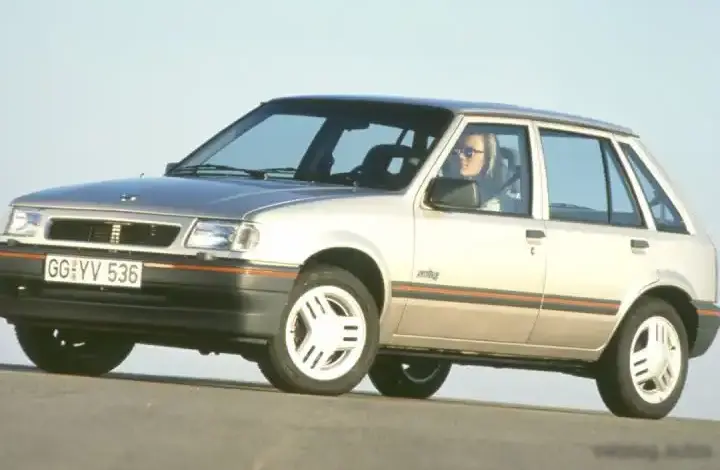
The Opel Corsa A (facelift, produced from 1987 to 1989) 1.3i, generating 60 horsepower, represented an entry-level offering within the first generation Corsa lineup. Introduced as a replacement for the aging Opel Kadett, the Corsa A aimed to provide a modern, economical, and compact hatchback for European buyers. The 1.3i variant, with its modest power output and focus on fuel efficiency, was positioned as the most accessible model, appealing to first-time car buyers and those prioritizing affordability. It was a key component of Opel’s strategy to compete in the burgeoning small car segment, facing rivals like the Ford Fiesta, Peugeot 205, and Volkswagen Polo.
Technical Specifications
| Brand | Opel |
| Model | Corsa |
| Generation | Corsa A (facelift 1987) |
| Type (Engine) | 1.3i (60 Hp) |
| Start of production | 1987 |
| End of production | 1989 |
| Powertrain Architecture | Internal Combustion engine |
| Body type | Hatchback |
| Seats | 5 |
| Doors | 3-5 |
| Fuel consumption (combined) | 6 l/100 km (39.2 US mpg, 47.1 UK mpg, 16.7 km/l) |
| Fuel Type | Petrol (Gasoline) |
| Acceleration 0 – 100 km/h | 15 sec |
| Acceleration 0 – 62 mph | 15 sec |
| Acceleration 0 – 60 mph | 14.3 sec |
| Maximum speed | 155 km/h (96.31 mph) |
| Weight-to-power ratio | 12.6 kg/Hp, 79.3 Hp/tonne |
| Weight-to-torque ratio | 7.9 kg/Nm, 126.8 Nm/tonne |
| Power | 60 Hp @ 5600 rpm |
| Power per litre | 46.3 Hp/l |
| Torque | 96 Nm @ 3400 rpm (70.81 lb.-ft. @ 3400 rpm) |
| Engine layout | Front, Transverse |
| Engine Model/Code | C13N |
| Engine displacement | 1297 cm3 (79.15 cu. in.) |
| Number of cylinders | 4 |
| Engine configuration | Inline |
| Cylinder Bore | 75 mm (2.95 in.) |
| Piston Stroke | 73.4 mm (2.89 in.) |
| Compression ratio | 9:1 |
| Number of valves per cylinder | 2 |
| Fuel injection system | Multi-port manifold injection |
| Engine aspiration | Naturally aspirated engine |
| Valvetrain | SOHC |
| Engine oil capacity | 3 l (3.17 US qt | 2.64 UK qt) |
| Coolant | 6.1 l (6.45 US qt | 5.37 UK qt) |
| Kerb Weight | 757 kg (1668.9 lbs.) |
| Max. weight | 1245 kg (2744.76 lbs.) |
| Max load | 488 kg (1075.86 lbs.) |
| Trunk (boot) space – minimum | 270 l (9.53 cu. ft.) |
| Trunk (boot) space – maximum | 1060 l (37.43 cu. ft.) |
| Fuel tank capacity | 42 l (11.1 US gal | 9.24 UK gal) |
| Length | 3622 mm (142.6 in.) |
| Width | 1532 mm (60.31 in.) |
| Height | 1365 mm (53.74 in.) |
| Wheelbase | 2343 mm (92.24 in.) |
| Front track | 1320 mm (51.97 in.) |
| Rear (Back) track | 1307 mm (51.46 in.) |
| Ride height (ground clearance) | 140 mm (5.51 in.) |
| Drag coefficient (Cd) | 0.36 |
| Minimum turning circle | 10 m (32.81 ft.) |
| Drivetrain Architecture | The Internal combustion engine (ICE) drives the front wheels of the vehicle. |
| Drive wheel | Front wheel drive |
| Number of gears and type of gearbox | 5 gears, manual transmission |
| Front brakes | Disc |
| Rear brakes | Drum |
| Tires size | 145/70 R13 |
| Wheel rims size | 13 |
Powertrain & Engine Architecture
The Corsa A 1.3i was powered by the Opel C13N engine, a 1.3-liter inline-four cylinder gasoline engine. This engine featured a single overhead camshaft (SOHC) valvetrain with two valves per cylinder. The C13N utilized multi-port fuel injection, a relatively modern feature for its time, contributing to improved fuel efficiency and smoother operation compared to carbureted engines. The engine’s 9:1 compression ratio was a compromise between performance and the ability to run on the available fuel grades in European markets. The engine was transversely mounted, driving the front wheels. The standard transmission was a five-speed manual gearbox, although a three-speed automatic transmission was also offered as an option, albeit less common. The automatic transmission was a traditional hydraulic unit, prioritizing simplicity and cost-effectiveness over advanced electronic control.
Driving Characteristics
The 1.3i Corsa A, particularly in manual form, offered adequate, if not exhilarating, performance. With 60 horsepower, acceleration from 0 to 60 mph took around 14.3 seconds, and top speed was approximately 96 mph. The automatic transmission version noticeably dulled performance, with slightly slower acceleration due to the transmission’s inherent efficiency losses. Gear ratios were geared towards economy, with taller gearing in higher gears to maximize fuel efficiency on the highway. The engine felt relatively responsive at lower RPMs, making it suitable for city driving, but lacked significant power for overtaking maneuvers or climbing steep hills. The steering was light and precise, contributing to a nimble feel, while the suspension provided a comfortable, if somewhat soft, ride.
Equipment & Trim Levels
The 1.3i Corsa A typically came with a basic level of equipment. Standard features included cloth upholstery, a basic instrument cluster, and manual windows and door locks. Optional extras included a sunroof, upgraded stereo system, and central locking. The interior was functional and durable, prioritizing practicality over luxury. Trim levels were relatively simple, with the 1.3i representing the base model. Higher trim levels, such as the 1.4 and 1.6 variants, offered more luxurious features like power steering, electric windows, and upgraded interior trim.
Chassis & Braking
The Corsa A featured a MacPherson strut front suspension and a twist-beam rear suspension. The front brakes were disc brakes, providing adequate stopping power, while the rear brakes were drum brakes, a cost-saving measure common in this class of vehicle. The suspension was tuned for comfort, providing a relatively smooth ride over uneven surfaces. Stabilizer bars were typically absent on the base 1.3i model, further contributing to the softer ride quality. The relatively light weight of the vehicle (around 1669 lbs) helped to offset the modest power output and provided a reasonably agile handling experience.
Market Reception & Comparison
The Corsa A 1.3i was generally well-received as an affordable and economical small car. Critics praised its fuel efficiency and nimble handling, but noted its lack of outright performance. Compared to the higher-output 1.4 and 1.6-liter versions, the 1.3i offered significantly less power, making it less appealing to drivers seeking a more engaging driving experience. However, its lower price and improved fuel economy made it a popular choice for budget-conscious buyers. The 1.9-liter diesel variant offered even better fuel economy but sacrificed performance further. The 1.3i’s reliability was generally good, although the automatic transmission was sometimes criticized for its sluggishness and potential for long-term issues.
Legacy
The Opel Corsa A 1.3i, while not the most powerful or technologically advanced version of the Corsa A, remains a popular choice among classic car enthusiasts and those seeking an affordable and reliable vintage hatchback. The C13N engine is known for its durability and relative simplicity, making it relatively easy to maintain. Parts availability is generally good, although some components may be becoming increasingly scarce. Today, well-maintained examples of the Corsa A 1.3i are sought after by collectors and those looking for a nostalgic reminder of the 1980s automotive landscape. The Corsa A laid the foundation for the successful Corsa lineage, establishing Opel as a major player in the European small car market.