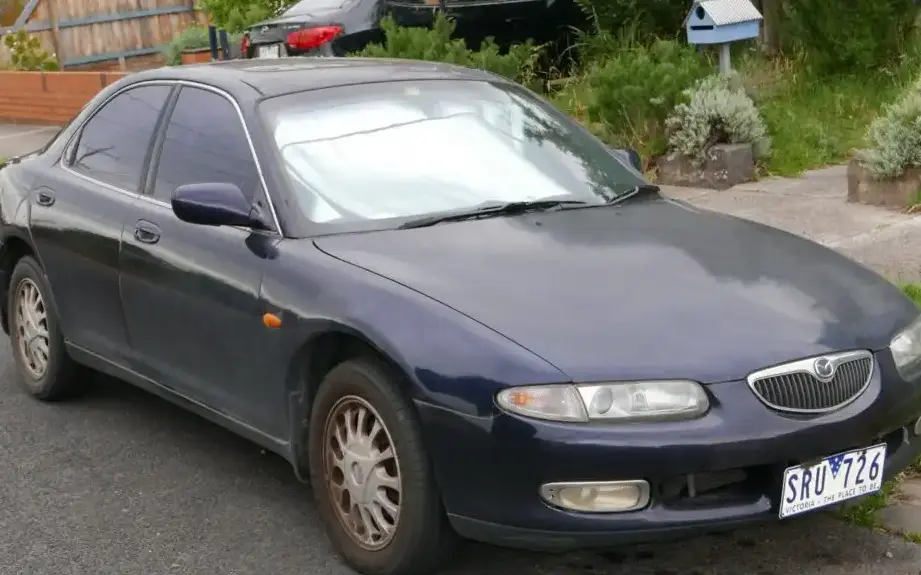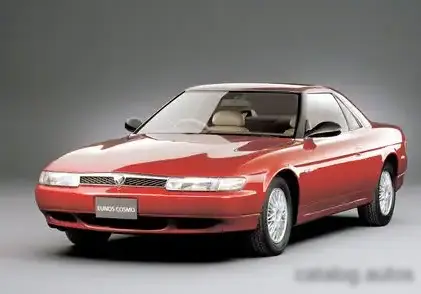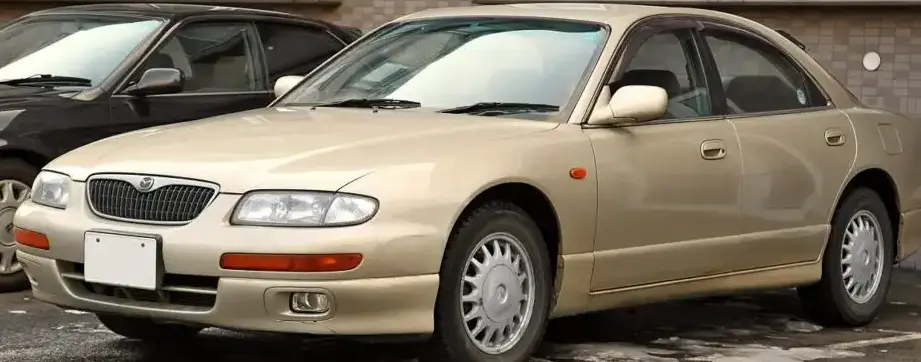
The Mazda Eunos 800 2.3 i V6 24V, produced between 1993 and 1996, represented a significant step upmarket for Mazda, and for the Eunos brand specifically. Positioned as a luxury sedan, it was primarily aimed at the Japanese domestic market (JDM) and European buyers seeking a comfortable, well-equipped, and relatively sporty alternative to established German and British competitors. The Eunos 800 was essentially a rebadged and significantly refined version of the Mazda Sentia, offering a more premium experience. This particular 2.3-liter V6 variant, producing 220 horsepower, sat at the top of the Eunos 800 range, offering the highest performance and most luxurious appointments.
Technical Specifications
| Brand | Mazda |
| Model | Eunos 800 |
| Generation | Eunos 800 |
| Type (Engine) | 2.3 i V6 24V (220 Hp) |
| Start of production | 1993 |
| End of production | 1996 |
| Powertrain Architecture | Internal Combustion engine |
| Body type | Sedan |
| Seats | 5 |
| Doors | 4 |
| Fuel consumption (combined) | 11.4 l/100 km (20.6 US mpg, 24.8 UK mpg, 8.8 km/l) |
| Fuel Type | Petrol (Gasoline) |
| Weight-to-power ratio | 6.8 kg/Hp, 147.7 Hp/tonne |
| Weight-to-torque ratio | 5.1 kg/Nm, 197.3 Nm/tonne |
| Power | 220 Hp @ 5500 rpm |
| Power per litre | 97.6 Hp/l |
| Torque | 294 Nm @ 3500 rpm (216.84 lb.-ft. @ 3500 rpm) |
| Engine layout | Front, Longitudinal |
| Engine displacement | 2254 cm3 (137.55 cu. in.) |
| Number of cylinders | 6 |
| Engine configuration | V-engine |
| Cylinder Bore | 80.3 mm (3.16 in.) |
| Piston Stroke | 74.2 mm (2.92 in.) |
| Compression ratio | 8:1 |
| Number of valves per cylinder | 4 |
| Fuel injection system | Multi-port manifold injection |
| Engine aspiration | Naturally Aspirated |
| Valvetrain | DOHC |
| Kerb Weight | 1490 kg (3284.89 lbs.) |
| Fuel tank capacity | 70 l (18.49 US gal | 15.4 UK gal) |
| Length | 4825 mm (189.96 in.) |
| Width | 1770 mm (69.69 in.) |
| Height | 1395 mm (54.92 in.) |
| Wheelbase | 2750 mm (108.27 in.) |
| Front track | 1520 mm (59.84 in.) |
| Rear track | 1520 mm (59.84 in.) |
| Drivetrain Architecture | Front wheel drive, Internal Combustion engine |
| Drive wheel | Front wheel drive |
| Number of gears and type of gearbox | 4 gears, automatic transmission |
| Front suspension | Double wishbone |
| Rear suspension | Double wishbone |
| Front brakes | Ventilated discs |
| Rear brakes | Disc |
| Assisting systems | ABS (Anti-lock braking system) |
| Steering type | Steering rack and pinion |
| Power steering | Hydraulic Steering |
| Tires size | 205/65 R15 H |
| Wheel rims size | 15 |
Powertrain & Engine Architecture
The heart of the Eunos 800 2.3 i V6 was the J-series V6 engine, specifically the JE-ZE variant. This 2.3-liter (2254 cc) engine featured a 60-degree V-angle, contributing to a smoother power delivery. It utilized a cast iron block with an aluminum cylinder head, a common configuration for durability and weight reduction. The engine employed multi-port fuel injection, managed by a sophisticated electronic control unit (ECU), and a double overhead camshaft (DOHC) valvetrain with four valves per cylinder. This configuration allowed for excellent breathing and contributed to the engine’s 220 horsepower output at 5500 rpm and 294 Nm (216.84 lb-ft) of torque at 3500 rpm. The engine’s 8:1 compression ratio was a compromise between performance and the quality of fuel available in its target markets. The four-speed automatic transmission was a conventional torque converter type, prioritizing smooth shifts and comfort over outright performance. While not a particularly advanced transmission by modern standards, it was well-suited to the car’s intended role as a luxury cruiser.
Driving Characteristics
The Eunos 800 2.3 i V6 offered a refined and comfortable driving experience. The automatic transmission, while not offering manual control, provided smooth and predictable gear changes. Acceleration was brisk, though not overtly sporty, with the V6 providing ample power for highway cruising and overtaking. The front-wheel-drive layout, combined with the relatively heavy curb weight of 1490 kg (3284.89 lbs), meant that it wasn’t a corner carver. Compared to the lower-powered 1.8-liter four-cylinder versions, the V6 offered a significant performance boost, reducing 0-60 mph times by several seconds. However, it lacked the responsiveness of a manual transmission. The suspension, tuned for comfort, absorbed bumps and imperfections in the road well, contributing to a relaxed ride. The steering, while hydraulically assisted, lacked the feel and precision of some European competitors.
Equipment & Trim Levels
The 2.3 i V6 variant of the Eunos 800 was typically equipped with a high level of standard features. These included power windows, power locks, power mirrors, air conditioning, a high-quality audio system, and leather upholstery. Many examples also featured wood trim on the dashboard and door panels, further enhancing the luxurious feel. Optional extras included a sunroof, upgraded audio systems, and more advanced climate control systems. The interior design was focused on comfort and elegance, with a spacious cabin and well-placed controls. The dashboard layout was relatively conventional for the early 1990s, but the materials used were of a high quality.
Chassis & Braking
The Eunos 800 utilized a front-engine, front-wheel-drive layout. The suspension consisted of a double wishbone setup at both the front and rear, providing a good balance between ride comfort and handling. The braking system featured ventilated discs at the front and solid discs at the rear, providing adequate stopping power for the car’s weight and performance. Anti-lock braking system (ABS) was standard, enhancing safety. The steering system employed a rack and pinion setup with hydraulic power assistance, offering relatively light and easy steering.
Market Reception & Comparison
The Eunos 800 2.3 i V6 was generally well-received by critics, who praised its comfortable ride, spacious interior, and refined engine. However, some criticized its lack of sporting pretensions and its relatively high price compared to some competitors. Compared to the lower-spec Eunos 800 models, the V6 offered a significant performance upgrade, but at the cost of increased fuel consumption. The 1.8-liter models were more economical and affordable, appealing to a different segment of the market. The V6 variant competed with established luxury sedans from brands like BMW, Mercedes-Benz, and Audi, but often offered a better value proposition.
Legacy
The Eunos 800, while not a massive sales success, remains a fondly remembered car among enthusiasts. The 2.3-liter V6 engine is generally considered to be a reliable unit, although regular maintenance is essential. Parts availability can be a challenge, particularly for specific trim pieces and interior components. Today, well-maintained examples of the Eunos 800 2.3 i V6 are becoming increasingly collectible, appealing to those seeking a unique and stylish classic Japanese sedan. The car represents a high point in Mazda’s efforts to create a truly luxurious and refined vehicle, and its legacy continues to endure.