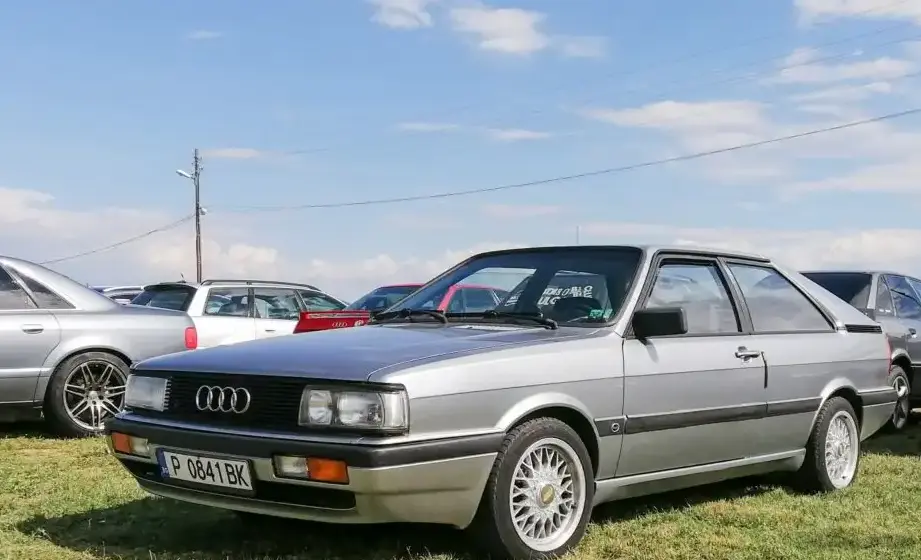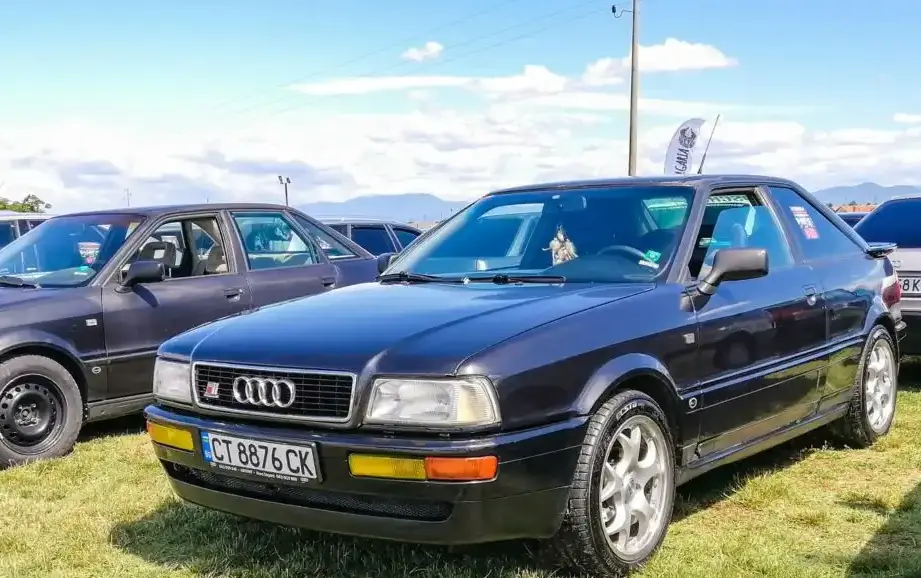
The Audi Coupe (B4), produced between 1988 and 1996, represented a significant evolution in Audi’s coupe design. The 2.0 E variant, specifically those manufactured between 1991 and 1993, occupied a middle ground within the B4 Coupe lineup. Powered by a 2.0-liter inline-four engine producing 115 horsepower, it aimed to provide a balance of performance and affordability, appealing to buyers seeking a stylish and capable coupe without the expense of the more potent 2.3-liter or S2 models. This generation, designated the 8C chassis code, was a key part of Audi’s transition towards more modern design and engineering principles.
Technical Specifications
| Brand | Audi |
| Model | Coupe |
| Generation | Coupe (B4 8C) |
| Type (Engine) | 2.0 E (115 Hp) |
| Start of production | 1991 |
| End of production | 1993 |
| Powertrain Architecture | Internal Combustion engine |
| Body type | Coupe |
| Seats | 5 |
| Doors | 3 |
| Fuel consumption (urban) | 11.3 l/100 km (20.8 US mpg, 25 UK mpg, 8.8 km/l) |
| Fuel consumption (extra urban) | 6 l/100 km (39.2 US mpg, 47.1 UK mpg, 16.7 km/l) |
| Fuel consumption (combined) | 7.8 l/100 km (30.2 US mpg, 36.2 UK mpg, 12.8 km/l) |
| Fuel Type | Petrol (Gasoline) |
| Acceleration 0 – 100 km/h | 10.9 sec |
| Acceleration 0 – 62 mph | 10.9 sec |
| Acceleration 0 – 60 mph | 10.4 sec |
| Maximum speed | 196 km/h (121.79 mph) |
| Weight-to-power ratio | 10.3 kg/Hp, 96.6 Hp/tonne |
| Weight-to-torque ratio | 7.2 kg/Nm, 138.7 Nm/tonne |
| Power | 115 Hp @ 5400 rpm |
| Power per litre | 58 Hp/l |
| Torque | 165 Nm @ 3200 rpm (121.7 lb.-ft. @ 3200 rpm) |
| Engine layout | Front, Longitudinal |
| Engine Model/Code | ABK |
| Engine displacement | 1984 cm3 (121.07 cu. in.) |
| Number of cylinders | 4 |
| Engine configuration | Inline |
| Cylinder Bore | 82.5 mm (3.25 in.) |
| Piston Stroke | 92.8 mm (3.65 in.) |
| Compression ratio | 10.4:1 |
| Number of valves per cylinder | 2 |
| Fuel injection system | Multi-port manifold injection |
| Engine aspiration | Naturally aspirated engine |
| Valvetrain | SOHC |
| Engine oil capacity | 3.5 l (3.7 US qt | 3.08 UK qt) |
| Coolant | 7 l (7.4 US qt | 6.16 UK qt) |
| Kerb Weight | 1190 kg (2623.5 lbs.) |
| Max. weight | 1650 kg (3637.63 lbs.) |
| Max load | 460 kg (1014.13 lbs.) |
| Trunk (boot) space – minimum | 296 l (10.45 cu. ft.) |
| Trunk (boot) space – maximum | 977 l (34.5 cu. ft.) |
| Fuel tank capacity | 70 l (18.49 US gal | 15.4 UK gal) |
| Max. roof load | 75 kg (165.35 lbs.) |
| Permitted trailer load with brakes (8%) | 1500 kg (3306.93 lbs.) |
| Permitted trailer load with brakes (12%) | 1200 kg (2645.55 lbs.) |
| Permitted trailer load without brakes | 630 kg (1388.91 lbs.) |
| Length | 4366 mm (171.89 in.) |
| Width | 1716 mm (67.56 in.) |
| Width including mirrors | 1930 mm (75.98 in.) |
| Height | 1375 mm (54.13 in.) |
| Wheelbase | 2556 mm (100.63 in.) |
| Front track | 1446 mm (56.93 in.) |
| Rear (Back) track | 1447 mm (56.97 in.) |
| Front overhang | 911 mm (35.87 in.) |
| Rear overhang | 899 mm (35.39 in.) |
| Ride height (ground clearance) | 131 mm (5.16 in.) |
| Drag coefficient (Cd) | 0.32 |
| Minimum turning circle (turning diameter) | 11.3 m (37.07 ft.) |
| Drivetrain Architecture | The Internal combustion engine (ICE) drives the front wheels of the vehicle. |
| Drive wheel | Front wheel drive |
| Number of gears and type of gearbox | 5 gears, manual transmission |
| Front suspension | Independent, type McPherson with coil spring and anti-roll bar, Wishbone |
| Rear suspension | Transverse stabilizer, Coil spring, Torsion |
| Front brakes | Ventilated discs |
| Rear brakes | Disc |
| Assisting systems | ABS (Anti-lock braking system) |
| Steering type | Steering rack and pinion |
| Power steering | Hydraulic Steering |
| Tires size | 205/65 R15 |
| Wheel rims size | 7J x 15 |
Powertrain & Engine Architecture
The heart of the 2.0 E Coupe was the Audi ABK engine, a 1984cc inline-four cylinder powerplant. This engine featured a single overhead camshaft (SOHC) valvetrain operating two valves per cylinder. Fuel delivery was managed by a Bosch Motronic multi-port fuel injection system, providing precise control over the air-fuel mixture. The ABK engine was known for its relative simplicity and durability. The engine’s longitudinal mounting within the front-wheel-drive chassis contributed to a balanced weight distribution. The 2.0 E was typically paired with a 5-speed manual transmission, although a 4-speed automatic transmission was also available. The automatic, while offering convenience, did impact acceleration and fuel economy compared to the manual version.
Driving Characteristics
The 2.0 E Coupe offered a comfortable and refined driving experience. With 115 horsepower and 122 lb-ft of torque, acceleration was adequate but not particularly brisk. The 0-60 mph sprint took around 10.4 seconds, and top speed was approximately 122 mph. The automatic transmission, while smooth, resulted in noticeable power loss and slower gear changes. The suspension, featuring McPherson struts at the front and a torsion beam rear axle, provided a good balance between ride comfort and handling. Steering was precise, typical of Audi’s engineering standards. Compared to the more powerful 2.3-liter models, the 2.0 E felt less urgent, but it offered a more economical and accessible entry point into the Audi Coupe range.
Equipment & Trim Levels
The 2.0 E Coupe typically came equipped with a reasonable level of standard features. These included power windows, central locking, and a basic stereo system. Interior upholstery was usually cloth, with options for upgraded materials. The dashboard layout was functional and driver-focused, with clear instrumentation. Optional extras included a sunroof, alloy wheels, and upgraded audio systems. The trim level was generally considered entry-level within the B4 Coupe range, making it an attractive option for buyers prioritizing value and practicality.
Chassis & Braking
The B4 Coupe chassis was a monocoque construction, providing a rigid and safe platform. The front suspension utilized independent McPherson struts with coil springs and an anti-roll bar, while the rear suspension employed a torsion beam axle. This setup offered a good compromise between ride comfort and handling. Braking duties were handled by ventilated discs at the front and solid discs at the rear. Anti-lock braking system (ABS) was standard, enhancing safety and control during emergency braking situations. The 2.0 E’s relatively lower weight compared to the higher-spec models contributed to its balanced handling characteristics.
Market Reception & Comparison
The 2.0 E Coupe was generally well-received by automotive critics as a practical and stylish coupe. It was praised for its comfortable ride, refined interior, and good build quality. However, its performance was often criticized as being somewhat underwhelming, particularly when equipped with the automatic transmission. Compared to the 2.3-liter models, the 2.0 E offered lower running costs and a more affordable price point. Fuel economy was respectable for its time, averaging around 30 mpg in combined driving. Reliability was generally good, although regular maintenance was essential to prevent issues with the fuel injection system and cooling system.
Legacy
The Audi Coupe B4 2.0 E remains a popular choice among classic car enthusiasts. The ABK engine is known for its durability, and parts availability is generally good. While not as sought-after as the more powerful S2 models, the 2.0 E offers a more accessible entry point into Audi Coupe ownership. Well-maintained examples are becoming increasingly collectible, and the car’s timeless design continues to appeal to a wide range of buyers. The 2.0 E represents a significant chapter in Audi’s history, showcasing the brand’s commitment to quality, innovation, and driving pleasure.