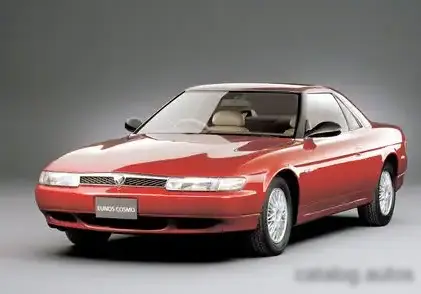
The Mazda Eunos Cosmo, specifically the 20B Type E variant, represents a unique and ambitious chapter in Mazda’s history. Produced between 1990 and 1995, this luxurious coupe was sold primarily in Japan through Mazda’s Eunos dealership network. It was the only production car ever to be powered by a triple-rotor Wankel engine, the 20B, setting it apart from virtually all other vehicles of the era. The Cosmo aimed to compete with grand tourers from European manufacturers like BMW and Mercedes-Benz, offering a blend of performance, technology, and comfort. The Type E, the highest performance trim, delivered 280 horsepower and was distinguished by its sophisticated features and exclusive styling.
Technical Specifications
| Brand | Mazda |
| Model | Eunos Cosmo |
| Generation | Eunos Cosmo |
| Type (Engine) | 20B Type E (280 Hp) |
| Start of production | 1990 |
| End of production | 1995 |
| Powertrain Architecture | Internal Combustion engine |
| Body type | Coupe |
| Seats | 2 |
| Doors | 2 |
| Fuel Type | Petrol (Gasoline) |
| Maximum speed | 250 km/h (155.34 mph) |
| Weight-to-power ratio | 5.8 kg/Hp, 173.9 Hp/tonne |
| Weight-to-torque ratio | 4 kg/Nm, 249.7 Nm/tonne |
| Power | 280 Hp @ 6500 rpm |
| Power per litre | 71.4 Hp/l |
| Torque | 402 Nm @ 3000 rpm (296.5 lb.-ft. @ 3000 rpm) |
| Engine layout | Front, Longitudinal |
| Engine displacement | 3924 cm3 (239.46 cu. in.) |
| Engine configuration | Rotary (Wankel) |
| Compression ratio | 9:1 |
| Fuel injection system | Multi-port manifold injection |
| Engine aspiration | Turbocharger, Intercooler |
| Kerb Weight | 1610 kg (3549.44 lbs) |
| Fuel tank capacity | 85 l (22.45 US gal | 18.7 UK gal) |
| Length | 4815 mm (189.57 in) |
| Width | 1795 mm (70.67 in) |
| Height | 1305 mm (51.38 in) |
| Wheelbase | 2750 mm (108.27 in) |
| Front track | 1520 mm (59.84 in) |
| Rear track | 1510 mm (59.45 in) |
| Drivetrain Architecture | The Internal combustion engine (ICE) drives the rear wheels of the vehicle. |
| Drive wheel | Rear wheel drive |
| Number of gears and type of gearbox | 4 gears, automatic transmission |
| Front suspension | Double wishbone |
| Rear suspension | Coil spring |
| Front brakes | Ventilated discs |
| Rear brakes | Ventilated discs |
| Assisting systems | ABS (Anti-lock braking system) |
| Steering type | Steering rack and pinion |
| Power steering | Hydraulic Steering |
| Tires size | 225/50 R16 |
| Wheel rims size | 7J x 16 ET 50 |
Powertrain & Engine Architecture
The heart of the Eunos Cosmo Type E is the 20B-REW rotary engine. Unlike conventional piston engines, the 20B utilizes a triple-rotor Wankel design, effectively increasing displacement and power output. This engine boasts a displacement of 3924cc, achieved through three triangular rotors spinning within a specially designed housing. The 20B is fed by a multi-port fuel injection system and benefits from a turbocharger and intercooler, boosting power to 280 hp at 6500 rpm and 402 Nm (296.5 lb-ft) of torque at 3000 rpm. The engine’s longitudinal front-engine layout contributes to balanced weight distribution. The Type E exclusively came equipped with a four-speed automatic transmission, designed to handle the engine’s substantial power. This transmission featured electronic control for smoother shifts and optimized performance.
Driving Characteristics
The 20B Type E offered a unique driving experience. While the automatic transmission wasn’t as engaging as a manual, it provided smooth and relatively quick shifts. The turbocharger provided a noticeable boost in power, delivering strong acceleration once spooled up. The Cosmo wasn’t a lightweight car, tipping the scales at 1610 kg (3549.44 lbs), but the 280 hp output provided adequate performance for spirited driving. Compared to the naturally aspirated versions of the Cosmo, the Type E offered a significant performance advantage. The automatic transmission, while convenient, did result in some power loss compared to a hypothetical manual version. The gear ratios were tuned for a balance between acceleration and highway cruising, making it a comfortable grand tourer.
Equipment & Trim Levels
The Type E represented the pinnacle of Cosmo luxury and equipment. Standard features included leather upholstery, power-adjustable seats, a premium sound system, climate control, and electric windows. The interior was designed with a focus on comfort and aesthetics, featuring wood trim and a sophisticated dashboard layout. Optional extras included a navigation system (a rarity for the time), upgraded sound systems, and special paint colors. The exterior was distinguished by unique badging and often featured a two-tone paint scheme. The overall ambiance was one of refined luxury, aimed at attracting discerning buyers.
Chassis & Braking
The Eunos Cosmo featured a double wishbone suspension setup at the front and a coil spring arrangement at the rear, providing a comfortable ride and good handling characteristics. Ventilated disc brakes were fitted on all four wheels, providing ample stopping power. An Anti-lock Braking System (ABS) was standard, enhancing safety. The steering utilized a rack and pinion system with hydraulic power assistance, offering precise control and ease of maneuverability. The car rode on 225/50 R16 tires mounted on 7J x 16 ET 50 alloy wheels.
Market Reception & Comparison
The Eunos Cosmo, and particularly the Type E, received generally positive reviews from automotive journalists in Japan. Critics praised the engine’s smoothness and power, as well as the car’s luxurious interior and advanced features. However, the rotary engine’s reputation for lower fuel economy and potential maintenance issues was a concern. Compared to other trims, the Type E was positioned as the performance flagship, appealing to buyers who prioritized power and exclusivity. The naturally aspirated versions offered better fuel economy and potentially lower maintenance costs, while the Type E delivered a more exhilarating driving experience.
Legacy
The Eunos Cosmo 20B Type E remains a highly sought-after vehicle among enthusiasts. Its unique triple-rotor engine and limited production numbers have made it a collector’s item. While the rotary engine requires specialized knowledge for maintenance, its distinctive character and performance continue to captivate. The 20B engine, while complex, is known to be relatively durable when properly maintained. Today, well-maintained examples command high prices in the used car market. The Cosmo represents a bold and innovative chapter in Mazda’s history, showcasing the company’s engineering prowess and willingness to push boundaries. It stands as a testament to the enduring appeal of the Wankel rotary engine and a unique piece of automotive history.