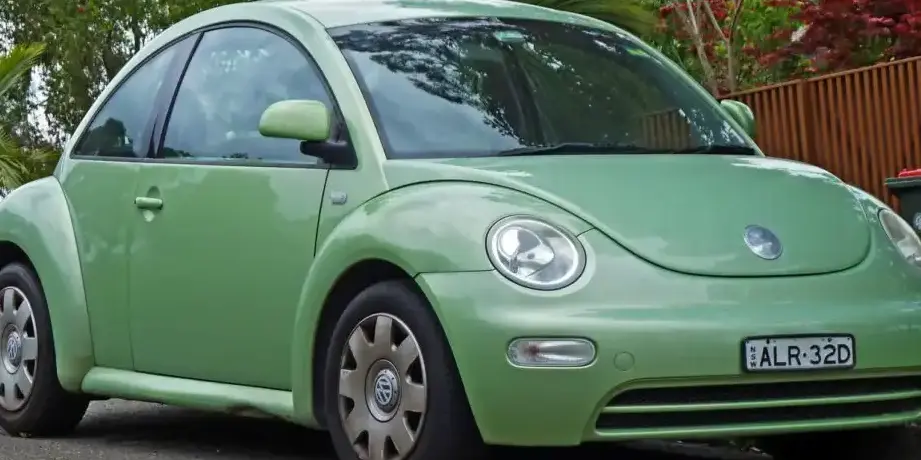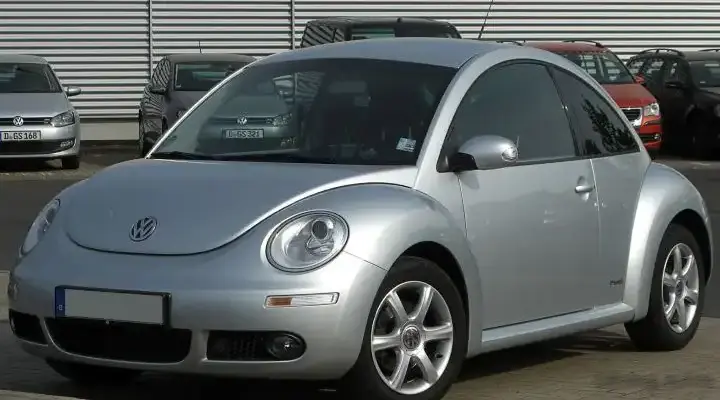
The Volkswagen New Beetle (9C, facelifted in 2005) 1.8 Turbo, producing 150 horsepower, represents a significant iteration of the revived classic. Introduced as part of the 9C series’ mid-cycle refresh, this variant was produced from 2005 to 2010. It aimed to blend the iconic Beetle aesthetic with modern engineering and performance, appealing to a broader audience than the original. This model occupied a mid-range position within the New Beetle lineup, offering a balance between affordability and performance, slotting between the base 1.6-liter models and the more potent, though less common, 2.0-liter turbocharged versions.
Technical Specifications
| Brand | Volkswagen |
| Model | Beetle |
| Generation | NEW Beetle (9C, facelift 2005) |
| Type (Engine) | 1.8 Turbo (150 Hp) |
| Start of production | 2005 |
| End of production | 2010 |
| Powertrain Architecture | Internal Combustion engine |
| Body type | Hatchback |
| Seats | 4 |
| Doors | 3 |
| Fuel consumption (urban) | 11 l/100 km (21.4 US mpg, 25.7 UK mpg, 9.1 km/l) |
| Fuel consumption (extra urban) | 6.4 l/100 km (36.8 US mpg, 44.1 UK mpg, 15.6 km/l) |
| Fuel consumption (combined) | 8.1 l/100 km (29 US mpg, 34.9 UK mpg, 12.3 km/l) |
| CO2 emissions | 194 g/km |
| Fuel Type | Petrol (Gasoline) |
| Acceleration 0 – 100 km/h | 8.7 sec |
| Acceleration 0 – 62 mph | 8.7 sec |
| Acceleration 0 – 60 mph | 8.3 sec |
| Maximum speed | 203 km/h (126.14 mph) |
| Emission standard | Euro 4 |
| Weight-to-power ratio | 8.5 kg/Hp, 118.2 Hp/tonne |
| Weight-to-torque ratio | 5.8 kg/Nm, 173.4 Nm/tonne |
| Power | 150 Hp @ 5800 rpm |
| Power per litre | 84.2 Hp/l |
| Torque | 220 Nm @ 2000 rpm (162.26 lb.-ft. @ 2000 rpm) |
| Engine layout | Front, Transverse |
| Engine Model/Code | AWU |
| Engine displacement | 1781 cm3 (108.68 cu. in.) |
| Number of cylinders | 4 |
| Engine configuration | Inline |
| Cylinder Bore | 81 mm (3.19 in.) |
| Piston Stroke | 86.4 mm (3.4 in.) |
| Compression ratio | 9.5:1 |
| Number of valves per cylinder | 4 |
| Fuel injection system | Multi-port manifold injection |
| Engine aspiration | Turbocharger, Intercooler |
| Engine oil capacity | 4.5 l (4.76 US qt | 3.96 UK qt) |
| Coolant | 5 l (5.28 US qt | 4.4 UK qt) |
| Kerb Weight | 1269 kg (2797.67 lbs.) |
| Max. weight | 1750 kg (3858.09 lbs.) |
| Max load | 481 kg (1060.42 lbs.) |
| Trunk (boot) space – minimum | 209 l (7.38 cu. ft.) |
| Trunk (boot) space – maximum | 769 l (27.16 cu. ft.) |
| Fuel tank capacity | 55 l (14.53 US gal | 12.1 UK gal) |
| Max. roof load | 50 kg (110.23 lbs.) |
| Permitted trailer load with brakes (12%) | 1000 kg (2204.62 lbs.) |
| Permitted trailer load without brakes | 600 kg (1322.77 lbs.) |
| Permitted towbar download | 75 kg (165.35 lbs.) |
| Length | 4129 mm (162.56 in.) |
| Width | 1721 mm (67.76 in.) |
| Height | 1498 mm (58.98 in.) |
| Wheelbase | 2515 mm (99.02 in.) |
| Front track | 1507 mm (59.33 in.) |
| Rear (Back) track | 1487 mm (58.54 in.) |
| Ride height (ground clearance) | 130 mm (5.12 in.) |
| Drag coefficient (Cd) | 0.38 |
| Drivetrain Architecture | The Internal combustion engine (ICE) drives the front wheels of the vehicle. |
| Drive wheel | Front wheel drive |
| Number of gears and type of gearbox | 5 gears, manual transmission |
| Front suspension | Independent type McPherson |
| Rear suspension | Semi-independent, coil spring |
| Front brakes | Ventilated discs |
| Rear brakes | Disc |
| Assisting systems | ABS (Anti-lock braking system) |
| Tires size | 205/55 R16 |
| Wheel rims size | 16 |
Powertrain & Engine Architecture
The heart of this New Beetle variant is the 1.8-liter, four-cylinder turbocharged engine, designated the AWU engine code. This engine is a member of Volkswagen’s EA888 family, known for its robust construction and tuning potential. The AWU utilizes multi-port fuel injection and a single turbocharger with an intercooler to boost power output. The turbocharger provides increased air intake, enhancing combustion efficiency and delivering more horsepower and torque. The engine’s 9.5:1 compression ratio strikes a balance between performance and fuel economy. The engine is transversely mounted at the front of the vehicle, driving the front wheels. The 5-speed manual transmission was the standard offering, providing a direct connection between the engine and the wheels. The transmission’s gear ratios were tuned for a blend of acceleration and highway cruising efficiency.
Driving Characteristics
The 1.8 Turbo engine in the New Beetle offered a noticeable step up in performance compared to the base 1.6-liter models. While not a sports car, the 150 horsepower and 220 Nm (162 lb-ft) of torque provided adequate power for everyday driving and occasional highway passing maneuvers. Acceleration from 0 to 60 mph took approximately 8.3 seconds, and the top speed was around 126 mph. The turbocharger did introduce a degree of turbo lag, meaning there was a slight delay between pressing the accelerator and feeling the full power delivery. However, once the turbo spooled up, the engine provided a smooth and linear power band. Compared to the 2.0-liter Turbo models, the 1.8T offered a more manageable power delivery and slightly better fuel economy, making it a more practical choice for daily commuting.
Equipment & Trim Levels
The 1.8 Turbo New Beetle typically came equipped with a reasonable level of standard features. These included power windows, power locks, air conditioning, and an audio system. Interior upholstery was typically cloth, with options for leather available. The dashboard featured a retro-inspired design, echoing the original Beetle’s circular instrument cluster. Optional extras included a sunroof, alloy wheels, upgraded audio systems, and heated front seats. Trim levels varied slightly depending on the market, but generally, the 1.8 Turbo occupied a mid-range position, offering a good balance of features and price.
Chassis & Braking
The New Beetle’s chassis utilized an independent McPherson strut suspension in the front and a semi-independent coil spring suspension in the rear. This setup provided a comfortable ride quality, absorbing bumps and imperfections in the road. The front brakes were ventilated discs, offering good stopping power, while the rear brakes were solid discs. Anti-lock Braking System (ABS) was standard, enhancing safety and control during emergency braking situations. The car’s weight distribution was relatively balanced, contributing to stable handling characteristics. The 1.8 Turbo models typically featured slightly thicker stabilizer bars compared to the base models, further improving handling performance.
Market Reception & Comparison
The 1.8 Turbo New Beetle was generally well-received by automotive critics. It was praised for its blend of retro styling, modern engineering, and reasonable performance. Fuel economy was considered acceptable for its class, averaging around 29 US mpg in combined driving. Reliability was generally good, although some owners reported minor issues with the turbocharger and fuel injection system. Compared to the 1.6-liter models, the 1.8 Turbo offered a significant performance upgrade, while remaining more affordable and fuel-efficient than the 2.0-liter Turbo versions. It appealed to buyers who wanted a stylish and fun-to-drive car without sacrificing practicality.
Legacy
The 1.8 Turbo engine in the New Beetle has proven to be a relatively durable and reliable powertrain. With proper maintenance, these engines can easily exceed 150,000 miles. On the used car market, the 1.8 Turbo New Beetle remains a popular choice, offering a unique combination of style, practicality, and affordability. While not as collectible as some classic Beetles, these modern interpretations have gained a following among enthusiasts who appreciate their retro charm and modern conveniences. The AWU engine’s relatively simple design and readily available parts contribute to its continued appeal and ease of maintenance.