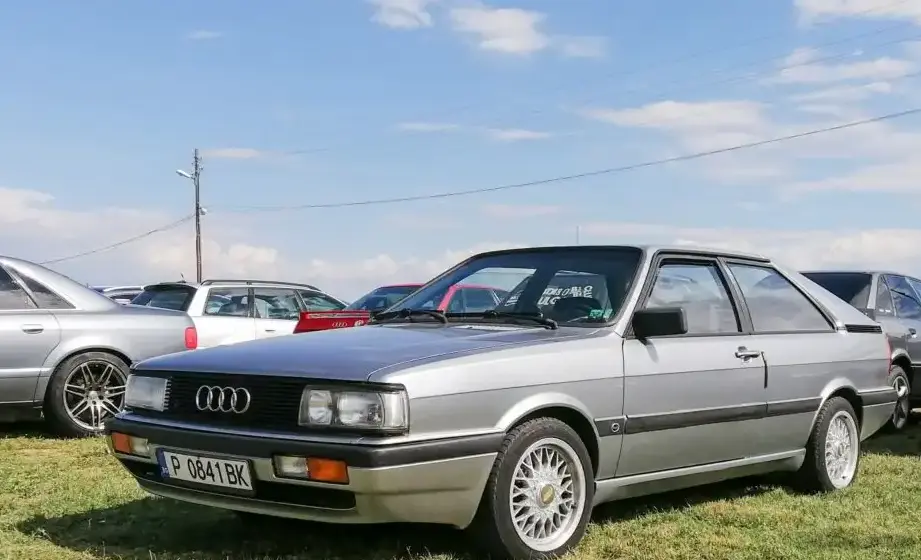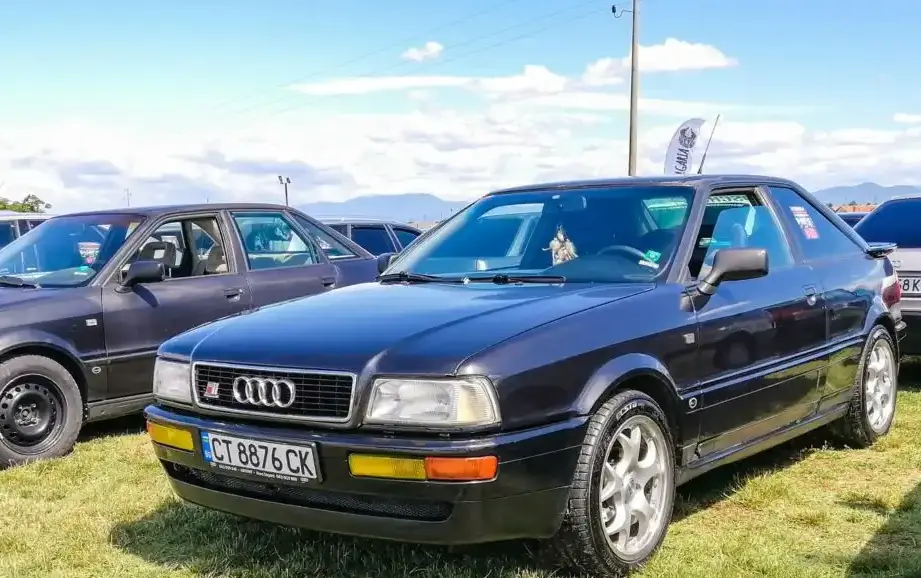
The Audi Coupe (B4), produced between 1991 and 1994, represented a significant evolution in Audi’s coupe lineage. The 2.3E quattro variant, powered by the NG inline-five cylinder engine, occupied a sweet spot in the lineup, offering a blend of performance and all-weather capability. This model was part of the B4 generation (internal code 8C), which built upon the success of the B3 Coupe, offering improved styling, refinement, and technology. It served as a more premium alternative to the four-cylinder models, while remaining more accessible than the high-performance S2 variant.
Technical Specifications
| Brand | Audi |
| Model | Coupe |
| Generation | Coupe (B4 8C) |
| Type (Engine) | 2.3 E (133 Hp) quattro |
| Start of production | June, 1991 |
| End of production | July, 1994 |
| Powertrain Architecture | Internal Combustion engine |
| Body type | Coupe |
| Seats | 5 |
| Doors | 3 |
| Fuel consumption (urban) | 12.6 l/100 km (18.7 US mpg, 22.4 UK mpg, 7.9 km/l) |
| Fuel consumption (extra urban) | 6.7 l/100 km (35.1 US mpg, 42.2 UK mpg, 14.9 km/l) |
| Fuel consumption (combined) | 9.4 l/100 km (25 US mpg, 30.1 UK mpg, 10.6 km/l) |
| Fuel Type | Petrol (Gasoline) |
| Acceleration 0 – 100 km/h | 9.7 sec |
| Acceleration 0 – 62 mph | 9.7 sec |
| Acceleration 0 – 60 mph | 9.2 sec |
| Maximum speed | 206 km/h (128 mph) |
| Weight-to-power ratio | 10 kg/Hp, 100 Hp/tonne |
| Weight-to-torque ratio | 7.2 kg/Nm, 139.8 Nm/tonne |
| Power | 133 Hp @ 5500 rpm |
| Power per litre | 57.6 Hp/l |
| Torque | 186 Nm @ 4000 rpm (137.19 lb.-ft. @ 4000 rpm) |
| Engine layout | Front, Longitudinal |
| Engine Model/Code | NG |
| Engine displacement | 2309 cm3 (140.9 cu. in.) |
| Number of cylinders | 5 |
| Engine configuration | Inline |
| Cylinder Bore | 82.5 mm (3.25 in.) |
| Piston Stroke | 86.4 mm (3.4 in.) |
| Compression ratio | 10:1 |
| Number of valves per cylinder | 2 |
| Fuel injection system | Multi-port manifold injection |
| Engine aspiration | Naturally aspirated engine |
| Valvetrain | OHC |
| Engine oil capacity | 4 l (4.23 US qt | 3.52 UK qt) |
| Coolant | 8.5 l (8.98 US qt | 7.48 UK qt) |
| Kerb Weight | 1330 kg (2932.15 lbs.) |
| Max. weight | 1790 kg (3946.27 lbs.) |
| Max load | 460 kg (1014.13 lbs.) |
| Trunk (boot) space – minimum | 230 l (8.12 cu. ft.) |
| Trunk (boot) space – maximum | 912 l (32.21 cu. ft.) |
| Fuel tank capacity | 70 l (18.49 US gal | 15.4 UK gal) |
| Length | 4366 mm (171.89 in.) |
| Width | 1716 mm (67.56 in.) |
| Width including mirrors | 1930 mm (75.98 in.) |
| Height | 1370 mm (53.94 in.) |
| Wheelbase | 2549 mm (100.35 in.) |
| Front track | 1446 mm (56.93 in.) |
| Rear (Back) track | 1447 mm (56.97 in.) |
| Front overhang | 911 mm (35.87 in.) |
| Rear overhang | 899 mm (35.39 in.) |
| Drag coefficient (Cd) | 0.32 |
| Minimum turning circle | 11.3 m (37.07 ft.) |
| Drive wheel | All wheel drive (4×4) |
| Number of gears | 5 gears, manual transmission |
| Front suspension | Independent, type McPherson with coil spring and anti-roll bar |
| Rear suspension | Double wishbone |
| Front brakes | Ventilated discs |
| Rear brakes | Disc |
| Steering type | Steering rack and pinion |
| Power steering | Hydraulic Steering |
| Tires size | 205/60 R15 |
| Wheel rims size | 15 |
Powertrain & Engine Architecture
The heart of the 2.3E quattro is the Audi NG inline-five cylinder engine. This engine, a descendant of the original Audi five-cylinder design, displaced 2309cc. It featured a cast iron block and an aluminum cylinder head, employing a single overhead camshaft (OHC) operating two valves per cylinder. Fuel delivery was handled by a Bosch Motronic multi-port fuel injection system, optimizing for both performance and efficiency. The NG engine produced 133 horsepower at 5500 rpm and 186 Nm (137 lb-ft) of torque at 4000 rpm. The engine’s longitudinal mounting and the quattro all-wheel-drive system contributed to balanced handling. The five-speed manual transmission was standard, providing precise gear changes and enhancing the driving experience.
Driving Characteristics
The 2.3E quattro offered a refined and capable driving experience. While not as overtly sporty as the later S2 models, it provided ample power for everyday driving and comfortable cruising. The all-wheel-drive system instilled confidence in various weather conditions, providing excellent traction. The five-speed manual transmission allowed drivers to fully exploit the engine’s powerband. Acceleration from 0 to 60 mph took approximately 9.2 seconds, and the car could reach a top speed of 128 mph. Compared to the four-cylinder Coupes, the 2.3E offered significantly more power and torque, resulting in more effortless acceleration and improved highway performance. However, it wasn’t as nimble or responsive as the lighter, more focused S2.
Equipment & Trim Levels
The 2.3E quattro typically came well-equipped for its time. Standard features included power windows, central locking, and a basic stereo system. The interior was typically finished in cloth upholstery, although leather options were available. The dashboard layout was functional and driver-focused, with clear instrumentation. Optional extras included a sunroof, upgraded audio systems, and alloy wheels. The quattro badge signified the presence of the all-wheel-drive system, a key selling point for buyers in regions with inclement weather. The trim level generally sat in the mid-range of the Coupe lineup, offering a good balance of features and price.
Chassis & Braking
The Audi Coupe B4 featured an independent suspension setup, with McPherson struts at the front and a double-wishbone configuration at the rear. This setup provided a comfortable ride and good handling characteristics. The 2.3E quattro was equipped with ventilated disc brakes at the front and solid discs at the rear, providing adequate stopping power. Hydraulic power steering was standard, making the car easy to maneuver. The chassis was relatively stiff, contributing to the car’s overall stability and handling precision. Stabilizer bars were fitted front and rear to reduce body roll during cornering.
Market Reception & Comparison
The Audi Coupe 2.3E quattro was generally well-received by automotive critics. It was praised for its refined engine, comfortable ride, and all-weather capability. However, some critics noted that it wasn’t as sporty or engaging to drive as some of its rivals. Compared to the four-cylinder Coupes, the 2.3E offered a significant performance upgrade, but at a higher price point. Compared to the S2, it offered a more affordable entry point into the Audi coupe range, albeit with less power and performance. Fuel economy was reasonable for the time, averaging around 25 mpg in combined driving.
Legacy
The Audi Coupe B4 2.3E quattro has developed a loyal following among enthusiasts. The NG engine is known for its durability and relatively straightforward maintenance. While not as highly sought after as the S2, the 2.3E quattro represents a well-rounded and capable classic coupe. Today, well-maintained examples are becoming increasingly collectible. Common issues include age-related wear and tear on suspension components and potential corrosion. The availability of spare parts is generally good, although some specific trim pieces may be difficult to find. The 2.3E quattro remains a testament to Audi’s engineering prowess and its commitment to building high-quality, all-weather performance cars.