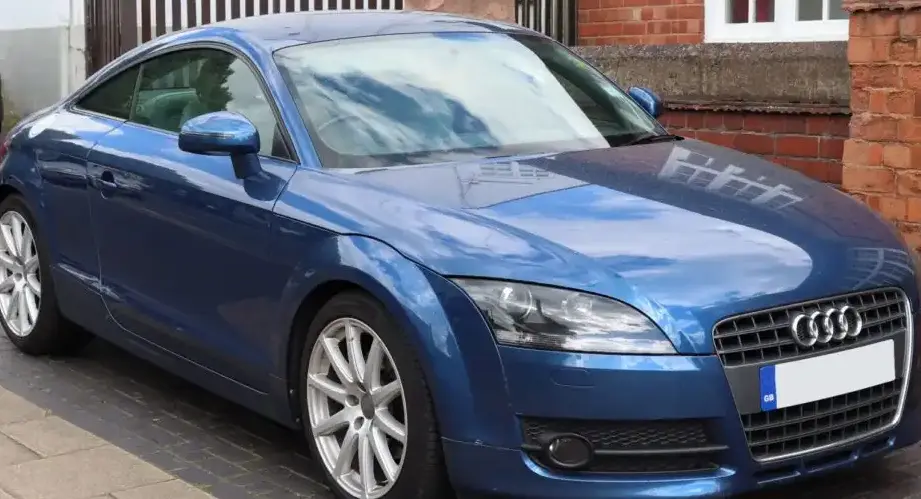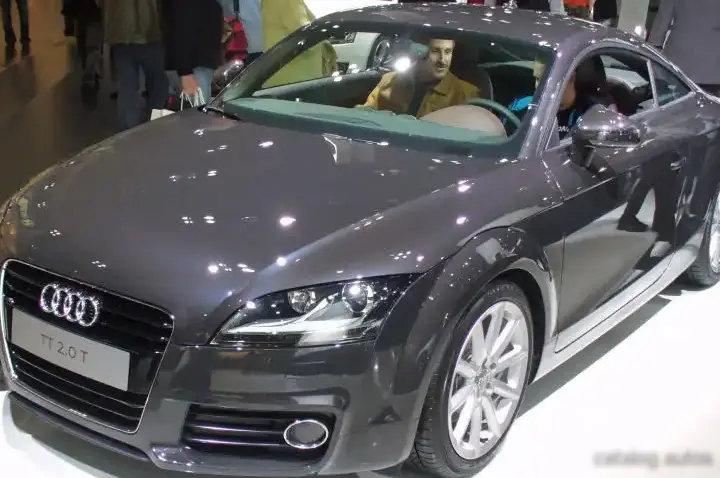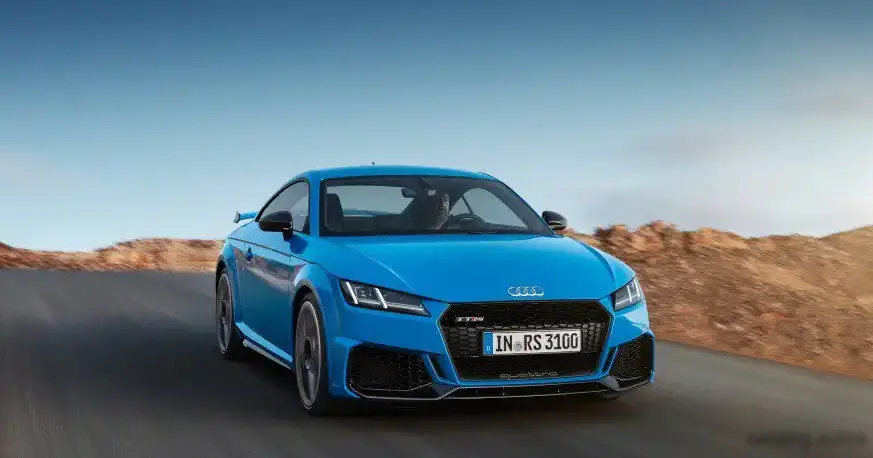
The Audi TT RS Coupe (8S, facelift) with the 2.5 TFSI 400 horsepower engine and S tronic dual-clutch transmission represents the pinnacle of performance for the third-generation TT model line. Introduced in February 2019 and continuing through October 2020, this variant was designed to deliver uncompromising driving dynamics and a thrilling experience within the compact sports car segment. It builds upon the foundation of the 8S platform (shared with the Volkswagen Golf, Audi A3, and other models from the Volkswagen Group) and represents a significant upgrade over earlier TT iterations, particularly in terms of power and technology.
Technical Specifications
| Brand | Audi |
| Model | TT |
| Generation | TT RS Coupe (8S, facelift 2019) |
| Type (Engine) | 2.5 TFSI (400 Hp) quattro S tronic |
| Start of production | February, 2019 |
| End of production | October, 2020 |
| Powertrain Architecture | Internal Combustion engine |
| Body type | Coupe |
| Seats | 4 |
| Doors | 3 |
| Combined fuel consumption (WLTP) | 9.2-9.3 l/100 km (25.6 – 25.3 US mpg, 30.7 – 30.4 UK mpg, 10.9 – 10.8 km/l) |
| CO2 emissions (WLTP) | 208-210 g/km |
| Fuel consumption (economy) – urban (NEDC, WLTP equivalent) | 10.5-10.6 l/100 km (22.4 – 22.2 US mpg, 26.9 – 26.6 UK mpg, 9.5 – 9.4 km/l) |
| Fuel consumption (economy) – extra urban (NEDC, WLTP equivalent) | 6.4-6.5 l/100 km (36.8 – 36.2 US mpg, 44.1 – 43.5 UK mpg, 15.6 – 15.4 km/l) |
| Fuel consumption (economy) – combined (NEDC, WLTP equivalent) | 7.9-8 l/100 km (29.8 – 29.4 US mpg, 35.8 – 35.3 UK mpg, 12.7 – 12.5 km/l) |
| CO2 emissions (NEDC, WLTP equivalent) | 181 g/km |
| Fuel Type | Petrol (Gasoline) |
| Acceleration 0 – 100 km/h | 3.7 sec |
| Acceleration 0 – 62 mph | 3.7 sec |
| Acceleration 0 – 60 mph | 3.5 sec |
| Maximum speed | 250 km/h (155.34 mph), Electronically limited |
| Emission standard | Euro 6d-TEMP-EVAP |
| Weight-to-power ratio | 3.6 kg/Hp, 275.9 Hp/tonne |
| Weight-to-torque ratio | 3 kg/Nm, 331 Nm/tonne |
| Power | 400 Hp @ 5850-7000 rpm |
| Power per litre | 161.3 Hp/l |
| Torque | 480 Nm @ 1700-5850 rpm (354.03 lb.-ft. @ 1700-5850 rpm) |
| Engine layout | Front, Transverse |
| Engine Model/Code | EA855 evo / DAZA |
| Engine displacement | 2480 cm3 (151.34 cu. in.) |
| Number of cylinders | 5 |
| Engine configuration | Inline |
| Cylinder Bore | 82.5 mm (3.25 in.) |
| Piston Stroke | 92.8 mm (3.65 in.) |
| Compression ratio | 10:1 |
| Number of valves per cylinder | 4 |
| Fuel injection system | Direct injection and Multi-port manifold injection |
| Engine aspiration | Turbocharger, Intercooler |
| Valvetrain | DOHC |
| Engine oil capacity | 7.1 l (7.5 US qt | 6.25 UK qt) |
| Coolant | 9.1 l (9.62 US qt | 8.01 UK qt) |
| Kerb Weight | 1450 kg (3196.7 lbs.) |
| Max. weight | 1875 kg (4133.67 lbs.) |
| Max load | 425 kg (936.96 lbs.) |
| Trunk (boot) space – minimum | 305 l (10.77 cu. ft.) |
| Trunk (boot) space – maximum | 712 l (25.14 cu. ft.) |
| Fuel tank capacity | 55 l (14.53 US gal | 12.1 UK gal) |
| Max. roof load | 75 kg (165.35 lbs.) |
| Length | 4201 mm (165.39 in.) |
| Width | 1832 mm (72.13 in.) |
| Width including mirrors | 1966 mm (77.4 in.) |
| Height | 1344 mm (52.91 in.) |
| Wheelbase | 2505 mm (98.62 in.) |
| Front track | 1564 mm (61.57 in.) |
| Rear (Back) track | 1543 mm (60.75 in.) |
| Front overhang | 893 mm (35.16 in.) |
| Rear overhang | 803 mm (31.61 in.) |
| Drag coefficient (Cd) | 0.33 |
| Minimum turning circle (turning diameter) | 10.96 m (35.96 ft.) |
| Drivetrain Architecture | The Internal combustion engine (ICE) drives the front wheels permanently, and the rear wheels are driven through an electrically or mechanically operated clutch if necessary. |
| Drive wheel | All wheel drive (4×4) |
| Number of gears and type of gearbox | 7 gears, automatic transmission S tronic |
| Front suspension | Independent, type McPherson with coil spring and anti-roll bar |
| Rear suspension | Independent multi-link spring suspension with stabilizer |
| Front brakes | Ventilated discs |
| Rear brakes | Disc |
| Assisting systems | ABS (Anti-lock braking system) |
| Steering type | Steering rack and pinion |
| Power steering | Electric Steering |
| Tires size | 245/35 R19; 255/30 R20 |
| Wheel rims size | 9J x 19; 9J x 20 |
INTRODUCTION
The Audi TT RS Coupe (8S, facelift) 2.5 TFSI 400 Hp quattro S tronic is a high-performance variant of the Audi TT, positioned as the flagship model within the TT lineup. Produced from 2019 to 2020, it represents the final iteration of the 8S generation before the introduction of the third-generation model. This car was aimed at enthusiasts seeking a compact, yet potent, sports coupe offering both exhilarating performance and a degree of everyday usability. The “facelift” designation refers to cosmetic and technological updates applied to the 8S platform during its lifecycle, including revised styling cues and enhanced infotainment systems.
Powertrain & Engine Architecture
At the heart of the TT RS is the EA855 evo 2.5-liter inline-five cylinder engine, internally designated as the DAZA code. This engine is renowned for its unique firing order (1-2-4-5-3) which contributes to its distinctive exhaust note and smooth power delivery. The engine utilizes a combination of direct injection and multi-port fuel injection to optimize combustion efficiency and power output. A single twin-scroll turbocharger, with an intercooler, forces air into the engine, boosting power to 400 horsepower at 5850-7000 rpm and 480 Nm (354 lb-ft) of torque between 1700-5850 rpm. The S tronic 7-speed dual-clutch transmission provides rapid and precise gear changes, contributing to the car’s impressive acceleration. This transmission allows for both fully automatic operation and manual gear selection via steering wheel-mounted paddles.
Driving Characteristics
The 2.5 TFSI engine and S tronic transmission combination delivers a truly engaging driving experience. Acceleration from 0 to 60 mph is achieved in approximately 3.5 seconds, and 0 to 100 km/h in 3.7 seconds. The quattro all-wheel-drive system provides exceptional traction, allowing the TT RS to confidently put its power down even in challenging conditions. The S tronic transmission’s quick shifts and the engine’s broad torque curve make for effortless overtaking and responsive acceleration in any gear. Compared to the standard TT models, the RS offers a significantly more aggressive and focused driving experience. While the standard TT prioritizes comfort and style, the RS is geared towards performance enthusiasts.
Equipment & Trim Levels
The TT RS Coupe came generously equipped as standard. Key features included sport seats upholstered in Nappa leather with honeycomb stitching, a flat-bottomed steering wheel, Audi’s Virtual Cockpit digital instrument cluster, and a premium sound system. Exterior styling cues included a unique front grille, larger air intakes, a rear spoiler, and oval exhaust tailpipes. Optional extras included carbon fiber trim elements, upgraded wheels, and advanced driver-assistance systems such as adaptive cruise control and blind-spot monitoring. The interior design was focused on a driver-centric layout, with controls positioned for easy access during spirited driving.
Chassis & Braking
The TT RS features a specially tuned suspension system designed to enhance handling and stability. The front suspension utilizes McPherson struts with a coil spring and anti-roll bar, while the rear employs a multi-link setup with a stabilizer bar. Braking duties are handled by ventilated discs on all four wheels, providing ample stopping power. The car’s relatively low weight (1450 kg / 3196.7 lbs) contributes to its agile handling characteristics. The quattro all-wheel-drive system actively distributes torque between the front and rear axles, optimizing traction and stability.
Market Reception & Comparison
The Audi TT RS Coupe was widely praised by automotive critics for its exceptional performance, engaging driving dynamics, and distinctive engine. It was often compared to rivals such as the Porsche 718 Cayman and BMW M2. While the TT RS offered a more accessible price point than the Porsche, the Cayman was often lauded for its more refined handling. Compared to the standard TT and the TT S, the RS represented a significant step up in performance and exclusivity. The fuel economy, while not a primary concern for buyers in this segment, was reasonable for a high-performance car, averaging around 25.6-25.3 US mpg (combined WLTP).
Legacy
The Audi TT RS Coupe (8S, facelift) 2.5 TFSI 400 Hp quattro S tronic has established itself as a desirable and collectible sports car. The 2.5-liter inline-five engine is particularly revered by enthusiasts for its unique sound and character. The powertrain has proven to be relatively reliable, although regular maintenance is essential. On the used car market, well-maintained examples command a premium price, reflecting the car’s performance capabilities and limited production run. The TT RS continues to be a popular choice for drivers seeking a thrilling and engaging driving experience in a compact and stylish package.