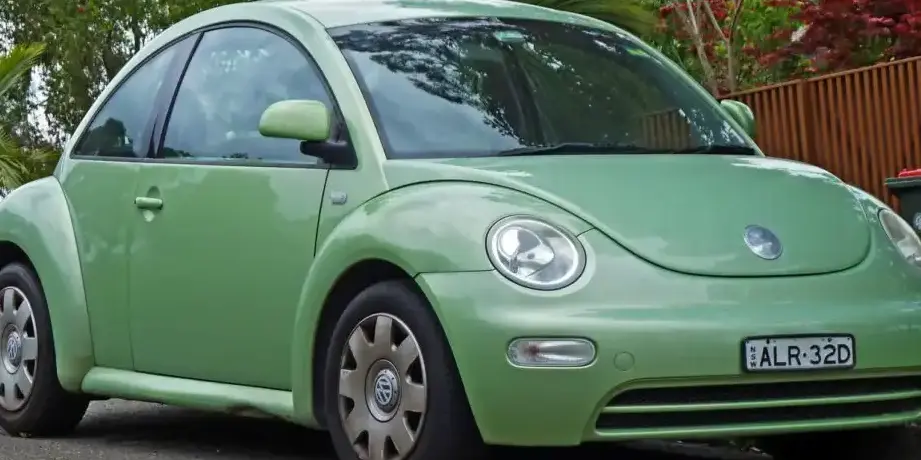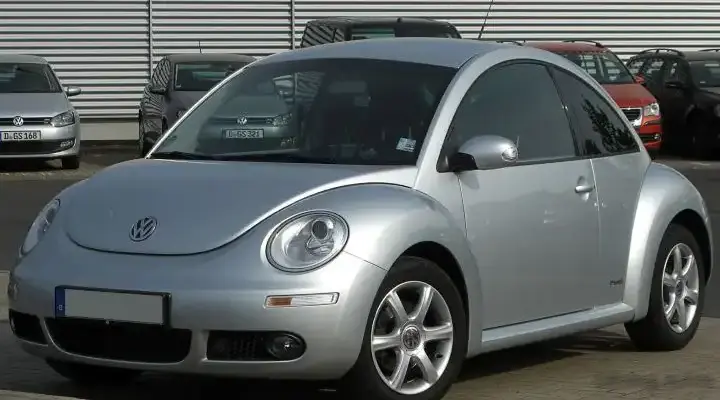
The Volkswagen New Beetle (9C) facelift, produced from 2005 to 2010, represented a significant refresh of the retro-inspired hatchback. Among the various engine and transmission combinations offered, the 2.0-liter 115 horsepower automatic variant occupied a middle ground in the lineup, appealing to buyers seeking a balance between affordability, ease of use, and acceptable performance. This version was particularly popular in markets where automatic transmissions were preferred, including the United States and parts of Europe. It built upon the foundation of the original New Beetle, aiming to modernize the design and address some of the criticisms leveled at the earlier models.
Technical Specifications
| Brand | Volkswagen |
| Model | Beetle |
| Generation | NEW Beetle (9C, facelift 2005) |
| Type (Engine) | 2.0 (115 Hp) Automatic |
| Start of production | 2005 |
| End of production | 2010 |
| Powertrain Architecture | Internal Combustion engine |
| Body type | Hatchback |
| Seats | 4 |
| Doors | 3 |
| Fuel consumption (urban) | 13.3 l/100 km (17.7 US mpg, 21.2 UK mpg, 7.5 km/l) |
| Fuel consumption (extra urban) | 6.9 l/100 km (34.1 US mpg, 40.9 UK mpg, 14.5 km/l) |
| Fuel consumption (combined) | 9.2 l/100 km (25.6 US mpg, 30.7 UK mpg, 10.9 km/l) |
| CO2 emissions | 222 g/km |
| Fuel Type | Petrol (Gasoline) |
| Acceleration 0 – 100 km/h | 12.9 sec |
| Acceleration 0 – 62 mph | 12.9 sec |
| Acceleration 0 – 60 mph | 12.3 sec |
| Maximum speed | 182 km/h (113.09 mph) |
| Emission standard | Euro 4 |
| Weight-to-power ratio | 11.1 kg/Hp, 89.8 Hp/tonne |
| Weight-to-torque ratio | 7.4 kg/Nm, 134.4 Nm/tonne |
| Power | 115 Hp @ 5400 rpm |
| Power per litre | 58 Hp/l |
| Torque | 172 Nm @ 3200 rpm (126.86 lb.-ft. @ 3200 rpm) |
| Engine layout | Front, Transverse |
| Engine Model/Code | AZJ, BER, BEV, BHP |
| Engine displacement | 1984 cm3 (121.07 cu. in.) |
| Number of cylinders | 4 |
| Engine configuration | Inline |
| Cylinder Bore | 82.5 mm (3.25 in.) |
| Piston Stroke | 92.8 mm (3.65 in.) |
| Compression ratio | 10.3:1 |
| Number of valves per cylinder | 4 |
| Fuel injection system | Multi-port manifold injection |
| Engine aspiration | Naturally aspirated engine |
| Engine oil capacity | 4 l (4.23 US qt | 3.52 UK qt) |
| Coolant | 5 l (5.28 US qt | 4.4 UK qt) |
| Kerb Weight | 1280 kg (2821.92 lbs.) |
| Max. weight | 1730 kg (3814 lbs.) |
| Max load | 450 kg (992.08 lbs.) |
| Trunk (boot) space – minimum | 209 l (7.38 cu. ft.) |
| Trunk (boot) space – maximum | 769 l (27.16 cu. ft.) |
| Fuel tank capacity | 55 l (14.53 US gal | 12.1 UK gal) |
| Max. roof load | 50 kg (110.23 lbs.) |
| Permitted trailer load with brakes (12%) | 1000 kg (2204.62 lbs.) |
| Permitted trailer load without brakes | 600 kg (1322.77 lbs.) |
| Permitted towbar download | 75 kg (165.35 lbs.) |
| Length | 4129 mm (162.56 in.) |
| Width | 1721 mm (67.76 in.) |
| Height | 1498 mm (58.98 in.) |
| Wheelbase | 2515 mm (99.02 in.) |
| Front track | 1507 mm (59.33 in.) |
| Rear (Back) track | 1487 mm (58.54 in.) |
| Ride height (ground clearance) | 130 mm (5.12 in.) |
| Drag coefficient (Cd) | 0.38 |
| Drivetrain Architecture | The Internal combustion engine (ICE) drives the front wheels of the vehicle. |
| Drive wheel | Front wheel drive |
| Number of gears and type of gearbox | 6 gears, automatic transmission |
| Front suspension | Independent type McPherson |
| Rear suspension | Semi-independent, coil spring |
| Front brakes | Ventilated discs |
| Rear brakes | Disc |
| Assisting systems | ABS (Anti-lock braking system) |
| Tires size | 195/65 R15 |
| Wheel rims size | 15 |
INTRODUCTION
The 2.0-liter automatic New Beetle, introduced with the 2005 facelift (internal code 9C), was a key variant in Volkswagen’s attempt to broaden the appeal of its retro-themed hatchback. The facelift brought revised front and rear styling, interior upgrades, and refinements to the chassis. This particular engine and transmission pairing was positioned as a comfortable and practical option, aimed at drivers who prioritized ease of driving over outright performance. It sat below the more powerful 2.5-liter five-cylinder and the diesel options in terms of performance, but above the base 1.4-liter engine in terms of refinement and available torque. Production continued until 2010, with minor variations in trim and equipment levels throughout its lifespan.
Powertrain & Engine Architecture
The heart of this New Beetle variant is the 1984cc inline-four cylinder engine, identified by engine codes such as AZJ, BER, BEV, and BHP depending on the specific year and market. This engine utilizes a multi-port fuel injection system, delivering fuel directly into the intake ports. The engine features a single overhead camshaft (SOHC) operating four valves per cylinder. The 2.0-liter engine produced 115 horsepower at 5400 rpm and 172 Nm (126.86 lb-ft) of torque at 3200 rpm. Paired with this engine is a six-speed automatic transmission. This transmission, while offering smooth shifts, wasn’t known for its sportiness and was geared towards fuel efficiency and comfortable cruising. The automatic transmission featured a conventional torque converter and electronic control for shift points.
Driving Characteristics
The 2.0-liter automatic New Beetle offered a relaxed and predictable driving experience. Acceleration from 0-60 mph took around 12.3 seconds, and top speed was limited to 113 mph. While not particularly quick, the engine provided sufficient power for everyday driving and highway merging. The automatic transmission, with its six forward gears, helped to keep the engine in its optimal power band, but lacked the responsiveness of a manual gearbox. Gear ratios were optimized for fuel economy rather than outright performance. Compared to the manual transmission versions of the 2.0-liter, the automatic felt noticeably slower, especially during overtaking maneuvers. The higher-output 2.5-liter engine offered a significant performance boost, while the diesel variants provided superior fuel economy and low-end torque.
Equipment & Trim Levels
The 2.0-liter automatic New Beetle typically came equipped with a reasonable level of standard features. These included air conditioning, power windows and locks, a CD player, and alloy wheels. Higher trim levels, often denoted by names like “Comfort” or “Sport,” added features such as heated front seats, a sunroof, upgraded audio systems, and leather upholstery. Optional extras included navigation systems, parking sensors, and various cosmetic enhancements. Interior upholstery was typically cloth, with leather available as an upgrade. The dashboard layout was consistent across the range, featuring a retro-inspired design with circular air vents and a centrally mounted instrument cluster.
Chassis & Braking
The New Beetle utilized a front-wheel-drive layout with an independent McPherson strut suspension at the front and a semi-independent torsion beam suspension at the rear. This suspension setup provided a comfortable ride, but wasn’t particularly sporty. Braking duties were handled by ventilated discs at the front and solid discs at the rear. Anti-lock Braking System (ABS) was standard equipment. The chassis was reinforced compared to the original New Beetle, improving rigidity and handling. Stabilizer bars were fitted front and rear to reduce body roll during cornering.
Market Reception & Comparison
The 2.0-liter automatic New Beetle received mixed reviews. Critics praised its comfortable ride, retro styling, and ease of use, but often criticized its lack of performance and somewhat dated interior. Compared to other cars in its class, such as the Mini Cooper and Fiat 500, the New Beetle offered more interior space and a more relaxed driving experience. However, it lacked the sporty handling and sophisticated technology of its rivals. Fuel economy was average for its class, and reliability was generally good, although some owners reported issues with the automatic transmission. The diesel variants were often favored by European buyers due to their superior fuel efficiency and lower running costs.
Legacy
The 2.0-liter automatic New Beetle remains a popular choice in the used car market, particularly among buyers seeking a stylish and affordable hatchback. The powertrain, while not known for its performance, has proven to be relatively reliable with proper maintenance. Common issues include occasional transmission glitches and sensor failures. Parts availability is generally good, and repair costs are reasonable. The New Beetle’s enduring appeal lies in its unique design and nostalgic charm, making it a distinctive and recognizable vehicle on the road today. It represents a unique chapter in Volkswagen’s history, bridging the gap between the original Beetle and the company’s modern lineup.