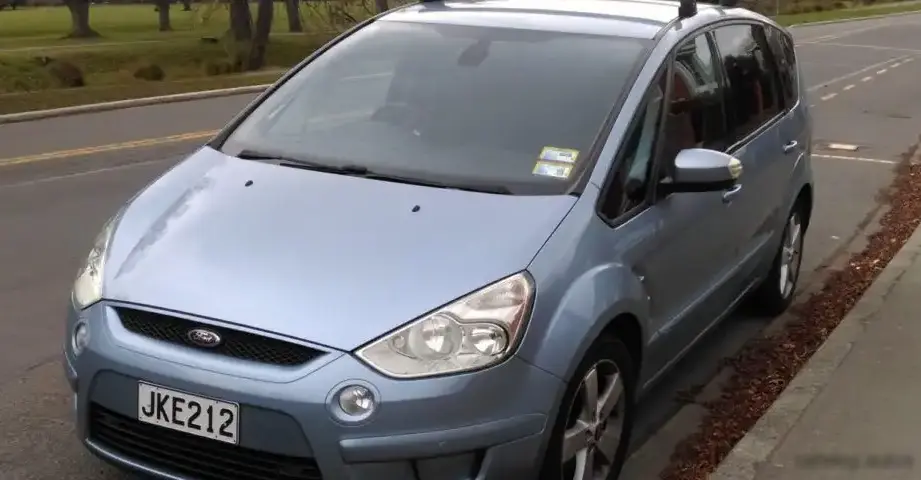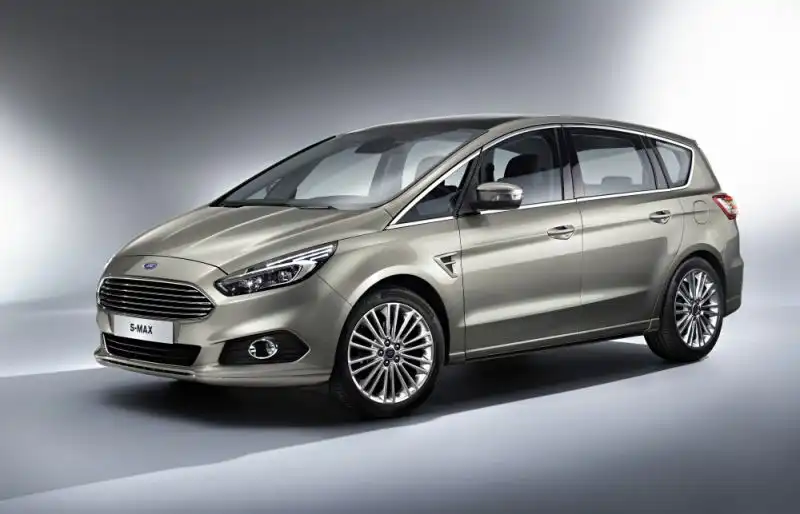
The Ford S-MAX II 2.0 EcoBoost (240 Hp) Automatic, produced between 2015 and 2018, represents a significant iteration of Ford’s multi-purpose vehicle (MPV) offering. Positioned as a mid-to-upper trim level within the second-generation S-MAX range (introduced in 2015, internally designated as the 2015-2018 model year), this variant aimed to deliver a blend of performance, practicality, and technology for families and drivers seeking a more engaging driving experience than typically found in the MPV segment. It was primarily marketed in Europe, where the S-MAX competed with vehicles like the Volkswagen Sharan, Renault Espace, and Citroën C4 Picasso.
Technical Specifications
| Brand | Ford |
| Model | S-MAX |
| Generation | S-MAX II |
| Type (Engine) | 2.0 EcoBoost (240 Hp) Automatic |
| Start of production | 2015 |
| End of production | 2018 |
| Powertrain Architecture | Internal Combustion engine |
| Body type | MPV |
| Seats | 5 |
| Doors | 5 |
| Fuel consumption (urban) | 12.5 l/100 km (18.8 US mpg, 22.6 UK mpg, 8 km/l) |
| Fuel consumption (extra urban) | 6.9 l/100 km (34.1 US mpg, 40.9 UK mpg, 14.5 km/l) |
| Fuel consumption (combined) | 8.9 l/100 km (26.4 US mpg, 31.7 UK mpg, 11.2 km/l) |
| CO2 emissions | 204 g/km |
| Fuel Type | Petrol (Gasoline) |
| Acceleration 0 – 100 km/h | 8.4 sec |
| Acceleration 0 – 62 mph | 8.4 sec |
| Acceleration 0 – 60 mph | 8 sec |
| Maximum speed | 226 km/h (140.43 mph) |
| Emission standard | Euro 5 |
| Weight-to-power ratio | 7.1 kg/Hp, 140.8 Hp/tonne |
| Weight-to-torque ratio | 4.9 kg/Nm, 202.5 Nm/tonne |
| Power | 240 Hp @ 5400 rpm |
| Power per litre | 120.1 Hp/l |
| Torque | 345 Nm @ 2300-4900 rpm (254.46 lb.-ft. @ 2300-4900 rpm) |
| Engine layout | Front, Transverse |
| Engine Model/Code | R9CD, R9CI |
| Engine displacement | 1999 cm3 (121.99 cu. in.) |
| Number of cylinders | 4 |
| Engine configuration | Inline |
| Cylinder Bore | 87.5 mm (3.44 in.) |
| Piston Stroke | 83.1 mm (3.27 in.) |
| Compression ratio | 10:1 |
| Number of valves per cylinder | 4 |
| Fuel injection system | Direct injection |
| Engine aspiration | Turbocharger, Intercooler |
| Valvetrain | DOHC |
| Engine oil capacity | 5.4 l (5.71 US qt | 4.75 UK qt) |
| Coolant | 8.9 l (9.4 US qt | 7.83 UK qt) |
| Kerb Weight | 1704 kg (3756.68 lbs.) |
| Max. weight | 2510 kg (5533.6 lbs.) |
| Max load | 806 kg (1776.93 lbs.) |
| Trunk (boot) space – minimum | 700 l (24.72 cu. ft.) |
| Trunk (boot) space – maximum | 2200 l (77.69 cu. ft.) |
| Fuel tank capacity | 70 l (18.49 US gal | 15.4 UK gal) |
| Length | 4796 mm (188.82 in.) |
| Width | 1916 mm (75.43 in.) |
| Width including mirrors | 2137 mm (84.13 in.) |
| Height | 1655 mm (65.16 in.) |
| Wheelbase | 2849 mm (112.17 in.) |
| Front track | 1606 mm (63.23 in.) |
| Rear (Back) track | 1606 mm (63.23 in.) |
| Ride height (ground clearance) | 128-150 mm (5.04 – 5.91 in.) |
| Minimum turning circle | 12 m (39.37 ft.) |
| Drivetrain Architecture | ICE, Front wheel drive |
| Number of gears and type of gearbox | 6 gears, automatic transmission |
| Front suspension | Independent, type McPherson with coil spring and anti-roll bar |
| Rear suspension | Independent coil spring |
| Front brakes | Ventilated discs |
| Rear brakes | Disc |
| Assisting systems | ABS (Anti-lock braking system) |
| Steering type | Steering rack and pinion |
| Tires size | 235/55 R17; 235/50 R18; 245/45 R19 |
| Wheel rims size | 7.5J x 17; 7.5J x 18; 8J x 19 |
Powertrain & Engine Architecture
At the heart of the S-MAX II 2.0 EcoBoost Automatic lies the Ford EcoBoost 2.0-liter inline-four cylinder engine. This engine, utilizing engine codes R9CD or R9CI depending on specific calibration, is a turbocharged, direct-injection powerplant. Direct injection allows for precise fuel delivery, enhancing both power and efficiency. The engine features a twin-scroll turbocharger, designed to minimize turbo lag and provide a more responsive driving experience. The valvetrain employs a double overhead camshaft (DOHC) configuration with four valves per cylinder, optimizing airflow for increased performance. The engine’s block is constructed from aluminum, contributing to weight reduction. The six-speed automatic transmission, a crucial component of this variant, is a conventional torque-converter automatic, tuned for smooth shifts and reasonable efficiency. It doesn’t feature the latest dual-clutch technology found in some competitors, prioritizing comfort and refinement over outright speed.
Driving Characteristics
The 240 horsepower and 345 Nm (254.46 lb-ft) of torque delivered by the 2.0 EcoBoost engine, coupled with the six-speed automatic, provide brisk acceleration. The 0-60 mph sprint takes approximately 8 seconds, and the car reaches a top speed of 140.43 mph. While not a sports car, the S-MAX II 2.0 EcoBoost offers a noticeably more spirited driving experience than lower-powered variants. The automatic transmission, while smooth, isn’t particularly quick to downshift, and lacks the responsiveness of a manual gearbox or a dual-clutch transmission. The gear ratios are tuned for a balance between acceleration and fuel economy. In real-world driving, the engine feels strong and capable, particularly when overtaking or merging onto highways. Compared to the 1.5 EcoBoost models, the 2.0 EcoBoost offers significantly more power and torque, resulting in a more confident and relaxed driving experience.
Equipment & Trim Levels
The 2.0 EcoBoost Automatic trim typically included features such as alloy wheels (ranging from 17 to 19 inches depending on options), automatic climate control, a touchscreen infotainment system with navigation, parking sensors, and cruise control. Higher-spec versions could be equipped with leather upholstery, a panoramic sunroof, and advanced driver-assistance systems like adaptive cruise control and lane-keeping assist. Interior upholstery was generally cloth on base models, with leather options available. The dashboard layout was modern and functional, with a focus on ergonomics. Optional extras included a premium sound system, rear-seat entertainment, and a hands-free power tailgate.
Chassis & Braking
The S-MAX II utilizes an independent suspension system on both the front and rear axles. The front suspension employs a McPherson strut design with coil springs and an anti-roll bar, while the rear features an independent coil spring setup. This configuration provides a comfortable ride and good handling characteristics. Braking duties are handled by ventilated discs on the front wheels and solid discs on the rear. Anti-lock Braking System (ABS) is standard. The S-MAX’s chassis is relatively robust, designed to handle the weight of passengers and cargo. Stabilizer bar thickness varies depending on the specific trim level and options selected.
Market Reception & Comparison
The Ford S-MAX II 2.0 EcoBoost Automatic was generally well-received by automotive critics. It was praised for its spacious interior, comfortable ride, and strong performance. However, some reviewers noted that the automatic transmission could be slow to respond at times. Fuel economy was considered reasonable for a vehicle of its size and performance, averaging around 26.4 US mpg in combined driving. Compared to the lower-powered 1.5 EcoBoost variants, the 2.0 EcoBoost offered a significant performance upgrade, but at a higher price point. The 2.0 EcoBoost was also more expensive to maintain than the diesel options, due to the complexity of the turbocharged engine and the higher cost of gasoline compared to diesel fuel in many European markets.
Legacy
The Ford S-MAX II 2.0 EcoBoost Automatic has proven to be a relatively reliable vehicle, although some owners have reported issues with the direct injection system and the turbocharger. Regular maintenance, including oil changes and timing belt replacements, is crucial for ensuring long-term reliability. In the used car market, this variant remains a popular choice for families seeking a practical and stylish MPV with a bit of extra performance. Its blend of space, comfort, and driving dynamics continues to appeal to buyers looking for a versatile vehicle that can handle a variety of tasks.