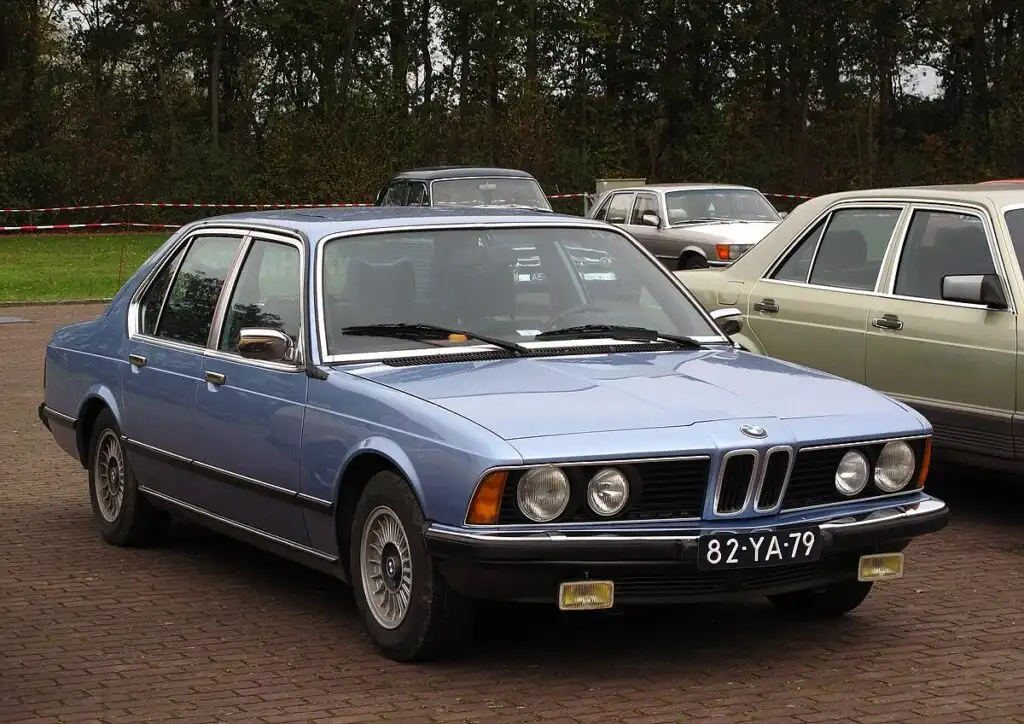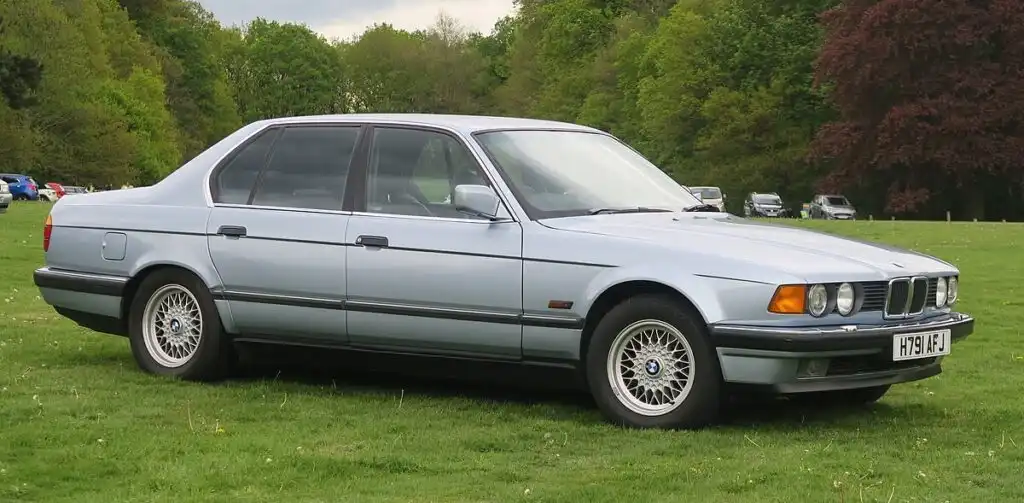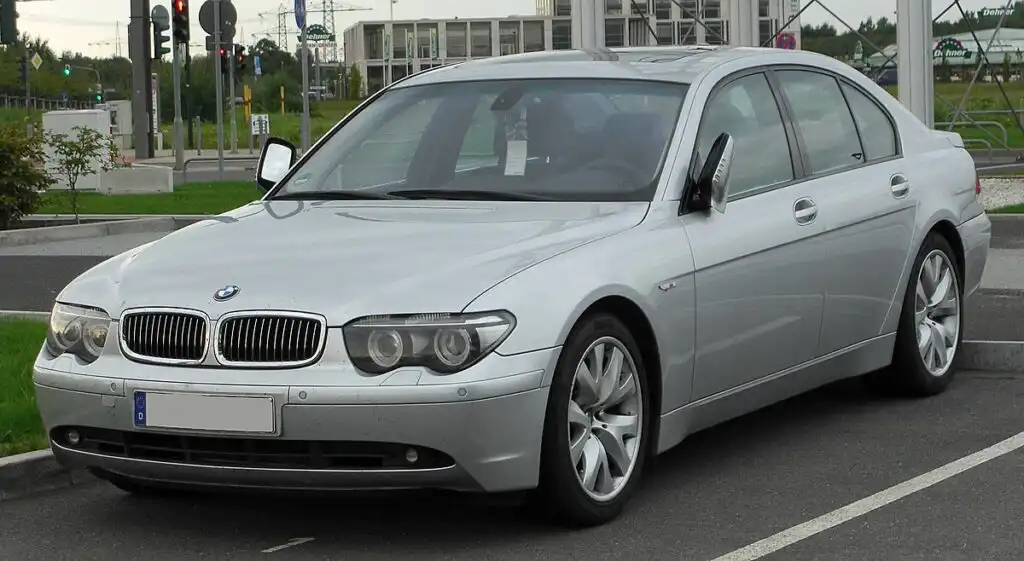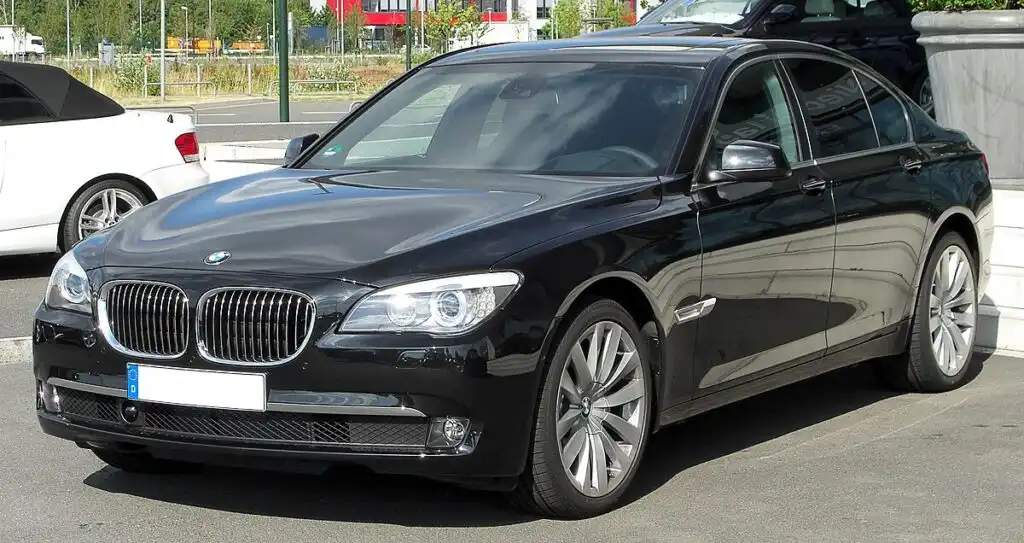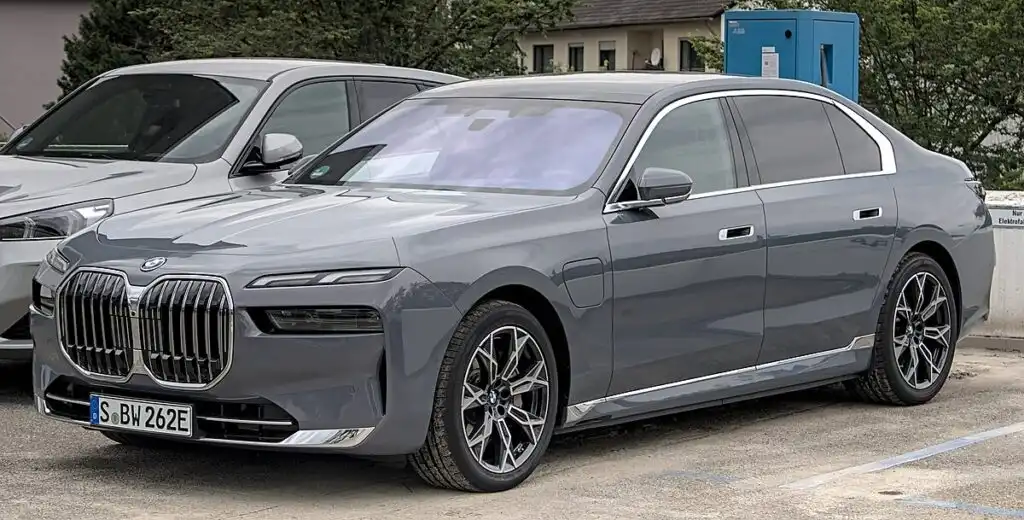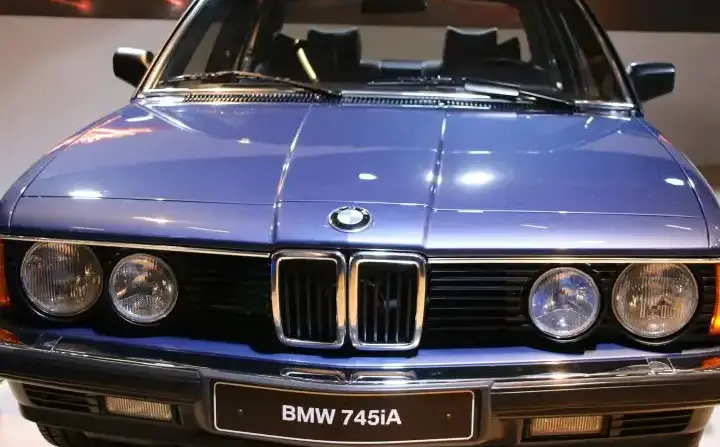
The BMW 745i, produced between 1983 and 1986, represented a significant evolution of the E23 7 Series. This facelifted model, building upon the original E23 launched in 1977, aimed to refine the luxury sedan experience with a focus on performance and technology. The 745i specifically distinguished itself with its larger, fuel-injected engine and, in many cases, an automatic transmission, positioning it as a premium offering within the 7 Series range. It was a flagship vehicle for BMW, intended to compete with the Mercedes-Benz S-Class and Jaguar XJ series in the burgeoning luxury car market.
Technical Specifications
| Brand | BMW |
| Model | 7 Series |
| Generation | 7 Series (E23, facelift 1983) |
| Type (Engine) | 745i (252 Hp) Automatic |
| Start of production | 1983 |
| End of production | 1986 |
| Powertrain Architecture | Internal Combustion engine |
| Body type | Sedan |
| Seats | 5 |
| Doors | 4 |
| Fuel consumption (economy) – urban | 16.6 l/100 km (14.2 US mpg, 17 UK mpg, 6 km/l) |
| Fuel consumption (economy) – extra urban | 8.4 l/100 km (28 US mpg, 33.6 UK mpg, 11.9 km/l) |
| Fuel consumption (economy) – combined | 11.8 l/100 km (19.9 US mpg, 23.9 UK mpg, 8.5 km/l) |
| Fuel Type | Petrol (Gasoline) |
| Acceleration 0 – 100 km/h | 7.9 sec |
| Acceleration 0 – 62 mph | 7.9 sec |
| Acceleration 0 – 60 mph | 7.5 sec |
| Maximum speed | 227 km/h (141.05 mph) |
| Weight-to-power ratio | 6.3 kg/Hp, 158.5 Hp/tonne |
| Weight-to-torque ratio | 4.2 kg/Nm, 239 Nm/tonne |
| Power | 252 Hp @ 4900 rpm |
| Power per litre | 73.5 Hp/l |
| Torque | 380 Nm @ 2200 rpm (280.27 lb.-ft. @ 2200 rpm) |
| Engine layout | Front, Longitudinal |
| Engine Model/Code | M102B34 |
| Engine displacement | 3430 cm3 (209.31 cu. in.) |
| Number of cylinders | 6 |
| Engine configuration | Inline |
| Cylinder Bore | 92 mm (3.62 in.) |
| Piston Stroke | 86 mm (3.39 in.) |
| Compression ratio | 8:1 |
| Number of valves per cylinder | 2 |
| Fuel injection system | Multi-port manifold injection |
| Engine aspiration | Turbocharger |
| Engine oil capacity | 5.75 l (6.08 US qt | 5.06 UK qt) |
| Coolant | 12 l (12.68 US qt | 10.56 UK qt) |
| Kerb Weight | 1590 kg (3505.35 lbs.) |
| Max. weight | 2100 kg (4629.71 lbs.) |
| Max load | 510 kg (1124.36 lbs.) |
| Trunk (boot) space – minimum | 480 l (16.95 cu. ft.) |
| Fuel tank capacity | 100 l (26.42 US gal | 22 UK gal) |
| Length | 4860 mm (191.34 in.) |
| Width | 1800 mm (70.87 in.) |
| Height | 1430 mm (56.3 in.) |
| Wheelbase | 2795 mm (110.04 in.) |
| Front track | 1502 mm (59.13 in.) |
| Rear (Back) track | 1524 mm (60 in.) |
| Ride height (ground clearance) | 132 mm (5.2 in.) |
| Drag coefficient (Cd) | 0.40 |
| Minimum turning circle (turning diameter) | 11.6 m (38.06 ft.) |
| Drivetrain Architecture | The Internal combustion engine (ICE) drives the rear wheels of the vehicle. |
| Drive wheel | Rear wheel drive |
| Number of gears and type of gearbox | 4 gears, automatic transmission |
| Front suspension | Independent, type McPherson with coil spring and anti-roll bar |
| Rear suspension | Independent multi-link spring suspension with stabilizer |
| Front brakes | Ventilated discs |
| Rear brakes | Disc |
| Assisting systems | ABS (Anti-lock braking system) |
| Tires size | 195/70 R14 |
| Wheel rims size | 6.5J x 14 |
INTRODUCTION
The 1983-1986 BMW 745i represented the pinnacle of the E23 7 Series range. It was positioned as the performance-oriented variant, offering a substantial upgrade over the 733i and 735i models. The facelift brought subtle but important cosmetic changes, including revised front and rear styling, and improvements to the interior. The 745i was a statement of BMW’s engineering prowess, blending luxury, performance, and increasingly sophisticated technology for the time. It was built on the E23 platform, which was known for its robust construction and balanced handling.
Powertrain & Engine Architecture
The heart of the 745i was the M102B34 engine, a 3.4-liter inline-six cylinder powerplant. This engine was a significant departure from the earlier 7 Series engines, featuring Bosch Motronic fuel injection and a higher compression ratio. The M102 engine was known for its smoothness and responsiveness. The 745i utilized a four-speed automatic transmission, which was designed to provide comfortable and effortless cruising. This transmission, while not as sporty as a manual, was well-suited to the car’s grand touring character. The engine featured a single overhead camshaft (SOHC) design with two valves per cylinder. The Motronic fuel injection system precisely controlled fuel delivery, optimizing performance and efficiency. The turbocharger significantly boosted power output, making the 745i the quickest of the E23 models.
Driving Characteristics
The 745i offered a distinctly different driving experience compared to its siblings. The increased horsepower and torque, combined with the automatic transmission, resulted in brisk acceleration and effortless highway cruising. While the automatic transmission wasn’t geared for outright performance like a manual, it provided smooth and predictable shifts. The car felt substantial and planted on the road, thanks to its well-tuned suspension. Compared to the 733i or 735i, the 745i felt noticeably more powerful, especially during overtaking maneuvers. However, the added weight of the larger engine and turbocharger did slightly impact handling agility. The gear ratios of the automatic transmission were optimized for comfortable cruising rather than aggressive acceleration.
Equipment & Trim Levels
The 745i came standard with a high level of equipment, befitting its flagship status. Leather upholstery was standard, along with power windows, power locks, and a sunroof. Air conditioning was also a standard feature. Optional extras included a premium sound system, heated seats, and a trip computer. The interior trim was typically finished in wood veneer, adding to the luxurious ambiance. The 745i often featured upgraded instrumentation and a more refined dashboard layout compared to the lower-trim models. The seats were designed for comfort and support, making long journeys more enjoyable.
Chassis & Braking
The E23 7 Series featured an independent suspension system at all four wheels, providing a comfortable ride and good handling. The front suspension utilized McPherson struts with coil springs and an anti-roll bar, while the rear suspension employed a multi-link design with a stabilizer bar. The 745i was equipped with ventilated disc brakes at the front and solid disc brakes at the rear, providing ample stopping power. An Anti-lock Braking System (ABS) was also standard, enhancing safety. The chassis was designed to be rigid and durable, contributing to the car’s overall stability. The steering was power-assisted, making it easy to maneuver at low speeds.
Market Reception & Comparison
The 745i was generally well-received by automotive critics, who praised its performance, luxury, and refinement. However, some critics noted that the automatic transmission didn’t fully exploit the engine’s potential. Compared to the 733i and 735i, the 745i offered a significant performance advantage, but it also came with a higher price tag. Fuel economy was a concern for some, given the engine’s size and turbocharging. The 745i was often seen as a more direct competitor to the Mercedes-Benz 560SEC and Jaguar XJ-S, offering a similar blend of luxury and performance.
Legacy
The BMW 745i (E23) remains a sought-after classic car today. The M102 engine, while complex, is generally considered to be reliable when properly maintained. However, finding parts can be challenging, and maintenance costs can be significant. The automatic transmission is generally durable, but it may require occasional servicing. The E23 7 Series, and particularly the 745i, is remembered as a landmark vehicle in BMW’s history, representing a high point in luxury sedan design and engineering. Well-maintained examples command a premium in the used car market, appealing to collectors and enthusiasts who appreciate its classic styling and performance.