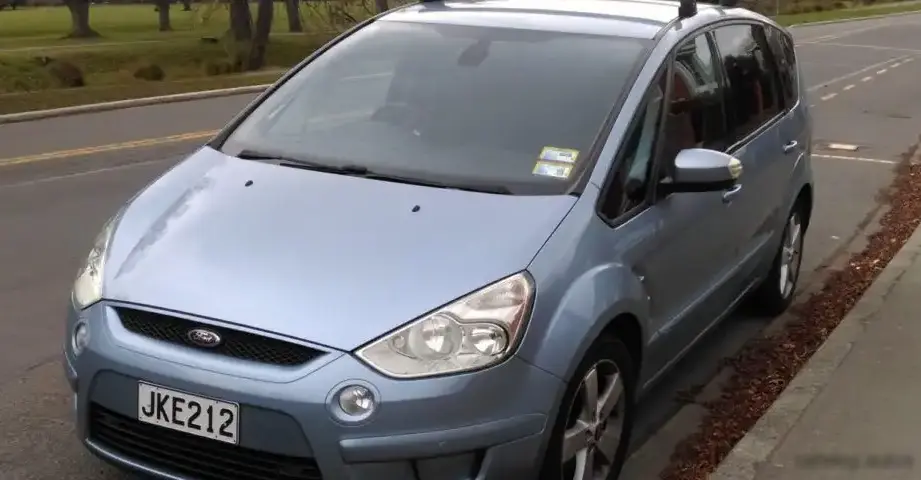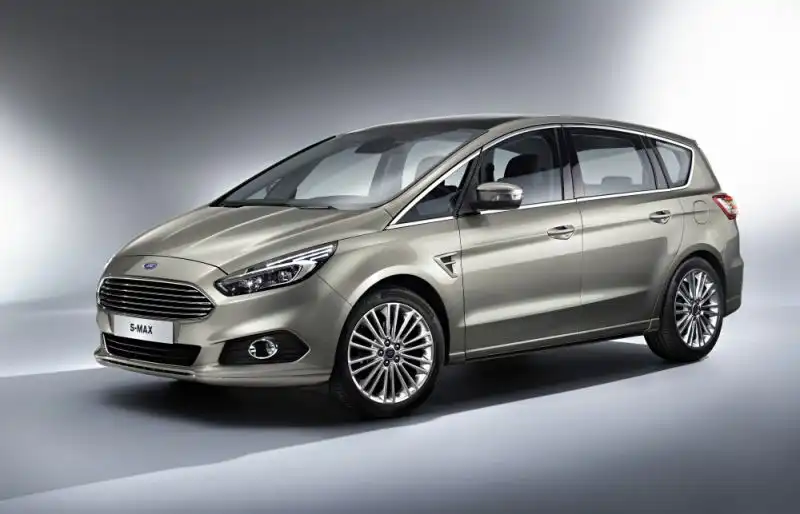
The Ford S-MAX II 2.0 TDCi (120 hp) with Start/Stop technology represents a significant iteration in Ford’s multi-purpose vehicle (MPV) lineup. Introduced in 2015 and continuing through 2018, this variant occupied a crucial position within the second-generation S-MAX (introduced as a 2015 model year vehicle), offering a balance between fuel efficiency, practicality, and affordability. Built on the Ford C2 platform, shared with models like the Ford Mondeo and the Ford Galaxy, the S-MAX II aimed to provide a compelling alternative to traditional minivan designs, emphasizing a more dynamic driving experience. This specific 2.0 TDCi engine and transmission combination was targeted towards families and drivers prioritizing economy and everyday usability over outright performance.
Technical Specifications
| Brand | Ford |
| Model | S-MAX |
| Generation | S-MAX II |
| Type (Engine) | 2.0 TDCi (120 Hp) S&S |
| Start of production | 2015 |
| End of production | 2018 |
| Powertrain Architecture | Internal Combustion engine |
| Body type | MPV |
| Seats | 5 |
| Doors | 5 |
| Fuel consumption (urban) | 5.6 l/100 km (42 US mpg, 50.4 UK mpg, 17.9 km/l) |
| Fuel consumption (extra urban) | 4.6 l/100 km (51.1 US mpg, 61.4 UK mpg, 21.7 km/l) |
| Fuel consumption (combined) | 5 l/100 km (47 US mpg, 56.5 UK mpg, 20 km/l) |
| CO2 emissions | 129 g/km |
| Fuel Type | Diesel |
| Acceleration 0 – 100 km/h | 13.4 sec |
| Acceleration 0 – 62 mph | 13.4 sec |
| Acceleration 0 – 60 mph | 12.7 sec |
| Maximum speed | 183 km/h (113.71 mph) |
| Emission standard | Euro 6 |
| Weight-to-power ratio | 14.4 kg/Hp, 69.6 Hp/tonne |
| Weight-to-torque ratio | 5.6 kg/Nm, 179.7 Nm/tonne |
| Power | 120 Hp @ 3500 rpm |
| Power per litre | 60.1 Hp/l |
| Torque | 310 Nm @ 1750-2000 rpm (228.64 lb.-ft. @ 1750-2000 rpm) |
| Engine layout | Front, Transverse |
| Engine Model/Code | UFCA, UFCB, UFCD |
| Engine displacement | 1997 cm3 (121.86 cu. in.) |
| Number of cylinders | 4 |
| Engine configuration | Inline |
| Cylinder Bore | 85 mm (3.35 in.) |
| Piston Stroke | 88 mm (3.46 in.) |
| Compression ratio | 17:1 |
| Number of valves per cylinder | 4 |
| Fuel injection system | Diesel Commonrail |
| Engine aspiration | Turbocharger, Intercooler |
| Valvetrain | DOHC |
| Engine oil capacity | 5.6 l (5.92 US qt | 4.93 UK qt) |
| Coolant | 7.3 l (7.71 US qt | 6.42 UK qt) |
| Kerb Weight | 1725 kg (3802.97 lbs.) |
| Max. weight | 2505 kg (5522.58 lbs.) |
| Max load | 780 kg (1719.61 lbs.) |
| Trunk (boot) space – minimum | 700 l (24.72 cu. ft.) |
| Trunk (boot) space – maximum | 2200 l (77.69 cu. ft.) |
| Fuel tank capacity | 70 l (18.49 US gal | 15.4 UK gal) |
| Length | 4796 mm (188.82 in.) |
| Width | 1916 mm (75.43 in.) |
| Width including mirrors | 2137 mm (84.13 in.) |
| Height | 1655 mm (65.16 in.) |
| Wheelbase | 2849 mm (112.17 in.) |
| Front track | 1606 mm (63.23 in.) |
| Rear (Back) track | 1606 mm (63.23 in.) |
| Ride height (ground clearance) | 128-150 mm (5.04 – 5.91 in.) |
| Minimum turning circle | 12 m (39.37 ft.) |
| Drivetrain Architecture | Front wheel drive |
| Number of gears | 6 |
| Type of gearbox | Manual transmission |
| Front suspension | Independent, type McPherson with coil spring and anti-roll bar |
| Rear suspension | Independent coil spring |
| Front brakes | Ventilated discs |
| Rear brakes | Disc |
| Assisting systems | ABS (Anti-lock braking system) |
| Steering type | Steering rack and pinion |
| Tires size | 235/55 R17; 235/50 R18; 245/45 R19 |
| Wheel rims size | 7.5J x 17; 7.5J x 18; 8J x 19 |
Powertrain & Engine Architecture
The heart of the S-MAX II 2.0 TDCi (120 hp) is the Ford Duratorq engine family. Specifically, this model utilized the UFCA, UFCB, or UFCD engine codes, all representing variations of the 2.0-liter inline-four cylinder diesel. This engine featured a common-rail direct fuel injection system, delivering fuel at extremely high pressure for optimized combustion. A turbocharger with an intercooler was employed to boost power output and improve efficiency. The engine also incorporated a Dual Overhead Camshaft (DOHC) valvetrain with four valves per cylinder, enhancing breathing and contributing to a broader torque curve. The Start/Stop system, denoted by the “S&S” designation, automatically shut off the engine when the vehicle came to a halt, further improving fuel economy in urban driving conditions. The engine was transversely mounted, driving the front wheels. The 6-speed manual transmission was the standard offering for this variant, providing a balance between fuel efficiency and driver control.
Driving Characteristics
The 120 hp output and 310 Nm (228.64 lb-ft) of torque delivered by the 2.0 TDCi engine resulted in a practical, rather than sporty, driving experience. Acceleration from 0-60 mph took approximately 12.7 seconds, and top speed was limited to 113.71 mph. While not particularly quick, the engine provided adequate power for everyday driving situations, including highway cruising and overtaking. The manual transmission allowed for precise gear selection, but the relatively long gearing emphasized fuel economy over rapid acceleration. Compared to the higher-output 2.0 TDCi variants (typically around 150-185 hp) or the petrol-powered options, this version felt noticeably less responsive. However, the lower power output also translated to improved fuel economy, making it a more economical choice for drivers covering significant distances.
Equipment & Trim Levels
The 2.0 TDCi (120 hp) S&S typically represented an entry-level or mid-range trim within the S-MAX II lineup. Standard equipment generally included air conditioning, power windows, power mirrors, a basic audio system with USB connectivity, and alloy wheels. Safety features such as ABS, Electronic Stability Control (ESC), and multiple airbags were also standard. Higher trim levels offered upgrades such as leather upholstery, a more advanced infotainment system with navigation, parking sensors, and a panoramic sunroof. Optional extras included features like adaptive cruise control, automatic headlights and wipers, and a premium sound system.
Chassis & Braking
The S-MAX II featured an independent suspension system on both the front and rear axles. The front suspension utilized McPherson struts with coil springs and an anti-roll bar, while the rear employed an independent multi-link setup with coil springs. This configuration provided a comfortable ride quality and decent handling characteristics. The braking system consisted of ventilated discs on the front wheels and solid discs on the rear. ABS (Anti-lock Braking System) was standard, enhancing braking performance and stability. The steering system was a rack and pinion type, providing precise and responsive steering feel.
Market Reception & Comparison
The Ford S-MAX II 2.0 TDCi (120 hp) S&S was generally well-received by critics as a practical and fuel-efficient MPV. It was praised for its spacious interior, comfortable ride, and reasonable running costs. However, some reviewers noted that the 120 hp engine felt underpowered, particularly when the vehicle was fully loaded. Compared to the higher-output diesel variants, this version offered lower performance but significantly better fuel economy. It also represented a more affordable entry point into the S-MAX II range. Against competitors like the Volkswagen Touran, Renault Scenic, and Citroen C4 Picasso, the S-MAX II offered a more dynamic driving experience and a more stylish design.
Legacy
The 2.0 TDCi engine, in its various iterations, proved to be a relatively reliable powertrain. While common diesel issues such as diesel particulate filter (DPF) clogging and potential turbocharger wear could occur, these were generally manageable with regular maintenance. Today, used examples of the S-MAX II 2.0 TDCi (120 hp) S&S represent a good value proposition for buyers seeking a spacious, economical, and practical MPV. Its relatively simple mechanicals and readily available parts contribute to its ongoing appeal in the used car market. However, prospective buyers should carefully inspect the vehicle’s service history and ensure that the DPF has been properly maintained.