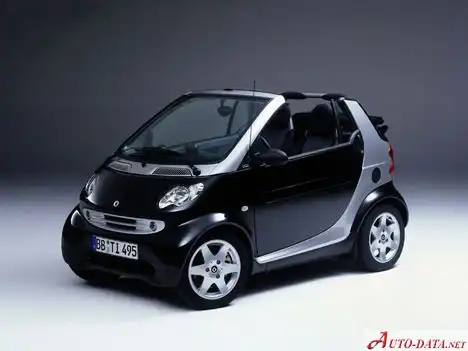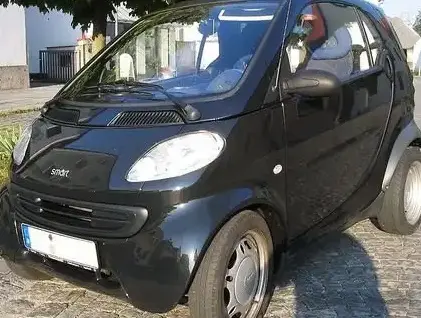
The Smart City-Coupe, internally designated as the MC01, represented a radical departure in urban transportation when it debuted in 1998. The 0.8 CDI variant, produced from 1999 to 2000, was a particularly interesting iteration, aiming to combine the Smart’s unique packaging with the fuel efficiency of a small-displacement diesel engine. This model was primarily targeted at the European market, where diesel fuel was more prevalent and fuel economy was a significant purchasing factor. It represented the entry-level diesel offering within the first generation Smart City-Coupe range, positioned below the later, more powerful CDI variants. The MC01 platform, notable for its microcar dimensions and innovative structural design, sought to address the challenges of congested city environments by offering a highly maneuverable and economical vehicle.
Technical Specifications
| Brand | Smart |
| Model | City-Coupe (MC01) |
| Generation | Smart (MC01) |
| Engine Type | 0.8 CDI (41 Hp) |
| Production Years | 1999 – 2000 |
| Powertrain Architecture | Internal Combustion Engine (Diesel) |
| Body Type | Hatchback |
| Fuel Type | Diesel |
| Power Output | 41 Hp |
| Engine Model/Code | OM 660.940 |
| Engine Aspiration | Naturally Aspirated |
| Engine Oil Capacity | 2.7 liters (2.85 US qt / 2.38 UK qt) |
| Coolant Capacity | 4.5 liters (4.76 US qt / 3.96 UK qt) |
Powertrain & Engine Architecture
The heart of the Smart City-Coupe 0.8 CDI is the OM 660.940, a diminutive three-cylinder diesel engine. This engine, developed by Mercedes-Benz, was a significant engineering achievement, packing diesel technology into an incredibly small package. It features direct injection, utilizing a common rail system operating at very high pressures (for the time) to ensure efficient combustion. The engine’s block is constructed from cast iron for durability, while the cylinder head is aluminum to reduce weight. The valvetrain employs two valves per cylinder, operated by an overhead camshaft. Unlike many contemporary diesels, the OM 660.940 eschewed a turbocharger in this base configuration, relying on its small displacement and direct injection for power. The engine is mated to a six-speed automated manual transmission (AMT), often referred to as ‘Softouch’ or ‘Softdrive’. This transmission, while offering automatic convenience, lacked the smoothness of a traditional torque converter automatic and could exhibit noticeable shifts. The AMT uses electro-hydraulic actuators to operate the clutch and shift gears, controlled by the vehicle’s computer.
Driving Characteristics
The 0.8 CDI Smart City-Coupe was never intended to be a performance car. With only 41 horsepower propelling a vehicle weighing around 790 kg (1742 lbs), acceleration was leisurely. 0 to 60 mph times were in the region of 17-18 seconds. However, the engine’s torque characteristics – peaking at around 80 Nm (59 lb-ft) – provided adequate pulling power for urban driving. The six-speed AMT helped to keep the engine in its optimal power band, but the shifts could be jerky, particularly at lower speeds. The gear ratios were relatively tall, prioritizing fuel economy over outright acceleration. Compared to the later, more powerful 0.8 CDI variants (which gained a turbocharger and increased horsepower), the base model felt significantly underpowered, especially when carrying a passenger or navigating hills. The steering was light and precise, making maneuvering in tight spaces effortless, and the short wheelbase contributed to the car’s exceptional agility. The suspension, while firm, was tuned to provide a reasonable ride quality on city streets.
Equipment & Trim Levels
The 0.8 CDI Smart City-Coupe was generally offered with a fairly basic level of equipment, reflecting its position as the entry-level diesel model. Standard features typically included power steering, central locking, and an immobilizer. The interior was functional and minimalist, with hard-wearing plastic trim. Upholstery was typically cloth, available in a limited range of colors. Air conditioning was often an optional extra, as were power windows and alloy wheels. The dashboard layout was simple and straightforward, with clearly labeled controls. Safety features were limited by the car’s size and weight, but included a driver’s airbag and anti-lock brakes (ABS) on some models. Trim levels were relatively limited, with most customization options revolving around exterior color and interior fabric choices.
Chassis & Braking
The Smart City-Coupe’s chassis was a defining feature of the vehicle. It employed a unique ‘tridion’ safety cell construction, consisting of a high-strength steel space frame. This structure was designed to absorb impact energy in the event of a collision. The body panels, made of thermoplastic, were attached to the tridion cell and were designed to deform in a controlled manner. The suspension consisted of independent suspension all around, with MacPherson struts at the front and a De Dion axle at the rear. Braking was typically accomplished with disc brakes at the front and drum brakes at the rear. The braking system was adequate for the car’s weight and performance, but lacked the stopping power of larger vehicles. Stabilizer bars were fitted to both the front and rear axles to reduce body roll during cornering.
Market Reception & Comparison
The Smart City-Coupe 0.8 CDI received mixed reviews upon its release. Critics praised its fuel economy – typically exceeding 50 mpg – and its exceptional maneuverability. However, the engine’s lack of power and the AMT’s jerky shifts were common criticisms. Compared to the petrol-powered Smart City-Coupe, the 0.8 CDI offered significantly better fuel economy but at the cost of performance. Compared to other small city cars of the time, such as the Fiat Panda or the Renault Twingo, the Smart offered a more distinctive design and a more sophisticated (though not necessarily more reliable) powertrain. The diesel variant was particularly popular in Europe, where fuel costs were higher and diesel engines were more widely accepted. However, its limited availability in North America hindered its success in that market.
Legacy
The OM 660.940 engine, despite its small size, proved to be a relatively durable and reliable unit when properly maintained. However, the AMT transmission was a known weak point, with many units experiencing issues with the clutch and shift actuators. Today, the Smart City-Coupe 0.8 CDI is a relatively rare sight on the roads. Those that remain are often cherished by enthusiasts who appreciate the car’s unique design and engineering. The car’s innovative structural design and its focus on urban mobility paved the way for future generations of microcars and city vehicles. The 0.8 CDI variant, while not the most powerful or refined, represents an important chapter in the Smart story, demonstrating the potential of small-displacement diesel engines in urban environments. Used examples, when found, typically command modest prices, but finding a well-maintained example with a functioning AMT can be a challenge.