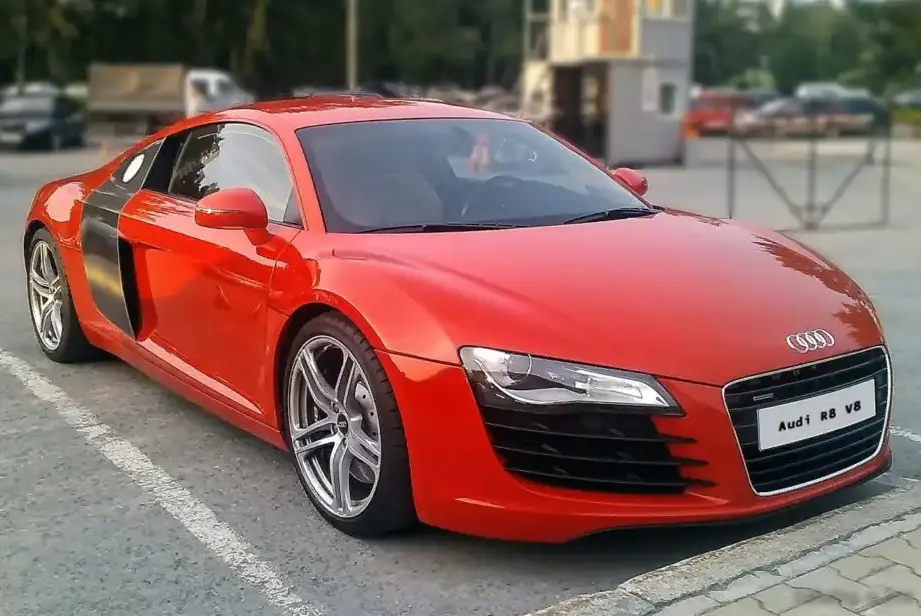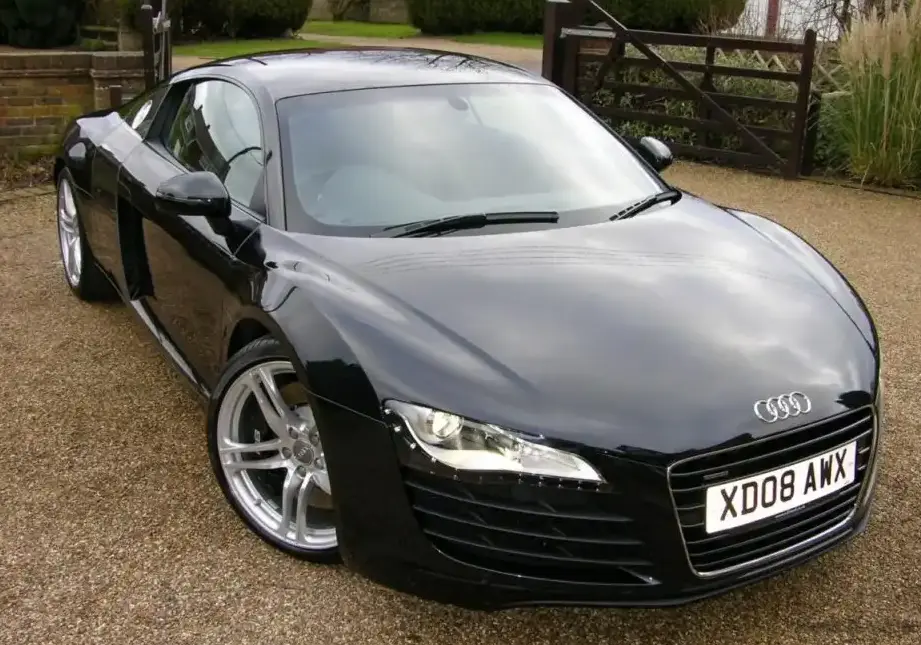
The Audi R8 Coupe (42) 5.2 FSI V10 quattro, produced from 2008 to 2010, represents the initial iteration of Audi’s flagship supercar. Positioned as a direct competitor to established marques like Porsche and Ferrari, the R8 aimed to deliver a blend of everyday usability and high-performance capability. This specific variant, equipped with the naturally aspirated 5.2-liter V10 engine and a six-speed manual transmission, served as the core model within the R8 lineup, offering a more engaging driving experience than the later S-Tronic dual-clutch transmission options. It was a pivotal model for Audi, demonstrating their engineering prowess and commitment to the high-performance sports car segment.
Technical Specifications
| Brand | Audi |
| Model | R8 |
| Generation | R8 Coupe (42) |
| Type (Engine) | 5.2 FSI V10 (525 Hp) quattro |
| Start of production | 2008 |
| End of production | 2010 |
| Powertrain Architecture | Internal Combustion engine |
| Body type | Coupe |
| Seats | 2 |
| Doors | 2 |
| Fuel consumption (economy) – urban | 22.6 l/100 km (10.4 US mpg, 12.5 UK mpg, 4.4 km/l) |
| Fuel consumption (economy) – extra urban | 10.2 l/100 km (23.1 US mpg, 27.7 UK mpg, 9.8 km/l) |
| Fuel consumption (economy) – combined | 14.7 l/100 km (16 US mpg, 19.2 UK mpg, 6.8 km/l) |
| CO2 emissions | 346 g/km |
| Fuel Type | Petrol (Gasoline) |
| Acceleration 0 – 100 km/h | 3.9 sec |
| Acceleration 0 – 62 mph | 3.9 sec |
| Acceleration 0 – 60 mph | 3.7 sec |
| Maximum speed | 316 km/h (196.35 mph) |
| Emission standard | Euro 5 |
| Weight-to-power ratio | 3.1 kg/Hp, 324.1 Hp/tonne |
| Weight-to-torque ratio | 3.1 kg/Nm, 327.2 Nm/tonne |
| Power | 525 Hp @ 8700 rpm |
| Power per litre | 100.9 Hp/l |
| Torque | 530 Nm @ 6500 rpm (390.91 lb.-ft. @ 6500 rpm) |
| Engine layout | Rear, Longitudinal |
| Engine Model/Code | BUJ |
| Engine displacement | 5204 cm3 (317.57 cu. in.) |
| Number of cylinders | 10 |
| Engine configuration | V-engine |
| Cylinder Bore | 84.5 mm (3.33 in.) |
| Piston Stroke | 92.8 mm (3.65 in.) |
| Compression ratio | 12.5:1 |
| Number of valves per cylinder | 4 |
| Fuel injection system | Direct injection |
| Engine aspiration | Naturally aspirated engine |
| Valvetrain | DOHC |
| Engine oil capacity | 8.3 l (8.77 US qt | 7.3 UK qt) |
| Kerb Weight | 1620 kg (3571.49 lbs.) |
| Max. weight | 1920 kg (4232.88 lbs.) |
| Max load | 300 kg (661.39 lbs.) |
| Trunk (boot) space – minimum | 100 l (3.53 cu. ft.) |
| Fuel tank capacity | 90 l (23.78 US gal | 19.8 UK gal) |
| Length | 4434 mm (174.57 in.) |
| Width | 1930 mm (75.98 in.) |
| Width including mirrors | 2029 mm (79.88 in.) |
| Height | 1252 mm (49.29 in.) |
| Wheelbase | 2650 mm (104.33 in.) |
| Front track | 1638 mm (64.49 in.) |
| Rear (Back) track | 1595 mm (62.8 in.) |
| Front overhang | 999 mm (39.33 in.) |
| Rear overhang | 785 mm (30.91 in.) |
| Drag coefficient (Cd) | 0.362 |
| Minimum turning circle (turning diameter) | 11.8 m (38.71 ft.) |
| Drive wheel | All wheel drive (4×4) |
| Number of gears and type of gearbox | 6 gears, manual transmission |
| Front suspension | Independent, type McPherson with coil spring and anti-roll bar |
| Rear suspension | Independent multi-link spring suspension with stabilizer |
| Front brakes | Ventilated discs |
| Rear brakes | Ventilated discs |
| Assisting systems | ABS (Anti-lock braking system) |
| Steering type | Steering rack and pinion |
| Power steering | Hydraulic Steering |
| Tires size | 235/35 R19; 295/30 R19 |
| Wheel rims size | 8.5J x 19; 11J x 19 |
Powertrain & Engine Architecture
At the heart of the R8 5.2 FSI quattro lies the BUJ engine code, a 5.2-liter naturally aspirated V10. This engine is a direct descendant of the V10 used in the Lamborghini Gallardo, reflecting the close ties between Audi and Lamborghini under the Volkswagen Group umbrella. The engine utilizes a direct fuel injection (FSI) system, enabling precise fuel delivery and contributing to both power output and efficiency. Its valvetrain employs double overhead camshafts (DOHC) with four valves per cylinder, optimizing airflow for high-revving performance. The 5.2-liter V10 produces 525 horsepower at 8700 rpm and 390 lb-ft of torque at 6500 rpm. The six-speed manual transmission, featuring a short-throw shifter, was the standard offering, providing drivers with a direct connection to the engine’s power. The quattro all-wheel-drive system, a hallmark of Audi performance vehicles, distributes power between all four wheels, enhancing traction and stability, particularly during acceleration and cornering.
Driving Characteristics
The R8 5.2 FSI V10 quattro delivers a visceral driving experience. The naturally aspirated V10 responds eagerly to throttle inputs, providing a linear power delivery that builds to a thrilling crescendo at high RPMs. The manual transmission, while requiring more driver involvement than later S-Tronic versions, offers a greater sense of control and engagement. The quattro all-wheel-drive system provides immense grip, allowing the R8 to accelerate confidently in a wide range of conditions. Compared to potential future models with the S-Tronic transmission, the manual version feels more raw and connected, appealing to drivers who prioritize driving feel over ultimate lap times. The gear ratios are well-matched to the engine’s powerband, providing strong acceleration in all gears. The exhaust note is characteristically V10, a high-pitched wail that adds to the overall driving excitement.
Equipment & Trim Levels
The R8 5.2 FSI quattro came reasonably well-equipped as standard. Interior features included leather upholstery, power-adjustable seats, a premium audio system, and automatic climate control. The dashboard layout was driver-focused, with clear and concise instrumentation. Optional extras included carbon fiber interior trim, navigation system, and upgraded audio options. Exterior options included various wheel designs and paint colors. The R8’s interior, while luxurious, prioritized functionality and a sporty aesthetic over opulent extravagance.
Chassis & Braking
The R8’s chassis is constructed primarily of aluminum, utilizing Audi’s Space Frame technology. This lightweight construction contributes to the car’s impressive handling and performance. The suspension features independent McPherson struts at the front and an independent multi-link setup at the rear, providing a comfortable yet controlled ride. Stabilizer bars are fitted to both axles to reduce body roll during cornering. The braking system consists of ventilated discs at all four corners, providing ample stopping power. Anti-lock braking system (ABS) is standard, enhancing safety and control. The steering is a hydraulic rack and pinion system, offering precise and responsive steering feel.
Market Reception & Comparison
The Audi R8 5.2 FSI quattro was generally well-received by automotive critics. It was praised for its stunning design, exhilarating performance, and surprisingly usable everyday manners. Compared to the Porsche 911, the R8 offered a more dramatic and exotic experience, while the Ferrari alternatives were significantly more expensive. Fuel economy was, unsurprisingly, a weak point, with combined fuel consumption averaging around 16 US mpg. Reliability was generally good, although the complex V10 engine and all-wheel-drive system could potentially lead to higher maintenance costs compared to simpler sports cars.
Legacy
The Audi R8 5.2 FSI quattro established Audi as a serious contender in the supercar market. It paved the way for future generations of the R8, as well as other high-performance Audi models. Today, the first-generation R8 remains a desirable and collectible sports car. The 5.2-liter V10 engine is known for its durability and performance, although regular maintenance is essential. Values for well-maintained examples have remained relatively stable, reflecting the car’s enduring appeal and iconic status. The R8’s impact extends beyond its performance figures; it demonstrated Audi’s ability to create a world-class supercar that could compete with the best in the business.