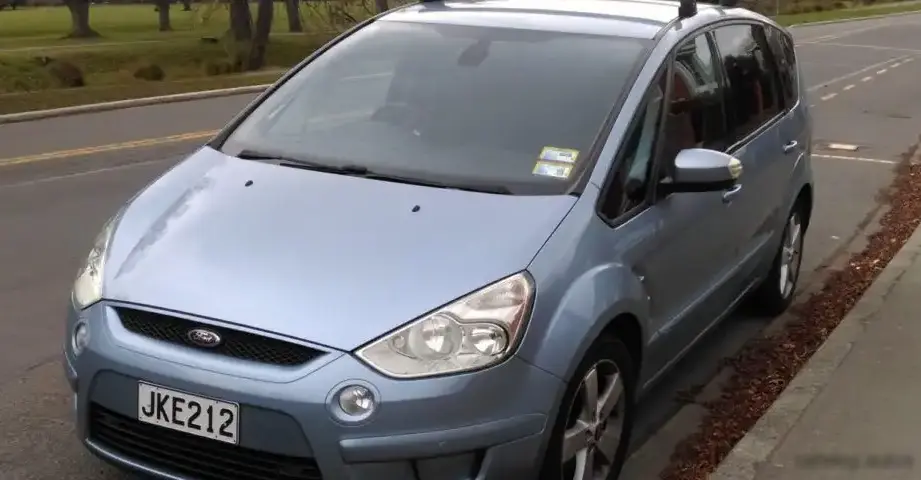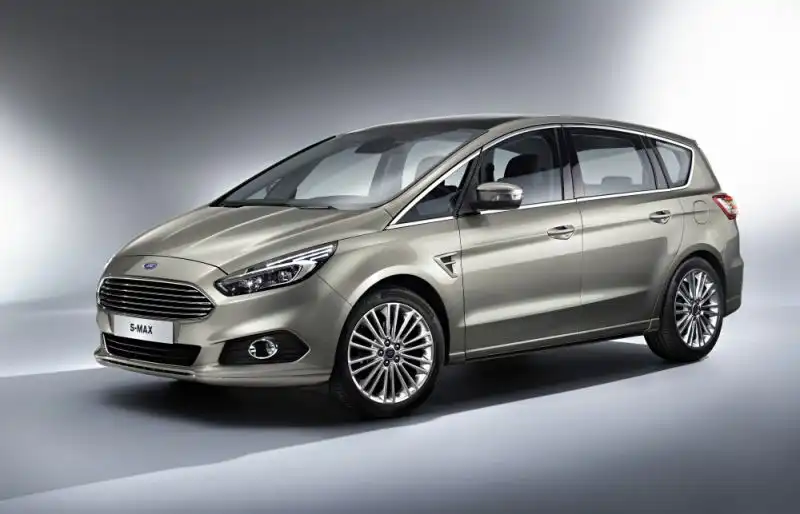
The Ford S-MAX II 2.0 TDCi (150 hp) PowerShift S&S 7-Seat, produced from 2015 to 2018, represents a significant iteration of Ford’s multi-purpose vehicle (MPV) offering. Positioned as a mid-range trim within the second-generation S-MAX lineup (introduced in 2015, internally designated as the second generation), this variant aimed to balance fuel efficiency, practicality, and a reasonable level of performance for family transport. It served primarily as a European market vehicle, though limited grey imports found their way to other regions. The S-MAX II, built on the Ford C240 platform, was designed to compete with vehicles like the Volkswagen Sharan and Seat Alhambra, offering a more dynamic driving experience than many of its competitors.
Technical Specifications
| Brand | Ford |
| Model | S-MAX |
| Generation | S-MAX II |
| Type | 2.0 TDCi (150 Hp) PowerShift S&S 7 Seat |
| Start of production | 2015 |
| End of production | 2018 |
| Powertrain Architecture | Internal Combustion engine |
| Body type | MPV |
| Seats | 7 |
| Doors | 5 |
| Fuel consumption (urban) | 6.1 l/100 km (38.6 US mpg, 46.3 UK mpg, 16.4 km/l) |
| Fuel consumption (extra urban) | 4.9 l/100 km (48 US mpg, 57.6 UK mpg, 20.4 km/l) |
| Fuel consumption (combined) | 5.4 l/100 km (43.6 US mpg, 52.3 UK mpg, 18.5 km/l) |
| CO2 emissions | 139 g/km |
| Fuel Type | Diesel |
| Acceleration 0 – 100 km/h | 10.8 sec |
| Acceleration 0 – 62 mph | 10.8 sec |
| Acceleration 0 – 60 mph | 10.3 sec |
| Maximum speed | 196 km/h (121.79 mph) |
| Emission standard | Euro 6 |
| Weight-to-power ratio | 11.6 kg/Hp, 86.6 Hp/tonne |
| Weight-to-torque ratio | 5 kg/Nm, 202 Nm/tonne |
| Power | 150 Hp @ 3500 rpm |
| Power per litre | 75.1 Hp/l |
| Torque | 350 Nm @ 2000-2500 rpm (258.15 lb.-ft. @ 2000-2500 rpm) |
| Engine layout | Front, Transverse |
| Engine Model/Code | T7CI, T7CJ, T7CK, T7CL |
| Engine displacement | 1997 cm3 (121.86 cu. in.) |
| Number of cylinders | 4 |
| Engine configuration | Inline |
| Cylinder Bore | 85 mm (3.35 in.) |
| Piston Stroke | 88 mm (3.46 in.) |
| Compression ratio | 17:1 |
| Number of valves per cylinder | 4 |
| Fuel injection system | Diesel Commonrail |
| Engine aspiration | Turbocharger, Intercooler |
| Valvetrain | DOHC |
| Engine oil capacity | 5.6 l (5.92 US qt | 4.93 UK qt) |
| Coolant | 8.2 l (8.66 US qt | 7.21 UK qt) |
| Kerb Weight | 1733 kg (3820.61 lbs.) |
| Max. weight | 2540 kg (5599.74 lbs.) |
| Max load | 807 kg (1779.13 lbs.) |
| Trunk (boot) space – minimum | 285 l (10.06 cu. ft.) |
| Trunk (boot) space – maximum | 2020 l (71.34 cu. ft.) |
| Fuel tank capacity | 70 l (18.49 US gal | 15.4 UK gal) |
| Length | 4796 mm (188.82 in.) |
| Width | 1916 mm (75.43 in.) |
| Width including mirrors | 2137 mm (84.13 in.) |
| Height | 1655 mm (65.16 in.) |
| Wheelbase | 2849 mm (112.17 in.) |
| Front track | 1606 mm (63.23 in.) |
| Rear (Back) track | 1606 mm (63.23 in.) |
| Ride height (ground clearance) | 128-150 mm (5.04 – 5.91 in.) |
| Minimum turning circle | 12 m (39.37 ft.) |
| Drivetrain Architecture | Front wheel drive |
| Number of gears | 6 |
| Gearbox type | Automatic transmission PowerShift |
| Front suspension | Independent, type McPherson with coil spring and anti-roll bar |
| Rear suspension | Independent coil spring |
| Front brakes | Ventilated discs |
| Rear brakes | Disc |
| Assisting systems | ABS (Anti-lock braking system) |
| Steering type | Steering rack and pinion |
| Tires size | 235/55 R17; 235/50 R18; 245/45 R19 |
| Wheel rims size | 7.5J x 17; 7.5J x 18; 8J x 19 |
Powertrain & Engine Architecture
The heart of the S-MAX II 2.0 TDCi is the Ford Duratorq engine family. Specifically, this variant utilizes the 2.0-liter turbocharged diesel engine, identified by engine codes T7CI, T7CJ, T7CK, and T7CL depending on the specific calibration and market. This engine features a common-rail direct injection system, delivering fuel at extremely high pressures for optimized combustion. The engine employs a double overhead camshaft (DOHC) valvetrain with four valves per cylinder, enhancing breathing and contributing to its power output. A turbocharger with an intercooler further boosts performance. The PowerShift transmission is a 6-speed dual-clutch transmission (DCT), offering quicker and smoother gear changes compared to a traditional automatic. The ‘S&S’ designation indicates the inclusion of Ford’s Auto-Start-Stop system, designed to improve fuel economy by automatically shutting off the engine when the vehicle is stationary.
Driving Characteristics
The 150 hp output, coupled with the PowerShift transmission, provides adequate performance for everyday driving and family duties. Acceleration from 0-60 mph takes around 10.3 seconds, and the top speed is 121.79 mph. While not a sporty vehicle, the S-MAX II 2.0 TDCi offers a reasonably responsive driving experience. The PowerShift transmission is generally quick-shifting, but some drivers have reported occasional hesitation at low speeds. The gear ratios are tuned for fuel efficiency, meaning the engine can feel slightly strained when accelerating hard or climbing hills. Compared to the higher-output 2.0 TDCi variants (typically 185 hp) or the petrol-powered versions, this trim feels less powerful, but it compensates with improved fuel economy.
Equipment & Trim Levels
The 2.0 TDCi 150 hp PowerShift S&S 7-Seat typically came equipped with features such as air conditioning, a basic audio system with Bluetooth connectivity, alloy wheels, and front and rear electric windows. Higher trim levels, often available as optional packages, added features like a touchscreen infotainment system with navigation, parking sensors, heated seats, and a panoramic sunroof. Interior upholstery was generally cloth, with leather options available at extra cost. The S-MAX II offered a flexible seating configuration, with the second and third-row seats capable of folding flat to maximize cargo space.
Chassis & Braking
The S-MAX II utilizes an independent suspension setup on both the front and rear axles. The front suspension employs McPherson struts with coil springs and an anti-roll bar, while the rear features an independent multi-link suspension. This configuration provides a comfortable ride and good handling characteristics. Braking duties are handled by ventilated discs on the front wheels and solid discs on the rear. Anti-lock Braking System (ABS) is standard. The suspension tuning is geared towards comfort and stability, rather than outright sportiness.
Market Reception & Comparison
The S-MAX II 2.0 TDCi 150 hp PowerShift S&S 7-Seat was generally well-received by automotive critics as a practical and fuel-efficient family vehicle. Its fuel economy of around 43.6 US mpg combined was a significant selling point. However, some reviewers noted that the PowerShift transmission could be occasionally jerky, and the engine lacked the outright punch of the higher-output variants. Compared to the 185 hp TDCi, the 150 hp version offered lower running costs but sacrificed some performance. The 1.5 EcoBoost petrol engine offered a different driving experience, prioritizing refinement over fuel economy.
Legacy
The Ford S-MAX II 2.0 TDCi 150 hp PowerShift S&S 7-Seat remains a relatively common sight on the used car market. The Duratorq engine is generally considered reliable, although the PowerShift transmission has been known to experience issues in some cases, particularly early iterations. Regular maintenance, including timely transmission fluid changes, is crucial for ensuring the longevity of the PowerShift unit. Overall, this variant represents a sensible choice for buyers seeking a spacious, fuel-efficient, and reasonably well-equipped MPV.