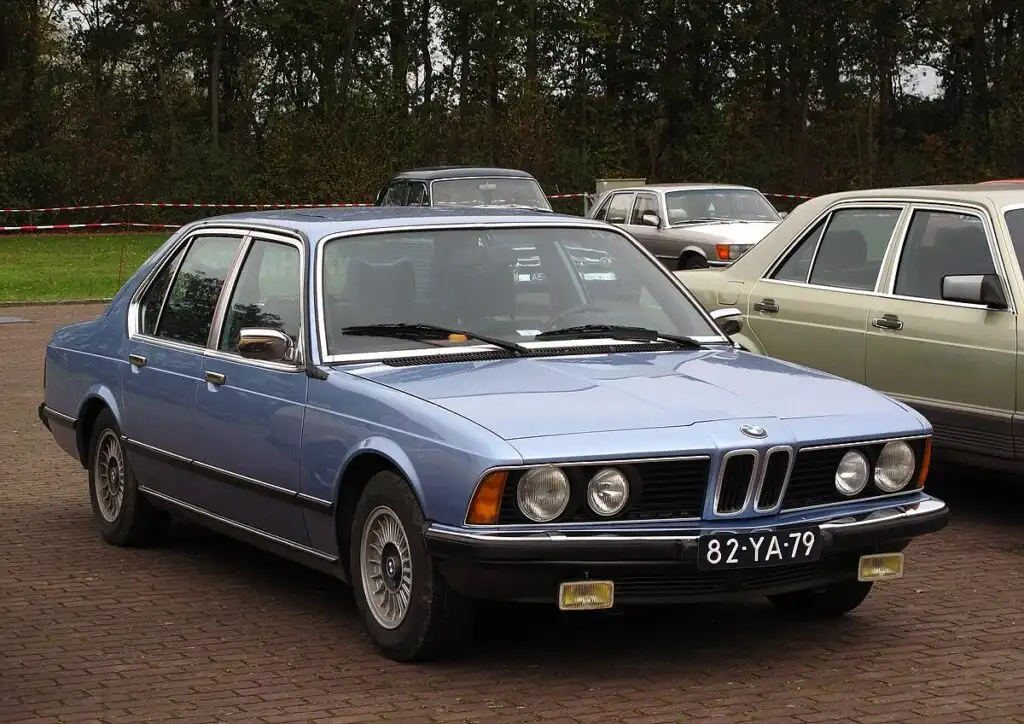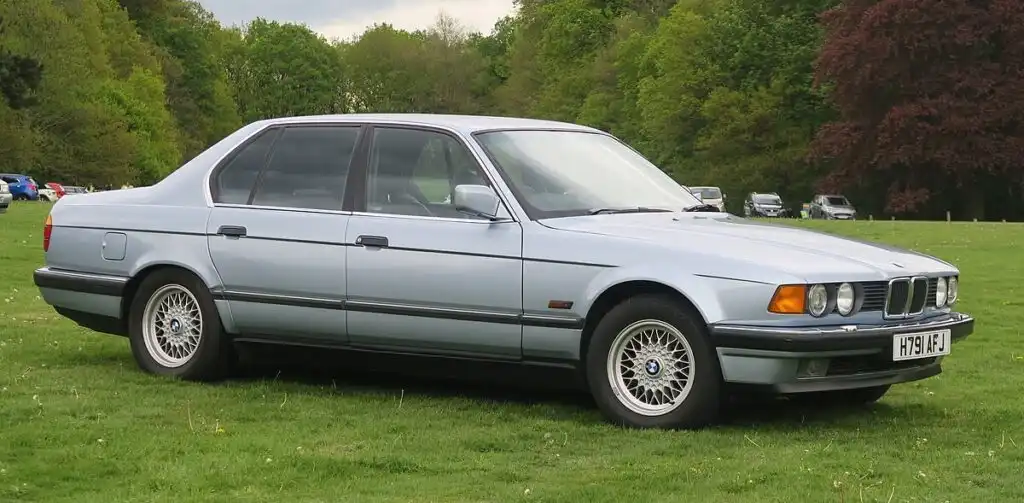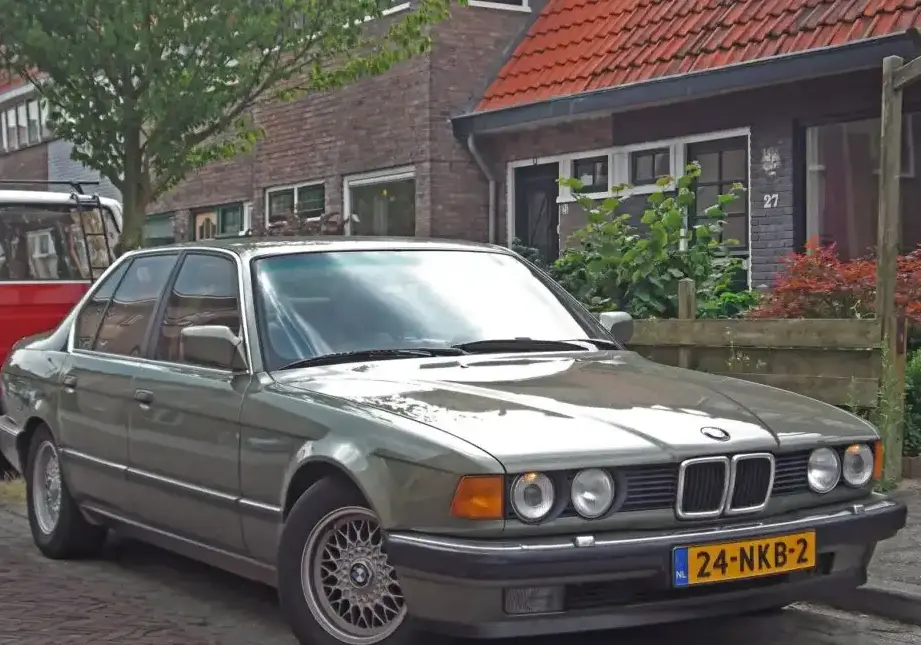
The BMW 750i, produced between 1987 and 1992 as part of the E32 7 Series generation, represented the pinnacle of BMW’s engineering and luxury during that era. This flagship sedan was designed to compete with the Mercedes-Benz S-Class and established BMW as a serious contender in the full-size luxury segment. The 750i, distinguished by its potent V12 engine, was the top-of-the-line model, offering a blend of performance and refinement unmatched by its siblings. It was a key model in establishing BMW’s reputation for driver-focused luxury and technological innovation.
Technical Specifications
| Brand | BMW |
| Model | 7 Series |
| Generation | 7 Series (E32) |
| Type (Engine) | 750i (300 Hp) Automatic |
| Start of production | 1987 |
| End of production | 1992 |
| Powertrain Architecture | Internal Combustion engine |
| Body type | Sedan |
| Seats | 5 |
| Doors | 4 |
| Fuel consumption (economy) – urban | 19.8 l/100 km (11.9 US mpg, 14.3 UK mpg, 5.1 km/l) |
| Fuel consumption (economy) – extra urban | 8.9 l/100 km (26.4 US mpg, 31.7 UK mpg, 11.2 km/l) |
| Fuel consumption (economy) – combined | 13.3 l/100 km (17.7 US mpg, 21.2 UK mpg, 7.5 km/l) |
| Fuel Type | Petrol (Gasoline) |
| Acceleration 0 – 100 km/h | 7.4 sec |
| Acceleration 0 – 62 mph | 7.4 sec |
| Acceleration 0 – 60 mph | 7 sec |
| Maximum speed | 250 km/h (155.34 mph) |
| Weight-to-power ratio | 6 kg/Hp, 166.7 Hp/tonne |
| Weight-to-torque ratio | 4 kg/Nm, 250 Nm/tonne |
| Power | 300 Hp @ 5200 rpm |
| Power per litre | 60.1 Hp/l |
| Torque | 450 Nm @ 4100 rpm (331.9 lb.-ft. @ 4100 rpm) |
| Engine layout | Front, Longitudinal |
| Engine Model/Code | M70B50 |
| Engine displacement | 4988 cm3 (304.39 cu. in.) |
| Number of cylinders | 12 |
| Engine configuration | V-engine |
| Cylinder Bore | 84 mm (3.31 in.) |
| Piston Stroke | 75 mm (2.95 in.) |
| Compression ratio | 8.8:1 |
| Number of valves per cylinder | 2 |
| Fuel injection system | Multi-port manifold injection |
| Engine aspiration | Naturally aspirated engine |
| Engine oil capacity | 7.5 l (7.93 US qt | 6.6 UK qt) |
| Coolant | 15 l (15.85 US qt | 13.2 UK qt) |
| Kerb Weight | 1800 kg (3968.32 lbs.) |
| Max. weight | 2320 kg (5114.72 lbs.) |
| Max load | 520 kg (1146.4 lbs.) |
| Trunk (boot) space – minimum | 500 l (17.66 cu. ft.) |
| Fuel tank capacity | 102 l (26.95 US gal | 22.44 UK gal) |
| Length | 4910 mm (193.31 in.) |
| Width | 1845 mm (72.64 in.) |
| Height | 1400 mm (55.12 in.) |
| Wheelbase | 2832 mm (111.5 in.) |
| Front track | 1528 mm (60.16 in.) |
| Rear (Back) track | 1556 mm (61.26 in.) |
| Drag coefficient (Cd) | 0.34 |
| Minimum turning circle (turning diameter) | 11.6 m (38.06 ft.) |
| Drivetrain Architecture | The Internal combustion engine (ICE) drives the rear wheels of the vehicle. |
| Drive wheel | Rear wheel drive |
| Number of gears and type of gearbox | 4 gears, automatic transmission |
| Front suspension | Coil spring |
| Rear suspension | Coil spring |
| Front brakes | Ventilated discs |
| Rear brakes | Disc |
| Assisting systems | ABS (Anti-lock braking system) |
| Steering type | Steering rack and pinion |
| Power steering | Hydraulic Steering |
| Tires size | 225/60 R15 |
| Wheel rims size | 15 |
Powertrain & Engine Architecture
The heart of the 750i was the M70B50, a 5.0-liter (4988 cc) V12 engine. This engine was a significant achievement in automotive engineering, featuring all-aluminum construction, a 60-degree V-angle, and dual overhead camshafts. The M70 employed Bosch Motronic fuel injection and ignition systems, delivering a smooth and responsive power delivery. The engine produced 300 horsepower at 5200 rpm and 450 Nm (331.9 lb-ft) of torque at 4100 rpm. The engine’s design prioritized refinement and low-end torque, making it well-suited for the grand touring nature of the 7 Series. Paired with the V12 was a 4-speed automatic transmission, specifically designed to handle the engine’s substantial power output. This transmission, while not as sophisticated as later iterations, provided smooth shifts and contributed to the car’s overall luxurious driving experience.
Driving Characteristics
The 750i offered a distinctly different driving experience compared to the 735i or 740i models. The V12 engine provided effortless acceleration and a remarkably smooth power delivery. While the 0-60 mph time of around 7 seconds doesn’t seem particularly quick by modern standards, the 750i’s strength lay in its ability to cruise at high speeds with minimal effort. The automatic transmission, while reliable, wasn’t known for its sportiness. Gear ratios were geared towards comfort and fuel efficiency rather than outright performance. Compared to the manual transmission options available on the 735i and 740i, the 750i automatic prioritized a relaxed and refined driving experience.
Equipment & Trim Levels
The 750i came standard with a comprehensive list of luxury features, befitting its flagship status. These included leather upholstery, power-adjustable front seats with memory function, climate control, a premium sound system, and power windows and locks. Wood trim adorned the interior, adding to the sense of opulence. Optional extras included a sunroof, upgraded sound systems, rear seat entertainment, and various exterior color options. The 750i was positioned as the ultimate expression of BMW luxury, and its equipment levels reflected that.
Chassis & Braking
The E32 7 Series featured an independent suspension on all four wheels, utilizing coil springs and shock absorbers. The 750i, due to its increased weight, often received slightly stiffer spring rates and thicker stabilizer bars compared to the lower-powered models. Braking duties were handled by ventilated disc brakes at the front and solid disc brakes at the rear. An Anti-lock Braking System (ABS) was standard equipment, enhancing safety and control. The steering was a power-assisted rack and pinion system, providing precise and responsive handling.
Market Reception & Comparison
The 750i was generally well-received by automotive critics, who praised its powerful engine, luxurious interior, and refined driving experience. However, its high price tag and relatively poor fuel economy (13.3 l/100 km combined) limited its appeal to a niche market. Compared to the 735i and 740i, the 750i offered significantly more performance but at a substantial cost premium. The 735i and 740i, with their inline-six engines, were considered more practical and fuel-efficient options for everyday driving. Reliability was generally good, although the complexity of the V12 engine meant that maintenance costs were higher.
Legacy
The E32 750i remains a highly sought-after classic car among BMW enthusiasts. The M70 V12 engine is renowned for its smoothness and durability, although maintenance can be expensive due to its complexity. Well-maintained examples command high prices in the used car market. The 750i’s legacy lies in its demonstration of BMW’s engineering prowess and its contribution to the evolution of the modern luxury sedan. It set a benchmark for performance and refinement that influenced subsequent generations of the 7 Series and other luxury vehicles.