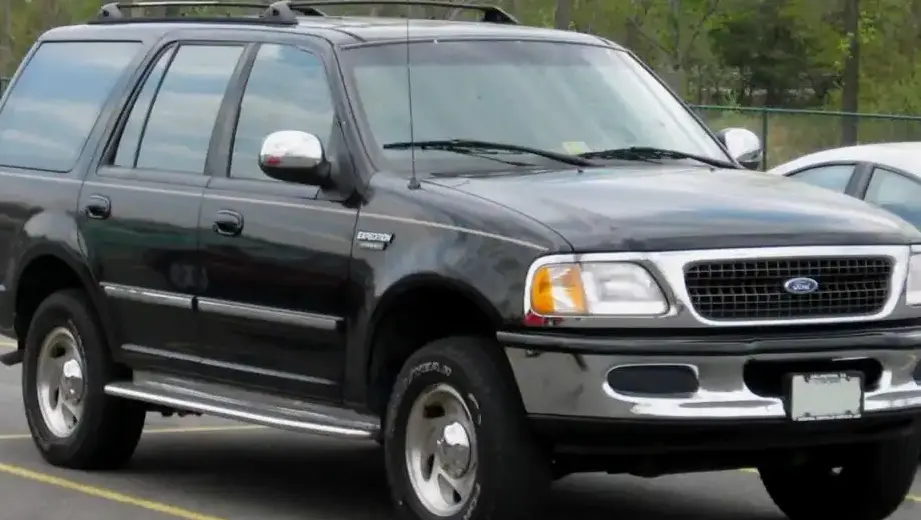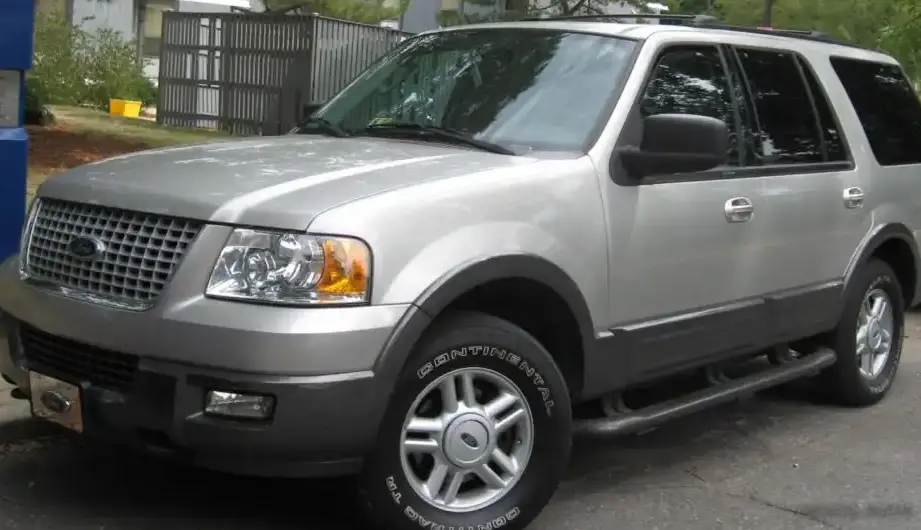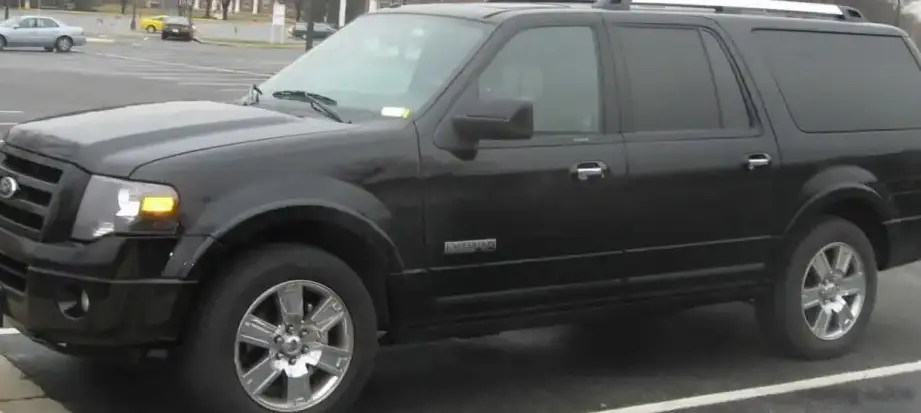
The Ford Expedition III EL (U354), specifically the variant equipped with the 5.4-liter V8 engine producing 300 horsepower and paired with a 4×4 drivetrain and automatic transmission, was a key offering in Ford’s full-size SUV lineup from 2006 to 2008. This extended-length version of the third-generation Expedition aimed to provide substantial interior space and towing capacity for large families and those with demanding hauling needs. It represented Ford’s commitment to the large SUV segment, competing directly with vehicles like the Chevrolet Suburban and GMC Yukon XL. This particular configuration occupied a mid-to-upper position within the Expedition range, offering a balance of power, capability, and features.
Technical Specifications
| Brand | Ford |
| Model | Expedition |
| Generation | Expedition III EL (U354) |
| Type (Engine) | 5.4 V8 (300 Hp) 4×4 Automatic |
| Start of production | August, 2006 |
| End of production | July, 2008 |
| Powertrain Architecture | Internal Combustion engine |
| Body type | SUV |
| Seats | 7-9 |
| Doors | 5 |
| Fuel Type | Petrol (Gasoline) |
| Power | 300 Hp @ 5000 rpm |
| Power per litre | 55.5 Hp/l |
| Torque | 495 Nm @ 3750 rpm / 365.09 lb.-ft. @ 3750 rpm |
| Engine layout | Front, Longitudinal |
| Engine Model/Code | Triton |
| Engine displacement | 5408 cm3 / 330.02 cu. in. |
| Number of cylinders | 8 |
| Engine configuration | V-engine |
| Cylinder Bore | 90.2 mm / 3.55 in. |
| Piston Stroke | 105.8 mm / 4.17 in. |
| Compression ratio | 9.85:1 |
| Number of valves per cylinder | 3 |
| Fuel injection system | Multi-port manifold injection |
| Engine aspiration | Naturally aspirated engine |
| Valvetrain | SOHC, VCT |
| Engine oil capacity | 6.6 l / 6.97 US qt | 5.81 UK qt |
| Coolant | 19.5 l / 20.61 US qt | 17.16 UK qt |
| Trunk (boot) space – minimum | 1206 l / 42.59 cu. ft. |
| Trunk (boot) space – maximum | 3704 l / 130.81 cu. ft. |
| Fuel tank capacity | 127 l / 33.55 US gal | 27.94 UK gal |
| Permitted trailer load with brakes (12%) | 3946 kg / 8699.44 lbs. |
| Length | 5621 mm / 221.3 in. |
| Width | 2002 mm / 78.82 in. |
| Width with mirrors folded | 2024 mm / 79.69 in. |
| Width including mirrors | 2332 mm / 91.81 in. |
| Height | 1989 mm / 78.31 in. |
| Wheelbase | 3327 mm / 130.98 in. |
| Front track | 1702 mm / 67.01 in. |
| Rear (Back) track | 1707 mm / 67.2 in. |
| Front overhang | 996 mm / 39.21 in. |
| Rear overhang | 1298 mm / 51.1 in. |
| Ride height (ground clearance) | 221 mm / 8.7 in. |
| Approach angle | 24.1° |
| Departure angle | 20.9° |
| Ramp-over (brakeover) angle | 18.7° |
| Drivetrain Architecture | The Internal combustion engine (ICE) drives the rear wheels permanently, and the front wheels are driven through an electrically or mechanically operated clutch if necessary. |
| Drive wheel | All wheel drive (4×4) |
| Number of gears and type of gearbox | 6 gears, automatic transmission |
| Front suspension | Coil spring, Double wishbone, Transverse stabilizer |
| Rear suspension | Independent multi-link spring suspension with stabilizer, Air Suspension – Optional |
| Front brakes | Ventilated discs |
| Rear brakes | Ventilated discs |
| Assisting systems | ABS (Anti-lock braking system) |
| Steering type | Steering rack and pinion |
| Power steering | Hydraulic Steering |
| Tires size | 255/70 R18; 275/55 R20 |
| Wheel rims size | 18; 20 |
Powertrain & Engine Architecture
The heart of this Expedition variant is Ford’s 5.4-liter Triton V8 engine. This engine, designated with various codes throughout its production run, is a three-valve-per-cylinder design featuring a single overhead camshaft (SOHC) and variable valve timing (VCT). The multi-port fuel injection system delivers fuel directly to each cylinder, optimizing combustion. The 5.4L Triton was known for its robust construction and relatively simple design, contributing to its longevity. The engine’s longitudinal mounting within the chassis and the rear-wheel-drive bias, coupled with an electronically controlled transfer case, provide the foundation for the 4×4 capability. The automatic transmission used in this model is a six-speed unit, designed to handle the engine’s torque output and provide smooth shifting. This transmission was a significant upgrade from the earlier four-speed automatics, improving both fuel efficiency and overall driving experience.
Driving Characteristics
The 300 horsepower and 365 lb-ft of torque delivered by the 5.4-liter V8, while substantial, resulted in a driving experience that prioritized capability over outright speed. Acceleration was adequate for a vehicle of this size and weight, but not particularly brisk. The six-speed automatic transmission helped to keep the engine in its optimal power band, but the sheer mass of the Expedition EL meant that passing maneuvers required planning. Compared to the higher-output versions of the Expedition, or those equipped with the smaller, more fuel-efficient engines, this variant offered a balance between performance and economy. The 4×4 system provided confident traction in various conditions, making it suitable for towing and light off-road use. The ride quality, particularly with the optional air suspension, was generally comfortable, absorbing bumps and irregularities in the road surface effectively.
Equipment & Trim Levels
The Expedition EL with the 5.4L V8 and 4×4 typically came standard with features such as air conditioning, power windows and locks, a CD player, and cloth upholstery. Higher trim levels, like the Eddie Bauer or Limited, added features like leather upholstery, heated seats, a premium sound system, and power-adjustable pedals. Optional extras included a DVD entertainment system, a navigation system, and a sunroof. The extended length of the EL model provided ample space for passengers and cargo, making it a popular choice for families. The third-row seats could be folded flat to maximize cargo capacity, and the power-folding running boards made access easier for passengers.
Chassis & Braking
The Expedition EL utilized a body-on-frame construction, providing a robust and durable platform. The front suspension featured an independent double wishbone design with coil springs and a transverse stabilizer bar. The rear suspension was an independent multi-link setup, also with a stabilizer bar. Optional air suspension was available, providing adjustable ride height and improved comfort. Braking duties were handled by ventilated discs on all four wheels, coupled with an anti-lock braking system (ABS) for enhanced safety. The braking system was adequately sized for the vehicle’s weight, but required a firm pedal input to bring the Expedition EL to a stop quickly.
Market Reception & Comparison
The 2006-2008 Ford Expedition EL 5.4L 4×4 Automatic received generally positive reviews, with critics praising its spacious interior, towing capacity, and comfortable ride. However, fuel economy was a common concern, as the 5.4-liter V8 was not particularly efficient. Compared to the smaller-engined Expeditions, the 5.4L offered more power and towing capability, but at the expense of fuel economy. Reliability was generally good, although some owners reported issues with the spark plugs breaking during removal, a common problem with the Triton V8 engines. The Expedition EL competed directly with the Chevrolet Suburban and GMC Yukon XL, offering a similar level of space and capability.
Legacy
The 5.4-liter Triton V8-powered Expedition EL remains a popular choice in the used car market, particularly for those seeking a large, capable SUV with ample space and towing capacity. While fuel economy is not its strong suit, the engine’s robust construction and relatively simple design contribute to its long-term reliability. Regular maintenance, including timely spark plug replacement (using the updated, anti-breakage plugs), is crucial to ensure the engine’s longevity. The Expedition EL’s spacious interior and comfortable ride continue to appeal to families and those who need a versatile vehicle for both everyday use and occasional towing or off-road adventures.