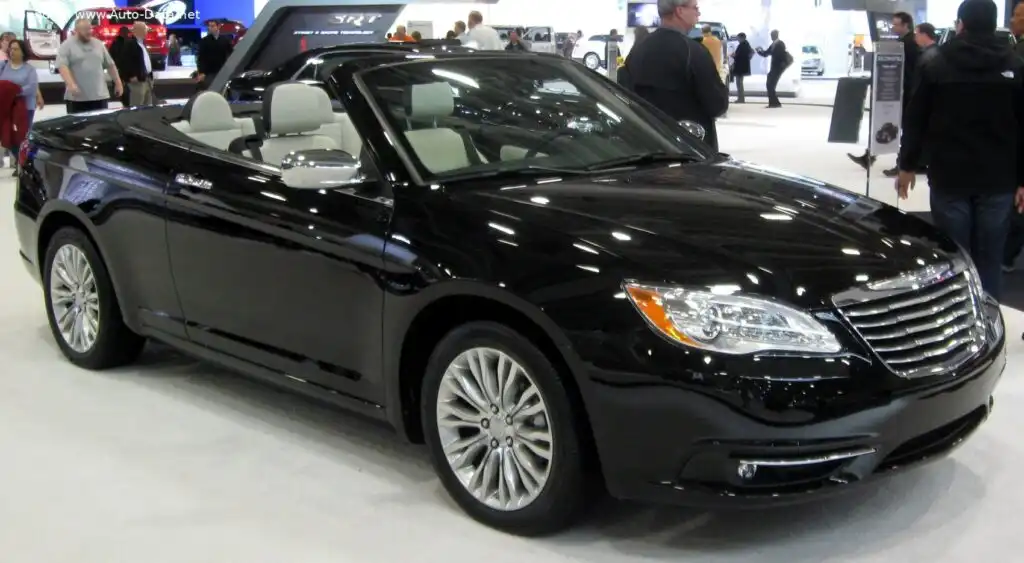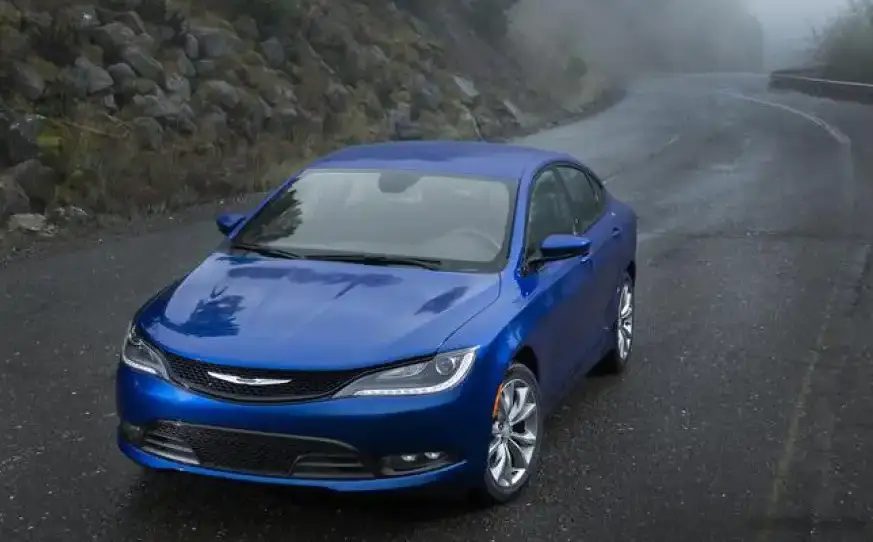
The Chrysler 200, launched for the 2011 model year, represented a significant step forward for the brand, aiming to compete more effectively in the mid-size sedan segment. The 2.4-liter (175 hp) automatic variant, produced from December 2010 through 2014, served as the entry-level powertrain option for the first generation (200 I) of the redesigned model. Positioned as the most accessible trim, it targeted buyers prioritizing fuel efficiency and affordability over outright performance. This model was a key part of Chrysler’s attempt to modernize its lineup and appeal to a broader customer base following its restructuring under Fiat ownership.
Technical Specifications
| Brand | Chrysler |
| Model | 200 |
| Generation | 200 I |
| Type (Engine) | 2.4 (175 Hp) Automatic |
| Start of production | December, 2010 |
| End of production | 2014 |
| Powertrain Architecture | Internal Combustion engine |
| Body type | Sedan |
| Seats | 5 |
| Doors | 4 |
| Fuel consumption (urban) | 11.2 l/100 km (21 US mpg) |
| Fuel consumption (extra urban) | 7.8 l/100 km (30.2 US mpg) |
| Fuel consumption (combined) | 9.8 l/100 km (24 US mpg) |
| Fuel Type | Petrol (Gasoline) |
| Emission standard | Euro 4 |
| Weight-to-power ratio | 8.8 kg/Hp |
| Weight-to-torque ratio | 6.9 kg/Nm |
| Power | 175 Hp @ 6000 rpm |
| Power per litre | 74.2 Hp/l |
| Torque | 225 Nm @ 4400 rpm (165.95 lb.-ft. @ 4400 rpm) |
| Maximum engine speed | 6500 rpm |
| Engine layout | Front, Transverse |
| Engine Model/Code | EDG |
| Engine displacement | 2360 cm3 (144.02 cu. in.) |
| Number of cylinders | 4 |
| Engine configuration | Inline |
| Cylinder Bore | 88 mm (3.46 in.) |
| Piston Stroke | 97 mm (3.82 in.) |
| Compression ratio | 10.5:1 |
| Number of valves per cylinder | 4 |
| Fuel injection system | Multi-port manifold injection |
| Engine aspiration | Naturally aspirated engine |
| Valvetrain | DOHC-VVT |
| Engine oil capacity | 4.4 l (4.65 US qt | 3.87 UK qt) |
| Coolant | 7.3 l (7.71 US qt | 6.42 UK qt) |
| Kerb Weight | 1543 kg (3401.73 lbs.) |
| Trunk (boot) space – minimum | 390 l (13.77 cu. ft.) |
| Fuel tank capacity | 64 l (16.91 US gal | 14.08 UK gal) |
| Permitted trailer load without brakes | 450 kg (992.08 lbs.) |
| Length | 4870 mm (191.73 in.) |
| Width | 1843 mm (72.56 in.) |
| Width including mirrors | 2121 mm (83.5 in.) |
| Height | 1482 mm (58.35 in.) |
| Wheelbase | 2765 mm (108.86 in.) |
| Front track | 1567 mm (61.69 in.) |
| Rear (Back) track | 1594 mm (62.76 in.) |
| Drag coefficient (Cd) | 0.34 |
| Minimum turning circle (turning diameter) | 11.2 m (36.75 ft.) |
| Drivetrain Architecture | Front wheel drive |
| Number of gears and type of gearbox | 4 gears, automatic transmission |
| Front suspension | Independent, type McPherson with coil spring and anti-roll bar |
| Rear suspension | Independent multi-link spring suspension with stabilizer |
| Front brakes | Ventilated discs, 294×26 mm |
| Rear brakes | Disc, 262×10 mm |
| Assisting systems | ABS (Anti-lock braking system) |
| Steering type | Steering rack and pinion |
| Tires size | 225/55 R17; 225/50 R18 |
| Wheel rims size | 6.5J x 17; 7J x 18 |
Powertrain & Engine Architecture
The heart of this 200 variant was the Chrysler EDG 2.4-liter inline-four cylinder engine. This engine, part of the World Engine family developed in collaboration with Hyundai, featured a dual overhead camshaft (DOHC) design with variable valve timing (VVT) on both intake and exhaust valves. The multi-port fuel injection system delivered fuel directly to the intake ports, optimizing combustion efficiency. The engine produced 175 horsepower at 6000 rpm and 225 Nm (165.95 lb-ft) of torque at 4400 rpm. Paired with this engine was a four-speed automatic transmission, a relatively conventional choice for the time. While not offering the efficiency of more modern transmissions with greater gear counts, it provided smooth and predictable shifts suitable for everyday driving.
Driving Characteristics
The 2.4-liter engine and four-speed automatic combination delivered adequate, but not exhilarating, performance. Acceleration was sufficient for typical commuting and highway merging, but lacked the punch of the optional 3.6-liter Pentastar V6. The automatic transmission’s gear ratios were tuned for fuel economy rather than aggressive acceleration. The lower gear ratios provided reasonable initial acceleration, while the higher gears allowed for relaxed cruising at highway speeds. Compared to the manual transmission option (available on other 200 trims), the automatic offered greater convenience but at the expense of driver engagement and fuel efficiency. The overall driving experience was comfortable and predictable, prioritizing ease of use over sporty handling.
Equipment & Trim Levels
The 2.4-liter automatic trim typically came standard with features such as air conditioning, power windows and locks, a basic audio system with auxiliary input, and standard safety equipment like ABS and multiple airbags. Interior upholstery was generally cloth, with a straightforward dashboard layout. Optional extras included upgraded audio systems, alloy wheels, a sunroof, and remote keyless entry. The base trim level focused on providing essential features at an affordable price point, making it an attractive option for budget-conscious buyers. Higher trim levels, such as the Limited and Touring, added more luxury and convenience features.
Chassis & Braking
The Chrysler 200 utilized an independent McPherson strut front suspension and an independent multi-link rear suspension. This setup aimed to provide a balance between ride comfort and handling. The front suspension incorporated a coil spring and anti-roll bar to reduce body roll during cornering. Braking duties were handled by ventilated discs at the front and solid discs at the rear. ABS (Anti-lock Braking System) was standard, enhancing braking performance and stability in emergency situations. The suspension tuning was geared towards providing a comfortable ride, rather than a particularly sporty feel.
Market Reception & Comparison
Critics generally viewed the 2.4-liter automatic Chrysler 200 as a competent, but unremarkable, offering in the mid-size sedan segment. Its fuel economy of around 24 mpg combined was competitive for its time, but not class-leading. Reliability was generally considered average, with some reports of minor issues with the engine and transmission. Compared to the V6-powered 200 models, the 2.4-liter version offered significantly lower performance but a lower price tag. Competitors like the Toyota Camry, Honda Accord, and Ford Fusion offered more refined driving experiences and stronger resale values, but the 200 often undercut them on price.
Legacy
The 2.4-liter engine and four-speed automatic transmission combination proved to be reasonably durable, with many examples still on the road today. However, as with any older vehicle, maintenance is key to long-term reliability. Common issues include oil leaks, sensor failures, and transmission slipping. On the used car market, the 2.4-liter 200 is typically the most affordable option, making it an attractive choice for buyers seeking a budget-friendly mid-size sedan. While it may not offer the performance or features of higher-end trims, it provides a comfortable and reliable transportation option for those prioritizing value and fuel efficiency.