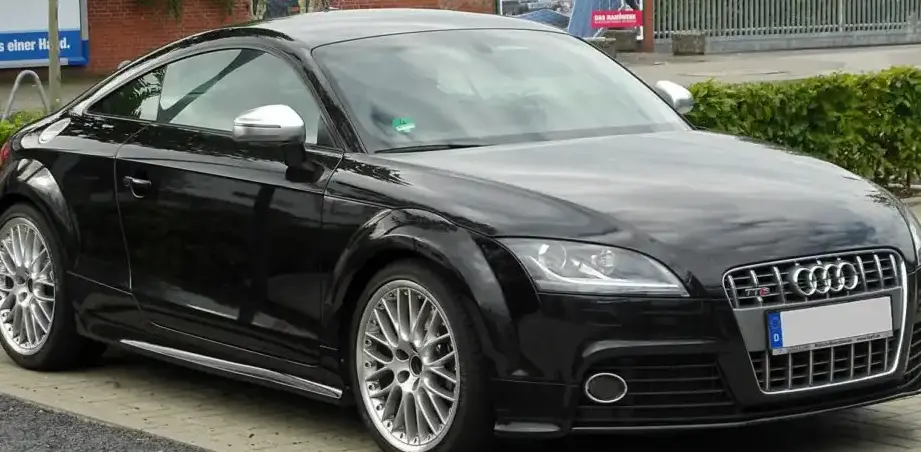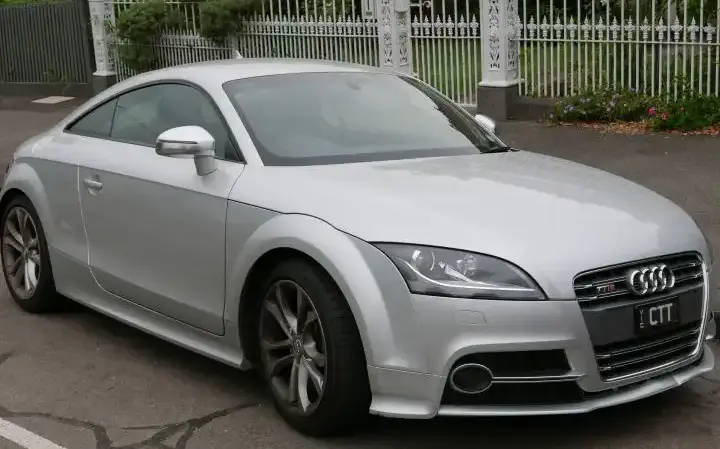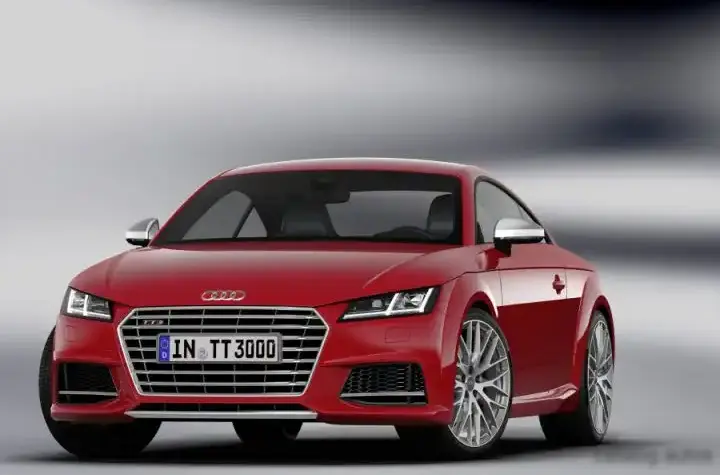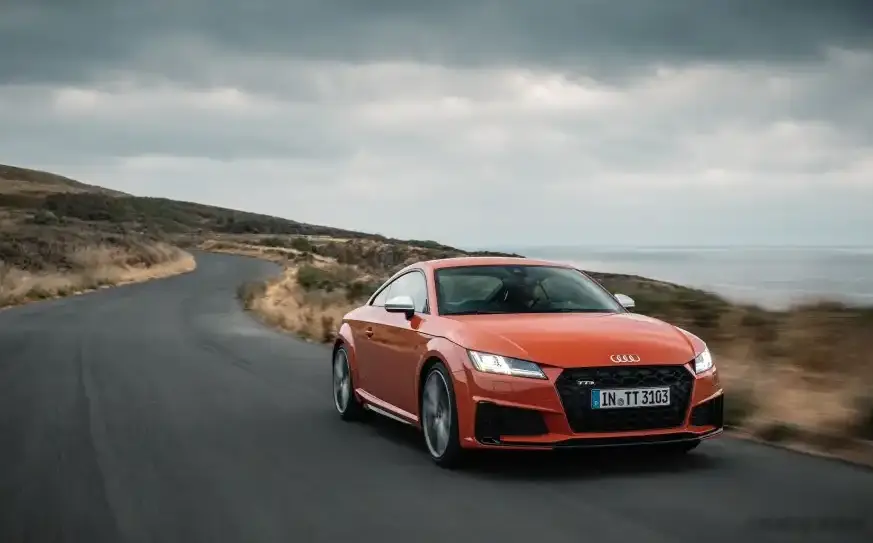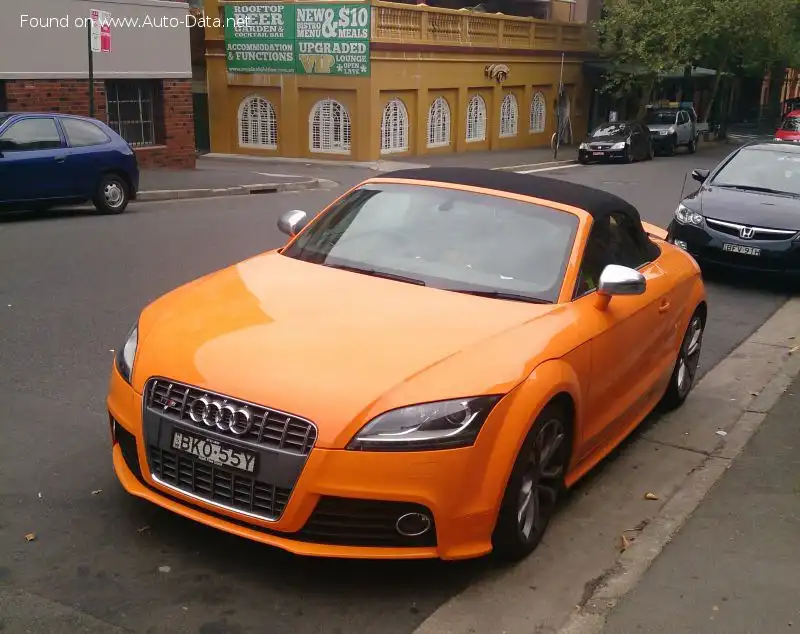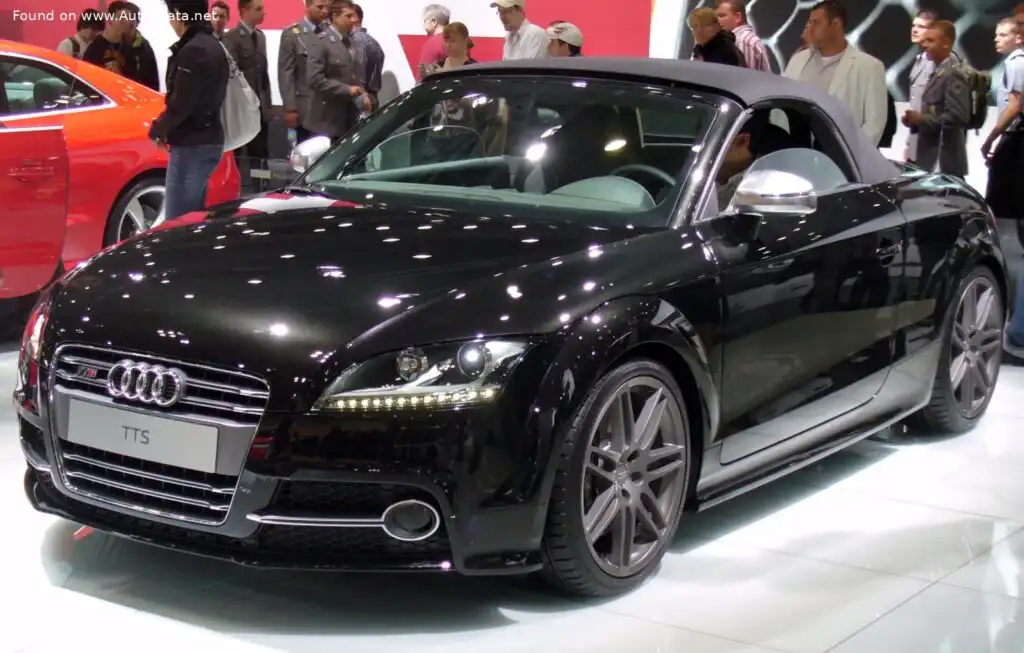
The Audi TTS Roadster (8J, facelift) with the 2.0 TFSI 272 horsepower engine and S tronic dual-clutch transmission represents a compelling blend of performance and open-air driving enjoyment. Produced from 2010 to 2014, this variant occupied the upper echelon of the 8J TT Roadster lineup, positioned above the base 2.0 TFSI models and below the even more potent TT RS. It built upon the foundation of the 8J platform – shared with the Volkswagen Golf Mk5 and Audi A3 – offering a more focused driving experience with enhanced power and sophisticated all-wheel drive.
Technical Specifications
| Brand | Audi |
| Model | TT |
| Generation | TTS Roadster (8J, facelift 2010) |
| Type (Engine) | 2.0 TFSI (272 Hp) quattro S tronic |
| Start of production | 2010 |
| End of production | 2014 |
| Powertrain Architecture | Internal Combustion engine |
| Body type | Roadster |
| Seats | 2 |
| Doors | 2 |
| Fuel consumption (economy) – urban (NEDC) | 10.8 l/100 km (21.8 US mpg, 26.2 UK mpg, 9.3 km/l) |
| Fuel consumption (economy) – extra urban (NEDC) | 6.2 l/100 km (37.9 US mpg, 45.6 UK mpg, 16.1 km/l) |
| Fuel consumption (economy) – combined (NEDC) | 7.9 l/100 km (29.8 US mpg, 35.8 UK mpg, 12.7 km/l) |
| CO2 emissions (NEDC) | 184 g/km |
| Fuel Type | Petrol (Gasoline) |
| Acceleration 0 – 100 km/h | 5.5 sec |
| Acceleration 0 – 62 mph | 5.5 sec |
| Acceleration 0 – 60 mph | 5.2 sec |
| Maximum speed | 250 km/h (155.34 mph), Electronically limited |
| Emission standard | Euro 5 |
| Weight-to-power ratio | 5.5 kg/Hp, 181.9 Hp/tonne |
| Weight-to-torque ratio | 4.3 kg/Nm, 234.1 Nm/tonne |
| Power | 272 Hp @ 6000 rpm |
| Power per litre | 137.1 Hp/l |
| Torque | 350 Nm @ 2500-5000 rpm (258.15 lb.-ft. @ 2500-5000 rpm) |
| Engine layout | Front, Transverse |
| Engine Model/Code | EA113 / CDLB |
| Engine displacement | 1984 cm3 (121.07 cu. in.) |
| Number of cylinders | 4 |
| Engine configuration | Inline |
| Cylinder Bore | 82.5 mm (3.25 in.) |
| Piston Stroke | 92.8 mm (3.65 in.) |
| Compression ratio | 9.8:1 |
| Number of valves per cylinder | 4 |
| Fuel injection system | Direct injection |
| Engine aspiration | Turbocharger, Intercooler |
| Valvetrain | DOHC |
| Engine oil capacity | 4.6 l (4.86 US qt | 4.05 UK qt) |
| Coolant | 8.6 l (9.09 US qt | 7.57 UK qt) |
| Kerb Weight | 1495 kg (3295.91 lbs.) |
| Max. weight | 1815 kg (4001.39 lbs.) |
| Max load | 320 kg (705.48 lbs.) |
| Trunk (boot) space – minimum | 250 l (8.83 cu. ft.) |
| Fuel tank capacity | 60 l (15.85 US gal | 13.2 UK gal) |
| Length | 4198 mm (165.28 in.) |
| Width | 1842 mm (72.52 in.) |
| Width including mirrors | 1952 mm (76.85 in.) |
| Height | 1350 mm (53.15 in.) |
| Wheelbase | 2468 mm (97.17 in.) |
| Front track | 1555 mm (61.22 in.) |
| Rear (Back) track | 1546 mm (60.87 in.) |
| Front overhang | 911 mm (35.87 in.) |
| Rear overhang | 819 mm (32.24 in.) |
| Drag coefficient (Cd) | 0.33 |
| Minimum turning circle (turning diameter) | 10.96 m (35.96 ft.) |
| Drivetrain Architecture | All wheel drive (4×4). Internal Combustion engine. The Internal combustion engine (ICE) drives the front wheels permanently, and the rear wheels are driven through an electrically or mechanically operated clutch if necessary. |
| Drive wheel | All wheel drive (4×4) |
| Number of gears and type of gearbox | 6 gears, automatic transmission S tronic |
| Front suspension | Independent, type McPherson with coil spring and anti-roll bar |
| Rear suspension | Independent multi-link spring suspension with stabilizer |
| Front brakes | Ventilated discs, 340 mm |
| Rear brakes | Ventilated discs, 310 mm |
| Assisting systems | ABS (Anti-lock braking system) |
| Steering type | Steering rack and pinion |
| Power steering | Electric Steering |
| Tires size | 245/40 R18; 255/35 R19 |
| Wheel rims size | 9J x 18; 9J x 19 |
INTRODUCTION
The Audi TTS Roadster (8J, facelift) 2.0 TFSI with the S tronic transmission, produced between 2010 and 2014, represents a significant step up in performance from the standard TT Roadster. The “facelift” designation refers to styling and technological updates applied mid-cycle to the 8J generation. This model aimed to deliver a more engaging and sporty driving experience while retaining the everyday usability expected of an Audi. It slotted into the TT range as a performance-oriented variant, bridging the gap between the entry-level 2.0 TFSI and the range-topping TT RS.
Powertrain & Engine Architecture
At the heart of the TTS Roadster lies the EA113 2.0-liter turbocharged four-cylinder engine, specifically the CDLB engine code. This engine produced 272 horsepower at 6000 rpm and 350 Nm (258 lb-ft) of torque between 2500 and 5000 rpm. The engine utilizes direct fuel injection (FSI) and a high-pressure turbocharger with an intercooler to maximize power and efficiency. The cylinder head features a dual overhead camshaft (DOHC) design with four valves per cylinder. The S tronic transmission is a six-speed dual-clutch gearbox that provides incredibly fast and smooth gear changes. This transmission allows for both fully automatic operation and manual gear selection via steering wheel-mounted paddles or the gear selector. The quattro all-wheel-drive system is integral to the TTS’s performance, utilizing a multi-plate clutch to distribute power between the front and rear axles as needed, enhancing traction and stability.
Driving Characteristics
The 272 hp and 350 Nm of torque, combined with the S tronic transmission and quattro all-wheel drive, deliver exhilarating performance. Acceleration from 0 to 60 mph takes approximately 5.2 seconds, and the car is electronically limited to a top speed of 155 mph. The S tronic transmission’s quick shifts contribute significantly to the car’s responsiveness. Compared to the standard 2.0 TFSI Roadster, the TTS offers a noticeably more urgent throttle response and a broader powerband. While the manual transmission offered in other TT variants provided a more direct connection for driving purists, the S tronic offered superior acceleration and convenience. The quattro system provides excellent grip in all weather conditions, inspiring confidence during spirited driving. The gear ratios are tuned for performance, prioritizing acceleration over outright fuel economy.
Equipment & Trim Levels
The TTS Roadster came generously equipped as standard. Interior features typically included leather upholstery, sport seats with adjustable lumbar support, a multi-function steering wheel, and Audi’s MMI infotainment system. Standard exterior features included 18-inch alloy wheels, xenon headlights, and a rear spoiler. Optional extras included 19-inch wheels, a Bang & Olufsen sound system, navigation, and various interior trim options. The TTS trim level was generally considered the premium offering within the 8J Roadster range, offering a more luxurious and technologically advanced experience than the base models.
Chassis & Braking
The TTS Roadster features a sport-tuned suspension with McPherson struts at the front and a multi-link setup at the rear. Stabilizer bars are fitted to both axles to reduce body roll during cornering. Braking duties are handled by ventilated disc brakes on all four wheels, measuring 340mm at the front and 310mm at the rear. The ABS (Anti-lock Braking System) is standard, providing enhanced braking performance and stability. The chassis is reinforced compared to the standard TT Roadster to handle the increased power and torque.
Market Reception & Comparison
The TTS Roadster was generally well-received by automotive critics, who praised its performance, handling, and refined interior. Compared to the base 2.0 TFSI Roadster, the TTS offered a significant performance upgrade, justifying its higher price tag. Fuel economy was respectable for a performance car, averaging around 29.8 US mpg in combined driving. Reliability was generally good, although some owners reported issues with the turbocharger and direct injection system. Compared to rivals like the Porsche Boxster, the TTS Roadster offered a more practical and affordable alternative, albeit with a slightly less focused driving experience.
Legacy
The Audi TTS Roadster (8J, facelift) 2.0 TFSI with S tronic remains a desirable used sports car today. The EA113 engine, while known for potential carbon buildup issues if not properly maintained, is generally reliable when serviced regularly. The S tronic transmission is robust but requires fluid changes according to Audi’s recommended schedule. The TTS Roadster’s combination of performance, style, and practicality has ensured its continued appeal to enthusiasts seeking an engaging and rewarding driving experience. Its quattro all-wheel drive system makes it a capable year-round vehicle, and its relatively compact size makes it easy to live with on a daily basis.