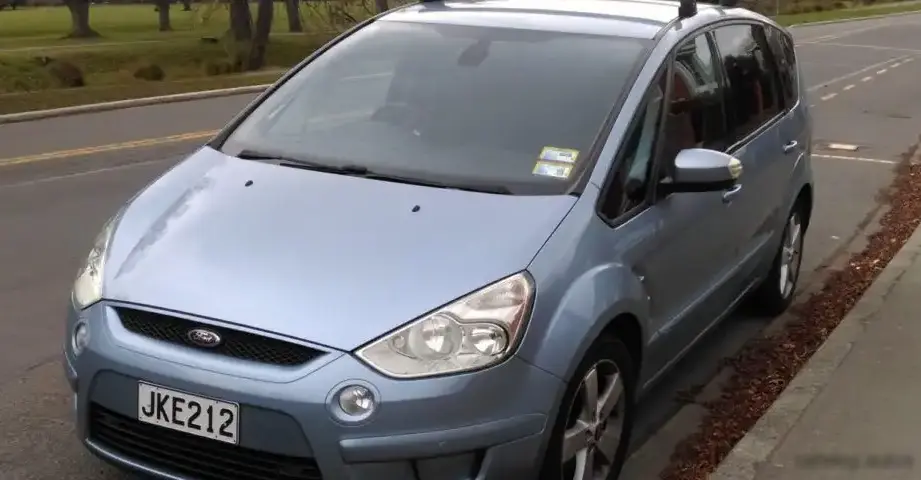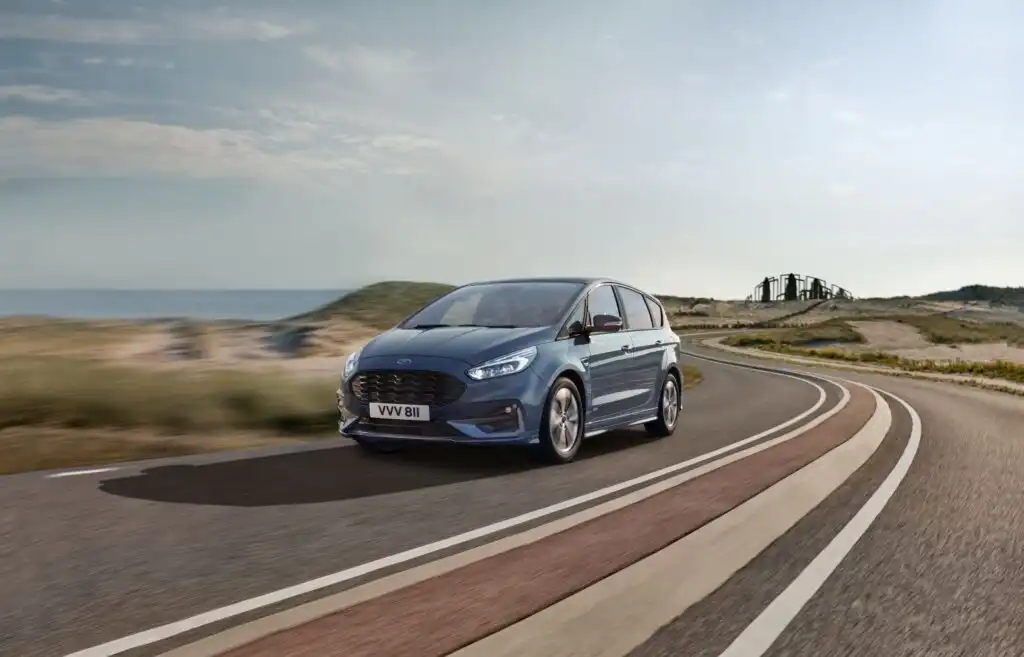
The Ford S-MAX II, specifically the 2.0 EcoBlue (150 hp) Automatic variant produced from November 2019 to April 2023, represents a mid-cycle refresh of the second-generation S-MAX (introduced in 2015). Positioned as a mainstream offering within the S-MAX lineup, this version aimed to balance fuel efficiency, practicality, and affordability for families seeking a versatile multi-purpose vehicle (MPV). It continued the S-MAX tradition of offering a more dynamic driving experience compared to some of its competitors, while incorporating modern technology and safety features. This model was primarily sold in the European market, where MPVs maintained a stronger presence than in North America.
| Brand | Ford |
| Model | S-MAX |
| Generation | S-MAX II (facelift 2019) |
| Type (Engine) | 2.0 EcoBlue (150 Hp) Automatic |
| Start of production | November, 2019 |
| End of production | April, 2023 |
| Powertrain Architecture | Internal Combustion engine |
| Body type | MPV |
| Seats | 5-7 |
| Doors | 5 |
| Fuel consumption (urban) | 6.1-6.3 l/100 km (38.6 – 37.3 US mpg) |
| Fuel consumption (extra urban) | 4.8-5.1 l/100 km (49 – 46.1 US mpg) |
| Fuel consumption (combined) | 5.3-5.6 l/100 km (44.4 – 42 US mpg) |
| CO2 emissions | 139-145 g/km |
| Fuel Type | Diesel |
| Acceleration 0 – 100 km/h | 10.8 sec |
| Acceleration 0 – 62 mph | 10.8 sec |
| Acceleration 0 – 60 mph | 10.3 sec |
| Maximum speed | 196 km/h (121.79 mph) |
| Emission standard | Euro 6d-TEMP-EVAP-ISC |
| Weight-to-power ratio | 12.2 kg/Hp |
| Weight-to-torque ratio | 4.9 kg/Nm |
| Power | 150 Hp @ 3500 rpm |
| Torque | 370 Nm @ 2000-2500 rpm (272.9 lb.-ft. @ 2000-2500 rpm) |
| Engine Model/Code | YMCB |
| Number of cylinders | 4 |
| Engine configuration | Inline |
| Number of valves per cylinder | 4 |
| Fuel injection system | Diesel Commonrail |
| Engine aspiration | Turbocharger, Intercooler |
| Engine oil capacity | 6.4 l (6.76 US qt | 5.63 UK qt) |
| Coolant capacity | 10.7 l (11.31 US qt | 9.41 UK qt) |
| Kerb Weight | 1830 kg (4034.46 lbs) |
| Max. weight | 2555 kg (5632.81 lbs) |
| Max load | 725 kg (1598.35 lbs) |
| Trunk (boot) space – minimum | 965 l (34.08 cu. ft) |
| Trunk (boot) space – maximum | 2020 l (71.34 cu. ft) |
| Fuel tank capacity | 63 l (16.64 US gal | 13.86 UK gal) |
| Max. roof load | 75 kg (165.35 lbs) |
| Permitted trailer load with brakes (8%) | 2000 kg (4409.25 lbs) |
| Permitted trailer load with brakes (12%) | 2000 kg (4409.25 lbs) |
| Permitted trailer load without brakes | 750 kg (1653.47 lbs) |
| Permitted towbar download | 90 kg (198.42 lbs) |
| Length | 4796 mm (188.82 in) |
| Width | 1916 mm (75.43 in) |
| Width with mirrors folded | 1953 mm (76.89 in) |
| Width including mirrors | 2137 mm (84.13 in) |
| Height | 1655 mm (65.16 in) |
| Wheelbase | 2850 mm (112.2 in) |
| Minimum turning circle | 11.95 m (39.21 ft) |
| Drivetrain Architecture | Front wheel drive |
| Number of gears | 8 |
| Gearbox type | Automatic transmission |
| Front suspension | Independent, type McPherson with coil spring and anti-roll bar |
| Rear suspension | Independent coil spring |
| Front brakes | Ventilated discs |
| Rear brakes | Disc |
| Tire size | 235/55 R17; 235/50 R18 |
| Wheel rims size | 7.5J x 17; 7.5J x 18 |
Powertrain & Engine Architecture
The heart of this S-MAX variant is the 2.0 EcoBlue YMCB diesel engine. This engine is a member of Ford’s EcoBlue family, known for its focus on efficiency and reduced emissions. It’s a four-cylinder, inline engine featuring a turbocharger and intercooler to boost power output. The engine utilizes a diesel commonrail direct injection system, delivering fuel directly into the cylinders at high pressure for optimized combustion. The 150 hp output is achieved at 3500 rpm, while the peak torque of 370 Nm (272.9 lb-ft) is available between 2000 and 2500 rpm, providing ample pulling power for everyday driving and hauling. The engine also incorporates a particulate filter to reduce soot emissions, meeting stringent Euro 6d-TEMP-EVAP-ISC emission standards. Paired with the engine is an eight-speed automatic transmission, designed to provide smooth gear changes and contribute to improved fuel economy. This transmission is a conventional torque-converter automatic, prioritizing comfort and ease of use over outright performance.
Driving Characteristics
The 2.0 EcoBlue 150 hp Automatic S-MAX offers a comfortable and practical driving experience. While not the quickest version of the S-MAX – with a 0-60 mph time of around 10.3 seconds – it provides sufficient power for most driving situations. The automatic transmission is well-tuned, offering smooth shifts and responsive performance. The gear ratios are optimized for fuel efficiency, but can sometimes feel a bit too high for quick overtaking maneuvers. Compared to the higher-output 2.0 EcoBlue variants (typically around 240 hp), this version feels noticeably less energetic. However, it offers a more relaxed driving experience, particularly on long journeys. Compared to the manual transmission versions of the same engine, the automatic sacrifices some driver engagement but gains in convenience. The front-wheel-drive configuration provides predictable handling, although it doesn’t offer the same level of grip as the optional all-wheel-drive system available on some S-MAX trims.
Equipment & Trim Levels
The 2.0 EcoBlue 150 hp Automatic S-MAX typically came equipped with a solid range of standard features. These generally included air conditioning, a touchscreen infotainment system with Bluetooth connectivity, alloy wheels, and a suite of safety features such as ABS, electronic stability control, and multiple airbags. Higher trim levels, such as Titanium and ST-Line, added features like leather upholstery, a larger touchscreen display, parking sensors, a rearview camera, and advanced driver-assistance systems (ADAS) like adaptive cruise control and lane-keeping assist. Optional extras included a panoramic sunroof, a premium sound system, and heated seats. Interior upholstery was typically cloth on base models, with leather options available on higher trims. The dashboard layout was modern and functional, with a focus on ease of use.
Chassis & Braking
The S-MAX II utilizes an independent suspension setup on both the front and rear axles. The front suspension employs a McPherson strut design with coil springs and an anti-roll bar, while the rear suspension features an independent coil spring setup. This configuration provides a good balance between ride comfort and handling. The braking system consists of ventilated discs on the front wheels and solid discs on the rear. ABS (Anti-lock Braking System) is standard, providing enhanced braking performance in emergency situations. The steering is electrically assisted, offering a light and precise feel. The S-MAX’s chassis is designed to accommodate the vehicle’s weight and provide stable handling characteristics, even when fully loaded.
Market Reception & Comparison
The Ford S-MAX II 2.0 EcoBlue 150 hp Automatic was generally well-received by automotive critics as a practical and efficient MPV. It was praised for its spacious interior, comfortable ride, and good fuel economy. However, some reviewers noted that the engine could feel underpowered when the vehicle was fully loaded or when tackling steep hills. Compared to other MPVs in its class, such as the Volkswagen Sharan and the Citroën Grand C4 Picasso, the S-MAX offered a more engaging driving experience but sometimes lacked the ultimate refinement of its competitors. Fuel economy figures of 5.3-5.6 l/100 km (44.4 – 42 US mpg) were competitive for its segment. Reliability reports suggest that the EcoBlue engine is generally robust, but regular maintenance is crucial to prevent issues with the diesel particulate filter and fuel injection system.
Legacy
The 2.0 EcoBlue 150 hp Automatic S-MAX has established itself as a reliable and practical choice in the used car market. Its relatively simple engine and transmission configuration contribute to lower maintenance costs compared to some of the more complex powertrains available in other MPVs. While the S-MAX has been discontinued in some markets, it remains a popular choice for families seeking a versatile and spacious vehicle. The EcoBlue engine, in particular, has proven to be durable and fuel-efficient, making this variant a sensible option for those looking for a long-term family vehicle. As with any used diesel vehicle, it’s important to check the service history and ensure that the diesel particulate filter has been properly maintained.