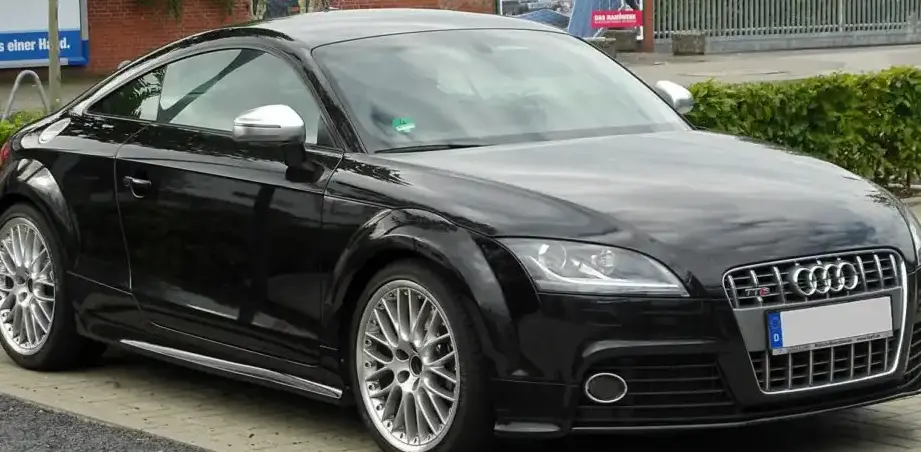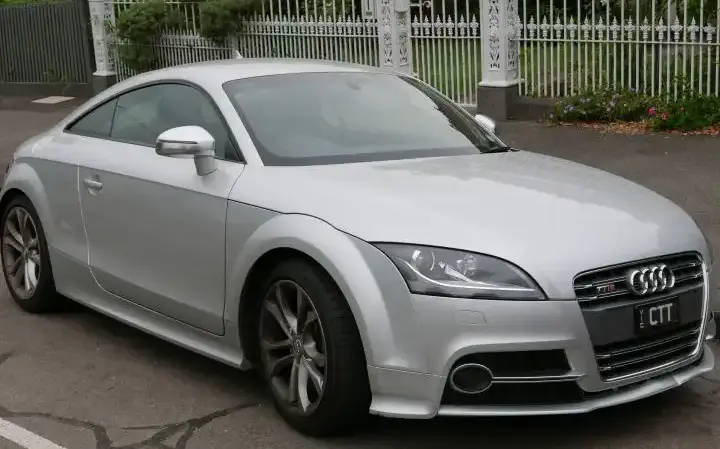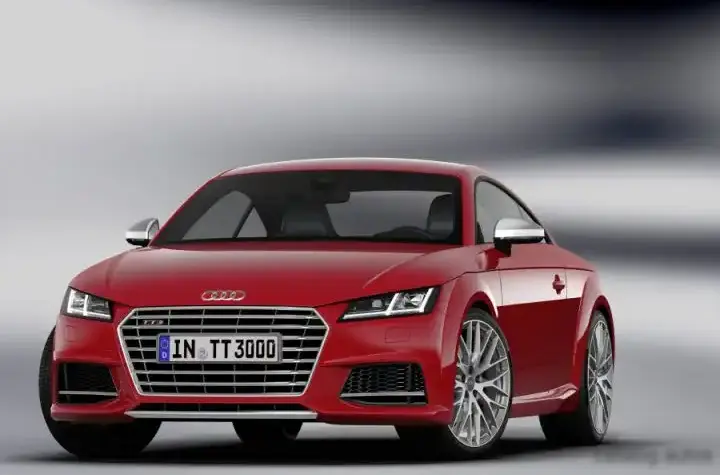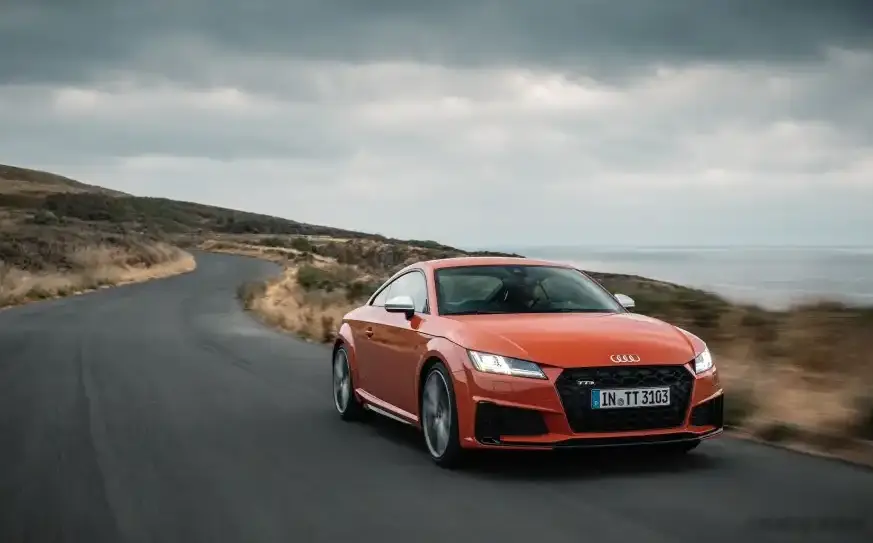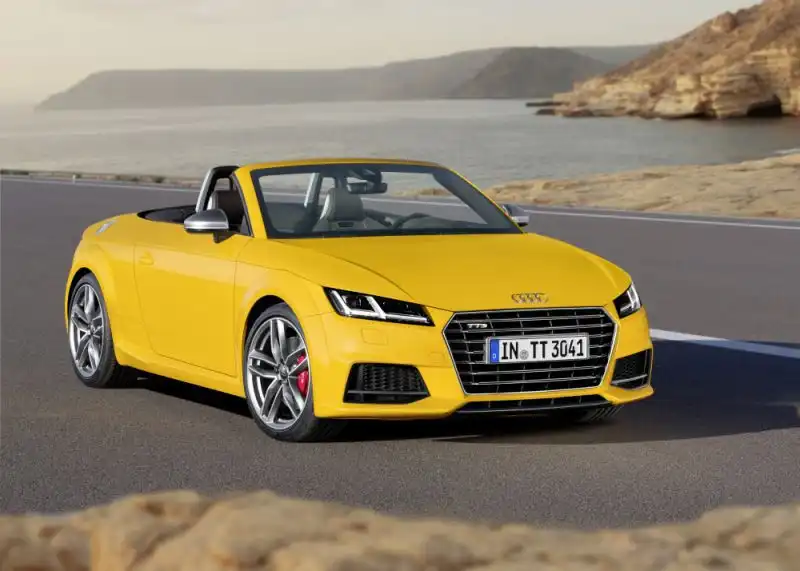
The Audi TTS Roadster (8S) 2.0 TFSI quattro, produced between 2014 and 2018, represents a compelling blend of performance and open-top motoring within the Audi TT lineage. Positioned as the higher-performance variant of the TT Roadster, it slots above the standard TT Roadster and below the even more focused TT RS Roadster. Built on the Volkswagen Group’s PQ25 (A5/8S) platform – also underpinning the Golf Mk7 and Audi A3 – the TTS Roadster aimed to deliver a more engaging driving experience with increased power and sophisticated all-wheel drive. This generation marked a significant step forward in terms of technology and refinement compared to its predecessor.
Technical Specifications
| Brand | Audi |
| Model | TT |
| Generation | TTS Roadster (8S) |
| Type (Engine) | 2.0 TFSI (310 Hp) quattro |
| Start of production | 2014 |
| End of production | 2018 |
| Powertrain Architecture | Internal Combustion engine |
| Body type | Roadster |
| Seats | 2 |
| Doors | 2 |
| Fuel consumption (economy) – urban | 9.3-9.5 l/100 km (25.3 – 24.8 US mpg, 30.4 – 29.7 UK mpg, 10.8 – 10.5 km/l) |
| Fuel consumption (economy) – extra urban | 6.1-6.3 l/100 km (38.6 – 37.3 US mpg, 46.3 – 44.8 UK mpg, 16.4 – 15.9 km/l) |
| Fuel consumption (economy) – combined | 7.3-7.5 l/100 km (32.2 – 31.4 US mpg, 38.7 – 37.7 UK mpg, 13.7 – 13.3 km/l) |
| CO2 emissions | 169-173 g/km |
| Fuel Type | Petrol (Gasoline) |
| Acceleration 0 – 100 km/h | 5.2 sec |
| Acceleration 0 – 62 mph | 5.2 sec |
| Acceleration 0 – 60 mph | 4.9 sec |
| Maximum speed | 250 km/h (155.34 mph), Electronically limited |
| Emission standard | Euro 6 |
| Weight-to-power ratio | 4.7 kg/Hp, 213.8 Hp/tonne |
| Weight-to-torque ratio | 3.8 kg/Nm, 262.1 Nm/tonne |
| Power | 310 Hp @ 5800-6200 rpm |
| Power per litre | 156.3 Hp/l |
| Torque | 380 Nm @ 1800-5700 rpm (280.27 lb.-ft. @ 1800-5700 rpm) |
| Engine layout | Front, Transverse |
| Engine Model/Code | EA888 / CJXG |
| Engine displacement | 1984 cm3 (121.07 cu. in.) |
| Number of cylinders | 4 |
| Engine configuration | Inline |
| Cylinder Bore | 82.5 mm (3.25 in.) |
| Piston Stroke | 92.8 mm (3.65 in.) |
| Compression ratio | 9.3:1 |
| Number of valves per cylinder | 4 |
| Fuel injection system | Direct injection and Multi-port manifold injection |
| Engine aspiration | Turbocharger, Intercooler |
| Valvetrain | DOHC |
| Engine oil capacity | 5.7 l (6.02 US qt | 5.02 UK qt) |
| Kerb Weight | 1450 kg (3196.7 lbs.) |
| Max. weight | 1770 kg (3902.18 lbs.) |
| Max load | 320 kg (705.48 lbs.) |
| Trunk (boot) space – minimum | 280 l (9.89 cu. ft.) |
| Fuel tank capacity | 55 l (14.53 US gal | 12.1 UK gal) |
| Length | 4191 mm (165 in.) |
| Width | 1832 mm (72.13 in.) |
| Width including mirrors | 1966 mm (77.4 in.) |
| Height | 1345 mm (52.95 in.) |
| Wheelbase | 2505 mm (98.62 in.) |
| Front track | 1574 mm (61.97 in.) |
| Rear (Back) track | 1553 mm (61.14 in.) |
| Front overhang | 893 mm (35.16 in.) |
| Rear overhang | 793 mm (31.22 in.) |
| Drag coefficient (Cd) | 0.31 |
| Minimum turning circle (turning diameter) | 11 m (36.09 ft.) |
| Drivetrain Architecture | All wheel drive (4×4). Internal Combustion engine. The Internal combustion engine (ICE) drives the front wheels permanently, and the rear wheels are driven through an electrically or mechanically operated clutch if necessary. |
| Drive wheel | All wheel drive (4×4) |
| Number of gears and type of gearbox | 6 gears, manual transmission |
| Front suspension | Independent, type McPherson with coil spring and anti-roll bar |
| Rear suspension | Independent multi-link spring suspension with stabilizer |
| Front brakes | Ventilated discs |
| Rear brakes | Ventilated discs |
| Assisting systems | ABS (Anti-lock braking system) |
| Steering type | Steering rack and pinion |
| Power steering | Electric Steering |
| Tires size | 245/40 R18; 245/35 R19 |
| Wheel rims size | 8.5J x 18; 9J x 19 |
Powertrain & Engine Architecture
The heart of the TTS Roadster is the EA888 2.0-liter turbocharged four-cylinder engine, specifically the CJXG variant. This engine is a direct-injection, DOHC (Dual Overhead Camshaft) 16-valve unit. The CJXG benefits from a twin-scroll turbocharger, which improves responsiveness and reduces turbo lag. Direct injection delivers fuel directly into the combustion chamber, optimizing combustion efficiency and power output. The engine also incorporates an intercooler to cool the intake air, further enhancing performance. The 6-speed manual transmission was standard, providing a direct connection to the engine and allowing for precise gear changes. Audi’s quattro all-wheel-drive system is a permanent system, utilizing a multi-plate clutch to distribute torque between the front and rear axles as needed, providing excellent traction and stability.
Driving Characteristics
The 310 horsepower and 380 Nm (280 lb-ft) of torque delivered by the 2.0 TFSI engine provide brisk acceleration. The 0-60 mph sprint takes approximately 4.9 seconds, and the car is electronically limited to a top speed of 155 mph. The manual transmission offers a sporty and engaging driving experience, with well-defined gear ratios. Compared to the standard TT Roadster’s 184 hp engine, the TTS delivers a significantly more potent performance. While not as raw or visceral as the later TT RS with its five-cylinder engine, the TTS strikes a good balance between performance and everyday usability. The quattro system provides confident handling in all weather conditions, minimizing understeer and maximizing grip.
Equipment & Trim Levels
The TTS Roadster came well-equipped as standard. Interior features included sport seats upholstered in a combination of leather and Alcantara, a flat-bottomed steering wheel, and aluminum trim accents. Standard technology included Audi’s MMI infotainment system with a 6.5-inch display, Bluetooth connectivity, and a premium sound system. Optional extras included a larger MMI display with navigation, a Bang & Olufsen sound system, adaptive dampers (Audi magnetic ride control), and various interior customization options. Exterior features included a unique front grille, quad exhaust outlets, and larger brakes.
Chassis & Braking
The TTS Roadster features a McPherson strut front suspension and a multi-link rear suspension, providing a comfortable yet controlled ride. The suspension is tuned for sporty handling, with stiffer springs and dampers compared to the standard TT Roadster. Ventilated disc brakes are fitted to all four wheels, providing ample stopping power. ABS (Anti-lock Braking System) and electronic stability control are standard safety features. The chassis benefits from reinforced components to handle the increased power and torque.
Market Reception & Comparison
The TTS Roadster was generally well-received by automotive critics, who praised its performance, handling, and stylish design. It was often compared to rivals such as the Porsche Boxster and BMW Z4. The TTS offered a compelling alternative, providing similar performance at a slightly lower price point. Fuel economy was respectable for a performance roadster, averaging around 32 mpg combined. Reliability has generally been good, although some owners have reported issues with the turbocharger and direct injection system.
Legacy
The Audi TTS Roadster (8S) remains a desirable used car today, offering a blend of performance, style, and refinement. The 2.0 TFSI engine, while not without its potential maintenance concerns (particularly regarding carbon buildup on the intake valves), is generally considered robust. The quattro all-wheel-drive system adds to its appeal, making it a capable all-weather performer. Well-maintained examples command a premium in the used car market, reflecting its enduring popularity among enthusiasts.