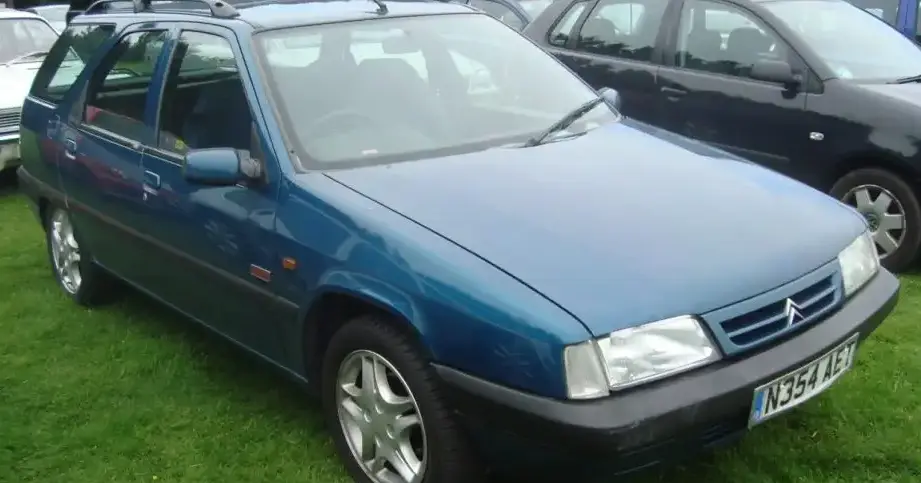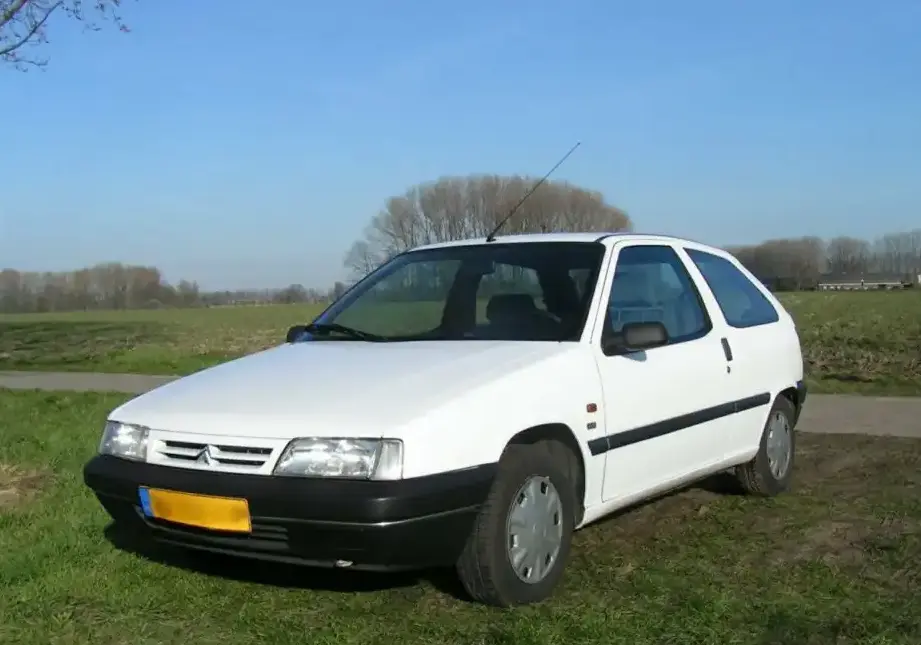
The Citroën ZX Volcane 2.0i (121 hp) was a performance-oriented variant of the Citroën ZX (N2, Phase II) hatchback, produced between 1994 and 1997. Positioned as a sporty offering within the ZX range, the Volcane 2.0i aimed to provide a more engaging driving experience than the base models, while remaining practical for everyday use. It was a key part of Citroën’s effort to modernize its image and appeal to a broader customer base in the mid-1990s. The ZX itself was a replacement for the aging BX, and represented a significant step forward in terms of design, technology, and driving dynamics for the French manufacturer.
Technical Specifications
| Brand | Citroen |
| Model | ZX |
| Generation | ZX (N2, Phase II) 3-door |
| Type (Engine) | Volcane 2.0 i (121 Hp) |
| Start of production | 1994 |
| End of production | 1997 |
| Powertrain Architecture | Internal Combustion engine |
| Body type | Hatchback |
| Seats | 5 |
| Doors | 3 |
| Fuel Type | Petrol (Gasoline) |
| Maximum speed | 202 km/h (125.52 mph) |
| Weight-to-power ratio | 8.8 kg/Hp, 114.2 Hp/tonne |
| Weight-to-torque ratio | 5.9 kg/Nm, 168.9 Nm/tonne |
| Power | 121 Hp @ 5750 rpm |
| Power per litre | 60.6 Hp/l |
| Torque | 179 Nm @ 2750 rpm (132.02 lb.-ft. @ 2750 rpm) |
| Engine layout | Front, Transverse |
| Engine Model/Code | RFX XU10J2C |
| Engine displacement | 1998 cm3 (121.93 cu. in.) |
| Number of cylinders | 4 |
| Engine configuration | Inline |
| Cylinder Bore | 86 mm (3.39 in.) |
| Piston Stroke | 86 mm (3.39 in.) |
| Compression ratio | 9.5:1 |
| Number of valves per cylinder | 2 |
| Fuel injection system | Multi-port manifold injection |
| Engine aspiration | Naturally aspirated engine |
| Engine oil capacity | 5.4 l (5.71 US qt | 4.75 UK qt) |
| Coolant | 8.5 l (8.98 US qt | 7.48 UK qt) |
| Kerb Weight | 1060 kg (2336.9 lbs) |
| Max. weight | 1600 kg (3527.4 lbs) |
| Max load | 540 kg (1190.5 lbs) |
| Trunk (boot) space – minimum | 324 l (11.44 cu. ft.) |
| Trunk (boot) space – maximum | 1146 l (40.47 cu. ft.) |
| Fuel tank capacity | 54 l (14.27 US gal | 11.88 UK gal) |
| Max. roof load | 75 kg (165.35 lbs) |
| Permitted trailer load with brakes (12%) | 1100 kg (2425.08 lbs) |
| Permitted trailer load without brakes | 530 kg (1168.45 lbs) |
| Permitted towbar download | 70 kg (154.32 lbs) |
| Length | 4085 mm (160.83 in.) |
| Width | 1705 mm (67.13 in.) |
| Height | 1385 mm (54.53 in.) |
| Wheelbase | 2540 mm (100 in.) |
| Front track | 1420 mm (55.91 in.) |
| Rear (Back) track | 1415 mm (55.71 in.) |
| Front overhang | 859 mm (33.82 in.) |
| Rear overhang | 686 mm (27.01 in.) |
| Minimum turning circle (turning diameter) | 11.1 m (36.42 ft.) |
| Drivetrain Architecture | The Internal combustion engine (ICE) drives the front wheels of the vehicle. |
| Drive wheel | Front wheel drive |
| Number of gears and type of gearbox | 5 gears, manual transmission |
| Front suspension | Independent type McPherson, Wishbone |
| Rear suspension | Hydro-pneumatic element, Trailing arm |
| Front brakes | Ventilated discs |
| Rear brakes | Disc |
| Assisting systems | ABS (Anti-lock braking system) |
| Steering type | Steering rack and pinion |
| Power steering | Hydraulic Steering |
| Tires size | 185/60 R14 |
| Wheel rims size | 5.5J x 14 |
Powertrain & Engine Architecture
The Volcane 2.0i was powered by the XU10J2C engine, a 1.998-liter (2.0L) inline-four cylinder petrol engine. This engine was part of the XU series, developed jointly by Peugeot and Renault, and was known for its robustness and relatively simple design. The RFX engine code designates the specific tuning for the ZX Volcane. It featured a multi-port fuel injection system, providing precise fuel delivery for improved efficiency and performance. The engine produced 121 horsepower at 5,750 rpm and 179 Nm (132 lb-ft) of torque at 2,750 rpm. The engine utilized a two-valve per cylinder configuration and a compression ratio of 9.5:1. The five-speed manual transmission was the only gearbox option available with this engine, providing direct control over the engine’s power.
Driving Characteristics
The 2.0i Volcane offered a noticeable improvement in performance compared to the lower-displacement ZX models. The 121 hp engine provided brisk acceleration, making it a capable performer on both city streets and open highways. While not a sports car in the purest sense, the Volcane offered a more engaging driving experience thanks to its responsive engine and well-tuned chassis. The five-speed manual transmission allowed drivers to fully exploit the engine’s powerband. The gear ratios were well-matched, providing good acceleration in each gear. Compared to the 1.6L or 1.8L versions, the 2.0i felt significantly more powerful, especially during overtaking maneuvers. The handling was generally considered good, with the ZX’s independent front suspension and hydro-pneumatic rear suspension providing a comfortable yet controlled ride.
Equipment & Trim Levels
The Volcane trim level was positioned as the premium offering in the ZX range. Standard equipment included power steering, ABS brakes, central locking, electric front windows, and a basic audio system. The interior featured sport seats with unique upholstery, often incorporating a patterned fabric. The dashboard was typically finished with a dark trim, and featured a comprehensive instrument cluster. Optional extras included a sunroof, air conditioning, upgraded audio systems, and alloy wheels. The Volcane also benefited from subtle exterior styling enhancements, such as a rear spoiler and unique wheel designs, to differentiate it from the more basic ZX models.
Chassis & Braking
The ZX Volcane 2.0i utilized an independent McPherson strut suspension at the front, providing good handling and ride comfort. The rear suspension employed Citroën’s innovative hydro-pneumatic system, which offered a self-leveling ride and excellent absorption of road imperfections. This system was a hallmark of Citroën vehicles and contributed significantly to the ZX’s comfortable ride quality. The braking system consisted of ventilated discs at the front and solid discs at the rear, providing adequate stopping power for the vehicle’s weight and performance. The ABS system helped to maintain steering control during hard braking.
Market Reception & Comparison
The Citroën ZX Volcane 2.0i was generally well-received by automotive critics. It was praised for its comfortable ride, engaging handling, and responsive engine. However, some critics noted that the interior quality was not quite up to the standards of some of its competitors, such as the Volkswagen Golf or Opel Astra. Compared to the lower-spec ZX models, the Volcane offered a significant improvement in performance and a more premium level of equipment. It was a viable alternative for buyers seeking a practical and comfortable hatchback with a sporty edge. Fuel economy was reasonable for a 2.0-liter engine, averaging around 30-35 mpg in mixed driving conditions.
Legacy
The XU10J2C engine proved to be a durable and reliable unit, and many ZX Volcane 2.0i models are still on the road today. While the hydro-pneumatic suspension can require specialized maintenance, the engine itself is generally considered to be relatively trouble-free. The ZX Volcane 2.0i has gained a following among enthusiasts who appreciate its unique blend of comfort, performance, and French flair. In the used car market, well-maintained examples of the Volcane 2.0i are sought after by collectors and enthusiasts alike, representing a relatively affordable entry point into classic Citroën ownership.