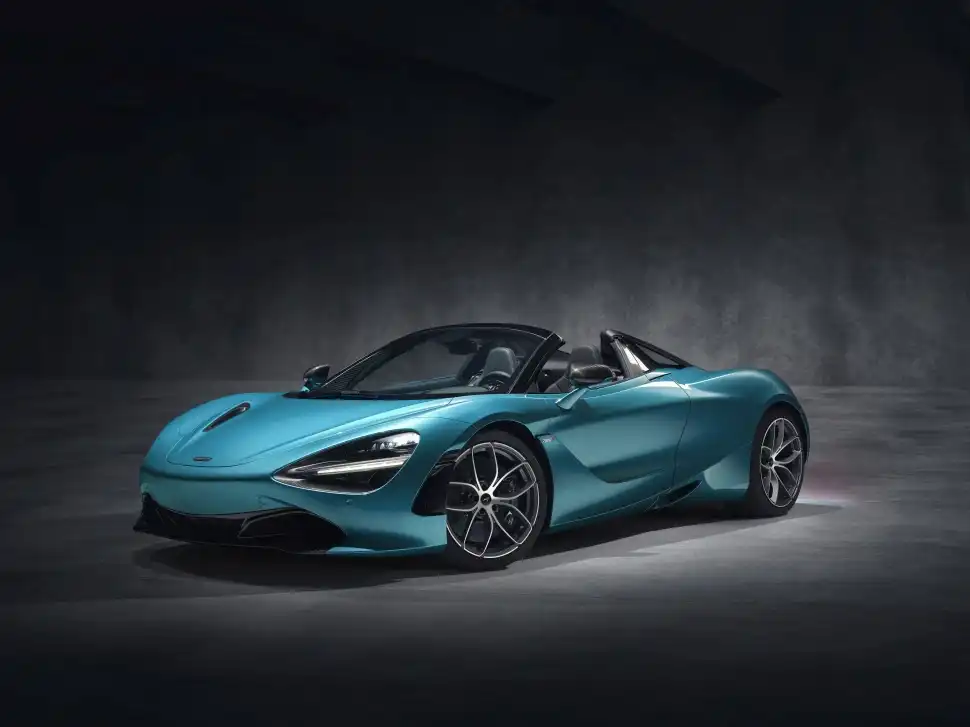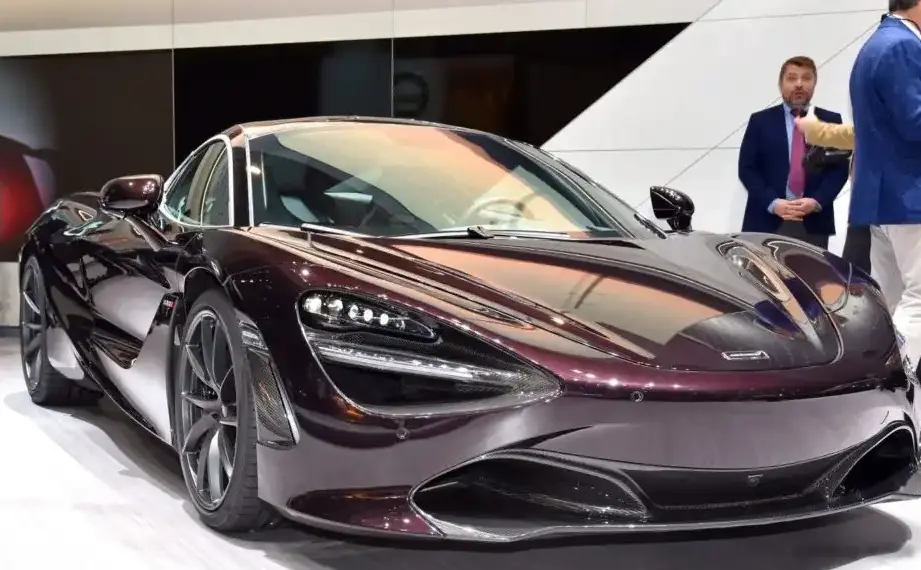
The McLaren 720S, produced from 2017 to 2023, represents a pivotal moment in McLaren Automotive’s strategy, marking a shift towards a more accessible, yet still exceptionally high-performance, supercar. Positioned as the first model in the “Super Series” to fully embody McLaren’s commitment to lightweight construction and powerful engine technology, the 720S aimed to deliver a driving experience that was both exhilarating and surprisingly usable. This article focuses specifically on the 4.0-liter V8 variant producing 720 horsepower, equipped with the 7-speed Seamless Shift Gearbox (SSG) automatic transmission, the most common configuration of the model. The 720S was a direct successor to the 650S, and paved the way for subsequent Super Series models like the 750S.
Technical Specifications
| Brand | McLaren |
| Model | 720S |
| Generation | 720S |
| Type (Engine) | 4.0 V8 (720 Hp) SSG |
| Start of production | 2017 |
| End of production | 2023 |
| Powertrain Architecture | Internal Combustion engine |
| Body type | Coupe |
| Seats | 2 |
| Doors | 2 |
| Fuel consumption (economy) – urban | 15.8 l/100 km (14.9 US mpg, 17.9 UK mpg, 6.3 km/l) |
| Fuel consumption (economy) – extra urban | 7.9 l/100 km (29.8 US mpg, 35.8 UK mpg, 12.7 km/l) |
| Fuel consumption (economy) – combined | 10.7 l/100 km (22 US mpg, 26.4 UK mpg, 9.3 km/l) |
| CO2 emissions | 249 g/km |
| Fuel Type | Petrol (Gasoline) |
| Acceleration 0 – 100 km/h | 2.9 sec |
| Acceleration 0 – 62 mph | 2.9 sec |
| Acceleration 0 – 60 mph | 2.8 sec |
| Acceleration 0 – 200 km/h | 7.8 sec |
| Acceleration 0 – 300 km/h | 21.4 sec |
| Maximum speed | 341 km/h (211.89 mph) |
| Weight-to-power ratio | 2 kg/Hp, 507.4 Hp/tonne |
| Weight-to-torque ratio | 1.8 kg/Nm, 542.6 Nm/tonne |
| Power | 720 Hp @ 7250 rpm |
| Power per litre | 180.3 Hp/l |
| Torque | 770 Nm @ 5500 rpm (567.92 lb.-ft. @ 5500 rpm) |
| Maximum engine speed | 8500 rpm |
| Engine layout | Middle, Longitudinal |
| Engine Model/Code | M840T |
| Engine displacement | 3994 cm3 (243.73 cu. in.) |
| Number of cylinders | 8 |
| Engine configuration | V-engine |
| Number of valves per cylinder | 4 |
| Fuel injection system | Direct injection |
| Engine aspiration | Twin-Turbo, Intercooler |
| Valvetrain | DOHC |
| Engine oil capacity | 8 l (8.45 US qt | 7.04 UK qt) |
| Coolant | 24.5 l (25.89 US qt | 21.56 UK qt) |
| Kerb Weight | 1419 kg (3128.36 lbs) |
| Trunk (boot) space – minimum | 360 l (12.71 cu. ft.) |
| Length | 4543 mm (178.86 in.) |
| Width | 1930 mm (75.98 in.) |
| Width with mirrors folded | 2059 mm (81.06 in.) |
| Width including mirrors | 2161 mm (85.08 in.) |
| Height | 1196 mm (47.09 in.) |
| Wheelbase | 2670 mm (105.12 in.) |
| Front track | 1674 mm (65.91 in.) |
| Rear (Back) track | 1629 mm (64.13 in.) |
| Drivetrain Architecture | Rear wheel drive |
| Number of gears and type of gearbox | 7 gears, automatic transmission SSG |
| Front suspension | Double wishbone |
| Rear suspension | Double wishbone |
| Front brakes | Ventilated discs |
| Rear brakes | Ventilated discs |
| Assisting systems | ABS (Anti-lock braking system) |
| Steering type | Steering rack and pinion |
| Power steering | Electric Steering |
| Tires size | 245/35 R19; 305/30 R20 |
| Wheel rims size | 9.0 J x 19; 11.0 J x 20 |
INTRODUCTION
The McLaren 720S debuted at the 2017 Geneva Motor Show and quickly established itself as a benchmark in the supercar segment. Built around a new carbon fiber chassis – the Monocage II – the 720S prioritized minimizing weight while maximizing structural rigidity. The “720” designation refers to the engine’s power output in metric horsepower. This model represented a significant departure from McLaren’s earlier offerings, focusing on a more refined and accessible driving experience without sacrificing performance. The 720S was available in Coupe and Spider (convertible) body styles, with the SSG transmission being the only transmission option.
Powertrain & Engine Architecture
At the heart of the 720S lies the M840T, a 3.8-liter twin-turbocharged V8 engine. While technically 3.8 liters, it’s often referred to as a 4.0-liter due to marketing reasons. This engine is a significant evolution of the V8 used in the 650S, featuring a flat-plane crankshaft for reduced rotating mass and improved responsiveness. The engine utilizes direct fuel injection and a sophisticated engine management system to deliver 720 horsepower at 7,250 rpm and 770 Nm (568 lb-ft) of torque at 5,500 rpm. The twin-scroll turbochargers, coupled with an intercooler, minimize turbo lag and provide a broad torque curve. The 7-speed Seamless Shift Gearbox (SSG) is a dual-clutch transmission designed for incredibly fast and smooth gear changes. Unlike traditional dual-clutch transmissions, the SSG utilizes a pre-emptive downshift system, anticipating the driver’s needs based on throttle and brake inputs.
Driving Characteristics
The 720S with the SSG transmission delivers a remarkably engaging driving experience. The quick-shifting gearbox, combined with the potent V8 engine, allows for blistering acceleration. The car’s lightweight construction and sophisticated suspension contribute to exceptional handling and cornering ability. While the SSG transmission is incredibly fast, some reviewers noted that it could feel slightly less intuitive than a traditional dual-clutch in certain driving situations, particularly at low speeds. Compared to a manual transmission (which wasn’t offered), the SSG provides a more accessible and user-friendly experience, making the 720S easier to drive in everyday conditions. The car’s variable geometry radiators and active aerodynamics further enhance its performance, optimizing cooling and downforce based on driving conditions.
Equipment & Trim Levels
The 720S came standard with a comprehensive suite of features, including a fully digital instrument cluster, a central infotainment screen, and leather upholstery. Standard equipment also included climate control, power-adjustable seats, and a premium audio system. McLaren offered a wide range of optional extras, allowing customers to personalize their 720S to their exact specifications. These options included carbon fiber body panels, upgraded interior trim materials, and various performance enhancements. The “Performance” trim added lightweight seats and additional aerodynamic elements, while the “Luxury” trim focused on enhancing interior comfort and refinement.
Chassis & Braking
The 720S’s chassis is constructed from a single-piece carbon fiber Monocage II structure, providing exceptional strength and rigidity while minimizing weight. The suspension utilizes double wishbones at both the front and rear, with adaptive dampers that adjust to road conditions and driving style. Braking is provided by ventilated discs at all four corners, with standard carbon ceramic discs available as an option. The braking system is assisted by ABS and electronic stability control. The car’s lightweight construction and powerful brakes contribute to impressive stopping performance.
Market Reception & Comparison
The McLaren 720S was widely praised by automotive critics for its exceptional performance, handling, and overall driving experience. It consistently outperformed rivals such as the Ferrari 488 GTB and Lamborghini Huracán in comparison tests. The 720S’s fuel economy, while not a primary concern for supercar buyers, was relatively respectable for its class. Reliability reports have been generally positive, although the complex technology and high-performance nature of the car mean that maintenance costs can be significant. Compared to the 650S, the 720S offered a more refined and user-friendly experience, with improved performance and a more comfortable interior.
Legacy
The McLaren 720S has established itself as a modern classic, representing a high point in McLaren Automotive’s development. Its innovative design, advanced technology, and exceptional performance have cemented its place in supercar history. On the used car market, the 720S remains highly sought after, with prices generally holding strong. The M840T engine has proven to be a robust and reliable powerplant, although regular maintenance is essential to ensure its longevity. The 720S paved the way for the 750S, continuing McLaren’s commitment to pushing the boundaries of supercar performance and technology.