Technical Specifications
| Brand | Chrysler |
| Model | 200 |
| Generation | 200 II |
| Type (Engine) | 3.6 V6 (294 Hp) AWD Automatic |
| Start of production | 2015 |
| End of production | 2017 |
| Powertrain Architecture | Internal Combustion engine |
| Body type | Sedan |
| Seats | 5 |
| Doors | 4 |
| Fuel consumption (urban) | 13.1 l/100 km (18 US mpg, 21.6 UK mpg, 7.6 km/l) |
| Fuel consumption (extra urban) | 8.4 l/100 km (28 US mpg, 33.6 UK mpg, 11.9 km/l) |
| Fuel consumption (combined) | 10.7 l/100 km (22 US mpg, 26.4 UK mpg, 9.3 km/l) |
| Fuel Type | Petrol (Gasoline) |
| Weight-to-power ratio | 5.9 kg/Hp, 170.4 Hp/tonne |
| Weight-to-torque ratio | 4.9 kg/Nm, 205.8 Nm/tonne |
| Power | 294 Hp @ 6350 rpm |
| Power per litre | 81.6 Hp/l |
| Torque | 355 Nm @ 4250 rpm (261.83 lb.-ft. @ 4250 rpm) |
| Maximum engine speed | 6400 rpm |
| Engine layout | Front, Transverse |
| Engine Model/Code | ERB |
| Engine displacement | 3605 cm3 (219.99 cu. in.) |
| Number of cylinders | 6 |
| Engine configuration | V-engine |
| Cylinder Bore | 96 mm (3.78 in.) |
| Piston Stroke | 83 mm (3.27 in.) |
| Compression ratio | 10.2:1 |
| Number of valves per cylinder | 4 |
| Fuel injection system | Multi-port manifold injection |
| Engine aspiration | Naturally aspirated engine |
| Valvetrain | DOHC |
| Engine oil capacity | 5.6 l (5.92 US qt | 4.93 UK qt) |
| Coolant | 8.2 l (8.66 US qt | 7.21 UK qt) |
| Kerb Weight | 1725 kg (3802.97 lbs.) |
| Max. weight | 2240 kg (4938.35 lbs.) |
| Max load | 515 kg (1135.38 lbs.) |
| Trunk (boot) space – minimum | 453 l (16 cu. ft.) |
| Fuel tank capacity | 60 l (15.85 US gal | 13.2 UK gal) |
| Length | 4884 mm (192.28 in.) |
| Width | 1871 mm (73.66 in.) |
| Height | 1491 mm (58.7 in.) |
| Wheelbase | 2742 mm (107.95 in.) |
| Front track | 1578 mm (62.13 in.) |
| Rear (Back) track | 1576 mm (62.05 in.) |
| Front overhang | 1039 mm (40.91 in.) |
| Rear overhang | 1103 mm (43.43 in.) |
| Ride height (ground clearance) | 147 mm (5.79 in.) |
| Drag coefficient (Cd) | 0.27 |
| Minimum turning circle (turning diameter) | 12.13 m (39.8 ft.) |
| Approach angle | 13.5° |
| Departure angle | 17.8° |
| Drive wheel | All wheel drive (4×4) |
| Number of gears and type of gearbox | 9 gears, automatic transmission |
| Front suspension | Independent type McPherson |
| Rear suspension | Independent multi-link suspension |
| Front brakes | Ventilated discs |
| Rear brakes | Disc |
| Assisting systems | ABS (Anti-lock braking system) |
| Steering type | Steering rack and pinion |
| Power steering | Electric Steering |
| Tires size | 215/55 R17 |
| Wheel rims size | 17 |
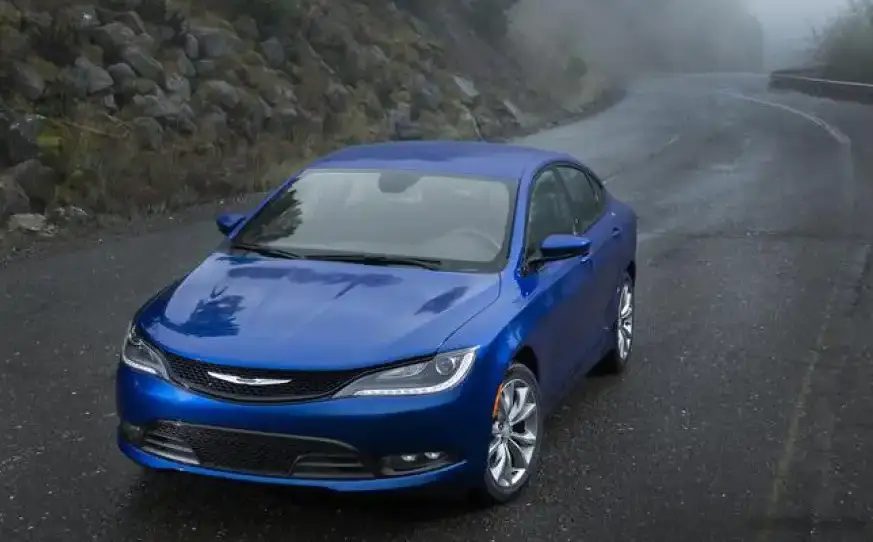
The Chrysler 200 II 3.6 V6 AWD Automatic, produced between 2015 and 2017, was the flagship trim of the redesigned Chrysler 200. This generation, internally designated as the 200 II, represented a significant departure from its predecessor, moving to a more modern and sophisticated platform. The 3.6-liter Pentastar V6, paired with a 9-speed automatic transmission and all-wheel drive, was the range-topping configuration, offering a substantial performance upgrade over the base 2.4-liter four-cylinder models. It aimed to provide a compelling alternative to competitors in the mid-size sedan segment, focusing on a blend of performance, technology, and comfort.
Powertrain & Engine Architecture
At the heart of the 200 II 3.6 V6 AWD was the Chrysler Pentastar 3.6-liter V6 engine, bearing the code ERB. This engine is a 60-degree V-engine featuring a dual overhead camshaft (DOHC) valvetrain with four valves per cylinder. It utilizes a multi-port fuel injection system, delivering fuel directly into the intake ports. The engine produces 294 horsepower at 6350 rpm and 261.83 lb-ft of torque at 4250 rpm. The 9-speed automatic transmission, sourced from ZF, was a key component of this powertrain. Its wide gear ratio spread aimed to optimize both fuel efficiency and acceleration. The transmission featured a sophisticated control system designed to provide smooth and responsive shifts. The all-wheel-drive system was an on-demand system, automatically engaging the rear wheels when traction was needed, enhancing stability in adverse weather conditions.
Driving Characteristics
The 3.6 V6 AWD variant of the Chrysler 200 delivered a noticeably more engaging driving experience compared to the base four-cylinder models. The 294 horsepower provided brisk acceleration, making highway merging and overtaking maneuvers effortless. The 9-speed automatic transmission, while generally smooth, could occasionally exhibit some hesitancy during low-speed maneuvers. The all-wheel-drive system provided enhanced grip and stability, particularly in inclement weather. Compared to the manual transmission options available on some competitors, the 9-speed automatic prioritized comfort and convenience over outright driver engagement. The power delivery was linear and predictable, making it easy to modulate the throttle. The suspension was tuned for a balance between ride comfort and handling, providing a reasonably composed ride even on less-than-perfect road surfaces.
Equipment & Trim Levels
The 200 II 3.6 V6 AWD Automatic typically came well-equipped with standard features including leather upholstery, heated front seats, a touchscreen infotainment system with navigation, a premium sound system, and a suite of advanced safety features such as blind-spot monitoring and rear cross-traffic alert. Optional extras included a panoramic sunroof, adaptive cruise control, and forward collision warning with automatic braking. Interior trim levels varied, with higher-spec models offering more luxurious materials and finishes. The dashboard layout was generally clean and modern, with a focus on user-friendliness.
Chassis & Braking
The Chrysler 200 II featured an independent McPherson strut front suspension and an independent multi-link rear suspension. This setup aimed to provide a comfortable ride while maintaining reasonable handling characteristics. The 3.6 V6 AWD models were equipped with ventilated front disc brakes and solid rear disc brakes. An anti-lock braking system (ABS) was standard, along with electronic stability control. The steering system utilized an electric power steering (EPS) system, providing light and precise steering feel. The chassis was designed to provide a good balance between rigidity and weight, contributing to the car’s overall handling performance.
Market Reception & Comparison
The Chrysler 200 II 3.6 V6 AWD Automatic received generally positive reviews from automotive critics. It was praised for its powerful engine, comfortable ride, and well-appointed interior. However, some critics noted that the 9-speed automatic transmission could be occasionally hesitant, and the car’s overall driving experience wasn’t as engaging as some of its competitors. Fuel economy was rated at 22 mpg combined, which was competitive for its class but not class-leading. Compared to the base 2.4-liter four-cylinder models, the 3.6 V6 AWD offered a significant performance upgrade, but at a higher price point. Reliability reports were mixed, with some owners reporting issues with the transmission and electrical systems.
Legacy
The Chrysler 200 was discontinued in 2017, and the 3.6 V6 AWD Automatic represents the pinnacle of the model’s development. While not a runaway sales success, the 200 II 3.6 V6 AWD Automatic offered a compelling package of performance, features, and comfort. On the used car market, these models tend to hold their value reasonably well, particularly those in good condition with low mileage. The Pentastar 3.6-liter V6 engine is generally considered to be a reliable powerplant, although the 9-speed automatic transmission has been known to require occasional maintenance. The 200 II 3.6 V6 AWD Automatic remains a viable option for buyers seeking a comfortable and capable mid-size sedan with a powerful engine and all-wheel drive.