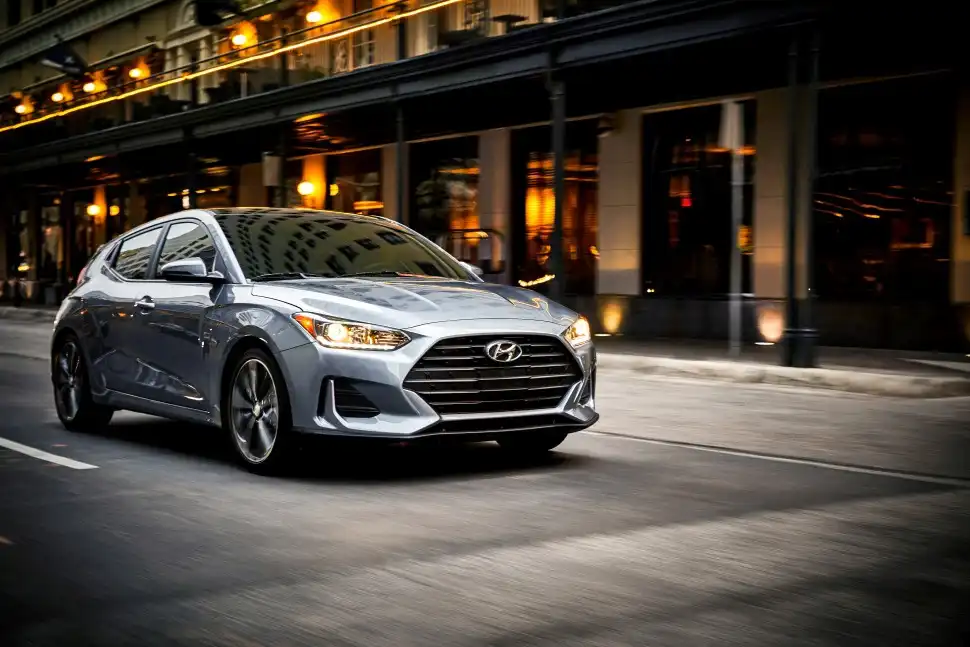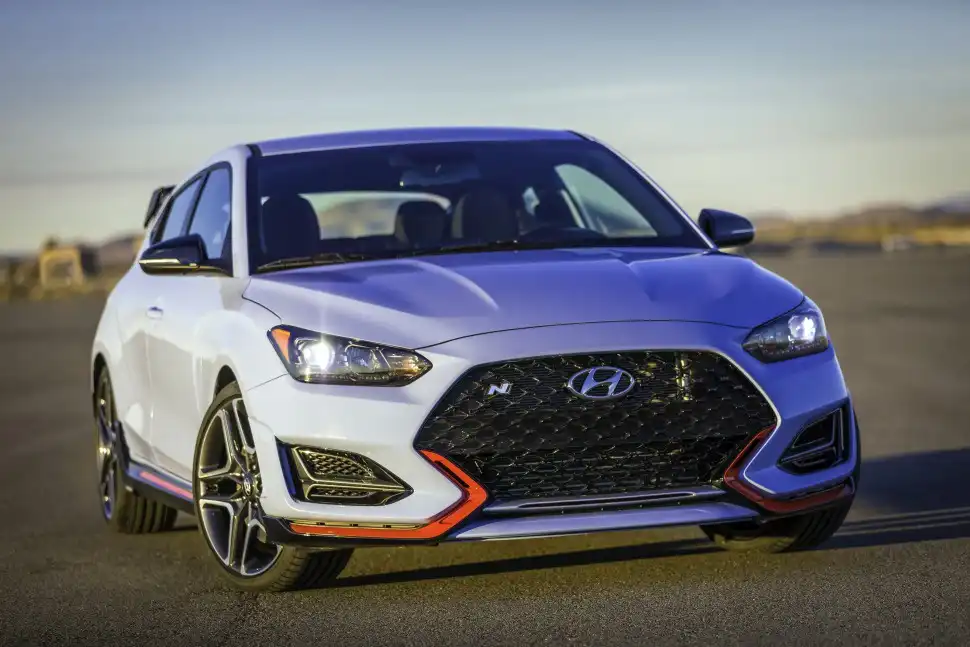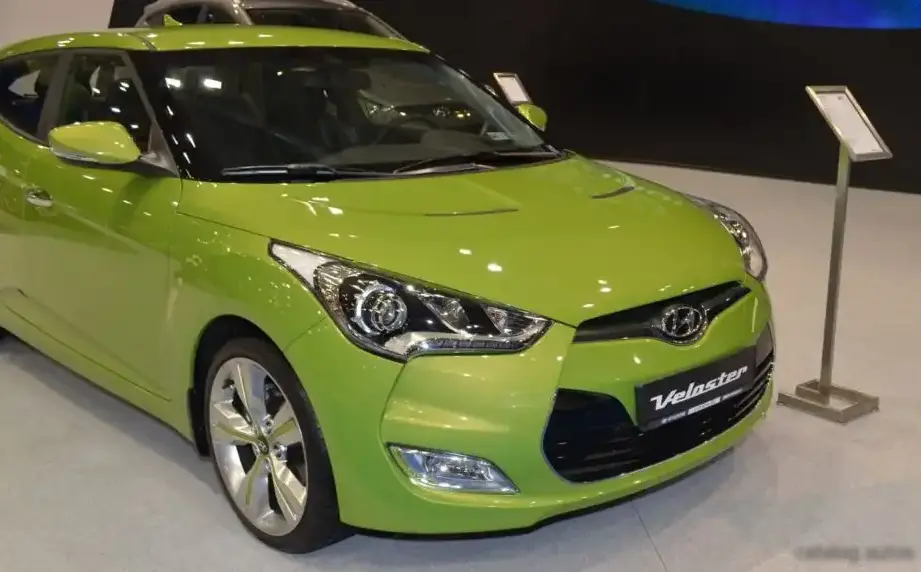
The Hyundai Veloster 1.6 GDI, producing 140 horsepower, was a key variant in the first generation (2011-2015) of Hyundai’s uniquely styled hatchback. Introduced as a more accessible entry point into the Veloster lineup, it offered a blend of fuel efficiency, modern features, and the car’s signature three-door configuration. Positioned below the more powerful turbocharged models, the 1.6 GDI catered to buyers prioritizing economy and everyday usability. It was a significant model for Hyundai, representing a move towards more expressive and youth-focused designs in the American market.
Technical Specifications
| Brand | Hyundai |
| Model | Veloster |
| Generation | Veloster |
| Type (Engine) | 1.6 GDI (140 Hp) |
| Start of production | 2011 |
| End of production | 2015 |
| Powertrain Architecture | Internal Combustion engine |
| Body type | Hatchback |
| Seats | 5 |
| Doors | 4 |
| Fuel consumption (urban) | 7.8 l/100 km (30.2 US mpg) |
| Fuel consumption (extra urban) | 5.1 l/100 km (46.1 US mpg) |
| Fuel consumption (combined) | 6.1 l/100 km (38.6 US mpg) |
| Fuel Type | Petrol (Gasoline) |
| Acceleration 0 – 100 km/h | 9.7 sec |
| Acceleration 0 – 62 mph | 9.7 sec |
| Acceleration 0 – 60 mph | 9.2 sec |
| Maximum speed | 201 km/h (124.9 mph) |
| Emission standard | Euro 5 |
| Weight-to-power ratio | 8.5 kg/Hp |
| Weight-to-torque ratio | 7.1 kg/Nm |
| Power | 140 Hp @ 6300 rpm |
| Torque | 167 Nm @ 4850 rpm (123.17 lb.-ft. @ 4850 rpm) |
| Engine layout | Front, Transverse |
| Engine Model/Code | Gamma / G4FD |
| Engine displacement | 1591 cm3 (97.09 cu. in.) |
| Number of cylinders | 4 |
| Engine configuration | Inline |
| Cylinder Bore | 77 mm (3.03 in.) |
| Piston Stroke | 85.4 mm (3.36 in.) |
| Compression ratio | 11:1 |
| Number of valves per cylinder | 4 |
| Fuel injection system | Direct injection |
| Engine aspiration | Naturally aspirated engine |
| Valvetrain | D-CVVT |
| Engine oil capacity | 3.6 l (3.8 US qt | 3.17 UK qt) |
| Coolant | 5 l (5.28 US qt | 4.4 UK qt) |
| Kerb Weight | 1185 kg (2612.48 lbs.) |
| Max. weight | 1700 kg (3747.86 lbs.) |
| Max load | 515 kg (1135.38 lbs.) |
| Trunk (boot) space – minimum | 440 l (15.54 cu. ft.) |
| Fuel tank capacity | 50 l (13.21 US gal | 11 UK gal) |
| Length | 4220 mm (166.14 in.) |
| Width | 1790 mm (70.47 in.) |
| Height | 1399 mm (55.08 in.) |
| Wheelbase | 2650 mm (104.33 in.) |
| Front track | 1561 mm (61.46 in.) |
| Rear (Back) track | 1574 mm (61.97 in.) |
| Minimum turning circle | 10.4 m (34.12 ft.) |
| Drivetrain Architecture | Front wheel drive |
| Number of gears | 6 gears, manual transmission |
| Front suspension | Independent type McPherson |
| Rear suspension | Independent coil spring |
| Front brakes | Ventilated discs |
| Rear brakes | Disc |
| Assisting systems | ABS (Anti-lock braking system) |
| Steering type | Steering rack and pinion |
| Power steering | Electric Steering |
| Tires size | 215/45 R17; 215/40 R18 |
| Wheel rims size | 7.0J x 17; 7.5J x 18 |
Powertrain & Engine Architecture
The heart of the Veloster 1.6 GDI is the Hyundai Gamma engine, specifically the G4FD variant. This 1.6-liter inline-four cylinder engine utilizes Gasoline Direct Injection (GDI) technology, a key feature for improving fuel efficiency and power output. GDI injects fuel directly into the combustion chamber, allowing for more precise fuel control and a higher compression ratio (11:1 in this case). The engine also incorporates Hyundai’s Dual Continuously Variable Valve Timing (D-CVVT) system, optimizing valve timing for both intake and exhaust to enhance performance across the rev range. The 16-valve configuration, with four valves per cylinder, further contributes to the engine’s breathing efficiency. The engine’s relatively simple, naturally aspirated design contributes to its reliability and ease of maintenance. The standard transmission for this variant was a six-speed manual, providing drivers with a more engaging driving experience.
Driving Characteristics
The 140-horsepower output of the 1.6 GDI Veloster translates to adequate, though not exhilarating, performance. Acceleration from 0 to 60 mph takes around 9.2 seconds, making it competitive with other economy-focused hatchbacks of the time. The engine delivers its peak torque of 167 Nm (123.17 lb-ft) at 4850 rpm, meaning drivers need to keep the engine revving to access its full potential. Compared to the turbocharged 1.6-liter and 2.0-liter Veloster models, the GDI version feels noticeably less powerful, particularly during highway overtaking maneuvers. However, the six-speed manual transmission offers precise shifts and helps to keep the engine in its optimal power band. The front-wheel-drive configuration provides predictable handling, but it’s not a particularly sporty driving experience. The focus is more on comfort and fuel efficiency.
Equipment & Trim Levels
The 1.6 GDI Veloster typically served as the base trim level. Standard features generally included air conditioning, power windows and locks, a six-speaker audio system with USB and auxiliary inputs, and basic safety equipment like ABS and multiple airbags. Interior upholstery was typically cloth, and the dashboard featured a straightforward design with easy-to-use controls. Optional extras included a panoramic sunroof, alloy wheels, a rearview camera, and Hyundai’s BlueLink telematics system. Higher trim levels, like the Turbo, added features such as leather upholstery, a premium audio system, and more advanced safety technologies.
Chassis & Braking
The Veloster’s chassis utilizes an independent McPherson strut suspension in the front and an independent coil spring suspension in the rear. This setup provides a comfortable ride quality, absorbing bumps and imperfections in the road effectively. The front brakes are ventilated discs, offering good stopping power, while the rear brakes are solid discs. The electric power steering provides light and responsive steering feel, making it easy to maneuver in urban environments. The relatively lightweight construction of the Veloster (around 1185 kg or 2612.48 lbs) contributes to its nimble handling.
Market Reception & Comparison
The Hyundai Veloster 1.6 GDI was generally well-received by critics as an affordable and stylish entry-level hatchback. Its fuel economy (around 38.6 US mpg combined) was a major selling point, making it an attractive option for budget-conscious buyers. However, some reviewers criticized its lack of power compared to its turbocharged siblings. Compared to competitors like the Honda Civic, Toyota Corolla, and Mazda3, the Veloster offered a more unique design and a more generous standard features list, but it didn’t quite match the refinement or driving dynamics of some of its rivals. Reliability reports have generally been positive, with the Gamma engine proving to be a durable and dependable unit.
Legacy
The Hyundai Veloster 1.6 GDI has proven to be a relatively reliable and affordable used car option. The Gamma engine is known for its longevity, and maintenance costs are generally reasonable. While it may not offer the performance of the higher-trim models, the 1.6 GDI Veloster remains a popular choice for buyers seeking a stylish, fuel-efficient, and practical hatchback. Its unique three-door design and modern features continue to appeal to a wide range of drivers, and it represents a significant step forward in Hyundai’s design and engineering capabilities.