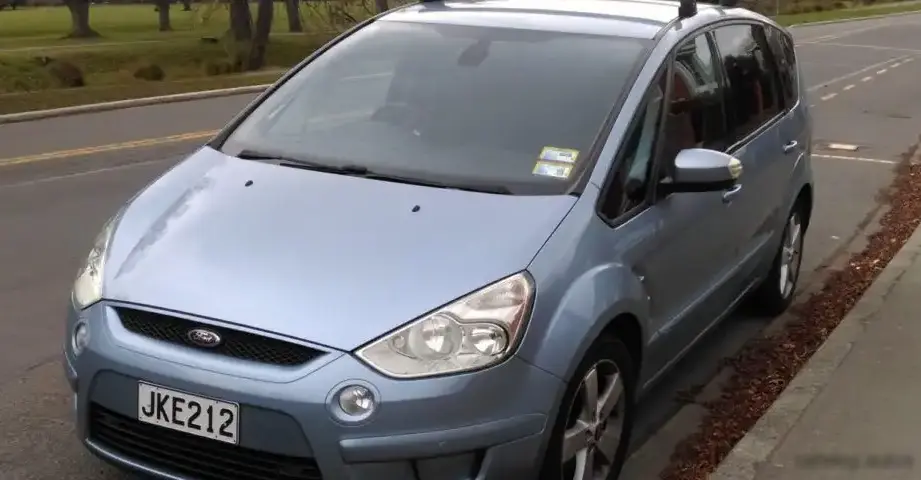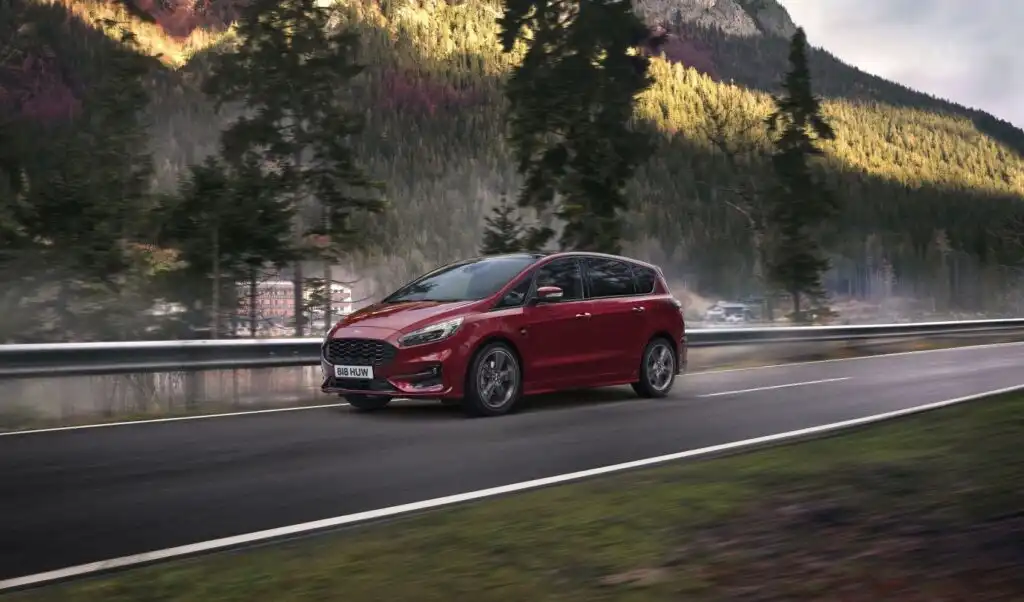
The Ford S-MAX II, specifically the facelifted version introduced in 2019, represents Ford’s continued presence in the multi-purpose vehicle (MPV) segment. The 2.5 (190 Hp) Hybrid CVT 7-Seat variant, produced from February 2021 to April 2023, was positioned as a technologically advanced, fuel-efficient option within the S-MAX lineup. This model leverages a full hybrid electric vehicle (FHEV) powertrain to balance performance with reduced emissions, catering to families and drivers seeking practicality and economy. It builds upon the foundation of the second-generation S-MAX, which itself was based on the Ford C240 platform, also known as the 1HX0/A3 platform shared with other Ford and Volvo models.
Technical Specifications
| Brand | Ford |
| Model | S-MAX |
| Generation | S-MAX II (facelift 2019) |
| Type | 2.5 (190 Hp) Hybrid CVT 7 Seat |
| Start of production | February, 2021 |
| End of production | April, 2023 |
| Powertrain Architecture | FHEV (Full Hybrid Electric Vehicle) |
| Body type | MPV |
| Seats | 7 |
| Doors | 5 |
| Combined fuel consumption (WLTP) | 6.4 l/100 km (36.8 US mpg, 44.1 UK mpg, 15.6 km/l) |
| CO2 emissions (WLTP) | 146-147 g/km |
| Fuel consumption (economy) – urban (NEDC) | 6.3 l/100 km (37.3 US mpg, 44.8 UK mpg, 15.9 km/l) |
| Fuel consumption (economy) – extra urban (NEDC) | 5.2 l/100 km (45.2 US mpg, 54.3 UK mpg, 19.2 km/l) |
| Fuel consumption (economy) – combined (NEDC) | 5.6 l/100 km (42 US mpg, 50.4 UK mpg, 17.9 km/l) |
| CO2 emissions (NEDC) | 128-129 g/km |
| Fuel Type | Petrol (Gasoline) |
| Acceleration 0 – 100 km/h | 9.8 sec |
| Acceleration 0 – 62 mph | 9.8 sec |
| Acceleration 0 – 60 mph | 9.3 sec |
| Maximum speed | 185 km/h (114.95 mph) |
| Emission standard | Euro 6d-ISC-FCM |
| Weight-to-power ratio | 9.9 kg/Hp, 101.5 Hp/tonne |
| Weight-to-torque ratio | 9.4 kg/Nm, 106.8 Nm/tonne |
| Gross battery capacity | 1.1 kWh |
| Battery technology | Lithium-ion (Li-Ion) |
| Battery location | Below the floor, Under the trunk |
| Electric motor power | 133 Hp |
| Electric motor type | Synchronous |
| System power | 190 Hp @ 5500 rpm |
| System torque | 200 Nm (147.51 lb.-ft.) |
| Engine Power | 150 Hp |
| Power per litre | 60.3 Hp/l |
| Engine Torque | 200 Nm (147.51 lb.-ft.) |
| Engine layout | Front, Transverse |
| Engine Model/Code | BGCA |
| Engine displacement | 2488 cm3 (151.83 cu. in.) |
| Number of cylinders | 4 |
| Engine configuration | Inline |
| Cylinder Bore | 89 mm (3.5 in.) |
| Piston Stroke | 100 mm (3.94 in.) |
| Compression ratio | 13:1 |
| Number of valves per cylinder | 4 |
| Fuel injection system | Multi-port manifold injection |
| Engine aspiration | Naturally aspirated engine |
| Valvetrain | DOHC, VCT |
| Engine oil capacity | 5.4 l (5.71 US qt | 4.75 UK qt) |
| Kerb Weight | 1872 kg (4127.05 lbs.) |
| Max. weight | 2545 kg (5610.76 lbs.) |
| Max load | 673 kg (1483.71 lbs.) |
| Trunk (boot) space – minimum | 185 l (6.53 cu. ft.) |
| Trunk (boot) space – maximum | 2020 l (71.34 cu. ft.) |
| Fuel tank capacity | 65 l (17.17 US gal | 14.3 UK gal) |
| Max. roof load | 75 kg (165.35 lbs.) |
| Permitted trailer load with brakes (12%) | 1560 kg (3439.21 lbs.) |
| Permitted trailer load without brakes | 750 kg (1653.47 lbs.) |
| Length | 4804 mm (189.13 in.) |
| Width | 1916 mm (75.43 in.) |
| Width with mirrors folded | 1953 mm (76.89 in.) |
| Width including mirrors | 2137 mm (84.13 in.) |
| Height | 1684-1710 mm (66.3 – 67.32 in.) |
| Wheelbase | 2850 mm (112.2 in.) |
| Front track | 1606 mm (63.23 in.) |
| Rear (Back) track | 1606 mm (63.23 in.) |
| Ride height (ground clearance) | 140 mm (5.51 in.) |
| Minimum turning circle (turning diameter) | 11.95 m (39.21 ft.) |
| Drivetrain Architecture | The Internal combustion engine (ICE) and electric motor drive the front wheels of the car with the ability to work in full electric or mixed mode. |
| Drive wheel | Front wheel drive |
| Number of gears and type of gearbox | automatic transmission CVT |
| Front suspension | Independent, type McPherson with coil spring and anti-roll bar |
| Rear suspension | Independent multi-link spring suspension with stabilizer |
| Front brakes | Ventilated discs, 316×28 mm |
| Rear brakes | Disc, 316×11 mm |
INTRODUCTION
The Ford S-MAX II facelift, launched in 2019 and continuing through the 2021-2023 model years, refined the already popular second-generation S-MAX. The 2.5-liter Hybrid variant, paired with a continuously variable transmission (CVT) and offering seven seats, was a key offering in European markets. It aimed to provide a practical and efficient solution for larger families. This version represented a move towards electrification within the S-MAX range, offering a blend of gasoline engine power and electric motor assistance. The S-MAX, in general, competed with vehicles like the Volkswagen Sharan, Citroën Grand C4 Picasso, and Renault Espace, offering a more dynamic driving experience than some of its competitors.
Powertrain & Engine Architecture
At the heart of the S-MAX 2.5 Hybrid lies the BGCA engine, a 2.5-liter naturally aspirated inline-four cylinder gasoline engine. This engine produces 150 horsepower and 200 Nm (147.51 lb.-ft.) of torque. It’s coupled with an electric motor generating 133 horsepower, resulting in a combined system output of 190 horsepower. The engine utilizes multi-port fuel injection and a double overhead camshaft (DOHC) valvetrain with variable camshaft timing (VCT) to optimize efficiency and performance. The hybrid system employs a lithium-ion battery pack with a gross capacity of 1.1 kWh, located under the floor and trunk. The CVT transmission is crucial to the smooth operation of the hybrid system, allowing the engine and electric motor to operate at their most efficient points. Unlike traditional stepped automatic transmissions, a CVT provides a seamless range of gear ratios, enhancing fuel economy and drivability.
Driving Characteristics
The 2.5-liter Hybrid CVT S-MAX delivers a comfortable and refined driving experience. The CVT, while prioritizing efficiency, can feel less responsive than a traditional automatic or manual transmission, particularly during hard acceleration. The combined output of the gasoline engine and electric motor provides adequate power for everyday driving and highway cruising. Acceleration from 0-60 mph takes approximately 9.3 seconds, and 0-100 km/h in 9.8 seconds. The electric motor provides instant torque, assisting the gasoline engine during acceleration and contributing to a quieter driving experience, especially at lower speeds. The S-MAX’s suspension is tuned for comfort, absorbing bumps and providing a stable ride, even when fully loaded. Compared to higher-powered S-MAX variants, this version prioritizes fuel economy over outright performance.
Equipment & Trim Levels
The S-MAX 2.5 Hybrid typically came well-equipped, reflecting its position as a technologically advanced model. Standard features often included Ford’s SYNC 3 infotainment system with an 8-inch touchscreen, navigation, Apple CarPlay and Android Auto compatibility, and a premium sound system. Safety features such as adaptive cruise control, lane-keeping assist, and automatic emergency braking were also common. Interior upholstery was typically cloth or leather, with higher trims offering more luxurious materials. Optional extras included a panoramic sunroof, heated and cooled front seats, and a rear-seat entertainment system. The trim levels varied by market, but generally offered increasing levels of luxury and technology.
Chassis & Braking
The S-MAX II utilizes an independent suspension setup on both the front and rear axles. The front suspension employs a McPherson strut design with coil springs and an anti-roll bar, while the rear features a multi-link setup, also with coil springs and a stabilizer bar. This configuration provides a good balance between ride comfort and handling. Braking duties are handled by ventilated discs at the front and solid discs at the rear. The S-MAX is equipped with ABS (Anti-lock Braking System), electronic brake-force distribution (EBD), and traction control as standard safety features. The steering is electric power-assisted, providing a light and responsive feel.
Market Reception & Comparison
The S-MAX 2.5 Hybrid was generally well-received by critics for its fuel efficiency and comfortable ride. However, some reviewers noted the CVT transmission could feel somewhat detached and less engaging than other transmission options. Compared to the petrol and diesel variants, the hybrid offered superior fuel economy, particularly in urban driving conditions. The hybrid’s CO2 emissions were also lower, making it an attractive option for environmentally conscious buyers. Against competitors like the Volkswagen Sharan, the S-MAX offered a more dynamic driving experience, while the Citroën Grand C4 Picasso prioritized comfort and practicality. The Renault Espace offered a more premium interior and a slightly more spacious cabin.
Legacy
The Ford S-MAX 2.5 Hybrid represents an important step in Ford’s electrification strategy. While not a plug-in hybrid, it demonstrated Ford’s commitment to reducing emissions and improving fuel efficiency in its MPV lineup. The BGCA engine and CVT transmission combination proved to be relatively reliable, although regular maintenance is crucial for optimal performance. On the used car market, these models are sought after by buyers looking for a practical, fuel-efficient, and well-equipped family vehicle. The S-MAX’s reputation for durability and its spacious interior continue to make it a popular choice among families, and the hybrid variant offers a compelling alternative to traditional gasoline and diesel engines.