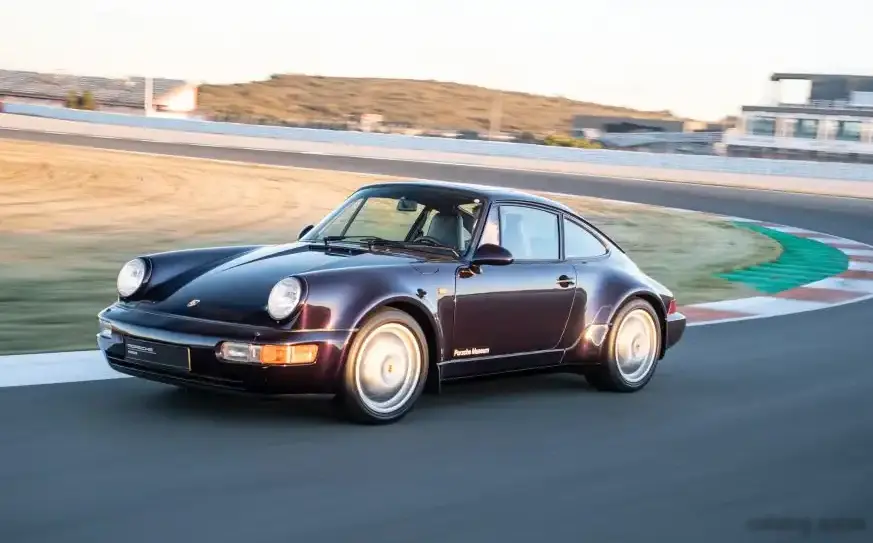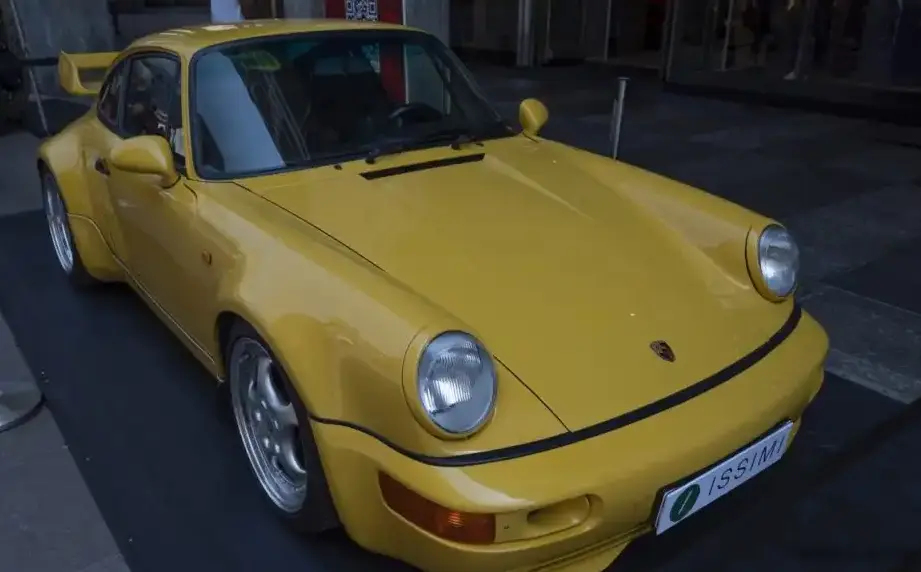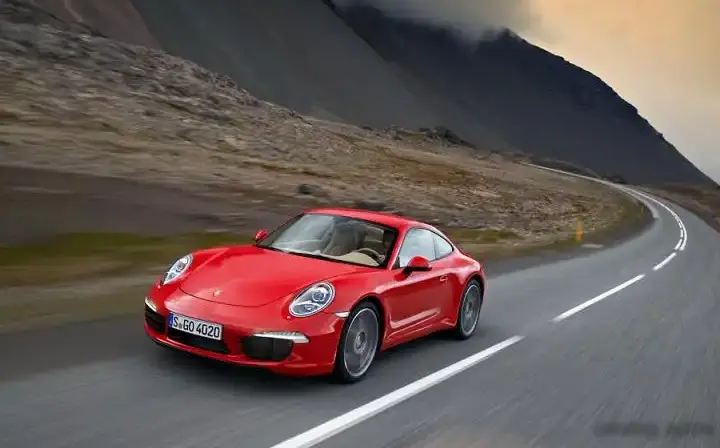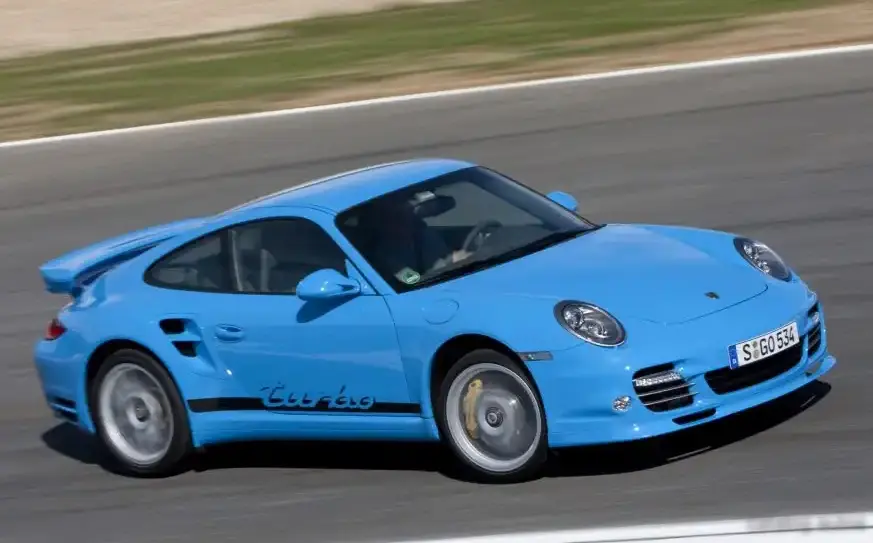
The Porsche 911 Carrera S 3.8 (385 Hp) PDK, produced from 2008 to 2011, represents a significant mid-life refresh of the 997 generation 911. This facelift, often referred to as the 997.2, brought substantial mechanical and cosmetic updates to Porsche’s iconic sports car. Positioned as a high-performance variant within the 911 range, the Carrera S bridged the gap between the base Carrera and the more track-focused Carrera GTS. It offered a compelling blend of everyday usability and exhilarating performance, appealing to enthusiasts seeking a refined yet engaging driving experience. The introduction of Porsche’s dual-clutch PDK transmission further enhanced the car’s capabilities, offering quicker shifts and improved efficiency compared to the previous Tiptronic S automatic.
Technical Specifications
| Brand | Porsche |
| Model | 911 |
| Generation | 911 (997, facelift 2008) |
| Type (Engine) | Carrera S 3.8 (385 Hp) PDK |
| Start of production | 2008 |
| End of production | 2011 |
| Powertrain Architecture | Internal Combustion engine |
| Body type | Coupe |
| Seats | 4 |
| Doors | 2 |
| Fuel consumption (economy) – urban | 15.3 l/100 km (15.4 US mpg, 18.5 UK mpg, 6.5 km/l) |
| Fuel consumption (economy) – extra urban | 7.2 l/100 km (32.7 US mpg, 39.2 UK mpg, 13.9 km/l) |
| Fuel consumption (economy) – combined | 10.2 l/100 km (23.1 US mpg, 27.7 UK mpg, 9.8 km/l) |
| CO2 emissions | 240 g/km |
| Fuel Type | Petrol (Gasoline) |
| Acceleration 0 – 100 km/h | 4.5 sec |
| Acceleration 0 – 62 mph | 4.5 sec |
| Acceleration 0 – 60 mph | 4.3 sec |
| Maximum speed | 300 km/h (186.41 mph) |
| Emission standard | Euro 5 |
| Weight-to-power ratio | 3.8 kg/Hp, 264.6 Hp/tonne |
| Weight-to-torque ratio | 3.5 kg/Nm, 288.7 Nm/tonne |
| Power | 385 Hp @ 6500 rpm |
| Power per litre | 101.3 Hp/l |
| Torque | 420 Nm @ 4400 rpm (309.78 lb.-ft. @ 4400 rpm) |
| Engine layout | Rear, Longitudinal |
| Engine Model/Code | MA1.01 |
| Engine displacement | 3800 cm3 (231.89 cu. in.) |
| Number of cylinders | 6 |
| Engine configuration | Boxer |
| Compression ratio | 12.5:1 |
| Number of valves per cylinder | 4 |
| Fuel injection system | Direct injection |
| Engine oil capacity | 7.5 l (7.93 US qt | 6.6 UK qt) |
| Coolant | 29 l (30.64 US qt | 25.52 UK qt) |
| Kerb Weight | 1455 kg (3207.73 lbs.) |
| Max. weight | 1860 kg (4100.6 lbs.) |
| Max load | 405 kg (892.87 lbs.) |
| Trunk (boot) space – maximum | 135 l (4.77 cu. ft.) |
| Fuel tank capacity | 64 l (16.91 US gal | 14.08 UK gal) |
| Length | 4435 mm (174.61 in.) |
| Width | 1808 mm (71.18 in.) |
| Height | 1300 mm (51.18 in.) |
| Wheelbase | 2350 mm (92.52 in.) |
| Drag coefficient (Cd) | 0.30 |
| Minimum turning circle | 10.9 m (35.76 ft.) |
| Drivetrain Architecture | Rear wheel drive |
| Number of gears and type of gearbox | 7 gears, automatic transmission PDK |
| Front suspension | Independent type McPherson |
| Rear suspension | Independent multi-link suspension |
| Front brakes | Disc, 330 mm |
| Rear brakes | Disc, 330 mm |
| Assisting systems | ABS (Anti-lock braking system) |
| Steering type | Steering rack and pinion |
| Power steering | Hydraulic Steering |
| Tires size | 235/35 ZR19; 305/30 ZR19 |
| Wheel rims size | 8J x 19; 11J x 19 |
Powertrain & Engine Architecture
At the heart of the 997.2 Carrera S lies the MA1.01 engine, a 3.8-liter naturally aspirated flat-six. This engine represented a significant upgrade over the 3.6-liter unit found in the earlier 997.1 Carrera S. The increased displacement, combined with direct fuel injection (DFI), variable valve lift (VarioCam Plus), and a revised intake system, resulted in a power output of 385 horsepower at 6,500 rpm and 420 Nm (309.78 lb-ft) of torque at 4,400 rpm. The DFI system precisely meters fuel directly into the combustion chamber, improving efficiency and reducing emissions. The PDK transmission, a seven-speed dual-clutch unit, was a key technological feature. It offered both fully automatic operation and manual control via steering wheel-mounted paddles, providing exceptionally quick and smooth gear changes. Unlike a traditional torque converter automatic, the PDK uses two separate clutches – one for odd-numbered gears and one for even-numbered gears – allowing for pre-selection of the next gear and virtually seamless shifts.
Driving Characteristics
The 997.2 Carrera S PDK delivered a markedly different driving experience compared to earlier 911s, and even to the manual versions of the same model. The PDK transmission eliminated the need for a clutch pedal and provided incredibly rapid gear changes, contributing to a 0-60 mph time of around 4.3 seconds. While the manual transmission offered a more engaging experience for purists, the PDK’s efficiency and speed made it a compelling option for everyday driving and track use. The 3.8-liter engine provided a broad and usable powerband, with strong torque available from relatively low engine speeds. The rear-wheel-drive configuration and precise steering contributed to the 911’s characteristic handling balance, offering a rewarding and confidence-inspiring driving experience. The gear ratios in the PDK were optimized for both acceleration and fuel efficiency, providing a good balance between performance and economy.
Equipment & Trim Levels
The Carrera S came standard with a generous array of features, including leather upholstery, automatic climate control, a Bose sound system, and bi-xenon headlights. Optional extras were plentiful, allowing buyers to personalize their 911 to their exact specifications. Popular options included sport seats, a navigation system, a sunroof, and Porsche Active Suspension Management (PASM), which electronically adjusts the dampers for improved ride comfort and handling. Interior trim options included various leather colors and materials, as well as carbon fiber accents. The dashboard layout was typical of the 997 generation, with a central tachometer flanked by gauges for speed, fuel level, and coolant temperature.
Chassis & Braking
The 997.2 Carrera S featured an independent suspension system with McPherson struts at the front and a multi-link setup at the rear. The suspension was tuned to provide a balance between comfort and performance. Braking duties were handled by ventilated disc brakes on all four wheels, providing ample stopping power. The Carrera S also came equipped with ABS (Anti-lock Braking System) and Porsche Stability Management (PSM), which helped to maintain control in challenging driving conditions. The chassis was constructed from a combination of steel and aluminum, contributing to a relatively lightweight and rigid structure.
Market Reception & Comparison
The 997.2 Carrera S was widely praised by automotive critics for its performance, handling, and refinement. The PDK transmission was particularly well-received, with many reviewers noting its speed and smoothness. Compared to the base Carrera, the Carrera S offered a significant performance upgrade, thanks to its larger engine and more aggressive suspension tuning. Compared to the Carrera GTS, the Carrera S offered a slightly more comfortable ride, while the GTS provided even sharper handling and a more focused driving experience. Fuel economy was respectable for a high-performance sports car, with combined fuel consumption of around 23.1 US mpg. Reliability was generally good, although some owners reported issues with the intermediate shaft (IMS) bearing, a common concern for earlier 997 models.
Legacy
The 997.2 Carrera S remains a highly sought-after sports car in the used market. Its combination of performance, refinement, and relative reliability has made it a popular choice among enthusiasts. The PDK transmission has proven to be durable and reliable, and the 3.8-liter engine is known for its longevity. While maintenance costs can be higher than those of more mainstream sports cars, the 911 Carrera S offers a unique and rewarding driving experience that continues to appeal to drivers today. The 997.2 generation, in general, is often considered the sweet spot in the 997 lineage, offering the best balance of modern technology and classic 911 character.