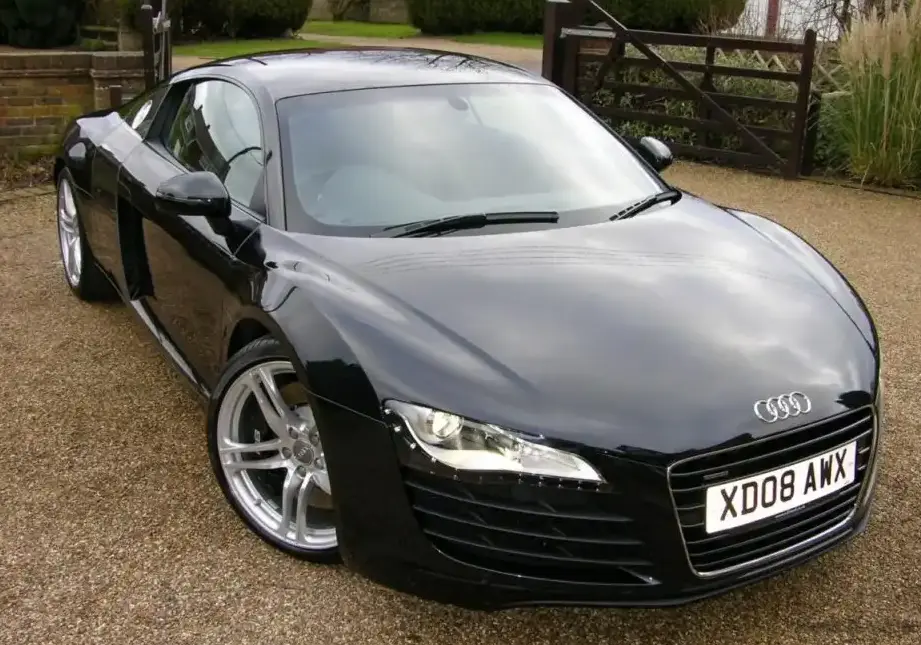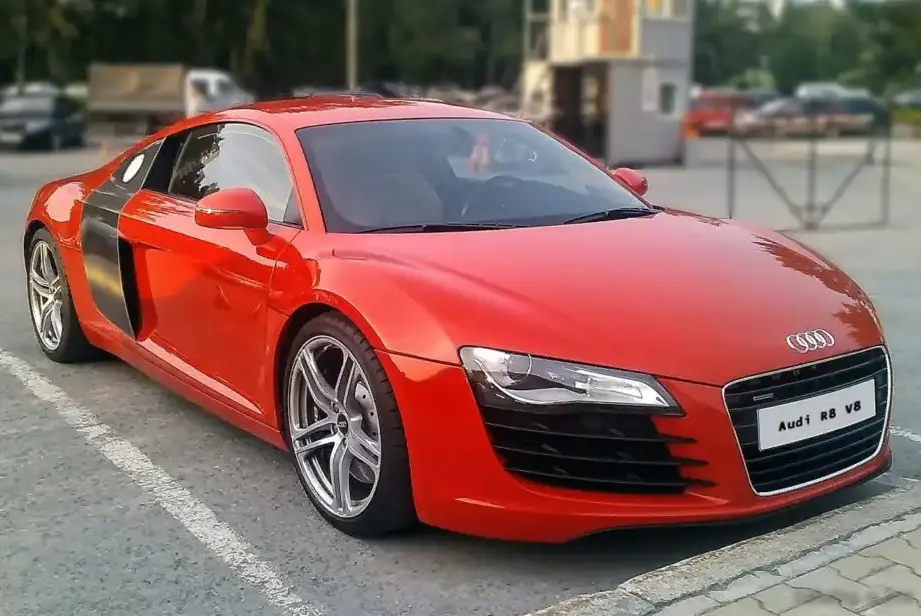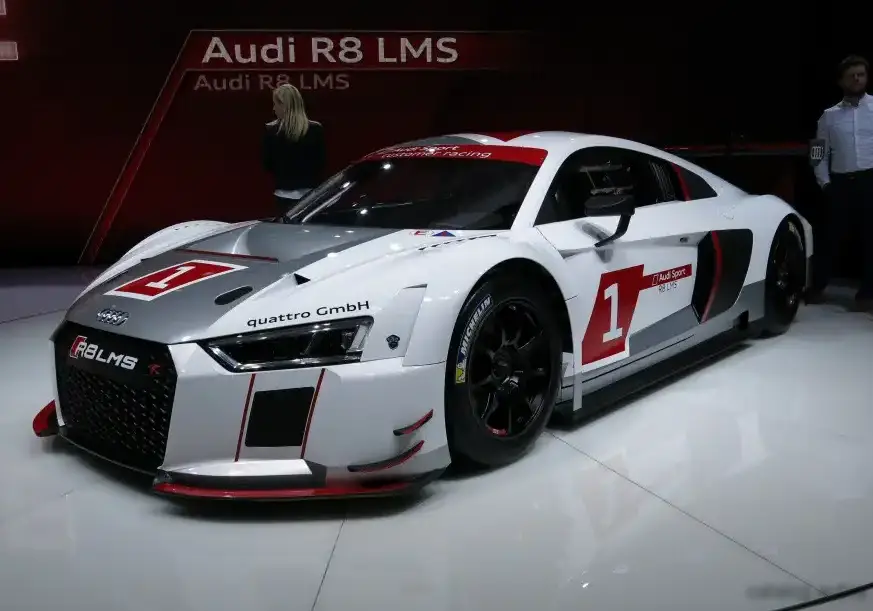
The Audi R8 II LMS GT4 5.2 FSI V10, produced from 2017 to 2018, represents Audi’s dedicated foray into the highly competitive GT4 racing category. Built upon the foundation of the second-generation R8 (internally designated R8 II), the LMS GT4 was engineered as a customer racing car, designed to be accessible to privateer teams and gentleman drivers. It served as a stepping stone for competitors aiming to move up the motorsport ladder, offering a relatively affordable and technically sophisticated platform for GT racing. This specific variant, equipped with the naturally aspirated 5.2-liter V10 engine and Audi’s seven-speed S tronic dual-clutch transmission, was a key component of Audi Sport’s customer racing program.
Technical Specifications
| Brand | Audi |
| Model | R8 |
| Generation | R8 II LMS |
| Type (Engine) | GT4 5.2 FSI V10 (495 Hp) S tronic |
| Start of production | 2017 |
| End of production | 2018 |
| Powertrain Architecture | Internal Combustion engine |
| Body type | Coupe |
| Seats | 2 |
| Doors | 2 |
| Fuel Type | Petrol (Gasoline) |
| Acceleration 0 – 100 km/h | 4 sec |
| Acceleration 0 – 62 mph | 4 sec |
| Acceleration 0 – 60 mph | 3.8 sec |
| Maximum speed | 250 km/h (155.34 mph) |
| Weight-to-power ratio | 2.9 kg/Hp, 339 Hp/tonne |
| Weight-to-torque ratio | 2.7 kg/Nm, 376.7 Nm/tonne |
| Power | 495 Hp |
| Power per litre | 95.2 Hp/l |
| Torque | 550 Nm (405.66 lb.-ft.) |
| Engine layout | Middle, Longitudinal |
| Engine displacement | 5200 cm3 (317.32 cu. in.) |
| Number of cylinders | 10 |
| Engine configuration | V-engine |
| Number of valves per cylinder | 4 |
| Fuel injection system | Direct injection and Multi-port manifold injection |
| Engine aspiration | Naturally aspirated engine |
| Valvetrain | DOHC |
| Kerb Weight | 1460 kg (3218.75 lbs.) |
| Fuel tank capacity | 118 l (31.17 US gal | 25.96 UK gal) |
| Length | 4467 mm (175.87 in.) |
| Width | 1940 mm (76.38 in.) |
| Width including mirrors | 2037 mm (80.2 in.) |
| Height | 1240 mm (48.82 in.) |
| Wheelbase | 2650 mm (104.33 in.) |
| Drivetrain Architecture | Rear wheel drive |
| Number of gears and type of gearbox | 7 gears, automatic transmission S tronic |
| Front suspension | Coil spring, Double wishbone, Transverse stabilizer |
| Rear suspension | Double wishbone, Transverse stabilizer, Coil spring |
| Front brakes | Ventilated discs, 380×34 mm |
| Rear brakes | Ventilated discs, 365×32 mm |
| Assisting systems | ABS (Anti-lock braking system) |
| Steering type | Steering rack and pinion |
| Power steering | Electric Steering |
| Tires size | Front wheel tires: 305/30 R18Rear wheel tires: 325/40 R18 |
| Wheel rims size | Front wheel rims: 11J x 18Rear wheel rims: 12J x 18 |
Powertrain & Engine Architecture
At the heart of the R8 II LMS GT4 lies Audi’s naturally aspirated 5.2-liter V10 engine, designated as the CJLA. While derived from the engine found in the road-going R8, the LMS GT4 version underwent significant modifications for racing purposes. These included a recalibrated engine management system, optimized intake and exhaust manifolds, and a reduction in weight. The engine utilizes a direct fuel injection system combined with multi-port manifold injection, maximizing both power and efficiency. The double overhead camshafts (DOHC) control four valves per cylinder, contributing to the engine’s high-revving nature. The S tronic seven-speed dual-clutch transmission provides rapid and precise gear changes, crucial for maintaining momentum on the track. This transmission was chosen for its robustness and efficiency, offering a balance between performance and drivability.
Driving Characteristics
The combination of the 495 horsepower V10 engine and the S tronic transmission delivers a potent driving experience. While not as raw or demanding as a traditional manual gearbox, the S tronic offers quick shifts and allows drivers to focus on braking and cornering. The GT4’s power delivery is linear and predictable, making it relatively accessible for drivers of varying skill levels. The gear ratios are optimized for track use, providing strong acceleration out of corners. Compared to a hypothetical R8 II LMS with a manual transmission, the S tronic version offers slightly quicker lap times due to faster gear changes, but may lack some of the driver engagement preferred by purists. The car’s weight distribution, carefully managed by Audi’s engineers, contributes to balanced handling and predictable behavior.
Equipment & Trim Levels
As a dedicated racing car, the R8 II LMS GT4 was not offered with traditional “trim levels.” However, it was delivered with a comprehensive suite of racing-specific equipment. This included a fully integrated roll cage, racing seats with six-point harnesses, a fire suppression system, and a data logging system. The interior was stripped of all unnecessary components to minimize weight. Optional extras included various aerodynamic packages, different suspension setups, and customized livery options. The standard interior featured a functional, no-frills design focused solely on the needs of the driver and co-driver.
Chassis & Braking
The R8 II LMS GT4 utilizes a lightweight aluminum chassis, derived from the road-going R8 but reinforced for the stresses of racing. The suspension system consists of fully adjustable coil springs, double wishbones, and transverse stabilizers at both the front and rear. This allows teams to fine-tune the car’s handling characteristics to suit different track conditions. The braking system features ventilated discs at all four corners, with six-piston calipers at the front and four-piston calipers at the rear. ABS (Anti-lock Braking System) is included as standard, providing enhanced stability under braking. The car rides on 18-inch wheels, with wider tires at the rear to maximize traction.
Market Reception & Comparison
The Audi R8 II LMS GT4 was generally well-received by racing teams and drivers. Critics praised its balanced handling, reliable powertrain, and relatively low running costs compared to other GT4 cars. Its S tronic transmission was seen as a benefit by many, offering a competitive edge in terms of lap times. Compared to other GT4 contenders, such as the Porsche 718 Cayman GT4 Clubsport and the Mercedes-AMG GT4, the Audi offered a unique combination of performance and usability. While some competitors may have offered slightly more outright speed, the R8 II LMS GT4 was often lauded for its consistency and driver-friendliness.
Legacy
The Audi R8 II LMS GT4 proved to be a successful platform in GT4 racing, achieving numerous victories and podium finishes in various championships around the world. Its robust powertrain and relatively straightforward maintenance requirements contributed to its longevity and popularity among customer teams. In the used car market, well-maintained examples of the R8 II LMS GT4 remain highly sought after by racing enthusiasts and collectors. The car represents a significant chapter in Audi’s motorsport history, demonstrating the brand’s commitment to customer racing and its ability to produce competitive and reliable racing cars.