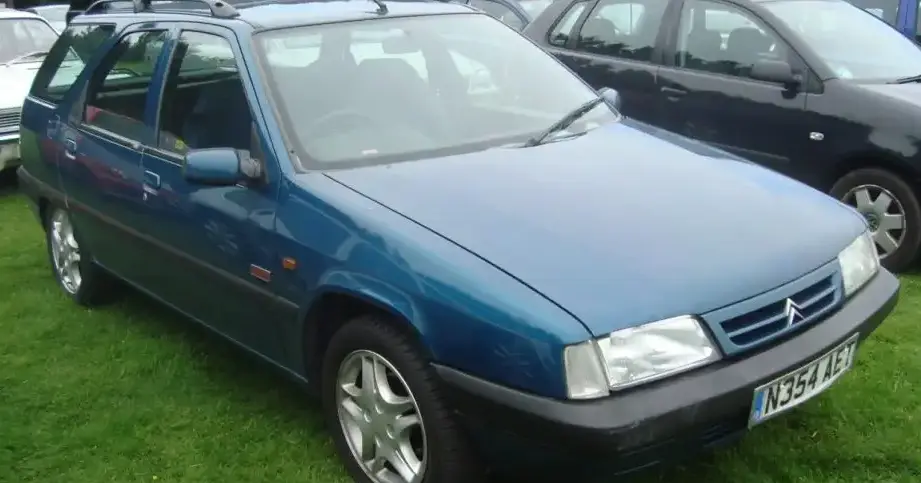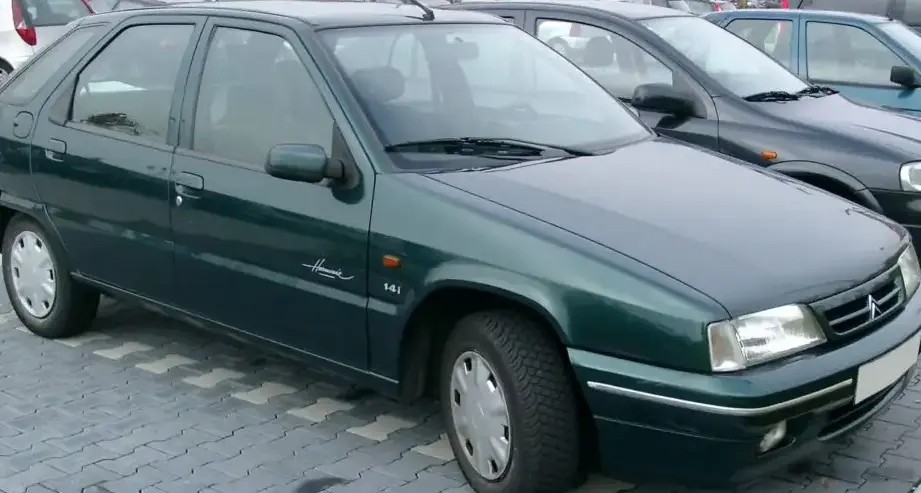
The Citroën ZX 1.6i, produced between 1994 and 1997, represented a core offering within the second phase (N2) of the ZX model range. Positioned as a practical and affordable family hatchback, it served as a key volume seller for Citroën, particularly in European markets. The ZX, as a whole, was designed to replace the aging BX, offering a more modern and aerodynamic design, alongside improved handling and a more spacious interior. The 1.6i variant, with its 88 horsepower engine and automatic transmission option, aimed to provide a balance between economy, usability, and comfort for a broad customer base. It occupied a mid-range position in the ZX lineup, slotting below the more powerful 2.0i 16V models and above the base 1.4-liter versions.
Technical Specifications
| Brand | Citroen |
| Model | ZX |
| Generation | ZX (N2, Phase II) 5-door |
| Type (Engine) | 1.6 i (88 Hp) |
| Start of production | 1994 |
| End of production | 1997 |
| Powertrain Architecture | Internal Combustion engine |
| Body type | Hatchback |
| Seats | 5 |
| Doors | 5 |
| Fuel Type | Petrol (Gasoline) |
| Maximum speed | 177 km/h (109.98 mph) |
| Weight-to-power ratio | 11.6 kg/Hp, 85.9 Hp/tonne |
| Weight-to-torque ratio | 7.8 kg/Nm, 128.9 Nm/tonne |
| Power | 88 Hp @ 6000 rpm |
| Power per litre | 55.7 Hp/l |
| Torque | 132 Nm @ 2600 rpm (97.36 lb.-ft. @ 2600 rpm) |
| Engine layout | Front, Transverse |
| Engine Model/Code | BFZ XU5JP L3 |
| Engine displacement | 1580 cm3 (96.42 cu. in.) |
| Number of cylinders | 4 |
| Engine configuration | Inline |
| Cylinder Bore | 83 mm (3.27 in.) |
| Piston Stroke | 73 mm (2.87 in.) |
| Compression ratio | 9.25:1 |
| Number of valves per cylinder | 2 |
| Fuel injection system | Multi-port manifold injection |
| Engine aspiration | Naturally aspirated engine |
| Valvetrain | OHC |
| Engine oil capacity | 4.5 l (4.76 US qt | 3.96 UK qt) |
| Coolant | 7.5 l (7.93 US qt | 6.6 UK qt) |
| Kerb Weight | 1024 kg (2257.53 lbs.) |
| Max. weight | 1550 kg (3417.17 lbs.) |
| Max load | 526 kg (1159.63 lbs.) |
| Trunk (boot) space – minimum | 343 l (12.11 cu. ft.) |
| Trunk (boot) space – maximum | 926 l (32.7 cu. ft.) |
| Fuel tank capacity | 54 l (14.27 US gal | 11.88 UK gal) |
| Max. roof load | 75 kg (165.35 lbs.) |
| Permitted trailer load with brakes (12%) | 1000 kg (2204.62 lbs.) |
| Permitted trailer load without brakes | 510 kg (1124.36 lbs.) |
| Permitted towbar download | 70 kg (154.32 lbs.) |
| Length | 4071 mm (160.28 in.) |
| Width | 1702 mm (67.01 in.) |
| Height | 1404 mm (55.28 in.) |
| Wheelbase | 2540 mm (100 in.) |
| Front track | 1440 mm (56.69 in.) |
| Rear (Back) track | 1430 mm (56.3 in.) |
| Front overhang | 849 mm (33.43 in.) |
| Rear overhang | 682 mm (26.85 in.) |
| Minimum turning circle (turning diameter) | 11.1 m (36.42 ft.) |
| Drivetrain Architecture | The Internal combustion engine (ICE) drives the front wheels of the vehicle. |
| Drive wheel | Front wheel drive |
| Number of gears and type of gearbox | 5 gears, manual transmission |
| Front suspension | Independent type McPherson, Wishbone |
| Rear suspension | Hydro-pneumatic element, Trailing arm |
| Front brakes | Ventilated discs |
| Rear brakes | Drum |
| Steering type | Steering rack and pinion |
| Power steering | Hydraulic Steering |
| Tires size | 175/65 R14 |
| Wheel rims size | 5.5J x 14 |
INTRODUCTION
The Citroën ZX, launched in 1992, was a significant model for the French manufacturer, representing a move towards more contemporary design and engineering. The Phase II update, introduced in 1994, brought refinements to the styling, interior, and mechanical components. The 1.6i variant, powered by the XU5JP engine, was a popular choice for buyers seeking a balance of affordability and practicality. This engine, a staple in many PSA (Peugeot Société Anonyme) vehicles of the era, was known for its reliability and reasonable fuel economy. The availability of an automatic transmission further broadened the ZX’s appeal, catering to drivers prioritizing ease of use over outright performance.
Powertrain & Engine Architecture
The heart of the ZX 1.6i is the XU5JP L3 engine, a 1.6-liter inline-four cylinder petrol engine. This engine utilizes a single overhead camshaft (OHC) design, operating two valves per cylinder. Fuel delivery is managed by a multi-port fuel injection system, contributing to improved efficiency and reduced emissions compared to earlier carbureted engines. The engine produces 88 horsepower at 6000 rpm and 132 Nm (97.36 lb-ft) of torque at 2600 rpm. The automatic transmission offered with this variant was typically a four-speed unit, designed to provide smooth and comfortable gear changes. While not known for its sportiness, this transmission was well-suited to the engine’s torque characteristics and the car’s intended role as a family vehicle. The engine code BFZ is commonly associated with this configuration.
Driving Characteristics
The ZX 1.6i with the automatic transmission delivers a comfortable, if not particularly exhilarating, driving experience. Acceleration is adequate for everyday driving, but the automatic transmission does diminish the engine’s responsiveness compared to the five-speed manual version. The gear ratios are optimized for fuel economy and smooth cruising, rather than rapid acceleration. The car feels stable and well-balanced, thanks to its independent front suspension and the unique hydro-pneumatic rear suspension system – a Citroën hallmark. This rear suspension provides a remarkably smooth ride, absorbing bumps and imperfections in the road surface with ease. However, the automatic transmission can feel somewhat sluggish when attempting to overtake or climb hills.
Equipment & Trim Levels
The ZX 1.6i typically came equipped with a reasonable level of standard features. These included central locking, power steering, and an adjustable steering column. Interior upholstery was generally cloth, with a simple and functional dashboard layout. Optional extras available for this trim level included air conditioning, electric windows, and a sunroof. Higher-spec versions of the ZX 1.6i might also have featured alloy wheels and upgraded audio systems. The overall interior ambiance was practical and durable, reflecting the car’s focus on everyday usability.
Chassis & Braking
The ZX features an independent McPherson strut front suspension, providing good handling and stability. The rear suspension utilizes Citroën’s innovative hydro-pneumatic system, offering a uniquely comfortable ride quality. Braking duties are handled by ventilated discs at the front and drum brakes at the rear. While adequate for normal driving conditions, the rear drum brakes are a point of criticism compared to the all-disc setups found on higher-performance ZX models. The steering is rack and pinion, providing precise and responsive control. The car’s relatively lightweight construction (1024 kg / 2257.53 lbs) contributes to its nimble handling characteristics.
Market Reception & Comparison
The ZX 1.6i automatic was generally well-received by automotive critics as a practical and comfortable family car. However, it was often criticized for its lack of outright performance compared to the more powerful ZX variants, such as the 2.0i 16V. Fuel economy was considered reasonable for its class, but not exceptional. Compared to rivals like the Ford Escort and Vauxhall/Opel Astra, the ZX offered a unique blend of comfort and handling, thanks to its hydro-pneumatic suspension. The automatic transmission, while convenient, was seen as detracting from the car’s overall driving enjoyment.
Legacy
The Citroën ZX, and specifically the 1.6i automatic variant, has developed a loyal following among enthusiasts. The XU5JP engine is known for its durability and relatively straightforward maintenance. While the automatic transmission is not as sought-after as the manual version, it remains a viable option for drivers prioritizing ease of use. Today, well-maintained examples of the ZX 1.6i can be found on the used car market, offering a unique and affordable classic car experience. The hydro-pneumatic suspension, while requiring occasional maintenance, continues to be praised for its exceptional ride quality. The ZX represents a significant chapter in Citroën’s history, showcasing the manufacturer’s commitment to innovation and comfort.