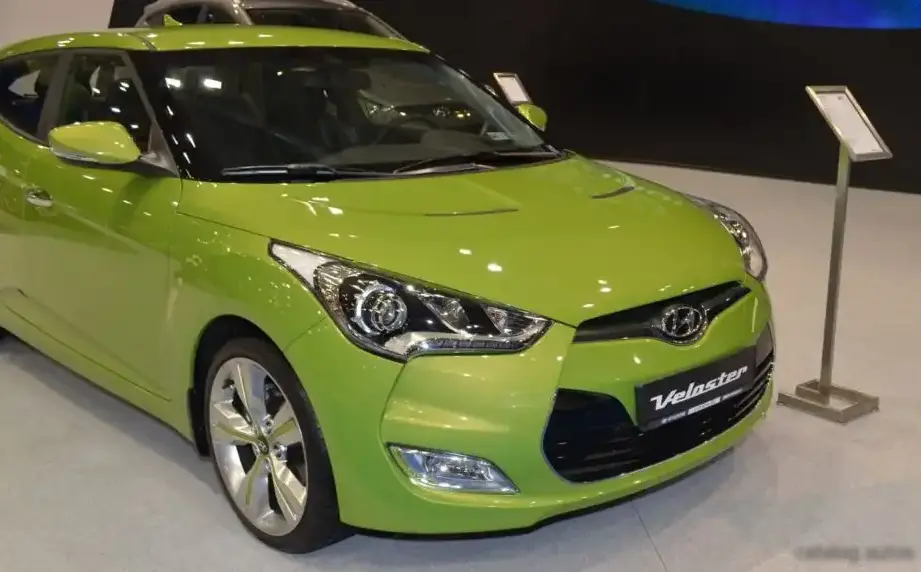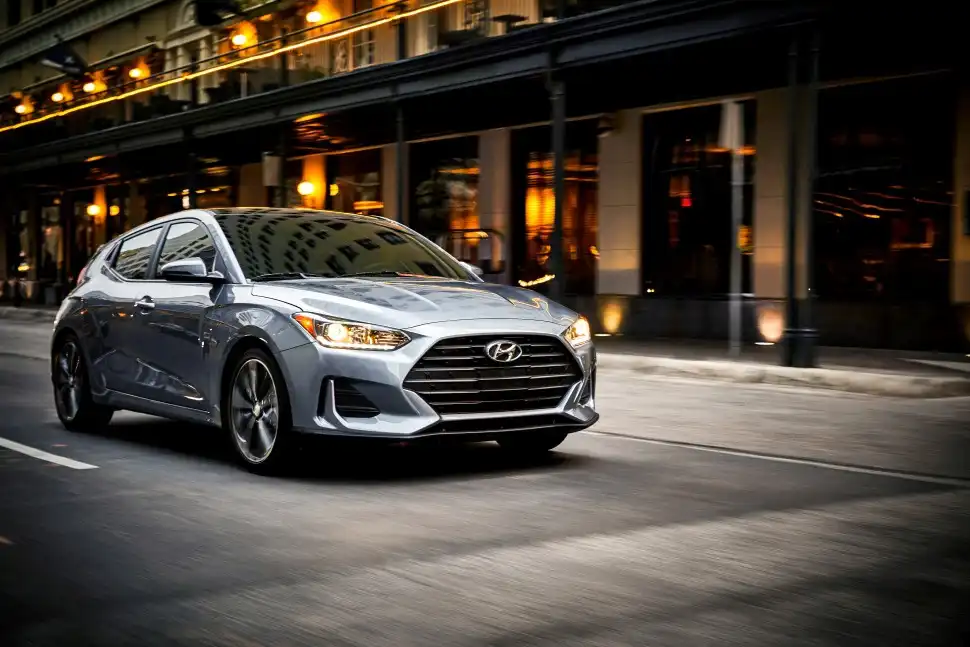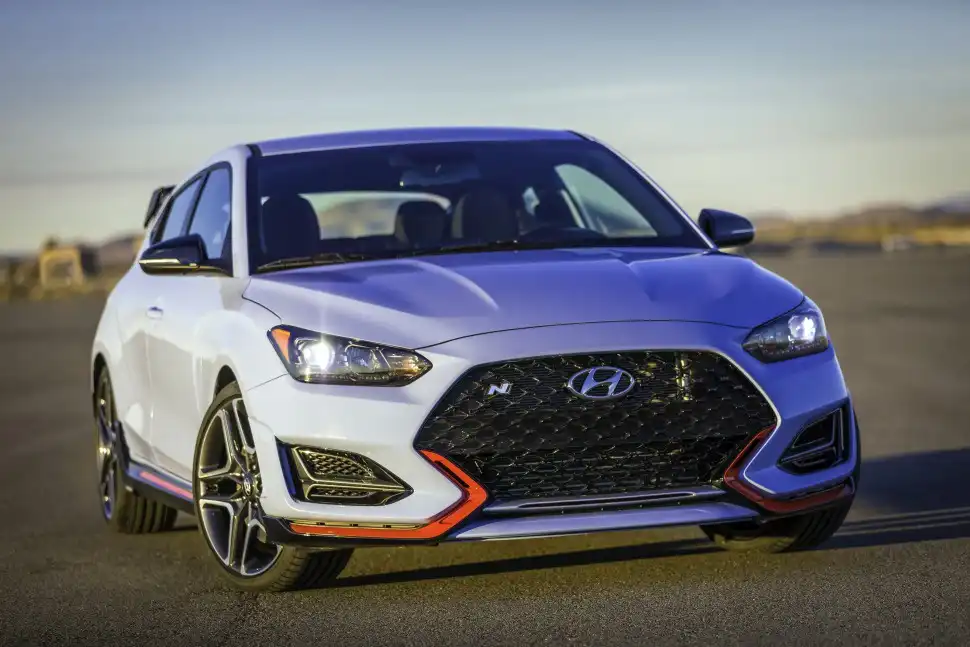
The Hyundai Veloster, particularly the facelifted model produced from 2015 to 2018, represented a significant step forward for Hyundai in the compact sports coupe market. This iteration, distinguished by its unique three-door configuration, aimed to blend practicality with a sporty driving experience. The 1.6-liter turbocharged engine variant, producing 186 horsepower, occupied a key position in the Veloster lineup, offering a balance between performance and fuel efficiency. It served as the mid-range option, bridging the gap between the base naturally aspirated engine and the more potent Veloster Turbo R-Spec.
Technical Specifications
| Brand | Hyundai |
| Model | Veloster |
| Generation | Veloster (facelift 2015) |
| Type (Engine) | 1.6 (186 Hp) |
| Start of production | 2015 |
| End of production | 2018 |
| Powertrain Architecture | Internal Combustion engine |
| Body type | Hatchback |
| Seats | 4 |
| Doors | 4 |
| Fuel consumption (urban) | 9.3 l/100 km (25.3 US mpg) |
| Fuel consumption (extra urban) | 5.5 l/100 km (42.8 US mpg) |
| Fuel consumption (combined) | 6.9 l/100 km (34.1 US mpg) |
| CO2 emissions | 157 g/km |
| Fuel Type | Petrol (Gasoline) |
| Acceleration 0 – 100 km/h | 8.4 sec |
| Acceleration 0 – 62 mph | 8.4 sec |
| Acceleration 0 – 60 mph | 8 sec |
| Maximum speed | 214 km/h (132.97 mph) |
| Emission standard | Euro 6 |
| Weight-to-power ratio | 6.7 kg/Hp |
| Weight-to-torque ratio | 4.7 kg/Nm |
| Power | 186 Hp @ 5500 rpm |
| Torque | 265 Nm @ 1500-4500 rpm (195.45 lb.-ft.) |
| Engine layout | Front, Transverse |
| Engine Model/Code | Gamma II / G4FJ |
| Engine displacement | 1591 cm3 (97.09 cu. in.) |
| Number of cylinders | 4 |
| Engine configuration | Inline |
| Cylinder Bore | 77 mm (3.03 in.) |
| Piston Stroke | 85.4 mm (3.36 in.) |
| Number of valves per cylinder | 4 |
| Engine aspiration | Turbocharger, Intercooler |
| Engine oil capacity | 4.5 l (4.76 US qt | 3.96 UK qt) |
| Coolant | 5 l (5.28 US qt | 4.4 UK qt) |
| Kerb Weight | 1255-1313 kg (2766.8 – 2894.67 lbs.) |
| Max. weight | 1750 kg (3858.09 lbs.) |
| Max load | 437-495 kg (963.42 – 1091.29 lbs.) |
| Trunk (boot) space – minimum | 320 l (11.3 cu. ft.) |
| Trunk (boot) space – maximum | 1015 l (35.84 cu. ft.) |
| Fuel tank capacity | 50 l (13.21 US gal | 11 UK gal) |
| Length | 4250 mm (167.32 in.) |
| Width | 1805 mm (71.06 in.) |
| Height | 1405 mm (55.31 in.) |
| Wheelbase | 2650 mm (104.33 in.) |
| Front track | 1557 mm (61.3 in.) |
| Rear (Back) track | 1570 mm (61.81 in.) |
| Front overhang | 850 mm (33.46 in.) |
| Rear overhang | 750 mm (29.53 in.) |
| Ride height (ground clearance) | 149 mm (5.87 in.) |
| Drivetrain Architecture | Front wheel drive |
| Drive wheel | Front wheel drive |
| Number of gears and type of gearbox | 6 gears, manual transmission |
| Front brakes | Ventilated discs |
| Rear brakes | Disc |
| Assisting systems | ABS (Anti-lock braking system) |
| Steering type | Steering rack and pinion |
| Power steering | Electric Steering |
| Tires size | 225/40 R18 |
| Wheel rims size | 7.5 J x 18 |
INTRODUCTION
The 2015-2018 Hyundai Veloster 1.6, powered by the Gamma II engine, was a key component of Hyundai’s strategy to attract a younger demographic. The facelift brought with it revised styling, improved interior materials, and enhanced technology. Positioned as a sporty and affordable option, the Veloster aimed to offer a unique alternative to traditional two-door coupes. Built on the Hyundai-Kia ‘B’ platform, also known as the 1HX0/A3 platform, the Veloster distinguished itself with its asymmetrical door configuration – a single door on the driver’s side and two doors on the passenger side – contributing to its distinctive appearance and practicality.
Powertrain & Engine Architecture
At the heart of the Veloster 1.6 lies the Hyundai Gamma II engine, specifically the G4FJ code. This 1.6-liter inline-four cylinder engine utilizes direct injection and a single scroll turbocharger with an intercooler to produce 186 horsepower and 195 lb-ft of torque. The engine features a dual continuously variable valve timing (D-CVVT) system, optimizing valve timing for improved performance and fuel efficiency across the rev range. Fuel is delivered via multi-point fuel injection. The engine’s architecture is designed for compactness and lightweight construction, contributing to the Veloster’s overall agility. The 6-speed manual transmission was standard, offering precise gear changes and a more engaging driving experience.
Driving Characteristics
The 1.6-liter turbocharged Veloster provided a noticeable step up in performance compared to the base engine. Acceleration from 0-60 mph took approximately 8 seconds, making it a reasonably quick vehicle for its class. The turbocharger provided a broad torque curve, delivering usable power throughout the engine’s operating range. While not as aggressively tuned as the Veloster Turbo R-Spec, the 1.6 offered a good balance between performance and everyday drivability. The manual transmission’s gear ratios were well-matched to the engine’s power delivery, allowing for spirited acceleration and comfortable highway cruising. Compared to the R-Spec, the 1.6 felt slightly less responsive, but offered a more refined and comfortable ride.
Equipment & Trim Levels
The 1.6 trim level of the Veloster typically included standard features such as air conditioning, power windows and locks, a touchscreen infotainment system with Bluetooth connectivity, and a rearview camera. Interior upholstery was typically cloth, with a sporty design. Optional extras included a panoramic sunroof, leather upholstery, a premium audio system, and keyless entry with push-button start. The dashboard layout was driver-focused, with easy-to-reach controls and a clear instrument cluster. The 1.6 trim was generally considered the sweet spot for value, offering a good level of equipment without the higher price tag of the R-Spec.
Chassis & Braking
The Veloster’s chassis was designed to provide a balance between handling and ride comfort. The front suspension utilized MacPherson struts, while the rear suspension employed a coupled torsion beam setup. The 1.6 trim typically featured disc brakes on all four wheels, providing adequate stopping power. Anti-lock braking system (ABS) was standard. The Veloster’s relatively lightweight construction contributed to its nimble handling characteristics. Stabilizer bars were included both front and rear, helping to reduce body roll during cornering. The standard tire size was 225/40R18, providing good grip in both wet and dry conditions.
Market Reception & Comparison
The Hyundai Veloster 1.6 received generally positive reviews from automotive critics. It was praised for its unique styling, sporty handling, and good value for money. However, some critics noted that the interior materials could be improved. Compared to other compact coupes in its class, such as the Honda Civic Coupe and the Scion FR-S, the Veloster offered a distinctive design and a more practical hatchback configuration. In terms of fuel economy, the 1.6-liter Veloster performed competitively, achieving around 34 mpg in combined driving. Reliability was generally good, with few reported issues.
Legacy
The Hyundai Veloster, and specifically the 1.6-liter turbocharged variant, has established a loyal following among enthusiasts. The Gamma II engine proved to be a reliable and durable powerplant, with many examples exceeding 100,000 miles without major issues. On the used car market, the 2015-2018 Veloster 1.6 remains an attractive option for buyers seeking an affordable and sporty coupe. Its unique styling, combined with its decent performance and fuel efficiency, continues to appeal to a wide range of drivers. The Veloster helped to solidify Hyundai’s reputation for building well-equipped, reliable, and stylish vehicles.