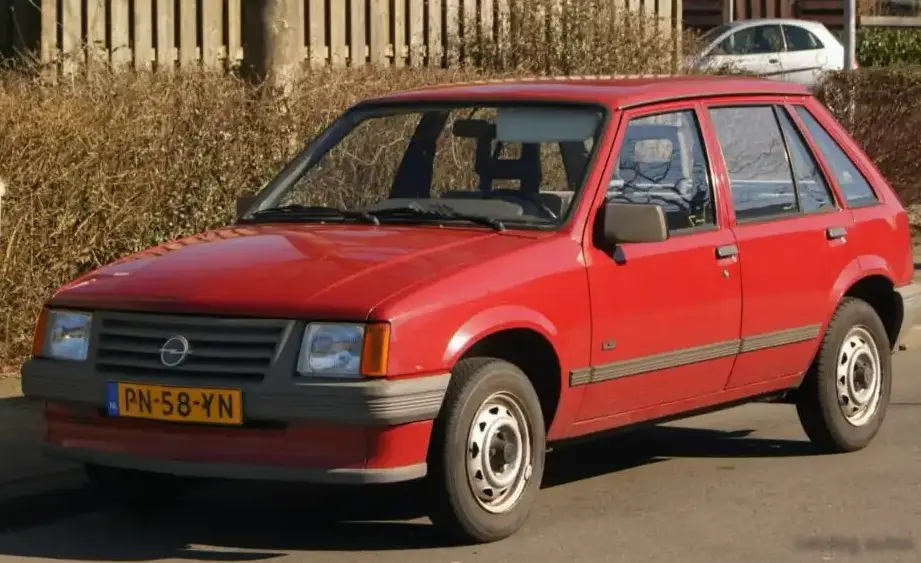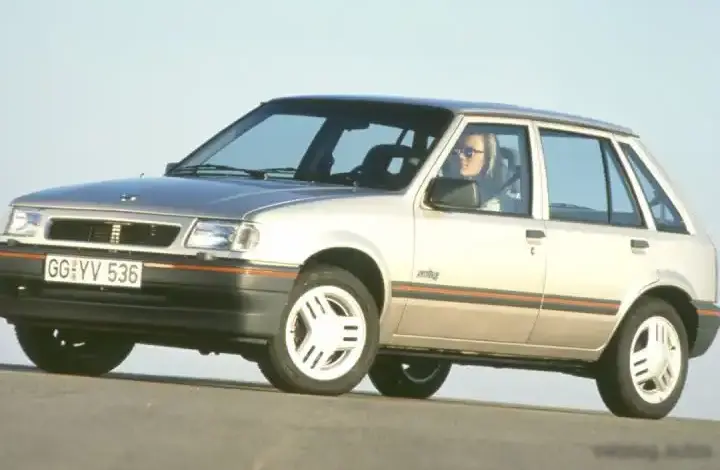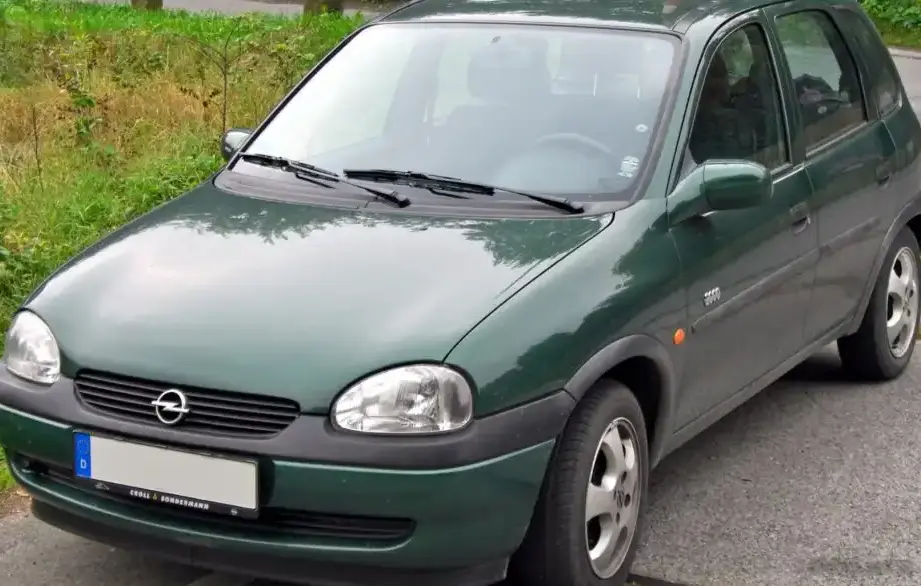
The Opel Corsa B, specifically the 1.2i 16V variant produced from April 1998 to July 2000, represented an entry-level offering within the Corsa B range. This facelifted version of the Corsa B (internally designated 1HX0) aimed to provide affordable and economical transportation, primarily targeting first-time buyers and those seeking a practical city car. Positioned below the more powerful 1.4 and 1.6-liter models, and significantly different from the sportier GSi trims, the 1.2i 16V offered a balance of fuel efficiency and acceptable performance for everyday driving. It was a key model for Opel in the European small car segment, competing with vehicles like the Peugeot 206, Renault Clio, and Volkswagen Polo.
Technical Specifications
| Brand | Opel |
| Model | Corsa |
| Generation | Corsa B (facelift 1997) |
| Type (Engine) | 1.2i 16V (65 Hp) |
| Start of production | April, 1998 |
| End of production | July, 2000 |
| Powertrain Architecture | Internal Combustion engine |
| Body type | Hatchback |
| Seats | 5 |
| Doors | 3-5 |
| Fuel consumption (urban) | 8.5 l/100 km (27.7 US mpg, 33.2 UK mpg, 11.8 km/l) |
| Fuel consumption (extra urban) | 5.3 l/100 km (44.4 US mpg, 53.3 UK mpg, 18.9 km/l) |
| Fuel consumption (combined) | 6.5 l/100 km (36.2 US mpg, 43.5 UK mpg, 15.4 km/l) |
| CO2 emissions | 155 g/km |
| Fuel Type | Petrol (Gasoline) |
| Acceleration 0 – 100 km/h | 14 sec |
| Acceleration 0 – 62 mph | 14 sec |
| Acceleration 0 – 60 mph | 13.3 sec |
| Maximum speed | 163 km/h (101.28 mph) |
| Weight-to-power ratio | 13.4 kg/Hp, 74.7 Hp/tonne |
| Weight-to-torque ratio | 7.9 kg/Nm, 126.4 Nm/tonne |
| Power | 65 Hp @ 5600 rpm |
| Power per litre | 54.2 Hp/l |
| Torque | 110 Nm @ 4000 rpm (81.13 lb.-ft. @ 4000 rpm) |
| Engine layout | Front, Transverse |
| Engine Model/Code | X12XE |
| Engine displacement | 1199 cm3 (73.17 cu. in.) |
| Number of cylinders | 4 |
| Engine configuration | Inline |
| Cylinder Bore | 72.5 mm (2.85 in.) |
| Piston Stroke | 72.6 mm (2.86 in.) |
| Compression ratio | 10.1:1 |
| Number of valves per cylinder | 4 |
| Fuel injection system | Multi-port manifold injection |
| Engine aspiration | Naturally aspirated engine |
| Valvetrain | DOHC |
| Engine oil capacity | 3.5 l (3.7 US qt | 3.08 UK qt) |
| Coolant | 5.2 l (5.49 US qt | 4.58 UK qt) |
| Kerb Weight | 870 kg (1918.02 lbs.) |
| Max. weight | 1370 kg (3020.33 lbs.) |
| Max load | 500 kg (1102.31 lbs.) |
| Trunk (boot) space – minimum | 260 l (9.18 cu. ft.) |
| Trunk (boot) space – maximum | 1050 l (37.08 cu. ft.) |
| Fuel tank capacity | 46 l (12.15 US gal | 10.12 UK gal) |
| Length | 3740 mm (147.24 in.) |
| Width | 1610 mm (63.39 in.) |
| Height | 1420 mm (55.91 in.) |
| Wheelbase | 2445 mm (96.26 in.) |
| Front track | 1385 mm (54.53 in.) |
| Rear (Back) track | 1390 mm (54.72 in.) |
| Drag coefficient (Cd) | 0.34 |
| Drivetrain Architecture | The Internal combustion engine (ICE) drives the front wheels of the vehicle. |
| Drive wheel | Front wheel drive |
| Number of gears and type of gearbox | 5 gears, manual transmission |
| Front suspension | Coil spring |
| Rear suspension | Coil spring |
| Front brakes | Disc |
| Rear brakes | Drum |
| Steering type | Steering rack and pinion |
| Power steering | Hydraulic Steering |
| Tires size | 165/70 R13 |
| Wheel rims size | 5 J X 13 |
Powertrain & Engine Architecture
The heart of the Corsa B 1.2i 16V is the X12XE engine, a 1.2-liter inline-four cylinder petrol engine. This engine utilizes a multi-port fuel injection system, delivering fuel directly into the intake ports, and a double overhead camshaft (DOHC) valvetrain, enhancing breathing and contributing to its relatively high output for its displacement. The 16-valve configuration (four valves per cylinder) further aids in maximizing airflow. The engine produces 65 horsepower at 5600 rpm and 110 Nm (81.13 lb-ft) of torque at 4000 rpm. The engine’s design prioritized fuel efficiency and low emissions over outright performance. The standard transmission for this variant was a five-speed manual gearbox, although a four-speed automatic transmission was also available, albeit less common. The automatic transmission, while offering convenience, did impact acceleration and fuel economy compared to the manual version.
Driving Characteristics
The 1.2i 16V Corsa B, particularly with the manual transmission, offered adequate performance for urban and suburban driving. Acceleration to 60 mph took around 13.3 seconds, and top speed was approximately 101 mph. The engine felt relatively responsive at lower RPMs, making it suitable for city traffic. However, when fully loaded or attempting highway overtaking, the engine could feel strained, requiring downshifts to maintain speed. The automatic transmission version suffered from noticeable performance degradation, with slower acceleration and a tendency to hunt for gears. The suspension provided a comfortable ride, absorbing bumps reasonably well, but handling was not particularly sporty. Steering was light and easy, making it maneuverable in tight spaces.
Equipment & Trim Levels
The 1.2i 16V typically came with a basic level of equipment. Standard features generally included power steering, central locking, and an adjustable steering column. Interior upholstery was typically cloth, and the dashboard featured a simple, functional design. Optional extras included air conditioning, electric windows, and a radio/cassette player. Higher trim levels, such as the “Swing” or “Sport,” added features like alloy wheels, body-colored bumpers, and upgraded interior trim. The base model was intentionally spartan, keeping the purchase price low.
Chassis & Braking
The Corsa B 1.2i 16V utilized a relatively simple chassis design. Front suspension consisted of coil springs and MacPherson struts, while the rear suspension employed a torsion beam setup. This configuration provided a good balance of comfort and handling for its intended purpose. Braking was typically accomplished with disc brakes on the front wheels and drum brakes on the rear. The braking system was adequate for everyday driving, but lacked the stopping power of more powerful Corsa variants equipped with rear disc brakes. The relatively light weight of the 1.2i 16V helped to offset the limitations of the braking system.
Market Reception & Comparison
The Corsa B 1.2i 16V was generally well-received as an affordable and economical city car. Critics praised its fuel efficiency and ease of driving, but noted its lack of performance compared to higher-powered models. Compared to the 1.4 and 1.6-liter Corsas, the 1.2i 16V offered significantly lower running costs but at the expense of acceleration and overall driving enjoyment. The 1.9 TDI diesel variant provided superior fuel economy and torque, but came with a higher purchase price and potentially higher maintenance costs. The 1.2i 16V appealed to buyers prioritizing affordability and practicality over performance.
Legacy
The Opel Corsa B 1.2i 16V remains a relatively common sight on European roads today, testament to its durability and affordability. The X12XE engine is generally considered reliable, although regular maintenance is crucial to prevent issues such as oil leaks and timing chain wear. Parts availability is good, and the car’s simple mechanical design makes it relatively easy to repair. In the used car market, the 1.2i 16V represents a budget-friendly option for those seeking a basic, reliable, and economical mode of transportation. While not a performance icon, it played a significant role in making the Corsa B one of Opel’s most successful models.