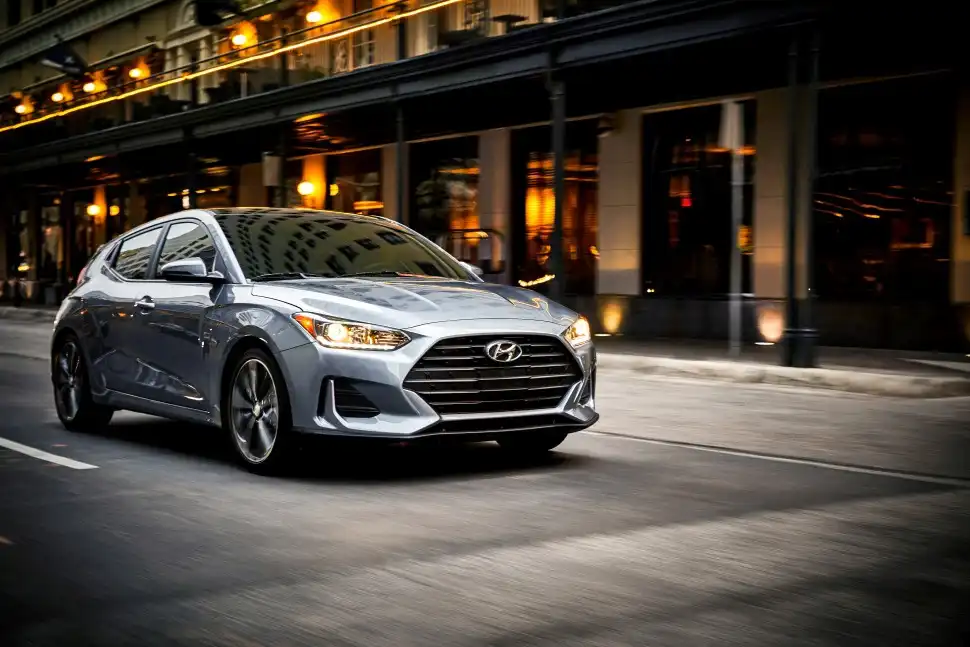
The Hyundai Veloster II 2.0 MPI Automatic, produced from 2018 onwards, represents a key variant within the second generation of Hyundai’s distinctive coupe-inspired hatchback. Positioned as a mid-range offering in the Veloster lineup, it aimed to provide a balance between performance and affordability, appealing to buyers seeking a stylish and practical vehicle. The Veloster II, built on the MB platform, sought to broaden the appeal of the original Veloster by addressing criticisms regarding interior space and rear access. This 2.0-liter MPI (Multi-Point Injection) automatic configuration was a popular choice, offering a more accessible entry point compared to the turbocharged variants.
Technical Specifications
| Brand | Hyundai |
| Model | Veloster |
| Generation | Veloster II |
| Type (Engine) | 2.0 MPI (147 Hp) Automatic |
| Start of production | 2018 |
| Powertrain Architecture | Internal Combustion engine |
| Body type | Coupe, Hatchback |
| Seats | 4 |
| Doors | 4 |
| Fuel consumption (urban) | 8.7 l/100 km (27 US mpg) |
| Fuel consumption (extra urban) | 6.9 l/100 km (34.1 US mpg) |
| Fuel consumption (combined) | 7.8 l/100 km (30.2 US mpg) |
| Fuel Type | Petrol (Gasoline) |
| Weight-to-power ratio | 8.4 kg/Hp |
| Weight-to-torque ratio | 6.9 kg/Nm |
| Power | 147 Hp @ 6200 rpm |
| Power per litre | 73.5 Hp/l |
| Torque | 179 Nm @ 4500 rpm (132.02 lb.-ft. @ 4500 rpm) |
| Engine layout | Front, Transverse |
| Engine Model/Code | Nu / G4NH |
| Engine displacement | 1999 cm3 (121.99 cu. in.) |
| Number of cylinders | 4 |
| Engine configuration | Inline |
| Cylinder Bore | 81 mm (3.19 in.) |
| Piston Stroke | 97 mm (3.82 in.) |
| Compression ratio | 12.5:1 |
| Number of valves per cylinder | 4 |
| Fuel injection system | Multi-port manifold injection |
| Engine aspiration | Naturally aspirated engine |
| Valvetrain | DOHC, D-CVVT |
| Engine oil capacity | 4 l (4.23 US qt | 3.52 UK qt) |
| Coolant capacity | 6.5 l (6.87 US qt | 5.72 UK qt) |
| Kerb Weight | 1240-1295 kg (2733.73 – 2854.99 lbs.) |
| Max. weight | 1700 kg (3747.86 lbs.) |
| Max load | 405-460 kg (892.87 – 1014.13 lbs.) |
| Trunk (boot) space – minimum | 564 l (19.92 cu. ft.) |
| Trunk (boot) space – maximum | 1260 l (44.5 cu. ft.) |
| Fuel tank capacity | 50 l (13.21 US gal | 11 UK gal) |
| Length | 4239 mm (166.89 in.) |
| Width | 1801 mm (70.91 in.) |
| Height | 1400 mm (55.12 in.) |
| Wheelbase | 2649 mm (104.29 in.) |
| Front track | 1549-1562 mm (60.98 – 61.5 in.) |
| Rear (Back) track | 1562-1575 mm (61.5 – 62.01 in.) |
| Minimum turning circle | 10.6 m (34.78 ft.) |
| Drivetrain Architecture | Front wheel drive |
| Number of gears | 6 |
| Gearbox type | Automatic transmission |
| Front suspension | Independent, McPherson with coil spring and anti-roll bar |
| Rear suspension | Independent multi-link suspension |
| Front brakes | Ventilated discs |
| Rear brakes | Disc |
| Assisting systems | ABS (Anti-lock braking system) |
| Steering type | Steering rack and pinion |
| Power steering | Electric Steering |
| Tires size | 215/45 R17; 225/40 R18 |
| Wheel rims size | 7.0J x 17; 7.5J x 18 |
Powertrain & Engine Architecture
The heart of the Veloster II 2.0 MPI Automatic is Hyundai’s Nu family inline-four cylinder engine, specifically the G4NH code. This 1999cc engine utilizes a naturally aspirated configuration with multi-point fuel injection. The engine features a double overhead camshaft (DOHC) valvetrain with Hyundai’s Dual Continuously Variable Valve Timing (D-CVVT) technology. D-CVVT optimizes valve timing based on engine load and speed, improving both fuel efficiency and performance. The 6-speed automatic transmission, a common unit within the Hyundai-Kia group, is designed for smooth shifting and reasonable efficiency. It’s a conventional torque-converter automatic, prioritizing comfort over outright sportiness. The engine produces 147 horsepower at 6200 rpm and 179 Nm (132 lb-ft) of torque at 4500 rpm.
Driving Characteristics
The 2.0-liter MPI automatic Veloster delivers a comfortable and predictable driving experience. While not particularly quick, it provides adequate acceleration for everyday driving situations. The automatic transmission is tuned for fuel economy and smooth operation, resulting in relatively relaxed gear changes. Compared to the turbocharged variants (1.6L Turbo), the 2.0 MPI lacks the same level of punch and responsiveness. The 6-speed automatic’s gear ratios are optimized for cruising, but downshifts can sometimes feel hesitant. The front-wheel-drive layout provides decent grip in normal conditions, but traction control is essential in slippery situations. The steering is light and easy to use, making it well-suited for urban environments.
Equipment & Trim Levels
The 2.0 MPI Automatic trim typically included standard features such as air conditioning, power windows and locks, a touchscreen infotainment system with Bluetooth connectivity, and a rearview camera. Higher trim levels added features like a sunroof, leather upholstery, heated front seats, and a premium audio system. Interior materials were generally of good quality for the price point, with a focus on practicality and durability. The Veloster II’s unique three-door configuration (one driver’s door, one passenger door, and a large rear hatch) offered relatively easy access to the rear seats, a significant improvement over the original Veloster.
Chassis & Braking
The Veloster II utilizes a McPherson strut front suspension and a multi-link rear suspension, providing a comfortable ride quality. Stabilizer bars are included at both ends to reduce body roll during cornering. The braking system consists of ventilated discs at the front and solid discs at the rear. Anti-lock Braking System (ABS) is standard. The suspension tuning is geared towards comfort rather than sporty handling, but the Veloster still offers a reasonably composed ride. The chassis is relatively lightweight, contributing to the car’s agility.
Market Reception & Comparison
The Veloster II 2.0 MPI Automatic was generally well-received by critics as an affordable and stylish entry-level coupe. It was praised for its unique design, spacious interior (compared to the first generation), and comfortable ride. However, some reviewers noted that the 2.0-liter engine lacked the excitement of the turbocharged options. Fuel economy was considered competitive for its class. Compared to rivals like the Honda Civic Coupe and the Scion FR-S (later Toyota 86), the Veloster offered a different blend of practicality and style. The 1.6L Turbo models were often favored by enthusiasts seeking more performance, while the 2.0 MPI Automatic appealed to buyers prioritizing value and fuel efficiency.
Legacy
The Hyundai Veloster II 2.0 MPI Automatic has proven to be a relatively reliable vehicle in the used car market. The Nu engine is known for its durability, and the 6-speed automatic transmission is generally dependable. Common maintenance items include routine oil changes, filter replacements, and brake pad replacements. While not without its flaws, the Veloster II 2.0 MPI Automatic remains a popular choice for buyers seeking an affordable, stylish, and practical coupe. Its unique design and relatively low running costs contribute to its continued appeal.