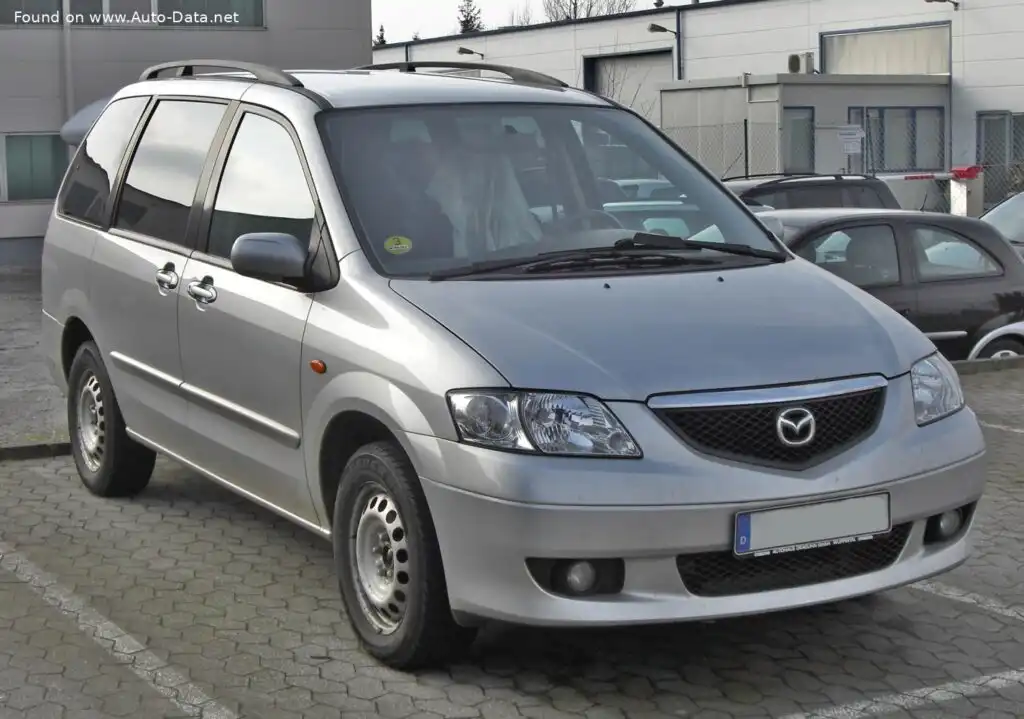
The Mazda MPV II (LW) 2.3i 16V MZR, produced from 2003 to 2006, represented a significant evolution in Mazda’s minivan offerings. This second-generation MPV, designated chassis code LW, aimed to provide a more refined and modern experience compared to its predecessor. The 2.3i variant, powered by Mazda’s MZR engine, served as a core offering within the MPV II lineup, positioned as a balance between affordability and capability for families. It was primarily sold in North America and select international markets, competing with established minivans like the Honda Odyssey, Toyota Sienna, and Dodge Caravan. The LW MPV marked a shift towards a more car-like driving experience for a minivan, incorporating updated styling and improved interior features.
Technical Specifications
| Brand | Mazda |
| Model | MPV |
| Generation | MPV II (LW) |
| Type (Engine) | 2.3 i 16V MZR (141 Hp) |
| Start of production | 2003 |
| End of production | 2006 |
| Powertrain Architecture | Internal Combustion engine |
| Body type | Minivan |
| Fuel Type | Petrol (Gasoline) |
| Power | 141 Hp |
| Engine Model/Code | L3 |
| Engine aspiration | Naturally aspirated engine |
| Engine oil capacity | 4.4 l (4.65 US qt | 3.87 UK qt) |
| Coolant capacity | 8.8 l (9.3 US qt | 7.74 UK qt) |
Powertrain & Engine Architecture
The heart of the MPV II 2.3i is Mazda’s 2.3-liter MZR (Mazda Zoom-Zoom) inline-four cylinder engine. This engine, internally designated as the L3, is a naturally aspirated powerplant featuring a dual overhead camshaft (DOHC) design with 16 valves. The MZR engine family was designed to deliver a balance of power, efficiency, and refinement. It utilizes a multi-point fuel injection system, providing precise fuel delivery for optimal combustion. The engine block is constructed from cast iron, while the cylinder head is made of aluminum, contributing to a reasonable weight. The 2.3i MZR produces 141 horsepower at approximately 6000 rpm and 154 lb-ft of torque at 4000 rpm. The engine is paired with a four-speed automatic transmission, which was the standard transmission offering for this trim level. While a five-speed manual transmission was available on some MPV II models, it was not offered with the 2.3i engine in the North American market.
Driving Characteristics
The 2.3i automatic MPV II delivers a comfortable and predictable driving experience, prioritizing ease of use over outright performance. The four-speed automatic transmission, while not offering the responsiveness of more modern gearboxes, provides smooth shifts and adequate acceleration for everyday driving. The gear ratios are tuned for fuel efficiency and relaxed cruising, rather than spirited acceleration. Compared to the optional 3.0-liter V6 engine available in higher MPV II trims, the 2.3i feels noticeably less powerful, particularly when fully loaded with passengers and cargo. However, the 2.3i’s lighter weight contributes to slightly better fuel economy. The steering is light and precise, making maneuvering in tight spaces relatively easy. The suspension is tuned for comfort, absorbing bumps and road imperfections effectively, although it can exhibit some body roll during cornering. The 0-60 mph time is estimated to be around 9-10 seconds, making it competitive with other similarly equipped minivans of the era.
Equipment & Trim Levels
The MPV II 2.3i typically came standard with a respectable array of features. Interior appointments included cloth upholstery, air conditioning, power windows and locks, and an AM/FM stereo with a CD player. Higher trim levels, such as the DX and LX, added features like alloy wheels, a power driver’s seat, a sunroof, and upgraded audio systems. Optional extras included leather upholstery, rear-seat entertainment systems, and a navigation system. The dashboard layout is functional and straightforward, with easy-to-read gauges and logically placed controls. The MPV II offered a flexible seating configuration, with options for seven or eight passengers depending on the configuration. Second-row seats could be captain’s chairs or a bench seat, and the third-row seats could be folded flat into the floor to maximize cargo space.
Chassis & Braking
The MPV II utilizes a front-engine, front-wheel-drive layout. The chassis features an independent MacPherson strut suspension in the front and a multi-link suspension in the rear, providing a comfortable ride and decent handling characteristics. The braking system consists of ventilated disc brakes in the front and drum brakes in the rear. Anti-lock brakes (ABS) were standard equipment. Steering is rack-and-pinion, providing precise and responsive control. The MPV II’s suspension tuning prioritizes ride comfort over sporty handling, but it remains stable and predictable in most driving situations. Stabilizer bars are fitted to both the front and rear axles to reduce body roll during cornering.
Market Reception & Comparison
The Mazda MPV II 2.3i was generally well-received by automotive critics as a practical and comfortable family vehicle. Reviewers praised its spacious interior, flexible seating configurations, and smooth ride. However, some critics noted that the 2.3-liter engine felt underpowered compared to the V6 options available in competing minivans. Fuel economy was considered average for the class, achieving around 19-22 mpg in city driving and 24-28 mpg on the highway. Compared to the Honda Odyssey and Toyota Sienna, the MPV II offered a more affordable price point, but lacked some of the refinement and features of those models. Compared to the Dodge Caravan, the MPV II offered a more upscale interior and a more engaging driving experience. Reliability was generally good, although some owners reported minor issues with the automatic transmission and electrical components.
Legacy
The Mazda MPV II, including the 2.3i variant, has established a reputation as a reliable and practical minivan in the used car market. The MZR engine, while not known for exceptional performance, is generally considered durable and long-lasting with proper maintenance. The four-speed automatic transmission, while dated by today’s standards, has proven to be reasonably reliable. Common maintenance items include regular oil changes, coolant flushes, and timing belt replacements. Today, the MPV II 2.3i represents an affordable option for families seeking a spacious and dependable minivan. While it may not offer the latest technology or features, its simplicity and reliability make it a compelling choice for budget-conscious buyers. The MPV II marked a turning point for Mazda in the minivan segment, demonstrating their ability to create a competitive and well-rounded vehicle.