
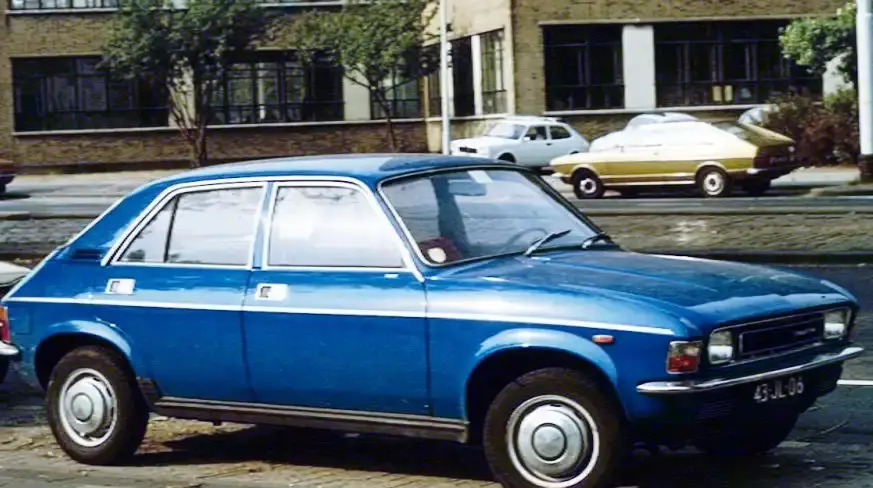
The Austin Allegro 1.1, produced between 1975 and 1979, represented the entry point into the ADO67 range, a series of small family cars designed by British Leyland as a replacement for the Austin 1100 and 1300. Positioned as a practical and affordable hatchback, the 1.1-liter variant aimed to provide economical transportation for the everyday driver. It was a crucial part of British Leyland’s attempt to modernize its image and compete with increasingly popular European and Japanese rivals. The Allegro, despite its innovative features for the time, faced a challenging reception and ultimately became known for quality control issues, impacting its overall reputation. The 1.1 model, being the base trim, was intended to attract budget-conscious buyers and served as the foundation upon which more powerful and better-equipped Allegro models were built.
Technical Specifications
| Brand | Austin |
| Model | Allegro |
| Generation | Allegro (ADO67) |
| Type (Engine) | 1.1 (49 hp) |
| Start of Production | 1975 |
| End of Production | 1979 |
| Powertrain Architecture | Internal Combustion Engine |
| Body Type | Hatchback |
| Fuel Type | Petrol (Gasoline) |
| Power | 49 hp |
| Engine Aspiration | Naturally Aspirated |
Powertrain & Engine Architecture
The Austin Allegro 1.1 was powered by the A-series engine, specifically the 1100cc version. This engine, designated as the 1100cc inline-four, was a long-running and widely used unit within the British Leyland portfolio. It featured a simple overhead valve (OHV) configuration with a single camshaft in the block operating the valves via pushrods and rockers. The engine utilized a single Zenith 36mm carburetor for fuel delivery, a relatively basic system compared to the fuel injection systems appearing on some contemporary vehicles. The 1.1-liter engine produced 49 horsepower at 5000 rpm and approximately 68 lb-ft of torque at 3000 rpm. The engine was typically paired with a four-speed manual gearbox, although a three-speed automatic transmission was offered as an option, albeit less common in the base 1.1 model. The automatic transmission, a Borg Warner unit, further reduced performance and fuel economy. The engine block was constructed from cast iron, while the cylinder head was made of aluminum alloy. This combination provided reasonable durability, but the engine was known for its susceptibility to overheating if not properly maintained.
Driving Characteristics
The driving experience in the Austin Allegro 1.1 was characterized by its modest performance. With only 49 horsepower propelling a vehicle weighing around 1,800 pounds, acceleration was slow, particularly when equipped with the optional automatic transmission. 0 to 60 mph times were typically in the region of 18-20 seconds. The four-speed manual gearbox allowed for more spirited driving, enabling the driver to keep the engine within its optimal power band. However, even with the manual transmission, the Allegro 1.1 was not a performance-oriented vehicle. The gear ratios were relatively tall, prioritizing fuel economy over rapid acceleration. The steering was light, making it easy to maneuver in urban environments, but lacked significant feedback. The suspension, featuring independent front suspension with hydrolastic units and a trailing arm rear suspension, provided a reasonably comfortable ride, absorbing bumps and imperfections in the road surface effectively. However, the hydrolastic suspension system was prone to leaks and required periodic maintenance. Compared to the 1.3 and 1.5-liter Allegro models, the 1.1 felt noticeably underpowered, especially when carrying passengers or luggage.
Equipment & Trim Levels
The Austin Allegro 1.1 was the most basic trim level in the range. Standard equipment was minimal, reflecting its position as an affordable family car. Interior upholstery was typically vinyl, with simple cloth seat covers available as an option. The dashboard was constructed from a durable plastic material and featured a basic instrument cluster with speedometer, fuel gauge, and temperature gauge. A heater was standard, but air conditioning was not available on the 1.1 model. Other standard features included a two-spoke steering wheel, manually operated windows, and basic exterior trim. Optional extras included a radio, upgraded seat upholstery, and a sunroof. The Allegro 1.1’s interior was functional but lacked the refinement of higher-spec models. The focus was on providing a practical and durable cabin rather than luxurious appointments.
Chassis & Braking
The Austin Allegro 1.1 utilized a monocoque chassis construction, providing a relatively lightweight and rigid platform. The front suspension featured independent suspension with hydrolastic units, a system designed to provide a comfortable ride and good handling. The rear suspension employed a trailing arm configuration, also utilizing hydrolastic units. Braking was initially provided by Girling disc brakes on the front wheels and drum brakes on the rear wheels. Later models saw the introduction of larger diameter drum brakes on the rear. The braking system was adequate for the vehicle’s performance, but lacked the stopping power of more modern braking systems. Steering was rack and pinion, providing light and precise steering control. The Allegro 1.1 did not feature a stabilizer bar, which contributed to a degree of body roll during cornering. The suspension geometry was tuned to prioritize ride comfort over sporty handling.
Market Reception & Comparison
The Austin Allegro 1.1 received a mixed reception from automotive critics. While praised for its spacious interior and comfortable ride, it was often criticized for its lack of performance and perceived build quality issues. The 1.1-liter engine was considered underpowered by many reviewers, particularly when compared to rival vehicles from Ford and Vauxhall. Fuel economy was reasonable for the time, averaging around 35-40 mpg. However, the automatic transmission significantly reduced fuel efficiency. Compared to the Allegro 1.3 and 1.5 models, the 1.1 offered a more affordable entry price but sacrificed performance and refinement. The 1.3-liter model, with its increased power output, was generally considered a more balanced option. The Allegro 1.1’s main competitors included the Ford Escort, Vauxhall Astra, and Morris Marina. The Escort and Astra were generally regarded as being more reliable and better built than the Allegro.
Legacy
The Austin Allegro 1.1, while not a resounding success, remains a significant vehicle in British automotive history. It represents a period of innovation and experimentation within British Leyland, but also highlights the challenges faced by the company in terms of quality control and market competitiveness. The 1.1-liter engine, while simple and reliable, was prone to wear and tear if not properly maintained. The hydrolastic suspension system, while providing a comfortable ride, required regular attention to prevent leaks and maintain optimal performance. Today, the Austin Allegro 1.1 is a relatively rare sight on the roads, with few examples remaining in good condition. It has gained a cult following among classic car enthusiasts, who appreciate its quirky design and historical significance. Parts availability can be challenging, but a dedicated network of suppliers and enthusiasts exists to support the preservation of these vehicles. The Allegro 1.1 serves as a reminder of a bygone era in British automotive manufacturing, a time of both innovation and struggle.
