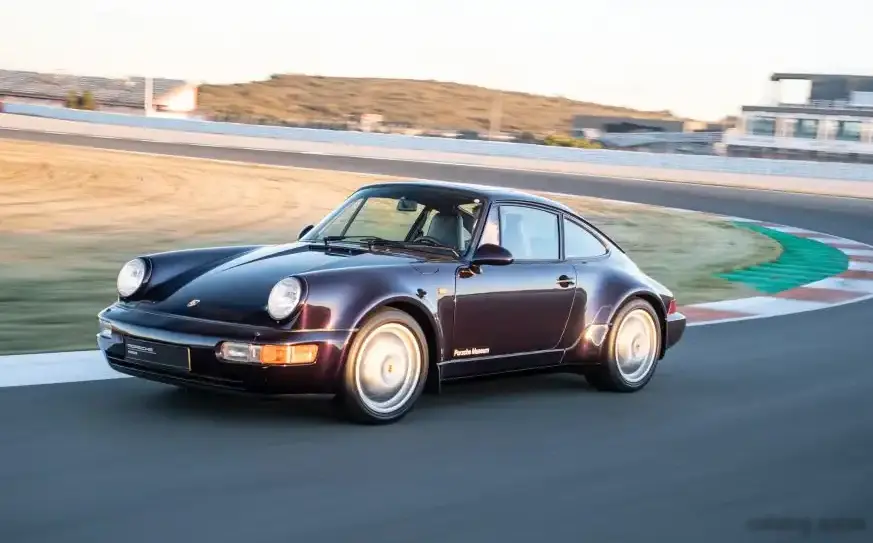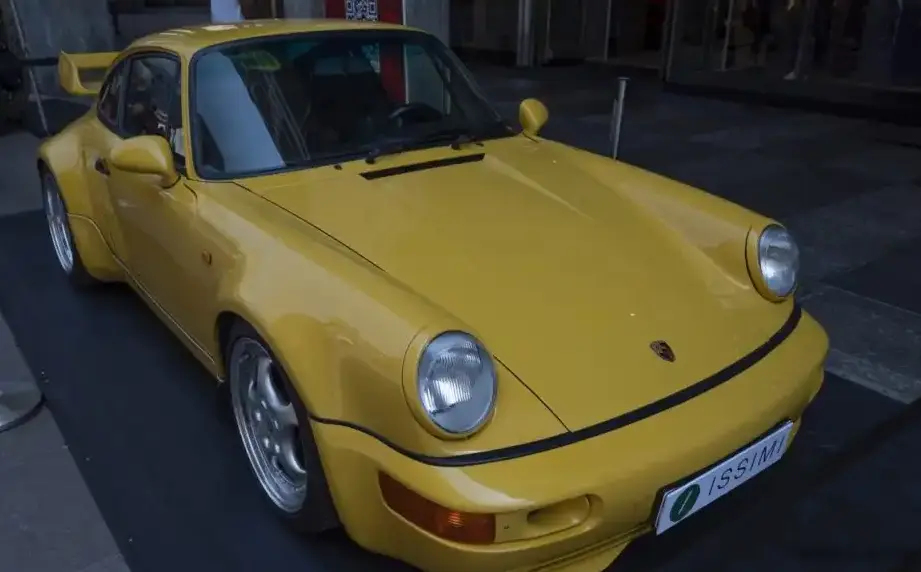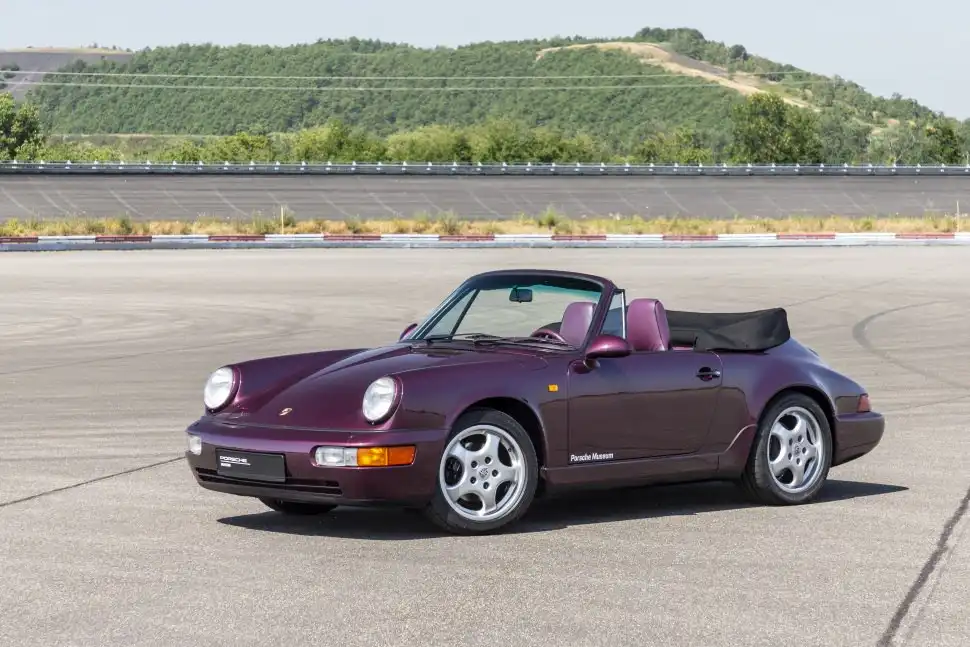
The Porsche 911 Cabriolet (964) Carrera 3.6, produced from 1989 to 1993, represents a significant evolution in the iconic 911 lineage. This variant, part of the 964 generation (internal code 9HX0), offered an open-top experience with a substantial increase in performance compared to earlier 911 models. It served as a desirable mid-range offering within the 964 Cabriolet lineup, positioned above the base Carrera 2 and below the more focused Carrera 4 models. The 964 generation itself was crucial for Porsche, introducing modern technology and refinements while retaining the classic 911 silhouette and rear-engine layout.
Technical Specifications
| Brand | Porsche |
| Model | 911 |
| Generation | 911 Cabriolet (964) |
| Type (Engine) | Carrera 3.6 (250 Hp) |
| Start of production | 1989 |
| End of production | 1993 |
| Powertrain Architecture | Internal Combustion engine |
| Body type | Cabriolet |
| Seats | 4 |
| Doors | 2 |
| Fuel consumption (economy) – urban | 17.1 l/100 km (13.8 US mpg, 16.5 UK mpg, 5.8 km/l) |
| Fuel consumption (economy) – extra urban | 8.7 l/100 km (27 US mpg, 32.5 UK mpg, 11.5 km/l) |
| Fuel consumption (economy) – combined | 9.7 l/100 km (24.2 US mpg, 29.1 UK mpg, 10.3 km/l) |
| Fuel Type | Petrol (Gasoline) |
| Acceleration 0 – 100 km/h | 5.9 sec |
| Acceleration 0 – 62 mph | 5.9 sec |
| Acceleration 0 – 60 mph | 5.6 sec |
| Maximum speed | 260 km/h (161.56 mph) |
| Power | 250 Hp @ 6100 rpm |
| Power per litre | 69.4 Hp/l |
| Torque | 310 Nm @ 4800 rpm (228.64 lb.-ft. @ 4800 rpm) |
| Engine layout | Rear, Longitudinal |
| Engine Model/Code | M64.01 |
| Engine displacement | 3600 cm3 (219.69 cu. in.) |
| Number of cylinders | 6 |
| Engine configuration | Boxer |
| Cylinder Bore | 100 mm (3.94 in.) |
| Piston Stroke | 76.4 mm (3.01 in.) |
| Compression ratio | 11.3:1 |
| Number of valves per cylinder | 2 |
| Fuel injection system | Multi-port manifold injection |
| Engine aspiration | Naturally aspirated engine |
| Engine oil capacity | 11.5 l (12.15 US qt, 10.12 UK qt) |
| Trunk (boot) space – minimum | 90 l (3.18 cu. ft.) |
| Length | 4250 mm (167.32 in.) |
| Width | 1650 mm (64.96 in.) |
| Height | 1310 mm (51.57 in.) |
| Wheelbase | 2270 mm (89.37 in.) |
| Front track | 1380 mm (54.33 in.) |
| Rear (Back) track | 1375 mm (54.13 in.) |
| Drivetrain Architecture | Rear wheel drive |
| Number of gears and type of gearbox | 5 gears, manual transmission |
| Front suspension | Independent, type McPherson with coil spring and anti-roll bar |
| Rear suspension | Independent coil spring |
| Front brakes | Ventilated discs |
| Rear brakes | Ventilated discs |
| Assisting systems | ABS (Anti-lock braking system) |
| Steering type | Steering rack and pinion |
| Power steering | Hydraulic Steering |
| Tires size | 205/55 R16; 225/50 R16 |
| Wheel rims size | 7J x 16; 9J x 16 |
Powertrain & Engine Architecture
The heart of the 964 Carrera 3.6 is the M64.01, a 3.6-liter naturally aspirated flat-six engine. This engine represented a significant departure from the earlier 3.2-liter engines, featuring increased displacement and a revised cylinder head design. The M64.01 utilized a multi-port fuel injection system, delivering precise fuel metering for improved performance and efficiency. The engine’s boxer configuration, with horizontally opposed cylinders, contributed to a low center of gravity, enhancing handling characteristics. The 964 Carrera 3.6 exclusively came with a 5-speed manual transmission, providing a direct connection between the engine and the rear wheels. This transmission was known for its robust construction and precise shift feel.
Driving Characteristics
The 964 Carrera 3.6 offered a compelling blend of performance and usability. With 250 horsepower and 228 lb-ft of torque, it delivered brisk acceleration, reaching 60 mph in approximately 5.6 seconds. The manual transmission allowed for precise control over the engine’s power band, making it engaging to drive on both winding roads and open highways. Compared to the base Carrera 2, the 3.6 offered a noticeable increase in power and torque, resulting in a more spirited driving experience. While not as raw or demanding as earlier 911s, the 964 Carrera 3.6 still retained the unique rear-engine handling characteristics that defined the model. The gear ratios were well-matched to the engine’s power curve, providing strong acceleration in all gears.
Equipment & Trim Levels
The 964 Carrera 3.6 came standard with a well-appointed interior featuring leather upholstery, power windows, and central locking. Air conditioning was also a standard feature. Optional extras included a sunroof, upgraded sound system, and sport seats. The dashboard layout was revised compared to earlier 911s, offering a more modern and ergonomic design. Exterior options included a variety of paint colors and wheel designs. The Cabriolet version featured a fully automatic, electrically operated soft top, providing open-air driving enjoyment.
Chassis & Braking
The 964 generation introduced several chassis improvements, including a redesigned suspension system. The Carrera 3.6 featured independent suspension at all four wheels, with McPherson struts at the front and coil springs at the rear. This setup provided a comfortable ride while maintaining excellent handling. Braking duties were handled by ventilated disc brakes at all four corners, providing ample stopping power. An ABS anti-lock braking system was standard, enhancing safety and stability. The 964 also featured a stiffer chassis compared to earlier 911s, improving rigidity and reducing body flex.
Market Reception & Comparison
The 964 Carrera 3.6 was well-received by automotive critics, who praised its improved performance, refined interior, and modern features. It was seen as a significant step forward for the 911, bridging the gap between the classic models and the more technologically advanced 993 generation. Compared to the base Carrera 2, the 3.6 offered a more rewarding driving experience, justifying its higher price tag. Fuel economy was reasonable for a sports car of its era, averaging around 24 mpg in combined driving. Reliability was generally good, although maintenance costs could be high due to the car’s complex engineering.
Legacy
The 964 Carrera 3.6 remains a highly sought-after classic Porsche. Its combination of performance, style, and usability has made it a favorite among collectors and enthusiasts. The M64.01 engine is known for its durability and relatively straightforward maintenance, although regular servicing is essential. Today, well-maintained examples command premium prices in the used car market. The 964 generation, and the Carrera 3.6 in particular, is widely regarded as a pivotal moment in the 911’s history, representing a successful blend of tradition and innovation. It solidified the 911’s position as a world-class sports car and paved the way for future generations.