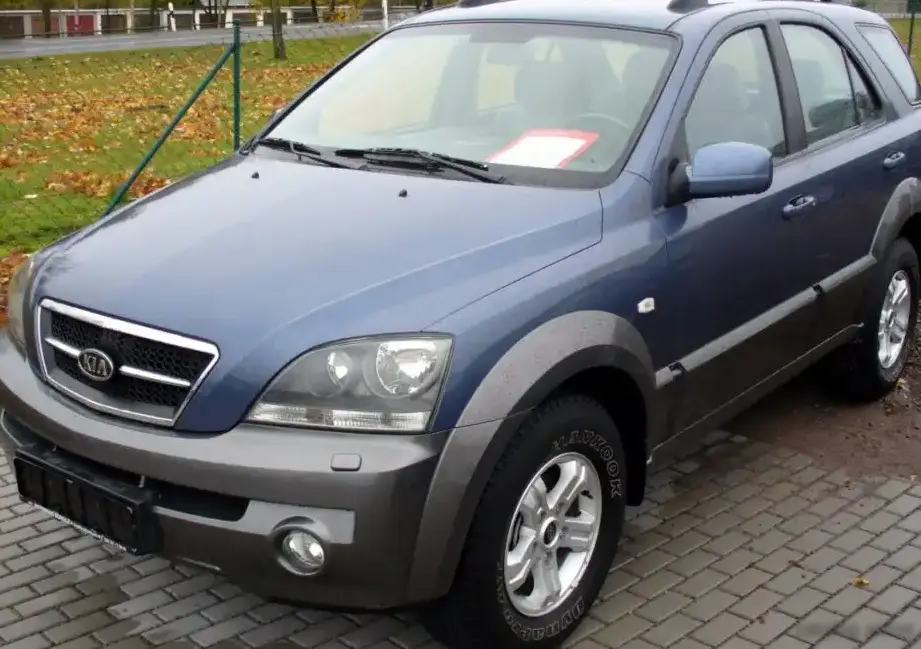
The Kia Sorento III, particularly the facelifted version introduced in 2018, represented a significant step forward for the Korean automaker in the highly competitive mid-size SUV segment. This iteration of the Sorento, produced through 2020, offered a range of engine and drivetrain options, with the 3.5-liter V6 engine paired with an eight-speed automatic transmission and all-wheel drive being positioned as the premium offering. This configuration aimed to deliver a blend of power, refinement, and all-weather capability for families seeking a versatile and comfortable vehicle.
Technical Specifications
| Brand | Kia |
| Model | Sorento |
| Generation | Sorento III (facelift 2018) |
| Type (Engine) | 3.5 V6 (249 Hp) AWD Automatic |
| Start of production | 2018 |
| End of production | 2020 |
| Powertrain Architecture | Internal Combustion engine |
| Body type | SUV |
| Seats | 5 |
| Doors | 5 |
| Fuel consumption (economy) – urban | 14.5 l/100 km (16.2 US mpg, 19.5 UK mpg, 6.9 km/l) |
| Fuel consumption (economy) – extra urban | 8.1 l/100 km (29 US mpg, 34.9 UK mpg, 12.3 km/l) |
| Fuel consumption (economy) – combined | 10.4 l/100 km (22.6 US mpg, 27.2 UK mpg, 9.6 km/l) |
| Fuel Type | Petrol (Gasoline) |
| Acceleration 0 – 100 km/h | 7.8 sec |
| Acceleration 0 – 62 mph | 7.8 sec |
| Acceleration 0 – 60 mph | 7.4 sec |
| Maximum speed | 210 km/h (130.49 mph) |
| Weight-to-power ratio | 8 kg/Hp, 125.7 Hp/tonne |
| Weight-to-torque ratio | 5.9 kg/Nm, 169.6 Nm/tonne |
| Power | 249 Hp @ 6300 rpm |
| Power per litre | 71.8 Hp/l |
| Torque | 336 Nm @ 5000 rpm (247.82 lb.-ft. @ 5000 rpm) |
| Engine layout | Front, Transverse |
| Engine Model/Code | G6DC |
| Engine displacement | 3470 cm3 (211.75 cu. in.) |
| Number of cylinders | 6 |
| Engine configuration | V-engine |
| Cylinder Bore | 92 mm (3.62 in.) |
| Piston Stroke | 87 mm (3.43 in.) |
| Compression ratio | 10.6:1 |
| Number of valves per cylinder | 4 |
| Fuel injection system | Multi-port manifold injection |
| Engine aspiration | Naturally aspirated engine |
| Engine oil capacity | 5.7 l (6.02 US qt | 5.02 UK qt) |
| Kerb Weight | 1981 kg (4367.36 lbs.) |
| Max. weight | 2560 kg (5643.83 lbs.) |
| Max load | 579 kg (1276.48 lbs.) |
| Trunk (boot) space – minimum | 660 l (23.31 cu. ft.) |
| Trunk (boot) space – maximum | 1732 l (61.17 cu. ft.) |
| Fuel tank capacity | 71 l (18.76 US gal | 15.62 UK gal) |
| Length | 4800 mm (188.98 in.) |
| Width | 1890 mm (74.41 in.) |
| Width including mirrors | 2140 mm (84.25 in.) |
| Height | 1685-1690 mm (66.34 – 66.54 in.) |
| Wheelbase | 2780 mm (109.45 in.) |
| Front track | 1628-1633 mm (64.09 – 64.29 in.) |
| Rear (Back) track | 1639-1644 mm (64.53 – 64.72 in.) |
| Front overhang | 945 mm (37.2 in.) |
| Rear overhang | 1075 mm (42.32 in.) |
| Ride height (ground clearance) | 185 mm (7.28 in.) |
| Drag coefficient (Cd) | 0.33 |
| Minimum turning circle (turning diameter) | 11.34 m (37.2 ft.) |
| Approach angle | 16.9° |
| Departure angle | 21° |
| Ramp-over (brakeover) angle | 18° |
| Drive wheel | All wheel drive (4×4) |
| Number of gears and type of gearbox | 8 gears, automatic transmission |
| Front suspension | Independent, type McPherson with coil spring and anti-roll bar |
| Rear suspension | Independent multi-link suspension |
| Front brakes | Ventilated discs |
| Rear brakes | Disc |
| Assisting systems | ABS (Anti-lock braking system) |
| Steering type | Steering rack and pinion |
| Power steering | Electric Steering |
| Tires size | 235/65 R17; 235/60 R18 |
| Wheel rims size | 17; 18 |
INTRODUCTION
The 2018-2020 Kia Sorento facelift built upon the success of the third-generation Sorento (UM), which debuted in 2015. The facelift brought revised styling, upgraded technology, and refinements to the powertrain options. The 3.5L V6 AWD Automatic variant was the top-tier trim, offering a significant power upgrade over the base 2.4L four-cylinder and the 2.0L turbocharged options. It was designed to appeal to buyers who prioritized performance and a more luxurious experience within the mid-size SUV class. The Sorento competed directly with vehicles like the Honda Pilot, Toyota Highlander, and Ford Explorer.
Powertrain & Engine Architecture
At the heart of this Sorento variant lies the Kia-Hyundai G6DC 3.5-liter naturally aspirated V6 engine. This engine utilizes a 60-degree V-angle configuration for smooth operation and balance. It features a multi-port fuel injection (MPI) system, delivering fuel directly into the intake ports. The engine boasts dual continuously variable valve timing (CVVT) on both intake and exhaust valves, optimizing performance and fuel efficiency across the rev range. The G6DC engine produces 249 horsepower at 6,300 rpm and 247.82 lb-ft of torque at 5,000 rpm. Paired with this engine is a smooth-shifting eight-speed automatic transmission, replacing the older six-speed unit. This transmission provides quicker acceleration and improved highway cruising. The all-wheel-drive system is primarily front-wheel drive, engaging the rear wheels when slip is detected, enhancing traction in adverse conditions.
Driving Characteristics
The 3.5L V6 Sorento delivers a noticeably more responsive driving experience compared to the lower-powered engine options. Acceleration from a standstill to 60 mph takes approximately 7.4-7.8 seconds, making it one of the quicker SUVs in its class. The eight-speed automatic transmission is well-tuned, providing seamless gear changes and keeping the engine in its optimal power band. While not a sports SUV, the V6 offers ample power for merging onto highways, overtaking, and tackling uphill climbs, even when fully loaded with passengers and cargo. The all-wheel-drive system provides confident handling in various weather conditions. Compared to the manual transmission options available on other Sorento trims, the automatic prioritizes convenience and ease of use, sacrificing some driver engagement.
Equipment & Trim Levels
The 3.5L V6 AWD Automatic typically came in the highest trim levels of the Sorento, such as the SX or Limited. Standard features included leather upholstery, heated and ventilated front seats, a panoramic sunroof, a premium audio system (often Harman Kardon), a large touchscreen infotainment system with navigation, and a suite of advanced driver-assistance systems (ADAS) like adaptive cruise control, lane departure warning, and blind-spot monitoring. Optional extras could include a rear-seat entertainment system, premium interior trim packages, and upgraded wheel designs. The interior design focused on providing a comfortable and upscale environment for passengers.
Chassis & Braking
The Sorento utilizes a front McPherson strut suspension and a rear independent multi-link suspension, providing a comfortable ride quality while maintaining reasonable handling characteristics. The suspension is tuned to prioritize comfort over sporty handling. The braking system consists of ventilated discs at the front and solid discs at the rear, providing adequate stopping power for the vehicle’s weight. Anti-lock brakes (ABS) and electronic stability control (ESC) are standard features, enhancing safety. The steering is electrically assisted, offering a light and responsive feel.
Market Reception & Comparison
Critics generally praised the Sorento 3.5L V6 for its smooth and powerful engine, comfortable ride, and spacious interior. The eight-speed automatic transmission was also well-received. However, some reviewers noted that the fuel economy was not class-leading, especially compared to the four-cylinder and turbocharged options. Compared to the 2.4L engine, the V6 offered a significant performance boost, but at the cost of increased fuel consumption. The V6 also provided a more refined driving experience than the 2.0L turbo, which could sometimes feel a bit rough around the edges. The Sorento’s value proposition – offering a lot of features for the price – was consistently highlighted in reviews.
Legacy
The G6DC 3.5L V6 engine has proven to be a relatively reliable powertrain when properly maintained. While not immune to issues, major engine failures are uncommon. The eight-speed automatic transmission has also demonstrated good durability. On the used car market, the 2018-2020 Sorento 3.5L V6 AWD Automatic commands a slightly higher price than the lower-trim models, reflecting its superior performance and features. These models are often sought after by buyers who prioritize power, comfort, and all-weather capability in a mid-size SUV. Regular maintenance, including oil changes and transmission fluid services, is crucial for ensuring the long-term reliability of this powertrain.