
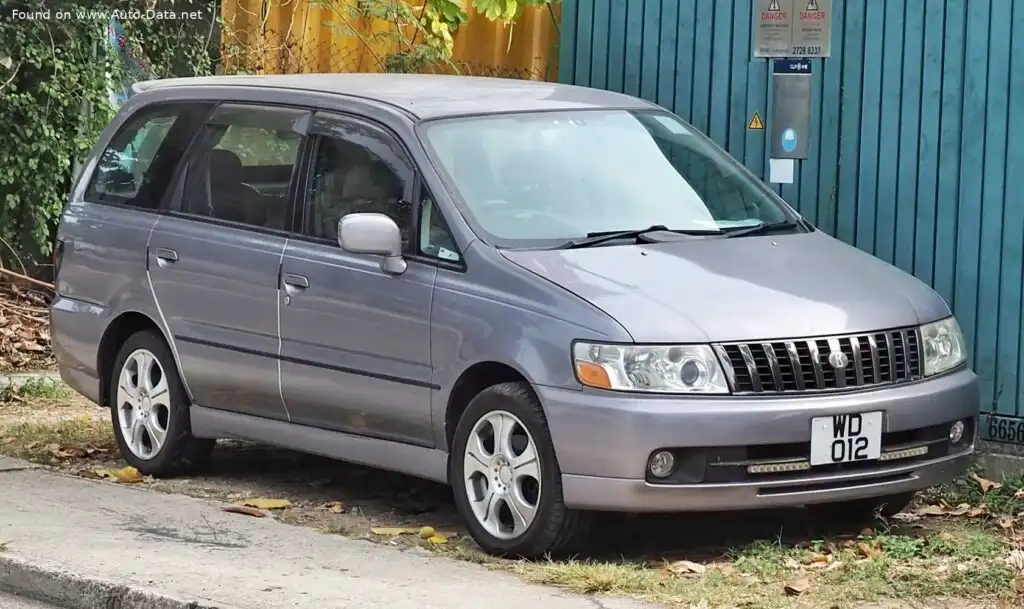
The Nissan Bassara 2.5d Automatic, produced between 1999 and 2001, was a diesel-powered variant of Nissan’s spacious minivan, primarily aimed at the Japanese domestic market (JDM). Positioned as a practical and comfortable family vehicle, the Bassara offered a compelling alternative to other MPVs available at the time. This particular configuration, featuring a 2.5-liter turbocharged diesel engine paired with a four-speed automatic transmission, represented a balance between fuel efficiency and ease of driving, though it wasn’t the performance-oriented choice within the Bassara lineup. It falls within the U30 series Bassara generation.
Technical Specifications
| Brand | Nissan |
| Model | Bassara |
| Generation | Bassara |
| Type (Engine) | 2.5d (150 Hp) Automatic |
| Start of production | 1999 |
| End of production | 2001 |
| Powertrain Architecture | Internal Combustion engine |
| Body type | Minivan |
| Seats | 7 |
| Doors | 5 |
| Fuel consumption (urban) | 11 l/100 km (21.4 US mpg) |
| Fuel consumption (extra urban) | 7.7 l/100 km (30.5 US mpg) |
| Fuel consumption (combined) | 9 l/100 km (26.1 US mpg) |
| Fuel Type | Diesel |
| Acceleration 0 – 100 km/h | 12 sec |
| Acceleration 0 – 62 mph | 12 sec |
| Acceleration 0 – 60 mph | 11.4 sec |
| Maximum speed | 175 km/h (108.74 mph) |
| Weight-to-power ratio | 11.9 kg/Hp |
| Weight-to-torque ratio | 6.4 kg/Nm |
| Power | 150 Hp @ 4000 rpm |
| Torque | 279 Nm @ 1800 rpm (205.78 lb.-ft. @ 1800 rpm) |
| Engine layout | Front, Transverse |
| Engine displacement | 2488 cm3 (151.83 cu. in.) |
| Number of cylinders | 4 |
| Engine configuration | Inline |
| Cylinder Bore | 89 mm (3.5 in.) |
| Piston Stroke | 100 mm (3.94 in.) |
| Compression ratio | 17.5:1 |
| Number of valves per cylinder | 4 |
| Fuel injection system | Diesel Commonrail |
| Engine aspiration | Turbocharger |
| Valvetrain | DOHC |
| Kerb Weight | 1790 kg (3946.27 lbs.) |
| Max. weight | 2230 kg (4916.31 lbs.) |
| Max load | 440 kg (970.03 lbs.) |
| Fuel tank capacity | 65 l (17.17 US gal | 14.3 UK gal) |
| Length | 4795 mm (188.78 in.) |
| Width | 1770 mm (69.69 in.) |
| Height | 1725 mm (67.91 in.) |
| Wheelbase | 2800 mm (110.24 in.) |
| Front track | 1535 mm (60.43 in.) |
| Rear track | 1515 mm (59.65 in.) |
| Ride height (ground clearance) | 150 mm (5.91 in.) |
| Drivetrain Architecture | Front wheel drive |
| Number of gears | 4 |
| Gearbox type | Automatic transmission |
| Front suspension | Coil spring |
| Rear suspension | Coil spring |
| Front brakes | Ventilated discs |
| Rear brakes | Drum |
| Assisting systems | ABS (Anti-lock braking system) |
| Steering type | Steering rack and pinion |
| Power steering | Hydraulic Steering |
| Tires size | 215/60 R15 |
| Wheel rims size | 15 |
Powertrain & Engine Architecture
The heart of the Bassara 2.5d was the Nissan RD28DETI engine, a 2.5-liter inline-four cylinder diesel. This engine utilized a turbocharger and a diesel common rail fuel injection system to deliver 150 horsepower at 4000 rpm and 279 Nm (205.78 lb-ft) of torque at a relatively low 1800 rpm. The common rail system, a relatively new technology at the time, allowed for more precise fuel delivery, resulting in improved combustion efficiency and reduced emissions compared to older diesel injection systems. The engine featured a double overhead camshaft (DOHC) valvetrain with four valves per cylinder, contributing to its power output. The four-speed automatic transmission was chosen for its convenience and ease of use, catering to the target demographic of family drivers. While not known for its sportiness, the transmission was generally reliable and provided smooth shifts under normal driving conditions.
Driving Characteristics
The Bassara 2.5d Automatic offered a comfortable and relaxed driving experience. The turbo diesel engine provided adequate power for everyday driving, but acceleration was not particularly brisk. The 0-60 mph time of around 11.4 seconds reflects this. The automatic transmission, while convenient, did contribute to some power loss compared to the available manual transmission options. The gear ratios were optimized for fuel efficiency and cruising comfort rather than outright performance. Compared to the gasoline-powered Bassara variants, the 2.5d offered significantly better fuel economy, making it a more economical choice for long-distance travel. However, it lacked the responsiveness and refinement of the petrol engines.
Equipment & Trim Levels
The 2.5d Automatic trim typically included features such as power windows, power locks, air conditioning, and an AM/FM radio. Higher trim levels, often denoted with suffixes like “RX” or “VX”, added features like alloy wheels, upgraded interior upholstery (often velour or a higher grade of cloth), a more sophisticated audio system, and optional extras like a sunroof or navigation system. The interior was designed with practicality in mind, offering ample space for passengers and cargo. The seven-seat configuration provided flexibility for larger families, while the folding rear seats allowed for increased cargo capacity when needed.
Chassis & Braking
The Bassara 2.5d utilized a front-engine, front-wheel-drive layout. Suspension consisted of coil springs all around, providing a comfortable ride quality. The front brakes were ventilated discs, offering good stopping power, while the rear brakes were drums, a cost-saving measure common in this class of vehicle. Anti-lock Braking System (ABS) was standard, enhancing safety by preventing wheel lockup during hard braking. The steering was rack and pinion with hydraulic power assistance, providing light and easy steering feel.
Market Reception & Comparison
The Nissan Bassara 2.5d Automatic was generally well-received in the Japanese market as a practical and fuel-efficient family vehicle. Critics praised its spacious interior, comfortable ride, and economical diesel engine. However, some reviewers noted its lack of sporty handling and relatively slow acceleration. Compared to other MPVs available at the time, such as the Toyota Estima (Previa) and Honda Odyssey, the Bassara offered a more affordable option, particularly in its diesel configuration. The diesel engine provided a significant advantage in terms of fuel economy, but it also came with the trade-off of increased noise and vibration compared to gasoline engines.
Legacy
The Nissan Bassara, while not a globally recognized model, remains a popular choice among enthusiasts of JDM vehicles. The 2.5d Automatic variant, while not the most sought-after trim, is appreciated for its reliability and fuel efficiency. The RD28DETI engine, when properly maintained, is known to be a durable and long-lasting powerplant. In the used car market, Bassaras in good condition can still command reasonable prices, particularly those with low mileage and well-maintained interiors. The Bassara represents a significant example of Japanese minivan design from the late 1990s and early 2000s, offering a blend of practicality, comfort, and affordability.
