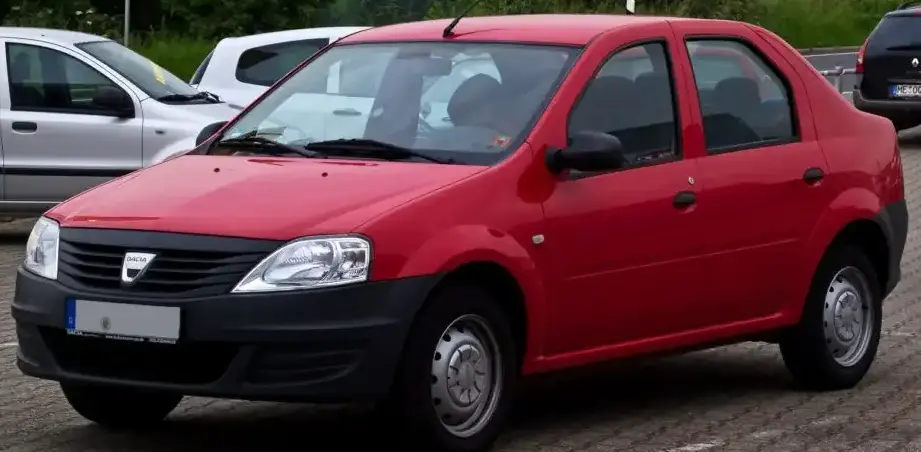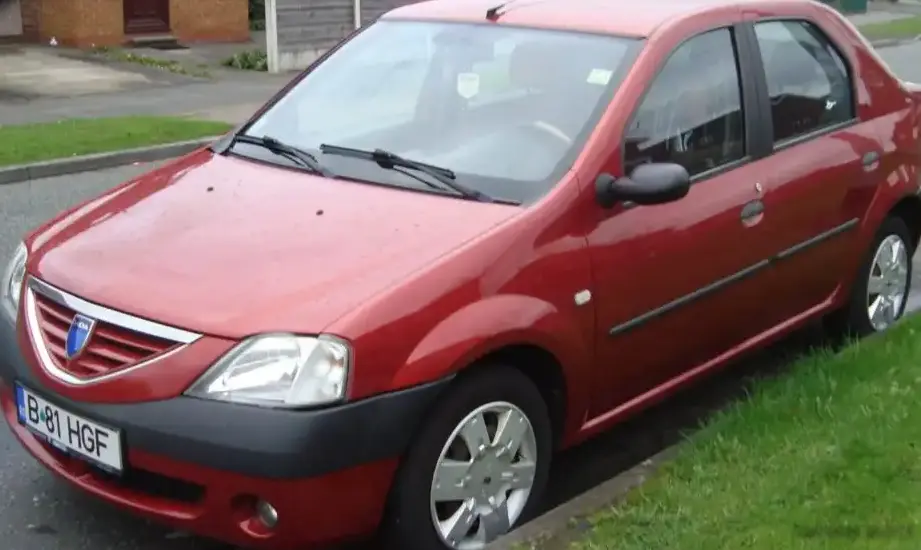
The Dacia Logan I 1.4 i (75 hp) represents the entry point into the first generation Logan lineup, produced between 2004 and 2008. Introduced as Dacia’s re-entry into the automotive market following decades under Renault ownership, the Logan was conceived as a no-frills, affordable family sedan primarily targeted at emerging markets and budget-conscious buyers in Europe. This specific 1.4-liter variant served as the foundation of the range, offering basic transportation with a focus on practicality and low running costs. It was a key model in establishing the Logan’s reputation as a value leader, and played a significant role in Dacia’s resurgence as a major automotive player.
Technical Specifications
| Brand | Dacia |
| Model | Logan |
| Generation | Logan I |
| Type (Engine) | 1.4 i (75 Hp) |
| Start of production | 2004 |
| End of production | 2008 |
| Powertrain Architecture | Internal Combustion engine |
| Body type | Sedan |
| Seats | 5 |
| Doors | 4 |
| Fuel consumption (urban) | 9.2 l/100 km (25.6 US mpg) |
| Fuel consumption (extra urban) | 5.5 l/100 km (42.8 US mpg) |
| Fuel consumption (combined) | 6.2 l/100 km (37.9 US mpg) |
| Fuel Type | Petrol (Gasoline) |
| Acceleration 0 – 100 km/h | 13 sec |
| Acceleration 0 – 62 mph | 13 sec |
| Acceleration 0 – 60 mph | 12.4 sec |
| Maximum speed | 164 km/h (101.9 mph) |
| Emission standard | Euro 4 |
| Weight-to-power ratio | 13 kg/Hp |
| Weight-to-torque ratio | 8.7 kg/Nm |
| Power | 75 Hp @ 5500 rpm |
| Torque | 112 Nm @ 3000 rpm (82.61 lb.-ft. @ 3000 rpm) |
| Engine layout | Front, Transverse |
| Engine Model/Code | K7J 710 |
| Engine displacement | 1390 cm3 (84.82 cu. in.) |
| Number of cylinders | 4 |
| Engine configuration | Inline |
| Cylinder Bore | 79.5 mm (3.13 in.) |
| Piston Stroke | 70 mm (2.76 in.) |
| Compression ratio | 9.5:1 |
| Number of valves per cylinder | 2 |
| Fuel injection system | Multi-port manifold injection |
| Engine aspiration | Naturally aspirated |
| Valvetrain | OHC |
| Engine oil capacity | 3.3 l (3.49 US qt | 2.9 UK qt) |
| Coolant capacity | 4.5 l (4.76 US qt | 3.96 UK qt) |
| Kerb Weight | 975 kg (2149.51 lbs.) |
| Max. weight | 1535 kg (3384.1 lbs.) |
| Max load | 560 kg (1234.59 lbs.) |
| Trunk (boot) space – minimum | 510 l (18.01 cu. ft.) |
| Fuel tank capacity | 50 l (13.21 US gal | 11 UK gal) |
| Length | 4250 mm (167.32 in.) |
| Width | 1735 mm (68.31 in.) |
| Height | 1525 mm (60.04 in.) |
| Wheelbase | 2630 mm (103.54 in.) |
| Front track | 1466 mm (57.72 in.) |
| Rear track | 1456 mm (57.32 in.) |
| Drivetrain Architecture | Front wheel drive |
| Number of gears | 5 gears, manual transmission |
| Front suspension | Spring Strut |
| Rear suspension | Coil spring |
| Front brakes | Disc |
| Rear brakes | Drum |
| Assisting systems | ABS (Anti-lock braking system) |
| Steering type | Steering rack and pinion |
| Tires size | 165/80 R14; 185/65 R15 |
Powertrain & Engine Architecture
The heart of the Logan I 1.4 i is the K7J 710 engine, a 1.4-liter inline-four cylinder gasoline engine. This engine, originating from Renault’s design, is a relatively simple and robust unit. It features a single overhead camshaft (OHC) operating two valves per cylinder. Fuel delivery is managed by a multi-point fuel injection system, providing adequate, though not exceptional, combustion control. The engine produces 75 horsepower at 5500 rpm and 112 Nm (82.61 lb-ft) of torque at 3000 rpm. The engine’s design prioritizes durability and ease of maintenance over outright performance. The 5-speed manual transmission was the standard offering for this variant, chosen for its cost-effectiveness and efficiency. The transmission’s gear ratios are geared towards maximizing fuel economy rather than providing sporty acceleration.
Driving Characteristics
The driving experience in the Logan I 1.4 i is best described as utilitarian. Acceleration is modest, taking approximately 13 seconds to reach 60 mph. The engine feels strained when pushed hard, and overtaking maneuvers require careful planning. However, in typical urban and highway driving conditions, the engine provides sufficient power for everyday tasks. The 5-speed manual transmission is light and easy to operate, but the shift quality isn’t particularly refined. The suspension is tuned for comfort, absorbing bumps and imperfections in the road reasonably well. Compared to the more powerful 1.6-liter versions, the 1.4 i feels noticeably slower, but it offers better fuel economy. It also provides a smoother, less stressed driving experience for those prioritizing economy over performance.
Equipment & Trim Levels
The 1.4 i Logan I was typically offered in a base trim level, focusing on essential features. Standard equipment included power steering, central locking, and a basic audio system. Interior upholstery was typically cloth, and the dashboard featured a simple, functional design. Optional extras were limited, but could include air conditioning and power windows. The interior materials were durable but basic, reflecting the car’s budget-oriented positioning. The emphasis was on providing a practical and functional cabin rather than luxury or refinement.
Chassis & Braking
The Logan I utilizes a relatively simple chassis design. The front suspension consists of MacPherson struts, while the rear suspension employs a coil spring setup. The braking system features disc brakes on the front wheels and drum brakes on the rear. Anti-lock Braking System (ABS) was available, but not standard on all models. The suspension is tuned for comfort and stability, providing a reasonably smooth ride. The drum brakes on the rear wheels were a cost-saving measure, and their performance is adequate for the car’s weight and power output.
Market Reception & Comparison
The Dacia Logan I 1.4 i was generally well-received by critics for its affordability and practicality. It was praised for offering a spacious interior and a large trunk at a very competitive price point. However, the engine’s lack of power and the car’s basic interior were often criticized. Compared to other entry-level sedans available at the time, the Logan offered a compelling value proposition, particularly in markets where affordability was a primary concern. Fuel economy was a strong point, with combined fuel consumption figures around 37.9 US mpg. The 1.6-liter Logan offered more performance, but at a higher price and with slightly lower fuel economy. The 1.5 dCi diesel version provided even better fuel economy, but came with a higher initial cost and potentially higher maintenance expenses.
Legacy
The Logan I 1.4 i powertrain has proven to be reasonably reliable over the long term. The K7J engine is known for its durability and relatively simple maintenance requirements. Common issues include oil leaks and occasional sensor failures, but these are generally inexpensive to repair. In the used car market, the Logan I 1.4 i remains an affordable and practical option for those seeking basic transportation. Its low running costs and simple mechanicals make it an attractive choice for first-time car buyers or those on a tight budget. While it may not offer the performance or refinement of more modern vehicles, the Logan I 1.4 i continues to serve as a testament to Dacia’s commitment to providing affordable and reliable cars.