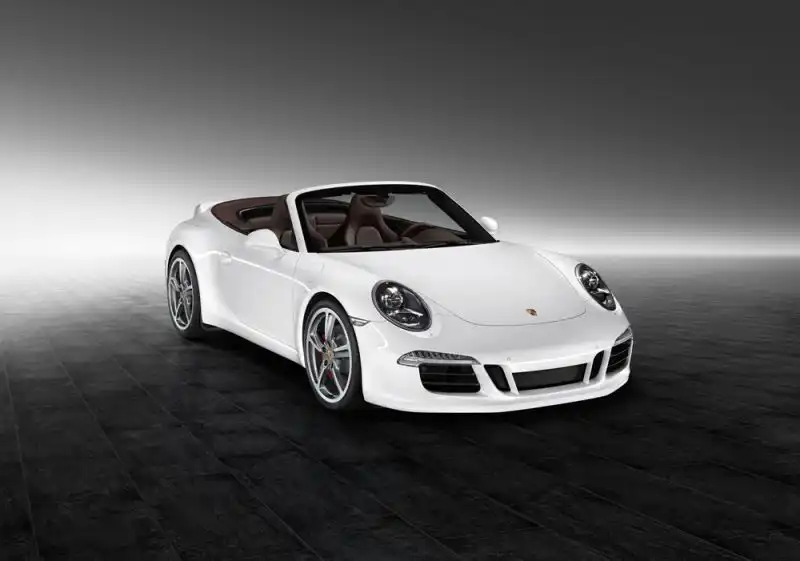
The Porsche 911 Cabriolet (991) Carrera 3.4, produced from 2011 to 2015, represents a significant evolution in the iconic 911 lineage. Positioned as the base model within the 991 generation, it offered an accessible entry point into the 911 experience while retaining the core characteristics of performance and luxury. This variant served as the foundation for the 991 range, appealing to buyers seeking a blend of everyday usability and the thrill of a sports car. It was a key model in Porsche’s strategy to broaden the 911’s appeal without diluting its sporting credentials. The 991 generation itself marked a departure from previous 911s with a longer wheelbase, a more refined interior, and a greater emphasis on technology.
Technical Specifications
| Brand | Porsche |
| Model | 911 |
| Generation | 911 Cabriolet (991) |
| Type (Engine) | Carrera 3.4 (350 Hp) |
| Start of production | 2011 |
| End of production | 2015 |
| Powertrain Architecture | Internal Combustion engine |
| Body type | Cabriolet |
| Seats | 4 |
| Doors | 2 |
| Fuel consumption (economy) – urban | 12.7 l/100 km (18.5 US mpg, 22.2 UK mpg, 7.9 km/l) |
| Fuel consumption (economy) – extra urban | 7.2 l/100 km (32.7 US mpg, 39.2 UK mpg, 13.9 km/l) |
| Fuel consumption (economy) – combined | 9.2 l/100 km (25.6 US mpg, 30.7 UK mpg, 10.9 km/l) |
| CO2 emissions | 216 g/km |
| Fuel Type | Petrol (Gasoline) |
| Acceleration 0 – 100 km/h | 5 sec |
| Acceleration 0 – 62 mph | 5 sec |
| Acceleration 0 – 60 mph | 4.8 sec |
| Maximum speed | 286 km/h (177.71 mph) |
| Emission standard | Euro 6 |
| Weight-to-power ratio | 4.2 kg/Hp, 238.1 Hp/tonne |
| Weight-to-torque ratio | 3.8 kg/Nm, 265.3 Nm/tonne |
| Power | 350 Hp @ 7400 rpm |
| Power per litre | 101.9 Hp/l |
| Torque | 390 Nm @ 5600 rpm (287.65 lb.-ft. @ 5600 rpm) |
| Engine layout | Rear, Longitudinal |
| Engine Model/Code | MA1.04 |
| Engine displacement | 3436 cm3 (209.68 cu. in.) |
| Number of cylinders | 6 |
| Engine configuration | Boxer |
| Cylinder Bore | 97 mm (3.82 in.) |
| Piston Stroke | 77.5 mm (3.05 in.) |
| Compression ratio | 12.5:1 |
| Number of valves per cylinder | 4 |
| Fuel injection system | Direct injection |
| Engine aspiration | Naturally aspirated engine |
| Engine oil capacity | 7.5 l (7.93 US qt | 6.6 UK qt) |
| Coolant | 29 l (30.64 US qt | 25.52 UK qt) |
| Kerb Weight | 1470 kg (3240.8 lbs.) |
| Max. weight | 1850 kg (4078.55 lbs.) |
| Max load | 380 kg (837.76 lbs.) |
| Trunk (boot) space – minimum | 290 l (10.24 cu. ft.) |
| Fuel tank capacity | 64 l (16.91 US gal | 14.08 UK gal) |
| Length | 4491 mm (176.81 in.) |
| Width | 1808 mm (71.18 in.) |
| Height | 1299 mm (51.14 in.) |
| Wheelbase | 2450 mm (96.46 in.) |
| Front track | 1532 mm (60.31 in.) |
| Rear (Back) track | 1518 mm (59.76 in.) |
| Drag coefficient (Cd) | 0.30 |
| Minimum turning circle | 10.9 m (35.76 ft.) |
| Drivetrain Architecture | Rear wheel drive |
| Number of gears and type of gearbox | 7 gears, manual transmission |
| Front suspension | Independent, type McPherson with coil spring and anti-roll bar |
| Rear suspension | Independent multi-link suspension |
| Front brakes | Ventilated discs, 330 mm |
| Rear brakes | Ventilated discs, 330 mm |
| Assisting systems | ABS (Anti-lock braking system) |
| Steering type | Steering rack and pinion |
| Tires size | 235/40 ZR19; 285/35 ZR19 |
| Wheel rims size | 8.5J x 19; 11J x 19 |
Powertrain & Engine Architecture
At the heart of the 991 Carrera 3.4 lies the MA1.04 engine, a 3.4-liter naturally aspirated flat-six (boxer) engine. This engine represents a refinement of the previous generation’s powerplant, incorporating direct fuel injection (DFI) to improve efficiency and power delivery. The DFI system precisely meters fuel directly into the combustion chamber, optimizing combustion and reducing knocking. The engine utilizes an aluminum block and cylinder heads, contributing to weight reduction. The valvetrain features four valves per cylinder, operated by chain-driven camshafts, ensuring precise valve timing and efficient gas exchange. The 7-speed manual transmission was standard, offering precise gear changes and a direct connection to the engine. The engine’s longitudinal rear-engine layout contributes to the 911’s characteristic handling balance.
Driving Characteristics
The 991 Carrera 3.4, with its 350 horsepower and 287 lb-ft of torque, provided a compelling driving experience. While not as brutally fast as the Carrera S or Turbo models, it offered ample power for both spirited driving and comfortable cruising. The manual transmission’s gear ratios were well-matched to the engine’s powerband, allowing for strong acceleration in each gear. Compared to the later Carrera models with turbocharging, the 3.4-liter engine delivered a more linear power delivery, rewarding the driver with a classic sports car feel. The rear-wheel-drive configuration and the engine’s rearward placement contributed to the 911’s signature handling characteristics, including excellent traction and a tendency towards oversteer.
Equipment & Trim Levels
The base 991 Carrera Cabriolet came standard with a respectable array of features. Interior appointments included partial leather upholstery, power-adjustable seats, and an automatic climate control system. The infotainment system featured a 7-inch touchscreen display, navigation, and a premium sound system. Standard exterior features included 19-inch alloy wheels, bi-xenon headlights, and a power-operated soft top. Numerous optional extras were available, including full leather interiors, sport seats, adaptive suspension (PASM), and a more powerful sound system. Buyers could also customize their 911 with a wide range of paint colors and interior trim options.
Chassis & Braking
The 991 generation benefited from a new, more rigid chassis compared to its predecessor. The suspension system featured independent McPherson struts at the front and a multi-link setup at the rear, providing a comfortable ride and precise handling. The Carrera 3.4 was equipped with ventilated disc brakes on all four wheels, providing ample stopping power. ABS (Anti-lock Braking System) was standard, enhancing safety and stability during hard braking. The steering system utilized a rack-and-pinion setup, offering precise and responsive steering feel.
Market Reception & Comparison
The 991 Carrera 3.4 was generally well-received by automotive critics. It was praised for its refined interior, improved ride quality, and engaging driving dynamics. Compared to the Carrera S, the base model offered a more accessible price point, making it attractive to a wider range of buyers. Fuel economy was respectable for a sports car, averaging around 25.6 US mpg in combined driving. Reliability was generally good, although some owners reported minor issues with the infotainment system and the hydraulic lifters in the engine. The 3.4-liter engine proved to be durable and relatively easy to maintain.
Legacy
The Porsche 911 Cabriolet (991) Carrera 3.4 remains a desirable sports car in the used car market. Its combination of performance, luxury, and relative affordability has made it a popular choice among enthusiasts. The naturally aspirated engine is particularly appreciated by purists, who value its linear power delivery and distinctive sound. While newer 911 models offer more power and advanced technology, the 991 Carrera 3.4 continues to provide a rewarding and engaging driving experience. Well-maintained examples are expected to hold their value, making them a sound investment for collectors and enthusiasts alike. The MA1.04 engine, while requiring regular maintenance, is known for its longevity when properly cared for.