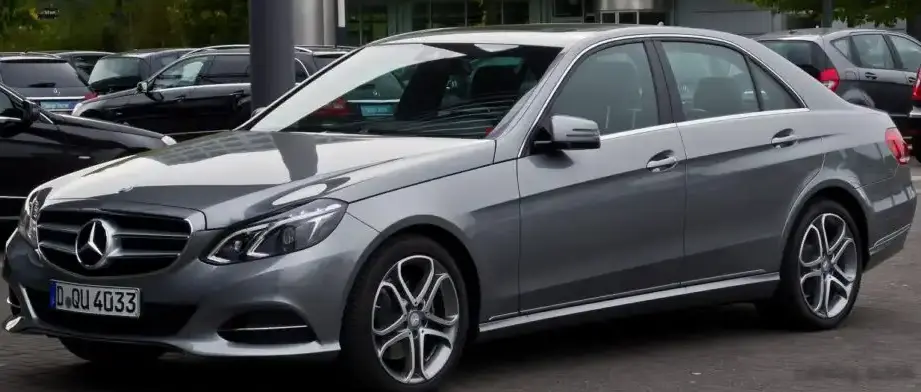
The Mercedes-Benz E 400 V6 3.5 (333 Hp) 7G-TRONIC PLUS, produced from July 2014 to January 2016, represents a significant iteration within the W212 facelifted E-Class range. Positioned as a high-performance variant, it offered a compelling blend of luxury, technology, and spirited driving. This model year marked a mid-cycle refresh for the W212, introducing revised styling, updated technology, and more efficient engine options. The E 400 served as a step up from the E 350, offering substantially more power and a more refined driving experience, while remaining below the flagship E 63 AMG in terms of outright performance and price. It was primarily marketed towards buyers seeking a sophisticated and powerful executive sedan.
Technical Specifications
| Brand | Mercedes-Benz |
| Model | E-class |
| Generation | E-class (W212, facelift 2013) |
| Type (Engine) | E 400 V6 3.5 (333 Hp) 7G-TRONIC PLUS |
| Start of production | July, 2014 |
| End of production | January, 2016 |
| Powertrain Architecture | Internal Combustion engine |
| Body type | Sedan |
| Seats | 5 |
| Doors | 4 |
| Fuel consumption (economy) – urban (NEDC) | 9.4-9.6 l/100 km (25 – 24.5 US mpg) |
| Fuel consumption (economy) – extra urban (NEDC) | 5.4-5.6 l/100 km (43.6 – 42 US mpg) |
| Fuel consumption (economy) – combined (NEDC) | 6.9-7.1 l/100 km (34.1 – 33.1 US mpg) |
| CO2 emissions (NEDC) | 160-165 g/km |
| Fuel Type | Petrol (Gasoline) |
| Acceleration 0 – 100 km/h | 5.3 sec |
| Acceleration 0 – 62 mph | 5.3 sec |
| Acceleration 0 – 60 mph | 5 sec |
| Maximum speed | 250 km/h (155.34 mph), Electronically limited |
| Emission standard | Euro 6 |
| Weight-to-power ratio | 5.1 kg/Hp, 194.7 Hp/tonne |
| Weight-to-torque ratio | 3.6 kg/Nm, 280.7 Nm/tonne |
| Power | 333 Hp @ 5250-6000 rpm |
| Power per litre | 95.2 Hp/l |
| Torque | 480 Nm @ 1200-4000 rpm (354.03 lb.-ft. @ 1200-4000 rpm) |
| Engine layout | Front, Longitudinal |
| Engine Model/Code | M 276.850 |
| Engine displacement | 3498 cm3 (213.46 cu. in.) |
| Number of cylinders | 6 |
| Engine configuration | V-engine |
| Cylinder Bore | 92.9 mm (3.66 in.) |
| Piston Stroke | 86 mm (3.39 in.) |
| Number of valves per cylinder | 4 |
| Fuel injection system | Direct injection |
| Engine aspiration | BiTurbo, Intercooler |
| Valvetrain | DOHC |
| Engine oil capacity | 6.5 l (6.87 US qt | 5.72 UK qt) |
| Coolant | 10.3 l (10.88 US qt | 9.06 UK qt) |
| Kerb Weight | 1710 kg (3769.9 lbs.) |
| Max. weight | 2360 kg (5202.91 lbs.) |
| Max load | 650 kg (1433 lbs.) |
| Trunk (boot) space – minimum | 540 l (19.07 cu. ft.) |
| Fuel tank capacity | 59 l (15.59 US gal | 12.98 UK gal) |
| Max. roof load | 100 kg (220.46 lbs.) |
| Permitted trailer load with brakes (12%) | 2000 kg (4409.25 lbs.) |
| Permitted trailer load without brakes | 750 kg (1653.47 lbs.) |
| Permitted towbar download | 84 kg (185.19 lbs.) |
| Length | 4879 mm (192.09 in.) |
| Width | 1854 mm (72.99 in.) |
| Width including mirrors | 2071 mm (81.54 in.) |
| Height | 1474 mm (58.03 in.) |
| Wheelbase | 2874 mm (113.15 in.) |
| Front track | 1598 mm (62.91 in.) |
| Rear (Back) track | 1614 mm (63.54 in.) |
| Front overhang | 849 mm (33.43 in.) |
| Rear overhang | 1156 mm (45.51 in.) |
| Minimum turning circle (turning diameter) | 11.28 m (37.01 ft.) |
| Drivetrain Architecture | The Internal combustion engine (ICE) drives the rear wheels of the vehicle. |
| Drive wheel | Rear wheel drive |
| Number of gears and type of gearbox | 7 gears, automatic transmission G-TRONIC PLUS |
| Front suspension | Coil spring, Independent multi-link suspension, Transverse stabilizer, Air Suspension – Optional |
| Rear suspension | Independent multi-link spring suspension with stabilizer, Air Suspension – Optional |
| Front brakes | Ventilated discs |
| Rear brakes | Ventilated discs |
| Assisting systems | ABS (Anti-lock braking system) |
| Steering type | Steering rack and pinion |
| Power steering | Electric Steering |
| Tires size | Front wheel tires: 245/45 R17; 245/40 R18; 245/35 R19Rear wheel tires: 245/45 R17; 245/40 R18; 265/35 R18; 275/30 R19 |
| Wheel rims size | Front wheel rims: 8J x 17; 8.5J x 18; 8.5J x 19Rear wheel rims: 8J x 17; 8.5J x 18; 9J x 18; 9.5J x 19 |
Powertrain & Engine Architecture
The heart of the E 400 is the M276.850 3.5-liter V6 engine. This engine is a naturally aspirated powerplant featuring direct fuel injection and twin turbochargers. The M276 engine family was a significant advancement for Mercedes-Benz, offering a compelling combination of power and efficiency. The engine utilizes a sophisticated combustion process and advanced materials to minimize friction and maximize output. The 7G-TRONIC PLUS automatic transmission, a seven-speed unit, was specifically calibrated to complement the engine’s power delivery. This transmission is known for its smooth shifts and responsive performance. It features a torque converter lock-up clutch that engages in most driving situations, improving fuel efficiency. The transmission also offers manual shift capability via steering wheel-mounted paddles.
Driving Characteristics
The E 400 delivers a noticeably more engaging driving experience than the E 350. The twin-turbocharged V6 provides ample power throughout the rev range, with peak torque available from a low 1200 rpm. This results in strong acceleration and effortless cruising. The 7G-TRONIC PLUS transmission contributes to the smooth and refined driving experience, providing quick and precise gear changes. While not as overtly sporty as the E 63 AMG, the E 400 offers a well-balanced chassis and responsive steering, making it enjoyable to drive on winding roads. The gear ratios are tuned for a blend of performance and fuel economy, providing adequate acceleration in all gears.
Equipment & Trim Levels
The E 400 typically came well-equipped as standard, including leather upholstery, automatic climate control, a premium sound system, and a host of safety features. Optional extras included features like a panoramic sunroof, advanced driver-assistance systems (such as lane keeping assist and adaptive cruise control), and upgraded interior trim options. The interior design was characterized by its elegant and understated luxury, with high-quality materials and meticulous attention to detail. The dashboard layout was clean and intuitive, with a central display screen controlling various vehicle functions.
Chassis & Braking
The E 400 utilized a sophisticated suspension system designed to provide a comfortable ride and precise handling. The front suspension featured a multi-link design with coil springs, while the rear suspension employed a multi-link setup as well. Air suspension was available as an option, further enhancing ride comfort and allowing for adjustable ride height. The braking system consisted of ventilated discs on all four wheels, providing ample stopping power. Anti-lock brakes (ABS) and electronic stability control (ESC) were standard features, enhancing safety and control in various driving conditions.
Market Reception & Comparison
The E 400 was generally well-received by automotive critics, who praised its powerful engine, refined driving experience, and luxurious interior. It was often seen as a sweet spot in the E-Class lineup, offering a significant step up in performance from the E 350 without the higher price tag and more aggressive character of the E 63 AMG. Compared to the E 350, the E 400 offered substantially more power and torque, resulting in quicker acceleration and more confident passing maneuvers. Fuel economy was comparable to the E 350, despite the increased power output. Reliability was generally good, although some owners reported minor issues with electronic components.
Legacy
The M276 engine family, including the 3.5-liter variant found in the E 400, has proven to be a relatively reliable and durable powerplant. While preventative maintenance is crucial, these engines are generally known for their longevity. On the used car market, the E 400 represents a compelling value proposition, offering a luxurious and powerful driving experience at a more affordable price point than newer models. However, potential buyers should be aware of the potential for age-related maintenance issues and ensure that the vehicle has been properly maintained throughout its life. The E 400 remains a desirable option for those seeking a sophisticated and capable executive sedan.