
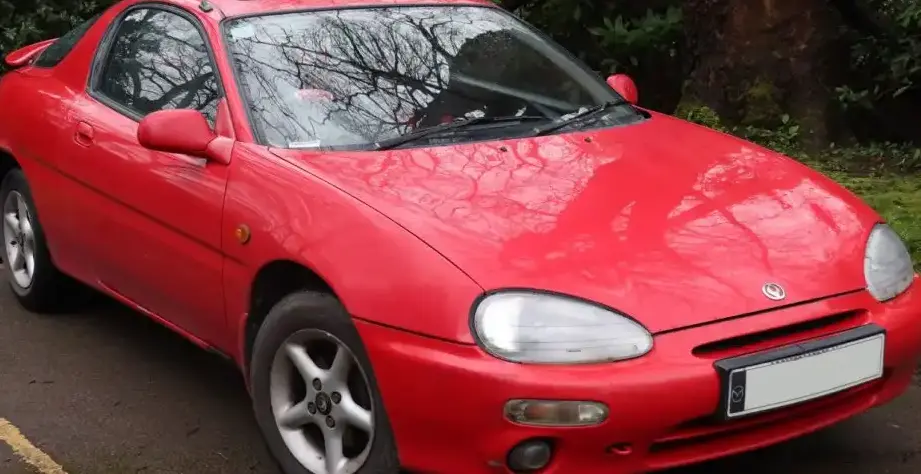
The Mazda MX-3, produced between 1992 and 1996 (with production continuing until 2000 in some markets), was a compact, front-wheel drive coupe designed to fill the space between Mazda’s more practical models and the celebrated MX-5 Miata roadster. The 1.6L 16V variant, delivering 105 horsepower, represented a mid-range offering within the MX-3 lineup, positioned as a balance between cost-effectiveness and performance. It was primarily aimed at younger buyers desiring a stylish and relatively sporty coupe. The MX-3 (EC) was sold in North America, Europe, and Japan, though its market success varied depending on the region.
Technical Specifications
| Brand | Mazda |
| Model | MX-3 |
| Generation | MX-3 (EC) |
| Type (Engine) | 1.6 16V (105 Hp) |
| Start of production | 1992 |
| End of production | 2000 |
| Powertrain Architecture | Internal Combustion engine |
| Body type | Coupe |
| Seats | 4 |
| Doors | 2 |
| Fuel consumption (urban) | 9 l/100 km (26.1 US mpg) |
| Fuel consumption (extra urban) | 5.8 l/100 km (40.6 US mpg) |
| Fuel consumption (combined) | 7.5 l/100 km (31.4 US mpg) |
| Fuel Type | Petrol (Gasoline) |
| Acceleration 0 – 100 km/h | 8.5 sec |
| Acceleration 0 – 62 mph | 8.5 sec |
| Acceleration 0 – 60 mph | 8.1 sec |
| Maximum speed | 197 km/h (122.41 mph) |
| Weight-to-power ratio | 10.1 kg/Hp |
| Weight-to-torque ratio | 7.9 kg/Nm |
| Power | 105 Hp @ 6100 rpm |
| Torque | 135 Nm @ 4000 rpm (99.57 lb.-ft. @ 4000 rpm) |
| Engine layout | Front, Transverse |
| Engine displacement | 1598 cm3 (97.52 cu. in.) |
| Number of cylinders | 4 |
| Engine configuration | Inline |
| Cylinder Bore | 78 mm (3.07 in.) |
| Piston Stroke | 83.6 mm (3.29 in.) |
| Compression ratio | 9.7:1 |
| Number of valves per cylinder | 4 |
| Fuel injection system | Multi-port manifold injection |
| Engine aspiration | Naturally aspirated engine |
| Valvetrain | OHC |
| Kerb Weight | 1060 kg (2336.9 lbs.) |
| Max. weight | 1475 kg (3251.82 lbs.) |
| Max load | 415 kg (914.92 lbs.) |
| Trunk (boot) space – minimum | 289 l (10.21 cu. ft.) |
| Fuel tank capacity | 50 l (13.21 US gal | 11 UK gal) |
| Length | 4220 mm (166.14 in.) |
| Width | 1695 mm (66.73 in.) |
| Height | 1310 mm (51.57 in.) |
| Wheelbase | 2455 mm (96.65 in.) |
| Front track | 1460 mm (57.48 in.) |
| Rear (Back) track | 1465 mm (57.68 in.) |
| Drivetrain Architecture | Front wheel drive |
| Number of gears and type of gearbox | 5 gears, manual transmission |
| Front suspension | Wishbone |
| Rear suspension | Spring Strut |
| Front brakes | Ventilated discs |
| Rear brakes | Drum |
| Assisting systems | ABS (Anti-lock braking system) |
| Steering type | Steering rack and pinion |
| Power steering | Hydraulic Steering |
| Tires size | 185/65 R14 |
| Wheel rims size | 14 |
Powertrain & Engine Architecture
The Mazda MX-3 1.6 16V’s engine was the Mazda B6, specifically the B6-ZE variant as found in North American models. This 1.6-liter inline-four cylinder engine employed a single overhead camshaft (SOHC) configuration and utilized multi-port fuel injection. The 16 valves – four per cylinder – contributed to a respectable power output for its displacement. The engine’s 9.7:1 compression ratio represented a balance between performance and compatibility with commonly available fuel grades. The B6 engine family was generally known for its durability and straightforward maintenance. The MX-3 1.6 16V was exclusively offered with a five-speed manual transmission, giving drivers direct control over the engine’s power delivery. An automatic transmission was not available with this engine.
Driving Characteristics
The 105 horsepower and 135 Nm (99.57 lb-ft) of torque from the 1.6L engine provided adequate, though not particularly thrilling, performance. Acceleration from 0-60 mph took around 8.1 seconds, making it competitive with other coupes in its segment. The five-speed manual transmission allowed drivers to maintain the engine within its optimal power range, resulting in a reasonably responsive driving experience. Compared to the more powerful V6-equipped MX-3 models, the 1.6L felt less potent, especially when overtaking on the highway. However, the lighter weight of the 1.6L version contributed to slightly improved handling and fuel economy. The gear ratios were reasonably well-spaced, offering a balance between acceleration and comfortable cruising.
Equipment & Trim Levels
The MX-3 1.6 16V typically came standard with features like power steering, a basic audio system, and cloth upholstery. Air conditioning was frequently an optional extra. Trim levels varied by market, but generally included a base model and a slightly more refined version with features such as alloy wheels, a sunroof, and upgraded interior trim. The interior design was functional and driver-focused, featuring a relatively simple dashboard layout. Optional extras included a CD player, enhanced speakers, and power windows.
Chassis & Braking
The MX-3 utilized a front-wheel drive layout with independent front suspension (wishbone) and a semi-independent rear suspension (spring strut). The front brakes were ventilated discs, providing good stopping power, while the rear brakes were drums. ABS (Anti-lock Braking System) was often included as standard equipment, enhancing safety. The suspension tuning aimed to provide a comfortable ride while maintaining reasonable handling characteristics. The relatively lightweight construction of the MX-3 contributed to its nimble handling.
Market Reception & Comparison
The Mazda MX-3 1.6 16V was generally well-received by automotive critics as an affordable and stylish coupe. It was praised for its handling, fuel efficiency, and the engine’s relative reliability. However, some reviewers pointed out that the 1.6L engine lacked the power of the V6 options. Compared to the V6-equipped MX-3, the 1.6L offered significantly better fuel economy (around 31.4 US mpg combined) and lower maintenance costs. It also appealed to a wider range of buyers who prioritized affordability and practicality over outright performance. Competitors included the Honda Civic Coupe, Toyota Celica, and Nissan NX.
Legacy
The Mazda MX-3, including the 1.6 16V variant, has garnered a modest following among car enthusiasts. The B6 engine is known for its durability, and well-maintained examples can still provide reliable transportation today. Parts availability is generally good, although some trim-specific components may be challenging to locate. The MX-3’s relatively simple mechanical design makes it a popular choice for amateur mechanics and restorers. In the used car market, the 1.6L models are typically more affordable than the V6 versions, making them an attractive option for buyers seeking a classic coupe on a budget. While not as iconic as the MX-5 Miata, the MX-3 remains a noteworthy example of Mazda’s dedication to building sporty and affordable vehicles.
