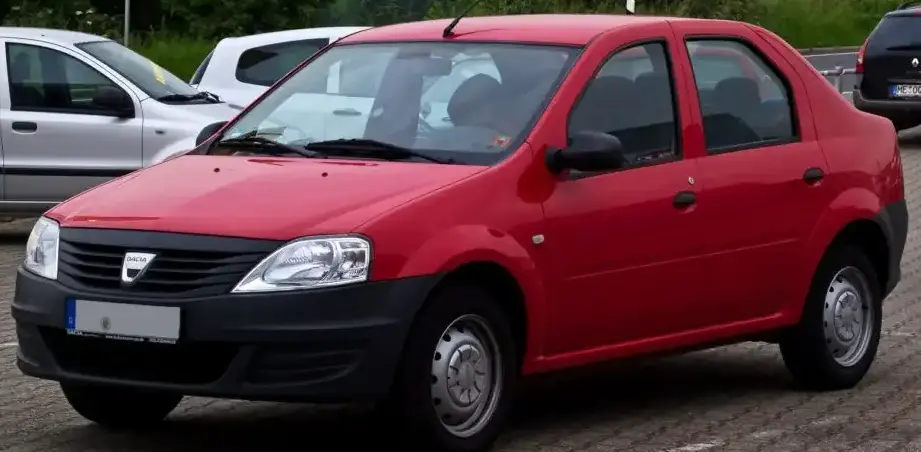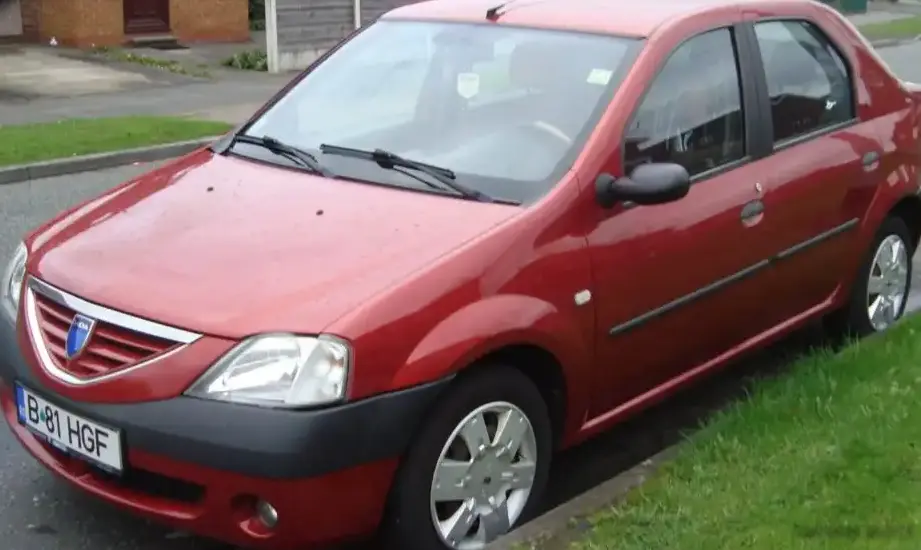
The Dacia Logan I 1.6 16V, producing 105 horsepower, was a significant variant within the first generation Logan lineup, manufactured between September 2006 and July 2008. Introduced as a budget-friendly sedan, the Logan aimed to provide practical transportation to a wider market, particularly in Eastern Europe and emerging economies. This 1.6 16V model represented a step up in performance from the base 1.4-liter engine, offering a more compelling driving experience while remaining affordable. It occupied a mid-range position within the Logan I portfolio, bridging the gap between the entry-level trims and the later, more sparsely equipped diesel options.
Technical Specifications
| Brand | Dacia |
| Model | Logan |
| Generation | Logan I |
| Type (Engine) | 1.6 16V (105 Hp) |
| Start of production | September, 2006 |
| End of production | July, 2008 |
| Powertrain Architecture | Internal Combustion engine |
| Body type | Sedan |
| Seats | 5 |
| Doors | 4 |
| Fuel consumption (economy) – urban (NEDC) | 9.2 l/100 km (25.6 US mpg, 30.7 UK mpg, 10.9 km/l) |
| Fuel consumption (economy) – extra urban (NEDC) | 5.9 l/100 km (39.9 US mpg, 47.9 UK mpg, 16.9 km/l) |
| Fuel consumption (economy) – combined (NEDC) | 7.1 l/100 km (33.1 US mpg, 39.8 UK mpg, 14.1 km/l) |
| CO2 emissions (NEDC) | 170 g/km |
| Fuel Type | Petrol (Gasoline) |
| Acceleration 0 – 100 km/h | 10.2 sec |
| Acceleration 0 – 62 mph | 10.2 sec |
| Acceleration 0 – 60 mph | 9.7 sec |
| Maximum speed | 183 km/h (113.71 mph) |
| Emission standard | Euro 4 |
| Weight-to-power ratio | 10.1 kg/Hp, 99.1 Hp/tonne |
| Weight-to-torque ratio | 7.2 kg/Nm, 139.6 Nm/tonne |
| Power | 105 Hp @ 5750 rpm |
| Power per litre | 65.7 Hp/l |
| Torque | 148 Nm @ 3750 rpm (109.16 lb.-ft. @ 3750 rpm) |
| Engine layout | Front, Transverse |
| Engine Model/Code | K4M 690 |
| Engine displacement | 1598 cm3 (97.52 cu. in.) |
| Number of cylinders | 4 |
| Engine configuration | Inline |
| Cylinder Bore | 79.5 mm (3.13 in.) |
| Piston Stroke | 80.5 mm (3.17 in.) |
| Compression ratio | 9.8:1 |
| Number of valves per cylinder | 4 |
| Fuel injection system | Multi-port manifold injection |
| Engine aspiration | Naturally aspirated engine |
| Valvetrain | SOHC |
| Engine oil capacity | 4.8 l (5.07 US qt, 4.22 UK qt) |
| Coolant | 4.5 l (4.76 US qt, 3.96 UK qt) |
| Kerb Weight | 1060 kg (2336.9 lbs.) |
| Max. weight | 1600 kg (3527.4 lbs.) |
| Max load | 540 kg (1190.5 lbs.) |
| Trunk (boot) space – minimum | 510 l (18.01 cu. ft.) |
| Fuel tank capacity | 50 l (13.21 US gal, 11 UK gal) |
| Max. roof load | 80 kg (176.37 lbs.) |
| Permitted trailer load with brakes (12%) | 1100 kg (2425.08 lbs.) |
| Permitted trailer load without brakes | 565 kg (1245.61 lbs.) |
| Permitted towbar download | 75 kg (165.35 lbs.) |
| Length | 4247 mm (167.2 in.) |
| Width | 1740 mm (68.5 in.) |
| Height | 1534 mm (60.39 in.) |
| Wheelbase | 2630 mm (103.54 in.) |
| Front track | 1480 mm (58.27 in.) |
| Rear (Back) track | 1470 mm (57.87 in.) |
| Ride height (ground clearance) | 155 mm (6.1 in.) |
| Minimum turning circle (turning diameter) | 10.5 m (34.45 ft.) |
| Drivetrain Architecture | The Internal combustion engine (ICE) drives the front wheels of the vehicle. |
| Drive wheel | Front wheel drive |
| Number of gears and type of gearbox | 5 gears, manual transmission |
| Front suspension | Independent, type McPherson with coil spring and anti-roll bar |
| Rear suspension | Coil spring |
| Front brakes | Disc, 259 mm |
| Rear brakes | Drum, 203 mm |
| Assisting systems | ABS (Anti-lock braking system) |
| Steering type | Steering rack and pinion |
| Tires size | 185/65 R15 |
| Wheel rims size | 6.0J x 15 |
INTRODUCTION
The Dacia Logan I 1.6 16V was introduced in 2006 as an upgrade to the initially offered 1.4-liter engine. Built on the 1HX0/A3 platform, the Logan was Dacia’s first new model after being acquired by Renault. The primary goal was to deliver a no-frills, reliable, and affordable vehicle to markets where cost was a major factor. The 1.6 16V variant aimed to broaden the Logan’s appeal by offering improved performance without significantly increasing the price point. This engine provided a noticeable boost in power and torque, making the Logan more capable for highway driving and carrying passengers or cargo.
Powertrain & Engine Architecture
The heart of the Logan I 1.6 16V is the K4M 690 engine, a 1.6-liter inline-four cylinder gasoline engine. This engine is a Renault-designed unit, known for its robustness and relatively simple design. It features a single overhead camshaft (SOHC) valvetrain with four valves per cylinder, contributing to its improved breathing and power output compared to the two-valve 1.4-liter. Fuel delivery is managed by a multi-port fuel injection system, providing precise fuel metering for optimal combustion. The engine’s 1598cc displacement and 9.8:1 compression ratio contribute to its 105 horsepower at 5750 rpm and 148 Nm (109.16 lb-ft) of torque at 3750 rpm. The engine was typically paired with a five-speed manual transmission, although a four-speed automatic transmission was also offered, albeit less commonly. The automatic transmission, while providing convenience, did impact acceleration and fuel economy.
Driving Characteristics
The Logan I 1.6 16V offered a noticeable improvement in driving experience compared to the 1.4-liter version. Acceleration from 0 to 60 mph took approximately 9.7 seconds, and it could reach a top speed of 113.71 mph. While not a performance car, the 1.6-liter engine provided sufficient power for everyday driving, including overtaking maneuvers and climbing hills. The five-speed manual transmission allowed drivers to keep the engine in its optimal power band, maximizing efficiency and responsiveness. The automatic transmission, while convenient, resulted in slightly slower acceleration and increased fuel consumption due to its less efficient torque converter. The Logan’s suspension was tuned for comfort, providing a relatively smooth ride, but it wasn’t particularly sporty in handling. Steering was light and easy, making it suitable for urban driving.
Equipment & Trim Levels
The Logan I 1.6 16V typically came equipped with basic but functional features. Standard equipment included power steering, central locking, and an adjustable steering column. Interior upholstery was typically cloth, and the dashboard featured a simple, utilitarian design. Air conditioning, power windows, and a radio/CD player were often available as optional extras, depending on the specific trim level. The 1.6 16V trim often included slightly upgraded interior trim compared to the base models. Safety features were relatively basic, with ABS being a common inclusion, but airbags were often optional or limited to higher trim levels.
Chassis & Braking
The Logan I featured a McPherson strut front suspension with a coil spring and anti-roll bar, providing a comfortable ride and reasonable handling. The rear suspension utilized a simple coil spring setup. Braking consisted of disc brakes on the front wheels and drum brakes on the rear wheels. ABS (Anti-lock Braking System) was a common feature, enhancing braking performance and safety. The Logan’s chassis was designed for durability and cost-effectiveness, prioritizing practicality over sporty handling. The relatively lightweight construction of the Logan (around 1060 kg or 2336.9 lbs) helped to offset the modest power output of the 1.6-liter engine.
Market Reception & Comparison
The Dacia Logan I 1.6 16V was generally well-received by critics as a practical and affordable vehicle. It was praised for its spacious interior, comfortable ride, and relatively low running costs. However, it was also criticized for its basic interior, lack of refinement, and somewhat uninspired driving dynamics. Compared to the 1.4-liter Logan, the 1.6 16V offered a significant performance improvement, making it a more appealing option for drivers who frequently traveled on highways or carried passengers or cargo. Compared to diesel variants, the 1.6 16V offered a smoother and quieter driving experience, but it lacked the fuel efficiency of the diesel engines. Fuel economy figures were around 33.1 US mpg combined, which was competitive for its class.
Legacy
The Dacia Logan I 1.6 16V powertrain has proven to be relatively reliable over the long term. The K4M engine is known for its durability and ease of maintenance. Common issues are typically related to age and wear, such as oil leaks and sensor failures. In the used car market, the Logan I 1.6 16V remains an affordable and practical option for budget-conscious buyers. Its simplicity and robust construction make it a relatively easy vehicle to maintain and repair. While it may not offer the same level of refinement or features as more modern vehicles, it continues to provide reliable transportation for those seeking a no-frills, cost-effective car.