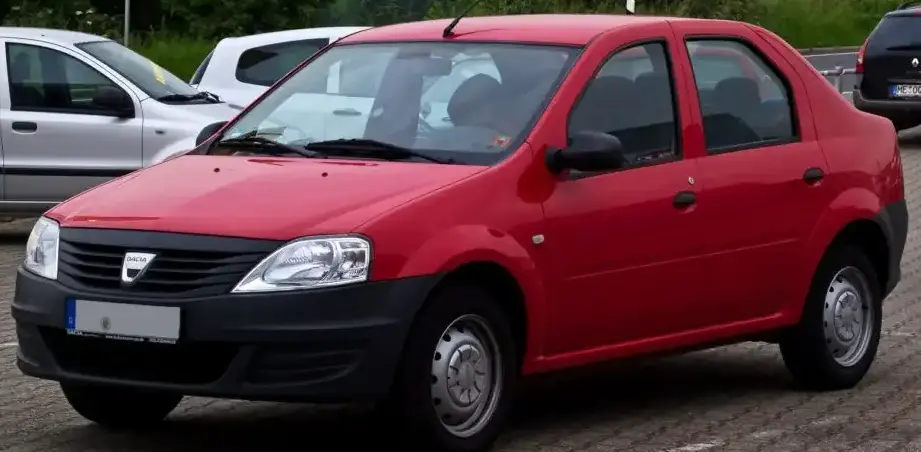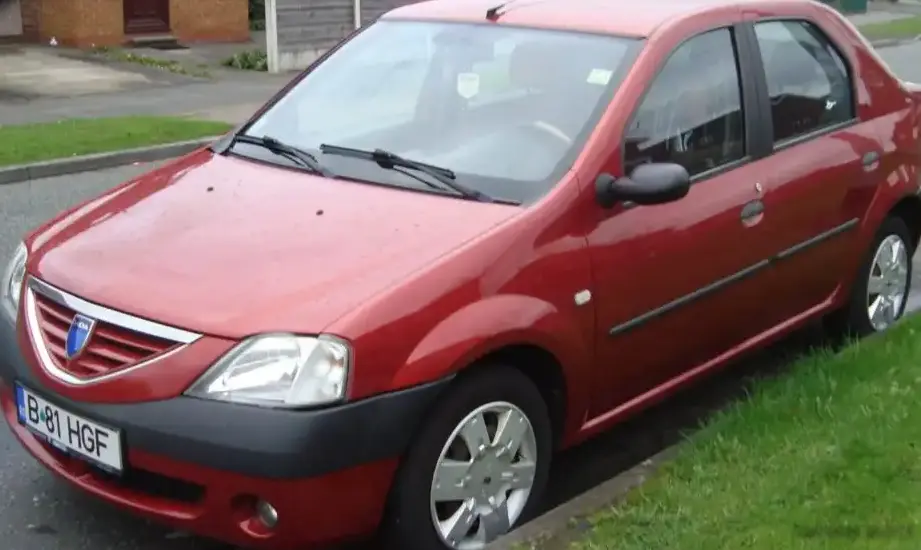
The Dacia Logan I 1.6 8V (87 hp) represents a significant entry point into the first generation Logan lineup, produced between 2004 and 2008. Introduced as Dacia’s initial foray back into mainstream automotive production after decades focusing on licensed builds and tooling, the Logan was conceived as a no-frills, affordable family sedan primarily targeted at emerging markets and budget-conscious buyers in Europe. This 1.6-liter variant, equipped with an 8-valve engine and a manual transmission, served as a core model, offering a balance between acceptable performance and fuel economy. It was positioned as the mid-range offering, bridging the gap between the base 1.4-liter engine and the slightly more powerful, though less common, 1.6 16V version.
| Brand | Dacia |
| Model | Logan |
| Generation | Logan I |
| Type (Engine) | 1.6 8V (87 Hp) |
| Start of production | 2004 |
| End of production | 2008 |
| Powertrain Architecture | Internal Combustion engine |
| Body type | Sedan |
| Seats | 5 |
| Doors | 4 |
| Fuel consumption (urban) | 9.7 l/100 km (24.2 US mpg) |
| Fuel consumption (extra urban) | 5.9 l/100 km (39.9 US mpg) |
| Fuel consumption (combined) | 7.3 l/100 km (32.2 US mpg) |
| CO2 emissions | 172 g/km |
| Fuel Type | Petrol (Gasoline) |
| Acceleration 0 – 100 km/h | 11.5 sec |
| Acceleration 0 – 62 mph | 11.5 sec |
| Acceleration 0 – 60 mph | 10.9 sec |
| Maximum speed | 175 km/h (108.74 mph) |
| Emission standard | Euro 4 |
| Weight-to-power ratio | 11.3 kg/Hp |
| Weight-to-torque ratio | 7.7 kg/Nm |
| Power | 87 Hp @ 5500 rpm |
| Torque | 128 Nm @ 3000 rpm (94.41 lb.-ft. @ 3000 rpm) |
| Engine layout | Front, Transverse |
| Engine Model/Code | K7M 710 |
| Engine displacement | 1598 cm3 (97.52 cu. in.) |
| Number of cylinders | 4 |
| Engine configuration | Inline |
| Cylinder Bore | 79.5 mm (3.13 in.) |
| Piston Stroke | 80.5 mm (3.17 in.) |
| Compression ratio | 9.5:1 |
| Number of valves per cylinder | 2 |
| Fuel injection system | Multi-port manifold injection |
| Engine aspiration | Naturally aspirated |
| Valvetrain | SOHC |
| Engine oil capacity | 3.3 l (3.49 US qt | 2.9 UK qt) |
| Coolant capacity | 4.5 l (4.76 US qt | 3.96 UK qt) |
| Kerb Weight | 980 kg (2160.53 lbs.) |
| Max. weight | 1540 kg (3395.12 lbs.) |
| Max load | 560 kg (1234.59 lbs.) |
| Trunk (boot) space | 510 l (18.01 cu. ft.) |
| Fuel tank capacity | 50 l (13.21 US gal | 11 UK gal) |
| Max. roof load | 80 kg (176.37 lbs.) |
| Permitted trailer load (braked) | 1100 kg (2425.08 lbs.) |
| Permitted trailer load (unbraked) | 525 kg (1157.43 lbs.) |
| Permitted towbar download | 75 kg (165.35 lbs.) |
| Length | 4247 mm (167.2 in.) |
| Width | 1740 mm (68.5 in.) |
| Height | 1534 mm (60.39 in.) |
| Wheelbase | 2630 mm (103.54 in.) |
| Front track | 1480 mm (58.27 in.) |
| Rear track | 1470 mm (57.87 in.) |
| Ride height | 155 mm (6.1 in.) |
| Turning circle | 10.5 m (34.45 ft.) |
| Drivetrain | Front wheel drive |
| Number of gears | 5 |
| Gearbox type | Manual transmission |
| Front suspension | Independent type McPherson, Transverse stabilizer |
| Rear suspension | Coil spring, Torsion |
| Front brakes | Ventilated discs, 259 mm |
| Rear brakes | Drum, 203 mm |
| Assisting systems | ABS (Anti-lock braking system) |
| Steering type | Steering rack and pinion |
| Power steering | Hydraulic |
| Tires size | 185/65 R15 |
| Wheel rims size | 6J x 15 |
Powertrain & Engine Architecture
The heart of this Logan variant is the Renault-sourced K7M 710 engine, a 1.6-liter inline-four cylinder unit. This engine, a staple in Renault and Dacia vehicles for many years, is known for its simplicity and robustness. The 8-valve configuration, coupled with a single overhead camshaft (SOHC), prioritizes low-end torque over high-revving power. Fuel delivery is managed by a multi-port fuel injection system, providing adequate atomization for efficient combustion. The engine produces 87 horsepower at 5500 rpm and 128 Nm (94.41 lb-ft) of torque at 3000 rpm. The transmission is a standard five-speed manual gearbox, chosen for its cost-effectiveness and reliability. This combination, while not particularly sporty, provided sufficient power for everyday driving and load-carrying capabilities.
Driving Characteristics
The 1.6 8V Logan with a manual transmission delivers a predictable, if uninspiring, driving experience. Acceleration from 0-60 mph takes around 10.9 seconds, and top speed is approximately 108.74 mph. The engine’s torque curve is relatively flat, offering usable power across a broad range of engine speeds. However, it requires frequent downshifts when overtaking or climbing hills. The gear ratios are tuned for economy rather than performance, and the clutch and steering are light, making it easy to drive in urban environments. Compared to the 1.4-liter version, the 1.6 offers noticeably more power, making it a more comfortable choice for longer journeys or carrying passengers and luggage. It lacks the refinement and higher performance of the 1.6 16V engine, which offered a more responsive and engaging driving experience.
Equipment & Trim Levels
The Logan I 1.6 8V typically came with a basic level of equipment, reflecting its budget-oriented positioning. Standard features included power steering, central locking, and an adjustable steering column. Interior upholstery was typically cloth, and the dashboard featured a simple, functional design. Air conditioning, power windows, and a radio/CD player were often available as optional extras. Higher trim levels, such as the “Prestige” or “Laureate” variants, added features like alloy wheels, fog lights, and upgraded interior trim. However, even in these higher trims, the Logan remained focused on practicality and affordability rather than luxury.
Chassis & Braking
The Logan I utilizes a McPherson strut front suspension and a torsion beam rear suspension. This setup provides a comfortable ride, although it’s not particularly sporty. The front brakes are ventilated discs, while the rear brakes are drums. Anti-lock Braking System (ABS) was standard, enhancing safety. The chassis is robust and designed to withstand the rigors of poor road conditions, a key consideration for its target markets. The relatively simple suspension setup contributes to lower maintenance costs.
Market Reception & Comparison
The Dacia Logan I 1.6 8V was generally well-received by critics and buyers alike, particularly for its exceptional value for money. It offered a spacious interior, a large trunk, and a reliable powertrain at a price point significantly lower than its competitors. Fuel economy was respectable, averaging around 32.2 US mpg in combined driving. Compared to other trims, the 1.6 8V offered a noticeable performance advantage over the 1.4-liter version, making it a more versatile choice for a wider range of drivers. However, it lacked the refinement and performance of more expensive rivals. Reliability was generally good, with the K7M engine proving to be durable and relatively easy to maintain.
Legacy
The Dacia Logan I 1.6 8V has proven to be a remarkably durable and reliable vehicle. Many examples are still on the road today, testament to the robustness of the K7M engine and the overall build quality. In the used car market, these Logans are highly sought after by budget-conscious buyers looking for a practical and affordable family car. While maintenance costs are low, potential buyers should be aware of the age-related issues common to older vehicles, such as corrosion and wear and tear on suspension components. The Logan I 1.6 8V played a crucial role in establishing Dacia as a major player in the European automotive market, demonstrating that a no-frills, affordable car could still offer excellent value and reliability.