
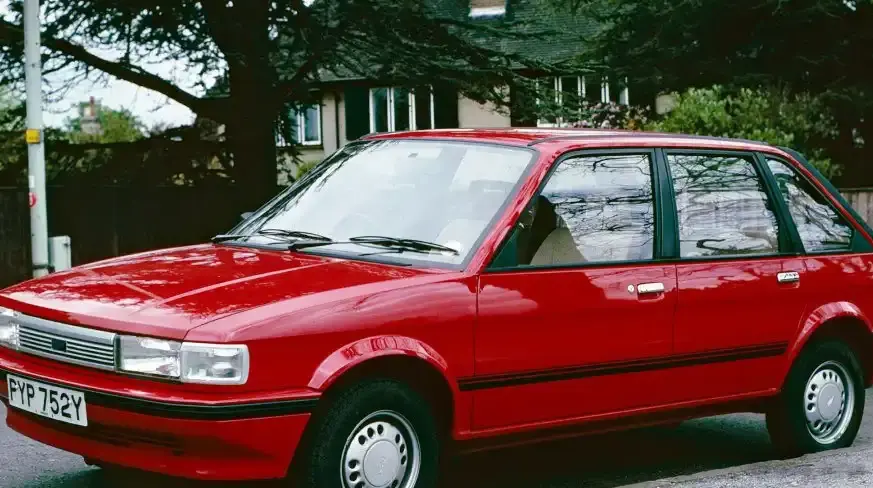
The Austin Maestro 1.6, producing 80 horsepower, was a key variant within the XC range produced between 1983 and 1984. Positioned as a mainstream offering in the Maestro lineup, it aimed to provide a balance of affordability, practicality, and reasonable performance for the British family car market. The Maestro itself represented a significant investment for British Leyland (later Austin Rover Group), intended to replace the aging Austin Allegro and Morris Ital, and to compete with increasingly sophisticated rivals like the Ford Escort and Vauxhall Astra. The XC designation refers to the initial series of Maestros, characterized by its distinctive five-door hatchback body style and a relatively modern (for its time) interior design. This 1.6-liter variant served as a core model, offering a step up in performance from the base 1.3-liter engine while remaining more accessible than the higher-specification 1.6i or 2.0-liter versions.
Technical Specifications
| Brand | Austin |
| Model | Maestro |
| Generation | Maestro (XC) |
| Type (Engine) | 1.6 (80 Hp) |
| Start of production | 1983 |
| End of production | 1984 |
| Powertrain Architecture | Internal Combustion engine |
| Body type | Hatchback |
| Fuel Type | Petrol (Gasoline) |
| Power | 80 Hp |
| Engine aspiration | Naturally aspirated engine |
Powertrain & Engine Architecture
The Austin Maestro 1.6 utilized the ‘O’ series engine, a 1598cc inline-four cylinder petrol engine. This engine had been in production for some time, initially appearing in the Austin 1800 and 1300 models of the 1960s, and had undergone several revisions over the years. The version fitted to the Maestro XC produced 80 horsepower at 5000 rpm and 95 lb-ft of torque at 3000 rpm. It featured a single overhead camshaft (SOHC) design, operating two valves per cylinder. Fuel delivery was managed by a Zenith-Stromberg 175CD carburetor, a relatively simple system compared to the fuel injection found on the later 1.6i models. The engine block was constructed from cast iron, while the cylinder head was made of aluminum alloy. The Maestro 1.6 was typically paired with a four-speed manual gearbox, but a three-speed automatic transmission was also available, though less common. The automatic transmission, a Borg Warner unit, was known for its smooth operation but contributed to slightly reduced fuel economy and acceleration compared to the manual version. The engine’s design prioritized durability and ease of maintenance over outright performance.
Driving Characteristics
The driving experience in the Austin Maestro 1.6 was generally considered competent but unremarkable. With 80 horsepower, acceleration was adequate for everyday driving, taking approximately 12-13 seconds to reach 60 mph. The automatic transmission, while providing convenience, noticeably dulled performance. Gear changes were relatively slow, and the transmission lacked the responsiveness of more modern automatic gearboxes. The suspension, featuring MacPherson struts at the front and a twist-beam rear axle, provided a comfortable ride, absorbing bumps and imperfections in the road surface reasonably well. However, the Maestro wasn’t particularly engaging to drive, with somewhat vague steering and a tendency to understeer when pushed hard. Compared to the manual transmission version, the automatic felt noticeably slower, particularly when overtaking. The 1.6-liter engine offered a more refined experience than the smaller 1.3-liter unit, providing more readily available torque for merging onto highways and climbing hills. However, it lacked the punch of the fuel-injected 1.6i or the larger 2.0-liter engines.
Equipment & Trim Levels
The Austin Maestro 1.6 was offered in several trim levels, including the base ‘L’, the mid-range ‘HL’, and the more luxurious ‘HLS’. The ‘L’ trim was fairly basic, featuring cloth upholstery, vinyl floor coverings, and minimal exterior embellishments. The ‘HL’ added features such as a more comfortable interior trim, a radio cassette player, and improved exterior detailing. The ‘HLS’ offered the highest level of equipment, including electric front windows, central locking, and alloy wheels. Standard features across most trims included a heated rear window, a wash-wipe system on both the front and rear screens, and a steering column adjustable for rake. Optional extras included a sunroof, metallic paint, and upgraded sound systems. Interior design was modern for the time, with a horizontally-oriented dashboard and a clear instrument cluster. The Maestro was also notable for its use of a liquid crystal display (LCD) for some functions, a relatively advanced feature for a car in its class.
Chassis & Braking
The Austin Maestro XC featured a monocoque chassis construction, providing a good balance of strength and weight. The front suspension utilized MacPherson struts with an anti-roll bar, while the rear suspension employed a twist-beam axle. Braking was initially provided by disc brakes on the front wheels and drum brakes on the rear wheels. Later models, particularly the higher-specification trims, were often equipped with disc brakes all around. The braking system was hydraulically operated, providing adequate stopping power for normal driving conditions. Steering was rack and pinion, offering reasonable precision, although it lacked the feedback of some contemporary rivals. The Maestro’s chassis design prioritized practicality and space efficiency, resulting in a relatively spacious interior for a car of its size. The wheelbase was relatively long, contributing to a comfortable ride quality.
Market Reception & Comparison
The Austin Maestro 1.6 received a mixed reception from automotive critics. While praised for its spacious interior, modern design, and comfortable ride, it was often criticized for its uninspiring driving dynamics and perceived lack of refinement compared to rivals like the Ford Escort and Vauxhall Astra. The automatic transmission version was generally considered to be slower and less engaging than the manual. Fuel economy was reasonable for the time, averaging around 32-35 mpg in mixed driving conditions. Reliability was a concern, with some owners reporting issues with the carburetor and electrical systems. Compared to the 1.3-liter Maestro, the 1.6 offered a noticeable improvement in performance, making it a more suitable choice for drivers who frequently carried passengers or drove on motorways. However, the fuel-injected 1.6i offered even better performance and fuel economy, albeit at a higher price point. The 2.0-liter models provided the highest level of performance but were significantly more expensive.
Legacy
The Austin Maestro, despite its relatively short production run, remains a significant vehicle in British automotive history. It represented a substantial investment by British Leyland and was intended to be a cornerstone of their future product lineup. However, quality control issues and a lack of ongoing development hampered its success. The 1.6-liter engine, in particular, proved to be relatively durable, and many examples are still in use today. In the used car market, the Maestro 1.6 is often sought after by enthusiasts and collectors, particularly those looking for a classic British hatchback. While not known for its outright performance or sophistication, the Maestro 1.6 offers a nostalgic driving experience and a reminder of a bygone era of British automotive manufacturing. Parts availability can be a challenge, but a dedicated network of enthusiasts and specialist suppliers continues to support the model.
